Quick Summary
A high-quality leather dog collar is typically made from full-grain, vegetable-tanned leather with solid brass hardware. It is often better tolerated by dogs with sensitive skin, less likely to trap moisture and odour against the neck than most synthetic alternatives, and softens to fit your dog's neck over weeks of wear. With proper care, a collar like this can realistically last for years, and for many dogs it holds up better over time than the nylon and synthetic collars owners tend to replace more often.
Most dog owners replace cheap collars every six to eighteen months without realising the cost adds up to far more than a single quality leather investment. A collar is in contact with your dog's skin every hour of every day. The material it is made from, the tanning process used to produce it, and the hardware holding it together all have a direct impact on your dog's comfort, skin health, and safety on the leash. This guide covers every variable you need to make the right decision: leather grades, tanning methods, collar styles matched to coat and breed, hardware quality, fit, and long-term care.
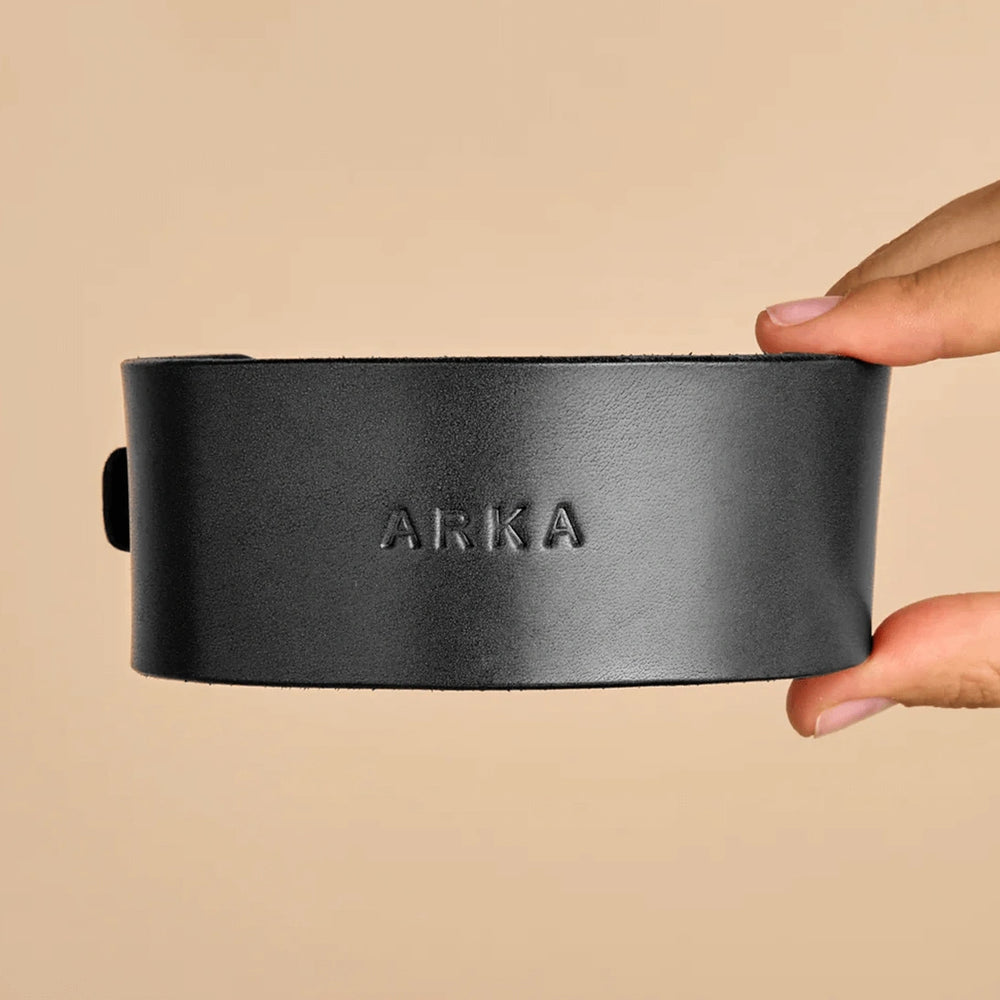
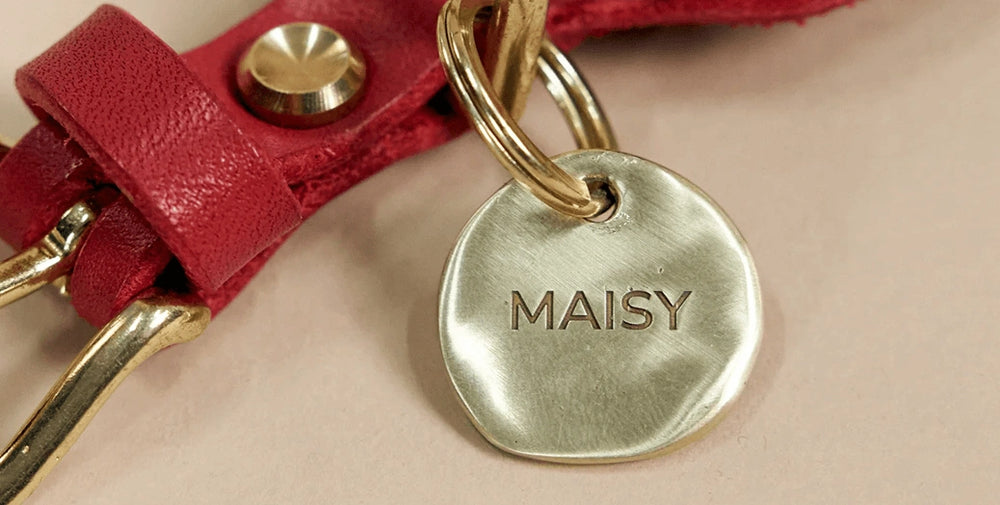
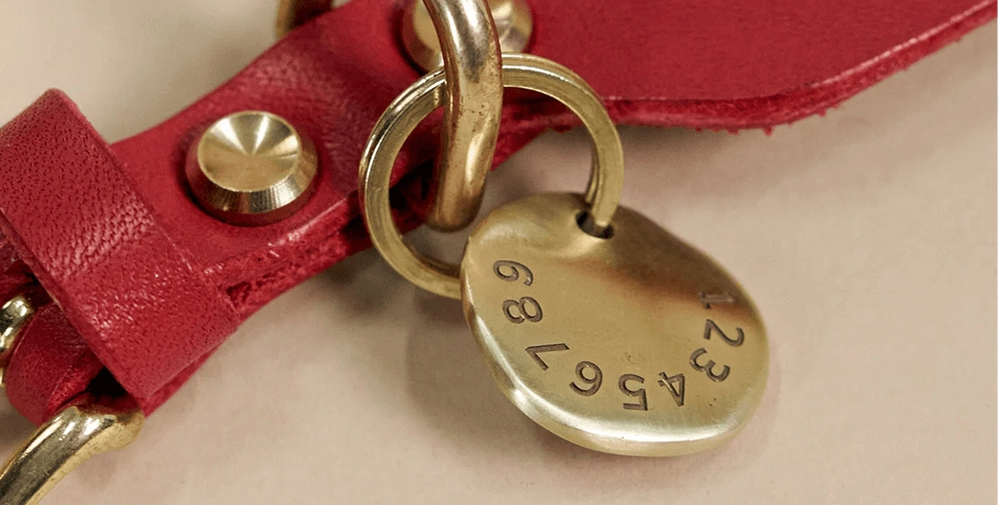
The Lille Björn leather dog collars at a glance. Every collar below is full-grain Italian vegetable-tanned leather, 3mm thick and chromium-free, with a solid brass buckle, D-ring and Chicago rivets, handcrafted to order in six sizes from XXS to XL.
| Collar | Width | Best for | Price |
|---|---|---|---|
| Vero Classic | 2cm or 3cm | Everyday all-rounder, toy to large breeds, name debossing | $69 to $75 |
| Aeris Classic | 3cm | Sensitive skin, thick or long coats, perforated for airflow | $69 to $75 |
| Vero Wide | 4.5cm | Sighthounds and large breeds, broader pressure distribution | $75 to $85 |
| Aeris Wide | 4.5cm | Sighthounds and large breeds needing airflow and lower weight | $75 to $85 |

Why Leather is One of the Best Materials for Dog Collars
Leather outperforms most competing collar materials across the three metrics that matter most: durability, skin safety, and long-term comfort. Full-grain and top-grain cowhide leather are far less likely to break or deform under the leash pressure generated by even large, powerful breeds. Compare that to nylon webbing, which commonly begins to show fraying at stress points under daily use, and to synthetic vegan leather, which cracks and delaminates at the hardware junctions where load is highest.
Leather is also a breathable, natural material. Its porous structure allows air to circulate at the skin-collar interface, which helps reduce the heat and moisture buildup that can contribute to neck irritation and hot spots in dogs that wear their collar continuously. As the leather ages, it absorbs your dog's natural oils and softens progressively, moulding to the exact contours of their neck. Nylon, even padded, rarely achieves the same custom-fit effect.
Vegetable-tanned leather is biodegradable, produced as a by-product of the meat industry, and processed without the heavy metal compounds commonly used in synthetic textile production. A collar built to last years also means fewer replacements manufactured and thrown away over your dog's lifetime.
Leather vs Nylon: A Direct Comparison
Dog owners comparing leather and nylon collars are usually weighing upfront cost against long-term value. The table below settles that calculation clearly.
| Factor | Full-Grain Leather | Nylon Webbing |
|---|---|---|
| Lifespan | years with basic care | 6 to 18 months before fraying |
| Skin safety | No chromium salts or synthetic dye residue; often better tolerated by sensitive-skinned dogs | Synthetic dyes and coatings can irritate sensitive skin |
| Comfort over time | Softens and moulds to neck shape | Stays rigid, can cause chafing at edges |
| Odour resistance | Plant-based tannins are less hospitable to the bacterial growth that causes odour buildup | Absorbs wet-dog smell, difficult to fully deodorise |
| Water resistance | Moderate (resists light rain; condition regularly) | High (dries quickly, suits beach/swim dogs) |
| Cost per year | Lower when amortised over 5-8 year lifespan | Higher due to frequent replacement |
| Patina and character | Develops unique aged finish over time | Fades and discolours |
| Hardware compatibility | Pairs with solid brass, nickel, and stainless steel | Typically fitted with zinc alloy or plastic buckles |
Nylon does hold a genuine advantage for dogs that swim daily or live in consistently wet environments, since leather absorbs water and requires conditioning to prevent drying and cracking after repeated wetting. For a retriever or a water-sport dog, a biothane collar is often the more practical daily choice. For most other dogs, leather is the stronger long-term option.

Leather Grades Explained: Full-Grain, Top-Grain, Genuine, and Bonded
The word leather on a product label tells you almost nothing about quality. Four distinct grades are sold under that label, and they perform at completely different levels. Understanding the difference protects you from buying a collar that looks premium in a product photo and degrades within a season. For a deeper explainer on how the grades compare, see which types of leather are best for dog collars.
Full-Grain Leather
Full-grain leather is the highest quality grade available. It uses the complete outer surface of the hide, preserving the natural grain layer, which is the strongest, most breathable, and most durable part of the skin. Because the grain is intact and unsanded, the leather retains the hide's original fibre structure. This is what gives vegetable-tanned full-grain leather its distinctive character markings: the natural surface variations, subtle scars, and grain patterns that make each collar unique.
Full-grain leather does not just maintain its quality over time. It improves. With daily wear, the leather absorbs your dog's natural oils and develops a patina: a deepening of colour and a subtle sheen that builds across years of use. A full-grain leather collar bought today will look better later than it did at purchase, which is something very few synthetic materials can credibly claim. This is the grade used in The Lille Bjorn collars.
Top-Grain Leather
Top-grain leather is the second-highest grade and is far more common in mid-market collar brands. The outer surface has been sanded or buffed to remove natural imperfections and then coated with a uniform pigmented finish. This produces a cleaner, more consistent visual appearance than full-grain but at a meaningful cost: the sanding removes the strongest fibres in the hide, reducing tensile strength, and the synthetic coating prevents the leather from breathing or developing a patina. Top-grain leather is a respectable collar material, but it does not age into the same quality that full-grain achieves.
Genuine Leather
Genuine leather is the lowest real-leather grade despite its name implying otherwise. It is made from the inner layers of the hide after the higher-quality outer layers have been stripped away for full-grain and top-grain production. These inner layers are bonded together, sanded, and coated heavily with synthetic finishes to create a usable surface. Genuine leather collars degrade significantly faster than either grade above, often cracking and peeling within twelve to eighteen months. The name is a legal minimum standard, not a quality assurance.
Bonded Leather
Bonded leather contains as little as 10 to 17 percent actual leather content by weight. It is manufactured by grinding leather scraps and fibres, mixing them with polyurethane or latex binders, and pressing the compound onto a fibre backing sheet. It looks like leather at a glance and costs very little to produce. It also peels, cracks, and structurally fails under the kind of load a dog collar regularly experiences. A collar labelled bonded leather is a poor candidate for use as a functional pet accessory and is best avoided for anything beyond occasional, light use.
Tanning Methods: Why Vegetable-Tanned Leather is the Safest Choice for Your Dog
Tanning is the chemical process that converts raw animal hide into stable, usable leather. The method used matters profoundly for your dog's skin health, because a collar can sit against your dog's neck 24 hours a day. Residual chemicals from the tanning process are not necessarily locked permanently in the leather and can transfer to skin under certain conditions, particularly heat, moisture, and prolonged contact. For the full health and sustainability case for vegetable tanning, see our guide to choosing the healthiest and most sustainable leather for dog collars.
Chrome-Tanned Leather
Chrome tanning accounts for approximately 80 percent of all leather produced globally. It uses chromium salts to process hides in as little as 24 hours, making it fast, cheap, and scalable for mass production. The finished leather is soft, pliable, and uniform in colour from day one. It is also the leather used in the majority of affordable and mid-range dog collars sold by large pet retailers.
The concern with chrome-tanned leather is the residual chromium that can remain in the finished material. Chrome tanning uses chromium compounds that, under poor process control or over time with heat and aging, can convert into hexavalent chromium. It's a form regulators classify as a Group 1 human carcinogen. Hexavalent chromium is a documented skin irritant and allergen. For dogs with sensitive skin, existing skin conditions, or a history of collar-related rashes, chrome-tanned leather is a risk that vegetable-tanned leather can eliminate.
Vegetable-Tanned Leather
Vegetable tanning uses plant-based tannins derived from tree bark, leaves, and fruit to process hides over a period of weeks to months. The process produces leather that contains no synthetic chemicals, no heavy metal compounds, and no residual irritants. It is the traditional tanning method used across fine leather goods, from saddlery to dog collars, and is widely regarded as well suited for a product worn continuously against an animal's skin.
Vegetable-tanned leather has additional practical advantages beyond skin safety. It starts firm and structured, then softens gradually with daily wear, moulding to the precise shape of your dog's neck over the first few weeks of use. This break-in period produces a fit that no chrome-tanned collar can replicate. Vegetable-tanned leather also responds well to conditioning with natural leather balms and waxes, extending its functional lifespan significantly beyond chrome-tanned alternatives. It is biodegradable, produced using a closed-loop process that generates far less industrial waste, and develops the richest patina of any leather type.
Our single-piece construction also contains no glue, fillers, or bonding agents, and no internal layers that can trap moisture against the skin, which removes another common source of neckline irritation beyond the tanning method alone.

Collar Styles: Matching the Right Leather Collar to Your Dog
The style of leather collar your dog needs is determined by three factors: their coat type, their breed anatomy, and how the collar will primarily be used. Choosing the wrong style for your dog's specific build is the single most common reason owners report discomfort, coat damage, or poor fit even with a correctly sized collar.
Flat Leather Collars: The Classic Everyday Choice
A flat leather collar is the standard format and the right starting point for most dogs. It consists of a single or double layer of leather cut to a consistent width, fitted with a buckle and a D-ring for leash attachment. Width options typically range from 10mm to 40mm, and the appropriate width for your dog scales with their neck circumference, shape, and body weight.
Flat collars suit short-coated breeds particularly well. Breeds including Labradors, Boxers, Vizslas, Dobermanns, and Dalmatians carry no long coat to mat or tangle around a flat collar edge, which means the full contact surface works in their favour: distributing leash pressure evenly across the width of the collar. For a large, powerful, short-coated dog, a wide flat collar (30 to 45mm) with leather construction and solid brass hardware is among the strongest everyday options available.
Rolled Leather Collars: The Coat-Preservation Specialist
A rolled leather collar is constructed from a strip of leather folded lengthwise and stitched into a cylindrical tube shape, producing a round cross-section rather than a flat band. This round profile is the defining structural feature that makes rolled collars the correct choice for long-coated, silky-coated, and curly-coated breeds.
Flat collar edges can press directly into the coat at the contact point, creating friction that, over time, can cause the fur to break, tangle, and mat at the neckline. A rolled collar's round profile distributes contact pressure in a narrower band with no sharp edge, allowing the coat to part naturally around the collar rather than compress beneath it. Breeds including Cocker Spaniels, Golden Retrievers, Irish Setters, Collies, Bichon Frises, and Poodles all can benefit substantially from a rolled leather collar worn daily. The reduction in coat damage is visible within weeks of switching from a flat collar.
Padded Leather Collars: High-Comfort for Strong Pullers
A padded leather collar features a soft inner lining, typically of suede, lambskin, or neoprene, stitched to the underside of a leather outer shell. The padding increases the contact surface area between collar and skin and distributes leash pressure across a wider, softer zone. This makes padded collars the preferred choice for dogs that pull consistently on the leash and for breeds with particularly sensitive or thin skin at the neck.
Working breeds and high-energy dogs that spend long hours in their collar benefit most from the padded format. Breeds including Huskies, Malinois, German Shepherds, Weimaraners, and large terriers that pull hard on walks are the primary candidates. The padded interior also reduces the risk of pressure sores forming at the contact point in dogs that wear their collar during physically demanding activity. Look for padded collars where the lining extends fully to the edges of the collar, not just the centre strip, to prevent the leather edge from creating a chafing line at either side of the padding.
Martingale Leather Collars: The Safety Collar for Escape Artists
A martingale collar uses a two-loop construction that tightens partially when the leash is engaged and releases when tension is removed. Unlike a choke chain, the tightening is limited by the length of the connecting loop and cannot constrict beyond the dog's neck circumference. This makes it a safety device, not a correction tool.
Martingale collars are purpose-built for sighthound breeds (Greyhounds, Whippets, Lurchers, Italian Greyhounds) whose narrow skulls make standard buckle collar escape a genuine risk during walks. They are also appropriate for any dog with a history of slipping their collar backward and pulling free. A leather martingale combines the skin safety and comfort of vegetable-tanned leather with the functional security of a limited-slip mechanism, making it the recommended everyday collar for the specific breeds it was designed to serve.

The Best Leather Collar for an Active, Everyday Dog
For an active, everyday dog, a strong choice is a full-grain, vegetable-tanned leather collar with solid brass hardware. For a dog that runs, hikes, and wears its collar all day, durability depends more on hardware grade and hide quality than on collar width alone. Solid brass and full-grain leather are designed to hold up to daily wear, and tend to last longer than the nylon collars many owners replace every few months.
A high-energy dog puts frequent load on the D-ring and repeatedly exposes the collar to water, dirt, and movement. Two components mostly decide how well it holds up: the hardware and the hide. Solid brass resists rust and corrosion at the load-bearing D-ring, where plated zinc and low-grade alloys tend to fail first. Full-grain, vegetable-tanned leather is the strongest grade and tends to soften with use rather than crack, so it conforms to an active dog's neck and can age into a patina instead of cracking or peeling the way lower-grade leather often does. With proper care, a full-grain collar with solid brass hardware can last for years of daily, high-activity wear, where nylon collars are often replaced every 6 to 18 months.
| Activity Level | What It Demands | The Feature That Helps |
|---|---|---|
| Everyday all-day wear | Comfort that does not chafe over long hours | Full-grain hide that softens and conforms with use |
| High-energy running and hiking | Load-bearing strength at the D-ring | Solid cast brass hardware that resists rust and corrosion |
| Wet weather, mud, and seasonal wear | Care after it gets wet, since leather is not waterproof | Vegetable-tanned full-grain leather, dried naturally and conditioned to stay supple |
| Strong, active pullers | Even pressure without a thin cutting edge | A wider or padded full-grain collar, sized by the two-finger rule |
| Sensitive skin on an active dog | Fewer irritation triggers during constant contact | Nickel-free solid brass and chromium-free tanning |
For an active dog, a collar designed to outlast the average season of wear is often the more economical long-term choice, rather than the one replaced when it frays. The same principles scale up for bigger dogs in our large breed collar buying guide, and the load-bearing details are covered in our breakdown of dog collar hardware and how it is attached.
Hardware Quality: Why the Buckle Material Matters as Much as the Leather
The hardware on a leather collar is the highest stress point in the entire assembly. Every leash pull, every gate clip, every ID tag attached to the D-ring concentrates load at the buckle, the D-ring, and the rivets or stitching that anchor those components to the leather. Choosing a collar with weak hardware undermines even the best leather construction. For a full breakdown of how buckles and D-rings are built and attached, see our dog collar hardware guide.
Solid Brass Hardware
Solid brass is the premium standard for leather collar hardware and the choice used by quality artisan makers. Brass is an alloy of copper and zinc that does not rust, resists corrosion in salt air and wet conditions, and maintains structural integrity under sustained load. It develops a warm patina that complements the ageing of vegetable-tanned leather, and it can be polished back to a bright finish without any loss of strength. Solid brass buckles, D-rings, and Chicago screws are the correct hardware choice for a collar designed to last years.
Nickel-Plated Hardware
Nickel hardware presents a different consideration than corrosion alone. Nickel is one of the most commonly cited triggers for allergic contact dermatitis in dogs, and hardware that sits against the neck for hours a day is a direct, sustained exposure point. Solid nickel resists corrosion well, but nickel-plated hardware (a steel base with a nickel coating) wears through at high-contact points over time, which both exposes the steel base to rust and increases nickel transfer to the skin as the coating degrades. For a dog with no known sensitivity, nickel hardware can perform adequately. For a dog with sensitive skin or any history of contact reactions, solid brass or solid stainless steel are safer starting points.
Zinc Alloy Hardware
Zinc alloy (also sold as die-cast or pot metal) is the lowest-grade hardware commonly used in pet accessories. It is inexpensive to produce and appears visually identical to brass or nickel in product photography. Zinc alloy corrodes, weakens under sustained tension, and fractures under impact load. Any collar advertising silver-tone or gold-tone hardware without specifying the base material is almost certainly using zinc alloy.
How to Measure and Fit a Leather Dog Collar Correctly
An incorrectly fitted collar is dangerous regardless of its material quality. A collar too loose can be slipped or snagged; a collar too tight restricts breathing and causes pressure sores. Correct fit takes two minutes to establish and should be verified every time a new collar is introduced.
Step 1: Measure Your Dog's Neck
Use a flexible fabric tape measure (or a length of string measured against a ruler) to measure the circumference of your dog's neck at the point where the collar will sit, typically the mid-neck, below the jaw and above the shoulders. Take the measurement snug but not tight, with the dog standing in a natural head position. Record the measurement in centimetres or inches.
Step 2: Apply the Two-Finger Rule
When the collar is buckled, you should be able to slide two adult fingers flat beneath the collar with light resistance. If three fingers slide through easily, the collar is too loose. If you cannot comfortably insert two fingers, it is too tight.
Step 3: Match to a Size Chart
Collar sizing varies by maker. Always verify that the collar's adjustment range covers your dog's neck measurement with room at both ends of the adjustment range. A collar that only fits at its tightest or loosest hole offers no room to accommodate seasonal weight variation or coat thickness changes.
Width Selection by Breed and Body Weight
| Dog Size / Breed Type | Recommended Collar Width | Recommended Style |
|---|---|---|
| Toy and miniature breeds (under 5kg) | 10 to 15mm | Slim flat or slim rolled |
| Small breeds (5 to 10kg) | 15 to 30mm | Flat or rolled |
| Medium breeds (10 to 25kg) | 20 to 30mm | Flat, rolled, or padded |
| Large breeds (25 to 40kg) | 25 to 45mm | Wide flat or padded |
| Giant breeds (over 40kg) | 35 to 45mm | Wide padded, double-ply |
| Sighthounds (all weights) | 30 to 50mm (wider than standard) | Martingale or wide flat |
| Long-coated breeds (all weights) | As above for weight, but rolled profile | Rolled leather |
How to Tell If a Leather Collar is Genuinely High Quality
Most low-quality leather collars are indistinguishable from high-quality ones in a product photo. These are the physical indicators that separate a collar worth buying from one that will disappoint within months.
- Grain texture on the outer surface. Full-grain leather shows natural surface variation: subtle grain patterns, minor marks, and a matte to semi-gloss finish that varies slightly across the surface. A perfectly uniform, mirror-smooth, or plastic-looking finish indicates a synthetic coating over sanded or bonded leather.
- Cut edges. On quality vegetable-tanned leather, the cut edges of the collar are burnished or edge-painted by hand, producing a smooth, sealed, rounded edge finish. Rough, crumbling, or layered edges on a cross-section indicate bonded or genuine-grade leather construction.
- Hardware weight and engraving. Solid brass hardware has noticeable weight and crisp, clean engraving on buckle surfaces. Zinc alloy hardware feels light relative to its size and often shows rough casting marks or uneven plating at the edges.
- Stitching consistency. Saddle stitching (two threads locked through each hole from both sides) is the strongest hand-stitching method and the mark of artisan construction. Machine lock-stitch is acceptable but should be even and tight with no skipped stitches, particularly at the D-ring attachment point.
- Rivet reinforcement at the D-ring. The D-ring should be secured by at minimum one solid copper or brass rivet through the leather fold. This is the highest load point on the collar and the first place weak construction fails.
- Natural leather smell. High-quality vegetable-tanned leather has a characteristic clean, earthy, slightly sweet smell. Chrome-tanned leather often has a chemical or solvent smell, particularly when new. Heavy perfuming in a leather product sometimes indicates an attempt to mask the chemical odour of low-grade tanning.

Leather Dog Collar Care: How to Make a Collar Last for Years
Vegetable-tanned leather is durable, but it is not indestructible. A simple care routine applied three to five times per year extends a quality collar's life to the upper range of its potential lifespan and keeps it comfortable and safe against your dog's skin throughout.
Routine Cleaning
Wipe the collar down with a barely damp cloth to remove surface dirt, dried mud, and oil buildup from the neck contact area. Do not submerge a leather collar in water and do not use household cleaning products, soap, or alcohol-based wipes. These strip the natural oils from the leather and accelerate drying and cracking. For stubborn grime, a small amount of leather-specific saddle soap applied with a soft cloth and then fully buffed off is the appropriate approach.
Conditioning
Apply a natural leather conditioner, beeswax balm, or neatsfoot oil to the collar every two to three months, or immediately after any significant wetting. Apply a thin, even coat with a soft cloth, allow it to absorb for ten to fifteen minutes, then buff off the excess. Conditioning restores the oils that evaporate from the leather over time and maintains suppleness, which is especially important at flex points near the buckle and D-ring. Do not over-condition: applying too much product too frequently softens the leather excessively and reduces its structural integrity.
Drying After Wetting
If the collar gets wet, remove it and allow it to dry naturally at room temperature, away from direct heat sources including radiators, sunlight, and hair dryers. Direct heat causes the leather to dry unevenly and crack. Once fully dry, apply a light coat of conditioner before returning it to use.
Storage
Store spare collars flat or loosely coiled in a cool, dry location away from direct sunlight. Do not store leather in sealed plastic bags or airtight containers: leather needs airflow to prevent mould growth. A breathable cloth storage bag or a hook on a dry wall is the correct approach.
Are Leather Dog Collars Safe for Dogs with Sensitive Skin?
This is one of the most frequently searched questions about leather dog collars, and the answer depends entirely on the tanning method used to produce the leather. Vegetable-tanned leather is among the safest collar materials available for dogs with sensitive skin. It contains no chromium salts, no synthetic dyes, and no chemical preservatives. The plant-based tannins that stabilise the hide are the same class of compounds found in tea, red wine, and many fruits. They are naturally antibacterial, which means the collar actively resists the bacterial colonisation that causes odour and skin irritation in collars worn daily.
Chrome-tanned leather, by contrast, poses a low but real risk for sensitive-skinned dogs. The residual chromium in chrome-tanned leather is not sealed inside the material: it can transfer to the skin at the contact point, particularly when the collar becomes wet. Dogs that scratch at their collar frequently, develop a rash or hair loss at the neckline, or seem uncomfortable in their collar despite a correct fit may be reacting to chrome-tanned leather or to the synthetic dyes used in finishing it. Switching to a full-grain vegetable-tanned leather collar frequently can help with these contact dermatitis presentations.
If your dog has a documented skin allergy or existing dermatological condition, consult your veterinarian before introducing any new collar material. For most dogs with sensitive skin, however, full-grain vegetable-tanned leather with a natural beeswax or oil finish is among the safer daily-wear options available for dogs with contact sensitivities.

Frequently Asked Questions About Leather Dog Collars
Are leather dog collars better than nylon?
Often, yes, for most dogs. Full-grain leather generally performs better than nylon in durability, skin safety, long-term comfort, and odour resistance. Leather can realistically last for many years, while many nylon collars commonly show signs of wear within 6 to 18 months of daily use. Vegetable-tanned leather contains no synthetic dye residue. The one exception is dogs that swim daily, where a biothane collar is often more practical because leather absorbs water and requires conditioning after heavy wetting.
Are leather dog collars safe for dogs with sensitive skin and allergies?
Full-grain vegetable-tanned leather is among the safest collar materials for sensitive-skinned dogs. It contains no chromium salts, synthetic dyes, or chemical preservatives. Chrome-tanned leather, which accounts for most cheap and mid-range leather collars, can leave residual chromium at the skin contact point and may contribute to contact dermatitis in sensitive dogs. Always verify the tanning method before purchasing a leather collar for a dog with known skin sensitivities.
How long does a leather dog collar last?
A full-grain vegetable-tanned leather collar maintained with regular conditioning can realistically last many years. Chrome-tanned and genuine leather collars are far more likely to show cracking, stiffening, or hardware failure within 1 to 3 years of regular use. The quality of the leather grade and tanning method are the two largest determinants of lifespan, followed by hardware quality and maintenance frequency.
What is a rolled leather dog collar and when should I use one?
A rolled leather collar is constructed from leather folded into a cylindrical tube shape, producing a round cross-section instead of a flat band. The round profile prevents coat matting and breakage at the neckline, making it the correct collar choice for long-coated and silky-coated breeds including Golden Retrievers, Cocker Spaniels, Poodles, and Collies. It is also the preferred format for sighthound breeds including Greyhounds and Whippets, where the slim round profile reduces the risk of collar escape during backward pulls.
How do I clean a leather dog collar?
Wipe the collar with a barely damp cloth to remove surface dirt. For heavier soiling, use a small amount of leather-specific saddle soap applied with a soft cloth, then buff clean. Never submerge a leather collar in water or use household cleaning products, which strip the leather's natural oils. After any cleaning or significant wetting, apply a thin coat of leather conditioner or beeswax balm and allow it to dry naturally at room temperature.
What leather grade should I look for in a dog collar?
Full-grain is the highest quality leather grade and the correct choice for a dog collar intended to last years. It retains the natural grain layer of the hide, which is the strongest and most breathable part, and it develops a rich patina with use. Top-grain is an acceptable second choice. Avoid genuine leather and bonded leather collars: both are low-grade products that degrade quickly under daily use conditions.
Is vegetable-tanned leather worth the extra cost for a dog collar?
Yes. Vegetable-tanned leather is more expensive to produce than chrome-tanned leather because the tanning process takes weeks rather than hours. The cost difference in the finished product is modest, typically 20 to 40 percent, but the benefits are significant: no synthetic chemical residue against your dog's skin, a break-in period that produces a custom fit, a longer functional lifespan, and a richer patina over time. For a product worn against your dog's skin every single day, the tanning method is not a premium feature. It is a baseline safety consideration.
How do I know if my dog's leather collar fits correctly?
A correctly fitted leather collar allows you to slide two adult fingers flat beneath the collar with light resistance when the dog is standing naturally. If three fingers slide through with ease, the collar is too loose and poses an escape or snagging risk. If you cannot insert two fingers comfortably, the collar is too tight and will cause pressure on the trachea and discomfort during wear. Re-check the correct fit every few months, particularly in young dogs that are still growing and in dogs that carry seasonal weight variation.
What is the best dog collar for an active dog?
A strong option for an active dog is a full-grain, vegetable-tanned leather collar with solid brass hardware. For a high-energy dog, durability depends more on hardware grade and hide quality than on width alone: solid brass resists rust and corrosion at the D-ring, and full-grain leather tends to soften with use rather than fray the way nylon often does. Sized with the two-finger rule and cared for properly, a collar like this is designed to last for years of daily wear.