Quick Summary
For large and big dog breeds over 25 kg (55 lbs), one of the best choices is a collar at least 4 cm wide, made from full-grain vegetable-tanned leather, fitted with solid brass hardware and a welded D-ring. Width distributes pulling force across the neck. Material determines whether the collar holds up under years of daily use. Hardware is where cheap collars fail under load.
A 30 kg Labrador hitting the end of a leash at full sprint does not just apply its standing body weight to its collar. It generates a sharp, concentrated burst of force that travels through the buckle, through the D-ring, and into whatever band of material is pressed against its trachea. A 2020 peer-reviewed study published in Veterinary Record tested seven collar types under simulated pulling conditions and recorded neck pressure ranging from 83 to 832 kilopascals depending on collar type and applied force. That is a tenfold difference in pressure delivered to the same structure. VCA Animal Hospitals notes that pressure on the trachea, including from a collar, is a recognised trigger for coughing and breathing difficulty in dogs with any underlying tracheal sensitivity. The collar you choose matters far more than most owners realise at the time of purchase.
This guide covers what to buy and why for large and big dog breeds: German Shepherds, Labradors, Rottweilers, Boxers, Golden Retrievers, and similar breeds in the 25 to 55 kg range. For neck measurements and breed-by-breed sizing, see our breed-by-breed neck measurement guide. This guide starts where sizing ends: with the structural decisions that determine whether a collar is genuinely suitable for a strong, active dog. For the comfort side of the equation, softness, breathability, and fit, our guide to what actually makes a collar comfortable covers the details this guide doesn't.
Why Width Is the Most Important Decision for Large Breeds
Collar width determines how pulling force is distributed across the surface of a dog's neck. A narrow collar concentrates the full force of a lunge onto a thin strip of skin and trachea. A wider collar spreads that same force across more surface area, reducing the pressure applied at any single point. This is not a comfort argument. It is a physics argument with direct consequences for neck health in dogs that pull.
For dogs over 25 kg, a collar width of at least 3.5 to 4 cm is the threshold most veterinary and training sources agree on. For giant breeds over 45 kg including Great Danes, Mastiffs, and Saint Bernards, the widest available option in the collar line is appropriate, generally 4.5 cm or more. A 2 cm collar that is perfectly proportional on a Beagle becomes a pressure point on a Rottweiler. The physics are different because the dog is different.
Width and thickness are two separate variables, and both matter for large breeds. Width is the measurement from the top edge to the bottom edge of the collar band. It determines how pulling force is spread across the neck's surface. Thickness is how deep the material is from front to back, and it determines structural integrity under sustained load. A collar that is wide but thin can still deform, twist, or compress under the repeated stress a large dog applies daily. For large breeds specifically, you need both: sufficient width for pressure distribution and sufficient thickness for structural durability. For a detailed comparison of how width and thickness interact across breed types and coat profiles, see our collar width guide.
The Aeris Wide and Vero Wide collars are built around this principle. Every size from XXS through XL uses a 4.5 cm (1.77 inch) strap of single-piece full-grain Italian leather across the section that contacts the neck, the surface that actually distributes pulling force. The leather is cut from a single piece of full-grain hide with a uniform thickness of 2.8 to 3 mm across the entire strap, so the structural integrity is consistent from buckle to tip. There is no stitching anywhere in the construction; the single-piece build eliminates the seam failure points that appear on stitched collars under sustained load. Unlike bonded or PU leather, which relies on adhesives to bind layers or coatings onto the surface, this strap has no glued-on layer sealing the leather's natural pore structure, so it can breathe against the dog's skin the way full-grain leather is meant to.
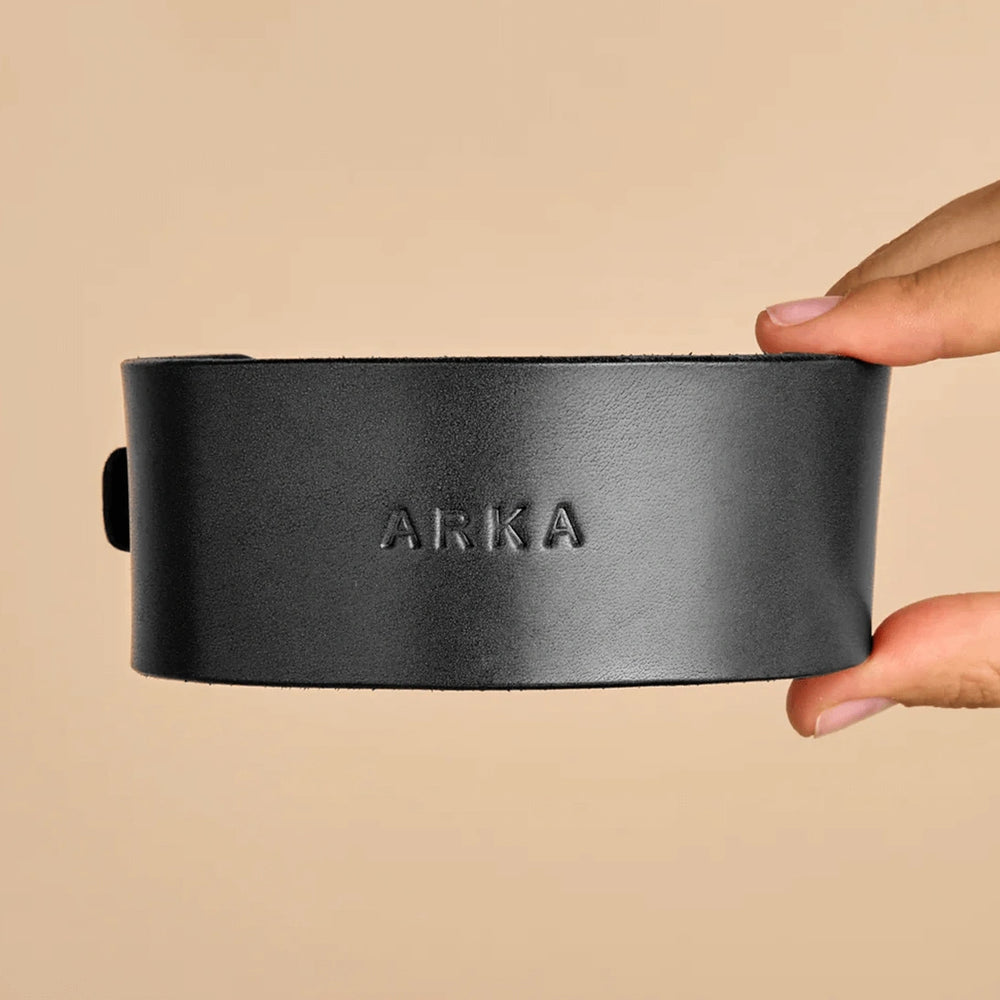
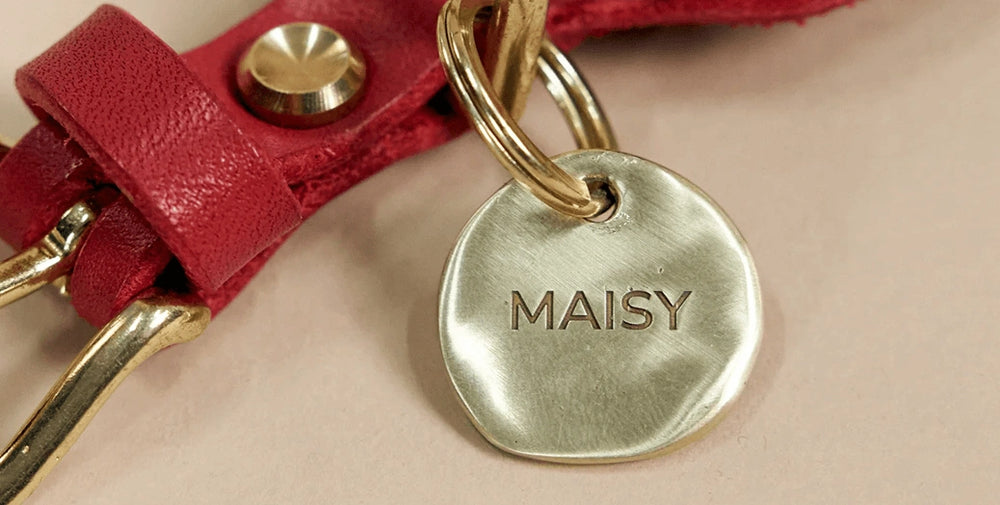
Both models share the same 4.5 cm full-grain Italian leather strap and solid brass hardware, so it comes down to finish. Aeris Wide has perforated detailing for a lighter, more breathable look. Vero Wide includes free custom name embossing if you want your dog's name on the collar itself.


For large breeds, sizes L and XL on both collars step up from 1.5 cm to 3 cm buckle and hardware width, built to handle the higher mechanical load a stronger dog puts through those points. Size L fits necks from 37 to 42 cm and size XL fits necks from 42 to 47 cm, covering most adult Labradors, German Shepherds, Rottweilers, and similarly built large breeds. Browse the full leather dog collar collection to compare the Aeris Wide and Vero Wide side by side.
Material: What the Collar Is Made From Determines How Long It Holds Up
Width solves the pressure problem. Material solves the failure problem. A wide collar made from poor-quality leather or stitched-together scraps still degrades under the sustained stress a large dog applies daily. Understanding the difference between leather grades is the single most important piece of buying knowledge most large-breed owners are missing.
Leather Grade: Full-Grain, Top-Grain, Genuine, and Bonded Are Not the Same Product
The word "leather" on a collar label tells you almost nothing about durability. What matters is which layer of the hide the leather was cut from and how it was processed.
Full-grain leather uses the outermost, strongest layer of the hide with the tightest fibre structure intact. It resists tearing, holds up against moisture and abrasion, and genuinely develops a patina and softens with use over years rather than breaking down. This is the correct material for a collar that a 35 kg dog will wear every day for years. Full-grain, vegetable-tanned leather that softens and conforms to a dog's neck over time is one of the few collar materials that improves with wear rather than degrading from it.
Top-grain leather has had the surface sanded and refinished. It is more uniform in appearance but has lost some of the structural density of true full-grain. It is a reasonable material but does not carry the same longevity under sustained load.
"Genuine leather" is a legal designation for the lower-quality real leather, typically split-grain or corrected-grain, meaning it was cut from the inner layers of the hide after the stronger outer layers were removed for other products. It is heavily finished to look premium in photographs and product listings but is far more likely to crack, peel, and delaminate under the repeated stress a large, active dog applies. Mass-market collars priced for mass-market appeal are frequently genuine leather in the technical sense. They are not built for a dog that pulls.
Bonded leather and PU leather use reconstituted scraps or polyurethane-coated synthetic surfaces. They look and feel acceptable in a store or in product photography. On a large dog worn daily, they typically delaminate and crack within a season or two. This is not a comfort argument; it is a structural argument. The fibre composition is not capable of absorbing and recovering from the mechanical stress a big dog generates. For a comprehensive breakdown of how leather grades compare in daily use, see our full-grain leather collar guide.
Tanning Method: Vegetable-Tanned vs Chrome-Tanned
Beyond grain grade, the tanning process determines chemical composition and long-term skin interaction. Most mass-market leather is chrome-tanned because chromium salts tan hides in 24 hours at industrial scale. Vegetable tanning uses plant-derived tannins and takes weeks. The resulting leather has a denser, firmer structure that stiffens and holds its form under load, and it develops a rich patina with use rather than surface-cracking.
There is also a regulatory pathway concern worth understanding at an educational level: chromium compounds used in conventional tanning are primarily chromium(III), which is considered low-risk in controlled conditions. However, under poor process controls, heat, moisture, and UV exposure can cause some chromium(III) to convert to chromium(VI), a form regulators across the EU and other jurisdictions classify as a carcinogen and restrict tightly in products that contact skin. Because of this, The Lille Björn's leather is chromium-free, vegetable-tanned Italian full-grain leather, chosen as a precautionary approach for a product worn against a dog's skin for hours every day. For context on how skin contact and collar materials interact, see our article on why single-piece leather construction is healthier for your dog's skin.
Why Single-Piece Construction Matters for Large Dogs
Most collars are assembled from multiple components: a strap of leather, a lining, stitching to hold them together, and hardware riveted or stitched in place. Every seam and stitch point is a potential failure point. Under the kind of sustained mechanical stress a large dog applies through daily pulling, the stitching at a D-ring junction or buckle attachment is typically where failure begins, not in the leather itself.
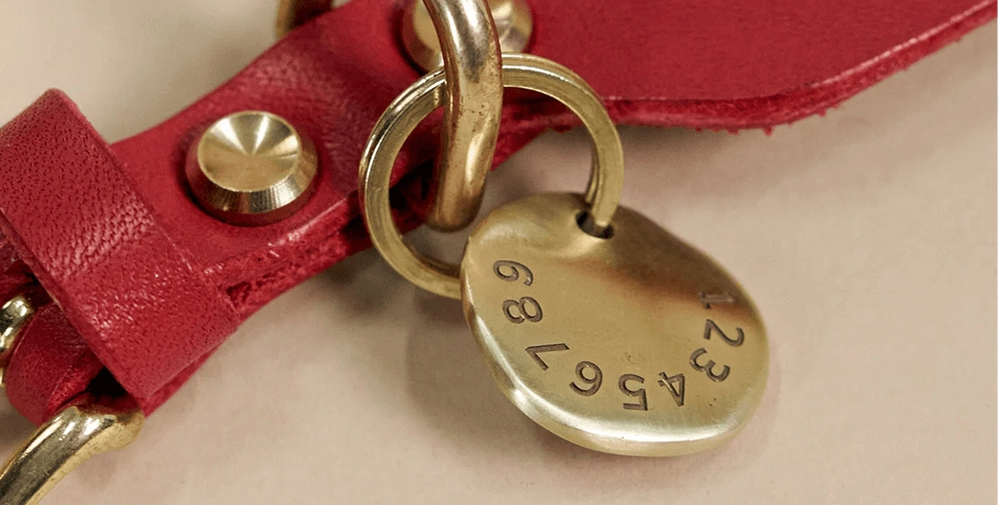
The Aeris Wide and Vero Wide collars use single-piece full-grain leather construction with no stitching anywhere in the build. The hardware is set into the single-piece strap and secured, leaving no composite layers to delaminate and no seam threads to fray under load. For a dog that pulls regularly and wears its collar for years, this structural approach removes a primary failure pathway in collar construction.

Hardware: Where Most Collars Fail Under Real Force
A collar is only as strong as its weakest metal component. For a large dog, the hardware carries the highest point-load stress in any pulling event. Most owners do not think about buckle alloy or D-ring construction until a collar fails at the wrong moment. Our detailed guide on how collar hardware is constructed and attached covers the specifics of alloy selection, D-ring geometry, and attachment methods in full.
| Hardware component | What to look for | What to avoid | Why it matters for large breeds |
|---|---|---|---|
| Buckle | Solid brass or stainless steel pin buckle with reinforced tang | Plastic side-release buckles; thin pot-metal alloy buckles | Plastic fatigues under repeated impact load; metal maintains its grip under sustained tension from a strong dog |
| D-ring | Welded solid brass D-ring at the leash attachment point | Folded or stamped D-rings; thin-gauge plated rings | A folded D-ring can open slightly under sustained leash pressure from a strong dog; a welded ring holds its geometry |
| Alloy material | Solid brass throughout: resists rust and corrosion, maintains strength over years of daily use | Plated steel or zinc alloy hardware: the plating fails, corrosion sets in, and structural integrity degrades | A large dog's collar gets wet on every rainy walk; hardware that corrodes weakens before it fails visibly |
| Hardware width at L/XL | 3 cm buckle and hardware width on sizes L and XL | Standard narrow hardware scaled up from smaller sizes | Point load at the buckle and D-ring increases with dog size and pulling force; wider hardware distributes that load across more material |
Solid brass hardware resists rust and corrosion and maintains its strength where it matters most: at the D-ring junction and buckle under daily use over years. Brass develops a natural patina over time rather than rusting or seizing, which is meaningful for a collar that gets wet regularly and stays in service for years rather than months. Browse our leather dog collar collection to compare the full Aeris Wide and Vero Wide range across colours and sizes.
Breed-Specific Sizing: German Shepherd, Labrador, Rottweiler, Boxer, Golden Retriever
Neck measurement charts give you a starting point. Breed anatomy gives you the context to interpret those measurements correctly. Two dogs with identical neck measurements can have very different collar requirements depending on neck shape, coat thickness, and build. The table below covers the five most common large-breed collar queries, with verified measurements drawn from our size guide data.
| Breed | Typical neck range | Recommended size | Notes |
|---|---|---|---|
| German Shepherd | 40 to 47 cm | L or XL | Dense double coat adds apparent bulk at the collar zone; measure neck circumference directly rather than estimating from body weight. GSDs generate real leash force; the 4.5 cm strap and solid brass hardware in sizes L and XL are the appropriate specification for this breed. |
| Labrador Retriever | 42 to 52 cm | L or XL | Labs have thick, muscular necks relative to body length; males typically measure at the higher end of this range. Short, dense coats make fit checks easier than with double-coated breeds. Labs are known pullers; the 4.5 cm wide collar with hardware sized up for sizes L and XL is the correct choice for daily walk use. |
| Rottweiler | 46 to 54 cm | XL (measure first) | Rottweilers have exceptionally thick, muscular necks; male Rotties regularly sit at the top of the XL range or beyond it. Measure before ordering. If your dog's neck exceeds 47 cm, contact us before ordering as XL covers up to 47 cm. Rottweilers generate serious leash force; solid brass hardware and single-piece full-grain leather construction are the appropriate spec for this breed. |
| Boxer | 38 to 46 cm | M or L | Boxers have shorter, thicker necks than their body weight suggests; a dog that weighs the same as a Labrador may wear a size M collar. Measure neck circumference directly. Boxers are active and can pull hard; the 4.5 cm width is appropriate even for dogs that sit in the M and L range. |
| Golden Retriever | 37 to 44 cm | L | Goldens have a medium-long neck with a dense double coat that can hide the collar against the undercoat; check that the collar sits above the dense fur layer and that the two-finger fit is verified at the skin. The 4.5 cm wide collar suits Goldens well for both pressure distribution and visual proportion on a longer neck. |
For any breed, neck measurement is more reliable than body weight as a sizing input. Two dogs at the same weight can have neck circumferences that differ by 5 cm or more depending on build and breed anatomy. Use a soft tape measure and see our neck measurement guide before ordering.
Flat Collar, Martingale, or Harness: Choosing the Right Control Approach
Large breed owners often reach for a more restrictive collar to solve a pulling problem. That approach applies more pressure to the same structure that is already under load. The better framing is: what is this piece of equipment for, and is it the right tool for that job?
The Flat Buckle Collar: The Right Default for Most Large Dogs
A flat buckle collar does three things: it carries ID tags, it accepts a leash clip, and it sits against the dog's neck during daily wear. For dogs that walk reasonably well on a leash, a well-fitted, wide flat collar handles all three without adding any mechanism that tightens, corrects, or applies concentrated pressure. This is the correct everyday collar for most large breeds. The goal is a collar that is the right width, made from the right material, and fitted correctly. Everything else is secondary.
When a Harness Is the Better Tool
For large dogs that pull consistently and with real force, a front-clip harness moves leash pressure to the chest entirely, removing the neck from the loading equation on walks. Cornell University's College of Veterinary Medicine recommends switching from neck collars to harnesses as a lifestyle adjustment for dogs with any tracheal sensitivity. A harness and a flat collar are not competing purchases; they are complementary tools for different jobs. The collar handles ID and casual wear. The harness handles leash attachment on walks where pulling is likely or consistent. For dogs that pull regularly, our leather harness collection and our Walk Kits offer matched collar and leash sets sized for large breeds.

Vero Harness + Classic Leash Walk Kit
Harness and fixed-length Classic leash cut from the same Italian leather batch. Leash width selectable. 10% off vs. buying separately. XXXS to XL, 5 colours.
Shop Walk KitFor a full breakdown of how collars and harnesses compare for different dog types, see our guide on collars vs harnesses for safety and comfort.
Martingale Collars: When They Are and Are Not Appropriate
A martingale collar tightens to a fixed point under tension rather than choking, which makes it a useful tool for dogs with a narrower head-to-neck ratio who are prone to backing out of a flat collar. This is most relevant for sighthound builds. For the majority of large breeds including German Shepherds, Labradors, Rottweilers, and Boxers, a properly fitted flat collar does not slip under normal conditions, making a martingale unnecessary. If your large-breed dog has successfully backed out of a properly fitted flat collar, a martingale or a front-clip harness used as the primary walk tool both resolve that issue. If the dog has never slipped their collar, a flat buckle collar remains the simpler and equally secure choice.
What we do not recommend regardless of a dog's size or pulling strength: prong collars, choke chains, or shock collars. The American Veterinary Society of Animal Behavior's position statements are consistent on this point: aversive tools including electronic collars, prong collars, and choke chains carry physical and psychological risks that do not diminish because a dog is large and strong. For our full reasoning, see why we recommend against prong collars and our complete ranking of every collar type from worst to best.
A Pre-Purchase Checklist for Large Breed Collar Buyers
| Factor | Minimum for 25 to 55 kg breeds | Why it matters |
|---|---|---|
| Width | 4 cm minimum; 4.5 cm preferred | Distributes pulling force across more neck surface area; reduces pressure per square centimetre at the trachea |
| Leather grade | Full-grain, vegetable-tanned, chromium-free | Resists tearing and degradation under repeated daily stress; develops a patina over years rather than cracking |
| Construction | Single-piece, no stitching | Eliminates seam failure points at D-ring and buckle junctions under sustained load |
| Buckle | Solid brass pin buckle | Does not fatigue or pop open under sudden tension from a large dog lunging at full force |
| D-ring | Welded solid brass | Holds its geometry under sustained leash pressure; a folded D-ring can deform under the load a large dog generates |
| Leather thickness | 2.5 mm minimum; 2.8 to 3 mm preferred | Thickness and width work together; a wide but thin strap still deforms under the repeated stress a large dog applies |
| Fit check | Two fingers underneath, with light resistance | Confirms secure but non-restrictive fit; too loose creates escape risk and concentrates force on a narrow contact zone when the collar shifts |
Caring for a Large Breed's Leather Collar Over Time
A wide leather collar on a large, active dog sees more mud, more rain, more physical stress, and more daily wear than a collar on a lighter, less active dog. The same material quality that makes full-grain, vegetable-tanned leather the correct choice for this application also means it responds well to basic care and can realistically last for years. A few consistent habits extend that service life significantly.
After muddy or wet walks, wipe the leather down with a damp cloth and allow the collar to dry naturally at room temperature, away from radiators or direct heat. Heat drying accelerates surface cracking in vegetable-tanned leather. For conditioning, apply a leather balm or conditioner formulated for vegetable-tanned leather every two to three months under normal use, or monthly if the collar is regularly wet. Conditioning keeps the leather supple and prevents the surface hardening that eventually leads to cracking at flex points.
Check the hardware every few weeks, particularly the D-ring and buckle attachment points. On a dog that pulls regularly, wear shows at the hardware junctions before it appears in the leather body. Re-measure your dog's neck if they are still growing, if they have had a significant weight change, or if the collar has been in service for more than a year and the fit feels different from initial purchase. For a complete leather care protocol, our leather and brass care guide covers cleaning, conditioning, and storage in full.
If you are looking for a matched set for your large breed, our Walk Kits pair the Aeris Wide collar with a Classic or Omni leash at 10% off, with all components sharing the same full-grain vegetable-tanned Italian leather and solid brass hardware.
Both kits pair the Aeris Wide collar with a leash at 10% off. Choose Classic for a traditional fixed-length lead, or Omni for a hands-free leash that adjusts between crossbody, waist, and handheld wear.


Frequently Asked Questions
What width collar is best for a large breed dog?
For dogs over 25 kg, a collar width of at least 4 cm or more is appropriate. Width determines how pulling force is distributed across the neck's surface area; a wider collar reduces the pressure applied per square centimetre at the trachea during any pulling event. A 2020 Veterinary Record study recorded a tenfold difference in neck pressure between collar types under the same applied force, confirming that width is the highest-impact variable in collar selection for large breeds.
Is leather better than nylon for a large dog that pulls?
For a dog that pulls consistently and wears its collar daily, full-grain vegetable-tanned leather is built for sustained mechanical stress in a way that standard nylon webbing is not. Full-grain leather resists tearing, does not fray at stress points, and can realistically last for years under daily wear on a large, active dog. Nylon is a reasonable choice for water-intensive use cases such as swimming or beach environments where leather's care requirements are a practical obstacle. For everyday urban and suburban use with a dog that pulls, full-grain leather with solid brass hardware is the more durable long-term choice.
What is single-piece leather construction and why does it matter?
Single-piece construction means the collar's contact strap is cut from a single piece of full-grain leather rather than assembled from a strap, a lining, and stitching to hold them together. The significance for large breeds is structural: every seam and stitch point in a composite collar is a potential failure point under sustained load. The stitching at a D-ring attachment or buckle junction is typically where multi-piece collars begin to fail under repeated stress. Single-piece construction eliminates those failure points, leaving only the leather body and the hardware as structural components.
What size collar does a German Shepherd need?
Most adult German Shepherds measure between 40 and 47 cm at the neck, fitting into size L (37 to 42 cm) or size XL (42 to 47 cm). Males typically fall in the upper part of that range; females in the lower to middle section. Because German Shepherds have a dense double coat, measure neck circumference directly with a soft tape measure against the coat rather than estimating from body weight. Given the GSD's pulling strength, a 4.5 cm wide collar with solid brass hardware sized up for sizes L and XL, proportional to the collar width, is the appropriate specification for this breed.
Can a collar alone control a large dog that pulls hard?
A flat collar handles identification, casual wear, and moderate leash pressure well. For a large dog that pulls consistently and with significant force, a front-clip harness is the more effective and more comfortable tool for walk management, as it redirects pulling force to the chest and removes the neck from the loading equation entirely. A collar and a harness work together rather than competing: the collar carries ID tags at all times, the harness handles leash attachment on walks where pulling is expected. Trying to solve a serious pulling problem through a tighter or more restrictive collar applies more pressure to the same structure that is already under load; it does not address the underlying pulling behaviour.
What collar should I avoid for a large breed?
Avoid prong collars, choke chains, and shock collars regardless of a dog's size, strength, or training history. These tools suppress pulling behaviour by applying aversive pressure or pain; they do not teach loose-leash walking and carry physical and psychological risks documented consistently in veterinary behaviour literature. Avoid narrow collars under 3 cm for daily use on dogs over 25 kg. Avoid plastic side-release buckles and folded D-rings on any collar intended for a strong puller. Avoid bonded leather or PU leather marketed as "genuine leather" from mass-market sources; the material composition is not built for sustained mechanical stress from a large, active dog.
How do I know when to replace my large dog's leather collar?
Inspect the collar every two to three weeks if your dog pulls regularly. The areas to check first are the D-ring attachment point and the buckle holes, as these carry the highest point-load stress. Surface scuffing and a deepening patina are normal signs of a well-used collar; they do not indicate failure. The signals that indicate replacement is needed: significant cracking at the flex points near the buckle or D-ring, visible stretching at hardware attachment points, or a buckle tongue that no longer holds its position securely. A well-made full-grain, vegetable-tanned leather collar with solid brass hardware that receives regular conditioning can realistically last for many years on a large, active dog.
What collar holds up for a highly active or working large dog?
For a highly active or working large dog, the collar takes constant load and movement, so hardware grade tends to matter more than width alone. A wide, full-grain, vegetable-tanned leather collar with solid cast brass hardware helps distribute force and resists corrosion at the D-ring, where plated alloys tend to fail first. Single-piece construction avoids the stitched seams that can become weak points under repeated strain.