Quick Summary
Measuring neck size is a vital component of finding the right dog collar for your pet, but it’s not the only one. Choosing the proper collar width is equally as important. How wide a collar is plays a role in your dog’s comfort levels, your control during walks and playtime on the leash, and your beloved pet’s overall safety. Reading this guide will give you valuable insight into deciding whether a wide leather dog collar is the best option, or if a collar that is narrower is the better selection for your pet. There is a detailed comparison of 2-3 cm (0.79-1.18 inch) dog collars versus 4.5 cm (1.77 inch) dog collars. There’s also plenty of details about dog breed, size, and activity level and neck length to help guide you toward the perfect collar for your dog. Let’s get started.
Why Collar Width Matters
The width of your dog’s collar impacts the distribution of weight and pressure when worn around your dog’s neck. If it’s too narrow, the collar may dig into the skin of your pet’s neck. Too wide and it can get in the way of safe, healthy movement. Finding the right width is a great way to ensure that dog collars are stylish and functional.

Benefits of Narrow Collars: 2-3 cm (0.79-1.18 inch)
Narrow collars tend to be around 2-3 cm (0.79-1.18 inch) in width, which offers several advantages. They are best for small to medium dogs who have delicate necks. Benefits include the following:
- Increased maneuverability: dogs who are high energy or who participate in agility training experience less restricted movement when they wear a narrow collar.
- Stylish appeal: genuine leather dog collars with a narrow width offer a sleek, timeless look that is ideal for small dogs and owners who enjoy a minimalist look.
- Lightweight design: without the bulk of a wider collar, a narrow choice is ideal for dogs with slender necks, including many small breeds.
Benefits of Wide Collars: 4.5 cm (1.77 inch)
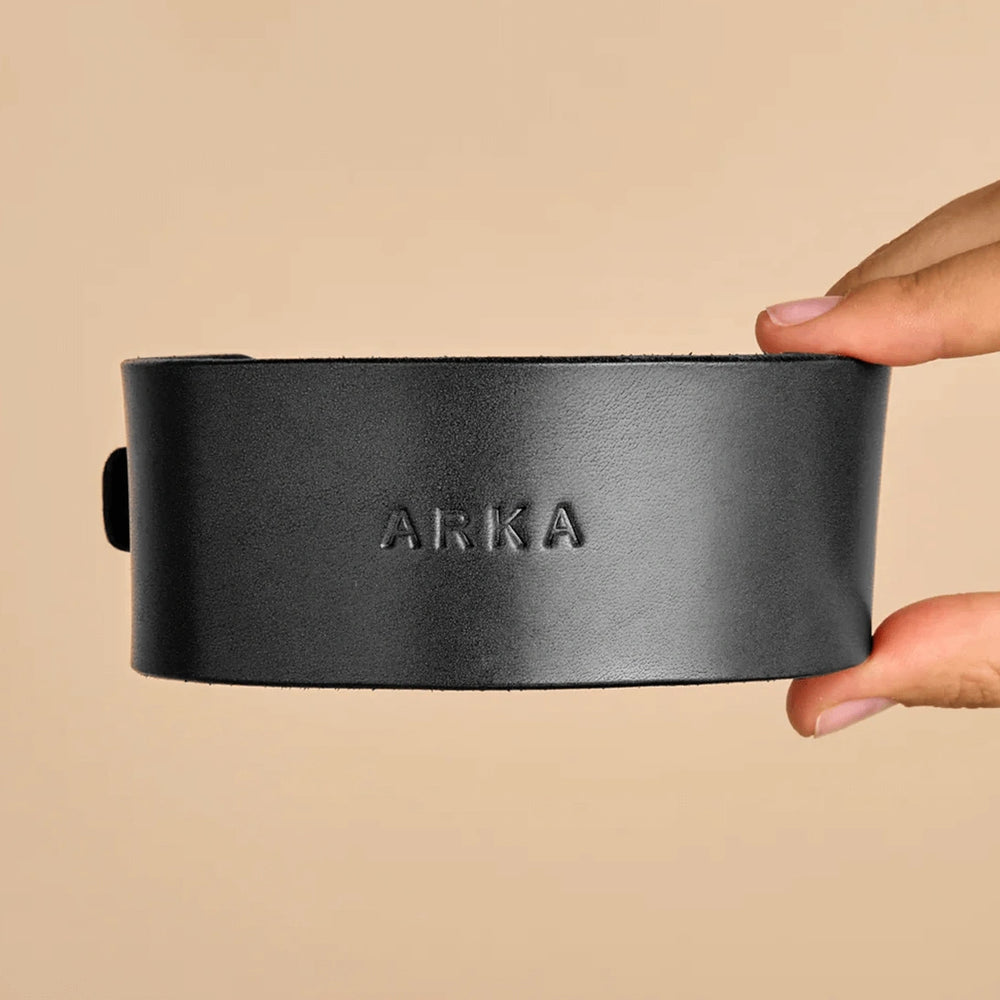
At around 4.5 cm (1.77 inch), wider leather dog collars are ideal for large, muscular dogs, as well as those who need a little bit of extra control. Advantages of choosing wide leather dog collars include the following:
- Enhanced control: you get better grip and control over your dog when they wear a wide leather dog collar, as compared to one that is narrower, making them ideal for strong, powerful dogs.
- Pressure distribution: wider collars do a better job of dispersing pressure evenly, which protects your dog’s neck and reduces the risk of an injury.
- Durability: thick, high quality dog collars, like those at The Lille Björn, can hold up to the wear and tear or very active or working dogs.
Quick-Reference Width Guide by Dog Size and Weight
If you want a fast starting point before diving into breed and build considerations, this weight-based guide gives you a reliable baseline. For the full breakdown across every weight bracket, see our complete dog collar sizing by weight guide. These are general starting points only. Always confirm collar fit based on your dog’s individual neck shape, coat, and comfort.
| Dog Weight | suggested Collar Width | Typical Breeds |
|---|---|---|
| Under 5 kg | 1–1.5 cm (0.4–0.6 in) | Chihuahua, Toy Yorkie, Maltese |
| 5–10 kg | 1.5–2 cm (0.6–0.8 in) | Miniature Dachshund, Pomeranian, Shih Tzu |
| 10–20 kg | 2–2.5 cm (0.8–1.0 in) | Beagle, Cocker Spaniel, French Bulldog |
| 20–35 kg | 2.5–3 cm (1.0–1.2 in) | Labrador, Border Collie, Boxer |
| 35–50 kg | 3.5–4.5 cm (1.4–1.8 in) | Rottweiler, German Shepherd, Weimaraner |
| 50 kg+ | 4.5 cm+ (1.8 in+) | Great Dane, Mastiff, Saint Bernard |
| Sighthounds (any weight) |
Often 4 cm or wider (1.6 in or wider) |
Greyhound, Whippet, Saluki, Italian Greyhound |
Note on Standard Poodles and Boxers: Even if their weight suggests a wider collar, individual neck shape and shoulder clearance matter. For some dogs, a 2.5–3 cm collar may be more comfortable than a very wide style.
Neck Size by Popular Breed
Breed is a useful starting point for neck size, but individual dogs vary by age, sex, and build. Always confirm with a direct measurement before ordering.
| Breed | Typical Neck Size | Suggested Width |
|---|---|---|
| Chihuahua | 20-30 cm (8-12 in) | 1-1.5 cm |
| Border Terrier | 26-36 cm (10-14 in) | 1.5-2 cm |
| French Bulldog | 30-40 cm (12-16 in) | 2-2.5 cm |
| Border Collie | 35-46 cm (14-18 in) | 2.5-3 cm |
| Bull Terrier | 35-50 cm (14-20 in) | 2.5-3 cm |
| Blue Heeler (Australian Cattle Dog) | 35-46 cm (14-18 in) | 2.5-3 cm |
| Boxer | 42-56 cm (16-22 in) | 3-3.5 cm |
| Australian Shepherd | 41-56 cm (16-22 in) | 3-3.5 cm |
| English Bulldog | 46-61 cm (18-24 in) | 3.5-4 cm |
| American Bully | 40-61 cm (16-24 in), wide variation by weight class | 3.5-4.5 cm |
Dog Collar Width vs. Thickness Explained
Dog collar width and dog collar thickness are two different measurements that work together. Width is how broad the collar band is from top to bottom, and this determines how pressure is distributed across the neck. Thickness is how many millimetres of leather or material make up the collar's cross-section, and it affects durability, stiffness, and how well the collar holds up over time. For large and working breeds, both greater width and greater thickness matter: width spreads force across the neck, while thickness ensures the collar withstands repeated tension without stretching or cracking. For small breeds, a slimmer width combined with a moderate thickness keeps the collar light without sacrificing longevity.
Factors to Consider When Choosing Collar Width
There are a variety of factors to keep in mind when you choose leather dog collars. That includes their neck size, breed, and activity level. Let’s have a closer look at each of them.
Breed-Specific Recommendations
Breeds come in all sizes and shapes, including neck circumference and neck length. They also vary in strength and activity level. Here are some examples:
- Small breeds (Chihuahua, Maltese): small dogs who have thin necks generally do better with a narrow collar. Choose lightweight real leather dog collars for optimum comfort.
- Medium breeds (Beagle, Border Collie): both 2-3 cm (0.79-1.18 inch) and 4.5 cm (1.77 inch) dog collars may work for medium breeds. Consider your dog’s neck shape and activity level when making the decision.
- Large breeds (Labrador Retriever, Rottweiler): wider collars are more suitable for large dog breeds. They offer better pressure distribution and control for you when you play or go for a walk.
- Giant breeds (Great Dane, Mastiff): for giant dog breeds, extra wide dog collars are often necessary. Choose thick leather dog collars for these strong dogs so you can rely on durability and support.

Neck Length and Shape
Collar width is also influenced by the shape and length of your pet’s neck. Consider the following:
- Dogs with long, slender necks (Greyhounds): sighthounds are a notable exception to the usual “narrow neck = narrow collar” rule. Because breeds like Greyhounds, Whippets, and Pharaoh Hounds have narrow heads and long, slender necks, they often do better with a wider collar that helps distribute pressure more evenly and reduces the chance of slipping out. Collar width should still be chosen based on the individual dog’s size and fit, but wide styles are commonly recommended for these breeds.
- Dogs with short, stocky necks (Bulldogs): wider collars are ideal for these dogs because they distribute pressure more evenly.
The Shoulder Clearance Test
For some dogs especially those with deep chests, short necks, or prominent shoulders a collar that is technically the right width can still sit too low and become uncomfortable during movement. If the collar rides down toward the shoulder area as your dog walks, or if you notice rubbing, redness, or hair loss, try moving it slightly higher on the neck or choosing a different width. This quick visual check can help catch fit problems before they turn into irritation.
Coat Type and Texture
One factor almost every collar guide overlooks: your dog's coat type directly affects how a collar width looks, sits, and performs in practice.
- Short, smooth coats (Vizsla, Weimaraner, Dalmatian, Dobermann): The collar sits directly on skin with no buffering from fur. A narrow collar concentrates friction more acutely than it would on a coated dog. Going one width tier up from the minimum recommendation may help to reduce rubbing and help prevent bare patches over time.
- Medium coats (Labrador, German Shepherd, Golden Retriever): Standard width usually work well, but check that the collar doesn't ride deep into the undercoat where it becomes difficult to inspect for fit and skin condition.
- Heavy double coats (Samoyed, Bernese Mountain Dog, Husky, Chow Chow): A narrow collar can disappear entirely into the coat, reducing its structural security and making it almost impossible to check the two-finger fit. A wider collar may be easier to see, inspect and adjust, and fit securely through dense fur.
- Delicate or sparse coats (sighthounds, Italian Greyhound, Chinese Crested): These dogs have very little natural padding between collar and skin. Prioritise a wider collar in a soft, supple leather that will not abrade bare skin. Padding along the inner edge of the collar is worth seeking out for these breeds specifically.
Activity Level
Lifestyle also plays a big role in the ideal width of your dog’s collar. Here are some factors to keep in mind:
- Working dogs (German Shepherds, Boxers): provide extra durability and support for working breeds with a wider collar width.
- Active dogs (Border Collie, Australian Shepherd): high energy dogs tend to do better with a narrow collar, which allows for running, play and other activities that need a certain degree of agility.

Choosing the Right Collar Width
Use these simple steps to ensure that you get the correct width for your dog’s collar.
Step 1: Measure Your Dog’s Neck
The first thing to do is measure the circumference of your pet’s neck. Use a flexible measuring tape for the most accurate number.
Step 2: Evaluate Your Dog’s Build
Consider your pet’s build and neck length. Dogs with slender necks will likely do better with a narrow collar. On the other hand, breeds with thick, muscular necks are better suited to wide leather dog collars.
Step 3: Assess Your Dog’s Needs
Think about when and where your dog will wear its collar.
- A lightweight 2-3 cm (0.79-1.18 inch) genuine leather dog collar is likely sufficient for everyday wear.
- A thicker 4.5 cm (1.77 inch) wide leather dog collar is a better choice for taking a walk or training, particularly when paired with a dog leash or dog lead, offering you more control.
Step 4: Test the Fit
You need to pay careful attention to how the dog collar fits. Make any necessary adjustments. Use the collar with a dog leash or dog harness during a walk to test its fit and assess for comfort and function.
The Two-Finger Rule: The Universal Fit Check
Regardless of which width you choose, the two-finger rule is a useful quick check for correct collar fit. Once the collar is on your dog, slide two fingers held flat, not pinched together between the collar and your dog's neck. You should be able to do this without forcing, but the collar shouldn't be loose enough to shift freely around the neck.
- Can't fit two fingers: the collar is too tight and risk of restriction and skin irritation
- Fingers slide in easily but collar gaps from neck: the collar is too loose and escape risk, especially for sighthounds
- Two fingers fit with light resistance: correct fit
Repeat this check every few weeks, especially for growing puppies or dogs that gain or lose weight seasonally.
A Note on Puppies and Growing Dogs
If you are choosing a collar for a puppy, bear in mind that their neck circumference can change significantly in a matter of weeks. Prioritise an adjustable collar with a wide buckle range rather than a fixed-length design. Check the two-finger fit every two to three weeks during the first six months, and be prepared to size up. Width-wise, start with a narrower collar proportional to their current size then you can move to a wider width as they grow into their adult build.
Comparing 3 cm and 4.5 cm Collars
| Feature | 2-3 cm (0.79-1.18 inch) Collars | 4.5 cm (1.77 inch) Collars |
|---|---|---|
| Ideal for | Small to medium dogs | Large to giant dogs |
| Weight | Flexible and lightweight | Heavier and more supportive |
| Pressure distribution | Moderate | Excellent |
| Durability | Light to moderate wear | Heavy duty and high strength needs |
| Style | Sleek and minimal | Bold and commanding |
| Suitability for Activity | High energy and agility | Walking, training, working |
Benefits of Leather Collars for Any Width
When you’re making the decision between a narrow dog collar or a wide one, consider the material quality, in addition to the width. Leather dog collars should be versatile and durable for all sizes and breeds of dogs.
Why Choose Leather Dog Collars?
- Style: premium leather dog collars are timeless and elegant and ideal for virtually any dog.
- Durability: high quality leather dog collars, both narrow and wide, hold up to daily wear and tear and are great for active or strong dogs.
- Versatility: leather dog collars are fantastic on their own, but also pair well with matching dog harnesses and dog leashes, allowing you to create a stylish set for your pet.
- Comfort: when you choose a soft and sturdy real leather dog collar, you give your pet comfort without worrying about strength or durability.
Wide Leather Collars for Large Breeds
Wide leather dog collars make a great choice for large breeds, as well as those who are powerful. A wider width cuts down on neck strain and makes walking your dog much more manageable. For a deeper dive into width, material, and control for big dogs specifically, see our large breed collar buying guide.
Narrow Leather Collars for Smaller Breeds
A genuine leather dog collar with a narrow width makes sense if your dog is small to medium in size, or has a delicate neck. A narrow dog collar is more lightweight and offers comfort and doesn’t restrict movement.

Pairing Collar Width with Accessories
Your dog’s collar is just one accessory they need. You should also choose a matching harness and leash or lead that allows you to walk your dog and train them. Choosing complementary items ensures optimum comfort and function, and also lets you create a cohesive look when you take your dog out and about. Here’s some additional information:
- Dog harnesses: a dog harness with a dog collar is an efficient way to control pulling without being concerned that your dog is straining its neck.
- Dog leashes and leads: a sturdy dog leash gives you more control on a walk and can be used with either a wide or narrow dog collar.
Frequently Asked Questions
How wide should a dog collar be?
Dog collar width should match your dog's size and neck build. As a general guide: dogs under 10 kg suit 1.5–2 cm; dogs from 10–25 kg suit 2–2.5 cm; dogs over 25 kg suit 3.5–4.5 cm. Sighthound breeds (Greyhounds, Whippets) are the key exception — they need a minimum of 4 cm regardless of body weight, because their slender, sensitive necks require wider pressure distribution and their narrow heads make escape from a standard collar a real risk.
Are wide collars better for dogs?
Wide collars are better for large breeds, strong pullers, and sighthounds because they distribute leash pressure across more of the neck, reducing the risk of tracheal injury. Narrow collars are better for small, lightweight breeds where a wide band would be disproportionate and add unnecessary weight. The best collar width is always the one proportional to your individual dog's neck size and build.
What is the difference between dog collar width and thickness?
Width is the measurement from the top to the bottom edge of the collar band — it determines how pressure is distributed across the neck. Thickness is how deep the collar material is from front to back, and it determines durability and structural integrity under load. A wide, thin collar can still be fragile. A narrow, thick collar is durable but concentrates pressure. For large and working breeds, both greater width and greater thickness are important for safety and longevity.
Should a Greyhound wear a wide or narrow collar?
Always wide. Despite their slender necks, Greyhounds and other sighthounds need wider collars because their larynx and cervical vertebrae are particularly vulnerable to pressure from a narrow band. They also have heads narrower than their necks, meaning any standard collar is an escape risk. A correctly fitted wide collar or a purpose-designed martingale is the safe choice for all sighthound breeds.
Does coat type affect which collar width to choose?
Yes. Dogs with thick double coats need a wider collar that stays visible and secure above the fur a narrow collar can disappear into the coat, making fit checks impossible. Dogs with short or sparse coats have less natural padding between collar and skin, so a softer, wider leather surface reduces friction and the risk of bare patches or abrasion. Coat type is a practical factor that every collar width guide overlooks but every owner notices.
What is the best collar width for a medium dog?
Medium dogs (10–25 kg) including Labradors, Springer Spaniels, Border Collies, and Beagles — generally suit a collar width of 2–2.5 cm. This range is wide enough to distribute leash pressure comfortably during active walks without the bulk of a large-breed collar. Active or pulling-prone medium dogs should lean toward 2.5 cm; lighter, calmer dogs sit comfortably at 2 cm.
Conclusion
Choosing the right collar width comes down to five factors working together: your dog's weight and size, their neck shape (particularly relevant for sighthounds and short-necked breeds), their coat type, their activity level, and the two-finger fit test as your final confirmation. Narrow collars of 1.5–2.5 cm suit small and agile dogs. A width of 2.5–3 cm covers the majority of medium breeds. Wide collars at 4–4.5 cm are the right choice for large and giant breeds and for sighthounds of any size.
Whatever width you land on, pairing it with a high-quality leather collar gives your dog the combination of softness, durability, and natural flex that synthetic materials simply can't match. Leather moulds gently to the neck over time, reducing friction and improving comfort with every wear. When paired with a matching leather leash or harness, you create a walk kit that is as beautiful as it is considered built for your dog's individual needs, not just what happened to be on the shelf.