Ripple Dog Name Tag - Gift
Free
$0.00

Product added to cart
To clean leather dog accessories, wipe first with a dry cloth to remove loose dirt, then clean with a damp cloth and a small amount of pH-neutral soap using small circular motions. Wipe off soap residue with a second clean damp cloth and air dry fully before conditioning. Brass hardware needs only a soft dry cloth for routine upkeep. Never soak, machine wash, or dry with direct heat.
About This Guide
Full-grain, vegetable-tanned leather and solid brass hardware both age well when maintained correctly and deteriorate quickly when they are not. This guide covers cleaning, conditioning, odour removal, mold treatment, storage, and how long properly maintained pieces can realistically last. It applies to all leather and brass products from The Lille Bjorn: collars, harnesses, leashes, walk kits, bundles, and brass nametags.
Care Instructions
Leather and Brass Accessory Care
|
Clean Damp cloth, mild pH-neutral soap. Every 2 to 3 weeks. |
|
Condition Conditioner made for vegetable-tanned leather. Every 4 to 6 weeks. |
|
Dry Air dry only. Keep away from heat and direct sun. |
|
Brass Soft, dry cloth. Patina is normal, not damage. |
| 1 | Wipe away loose dirt. Dry cloth, before any soap or water touches the piece. Removes grit that would otherwise scratch the leather during cleaning. |
| 2 | Clean. Damp cloth, lukewarm water, a small amount of mild pH-neutral soap. Small circular motions. On collars and leashes, focus on the buckle area and keeper loop, where dirt and skin oils build up fastest. On harnesses, pay attention to the chest plate and girth strap underside. |
| 3 | Wipe and dry. Second clean damp cloth, water only, to remove soap residue. Air dry away from sunlight and heating vents. |
| 4 | Condition. Once fully dry, work in a small amount of conditioner made for vegetable-tanned leather. On collars, focus on the neck-wrap section and the area near the buckle, where the leather flexes most. On harnesses, pay particular attention to the junction points between straps, where repeated flexion is highest. |
| Use Pattern | Cleaning Frequency | Conditioning Frequency |
|---|---|---|
| Everyday wear, daily walks | Every 2 to 3 weeks | Every 4 to 6 weeks |
| Occasional wear, indoor dog | Every 6 to 8 weeks | Every 2 to 3 months |
| Active dog, frequent mud or water | After each muddy or wet outing | Every 3 to 4 weeks |
| To keep the aged look: soft, dry cloth. A barely damp cloth for fingerprints or light dirt. Patina is the same protective layer that gives solid brass its corrosion resistance, not a flaw. |
| To restore shine: jewelry-grade brass polish, not abrasive household metal polish. Apply sparingly, small circular motion, keep residue away from the leather. |
Full-grain, vegetable-tanned leather is cut from the top layer of the hide, the densest, most tightly packed fiber structure available. Those fibers hold natural oils that keep the leather flexible; lose them to heat, sun, or repeated water exposure, and the leather stiffens, then cracks. Cleaning removes surface dirt; conditioning replaces the oil lost from inside the fiber. Do them out of order, and dirt gets sealed in instead of lifted out.
Brass works on a different mechanism entirely. It tarnishes and develops a patina: a thin oxide layer that forms on the surface when exposed to air. That layer blocks moisture and oxygen from reaching the metal underneath, so corrosion stops at the surface instead of spreading. Plated steel hardware does not have this built in, since the protective layer is just a coating over a different, less corrosion-resistant metal; once that coating wears through, the steel underneath rusts freely.
On a cognac Vero Classic worn daily for around eight months: noticeable darkening and burnishing at the buckle and keeper loop, the two points that see the most friction. The patina tracks those exact contact points rather than spreading evenly, and there is no cracking from normal water exposure over that period. Leather grade determines how this aging process looks; lower-grade leather does not have the dense fiber structure to age the same way. Nylon webbing, by comparison, does not develop a patina at all, it just fades and frays in the same spots.
Real Patina, Documented Over Eight Months
The Vero Classic collar shown below documents this process directly. Worn daily for approximately 8 months, including regular outdoor walks with occasional exposure to rain and water, the leather has darkened and developed visible burnishing at the buckle and keeper loop, the two points that see the most friction and flex with every wear. The body of the collar away from these contact points shows comparatively less change, illustrating how patina develops unevenly and tracks directly with where the leather actually works. The collar shows no cracking, flaking, or surface damage from the water exposure it encountered during normal use.

NEW, UNWORN

EIGHT MONTHS OF DAILY WEAR
The Lille Bjorn Vero Classic collar: new in box (first) and after approximately eight months of daily wear (second), including regular outdoor walks with occasional water exposure. Darkening and burnishing are most visible at the buckle and keeper loop, the highest-friction points on the collar.
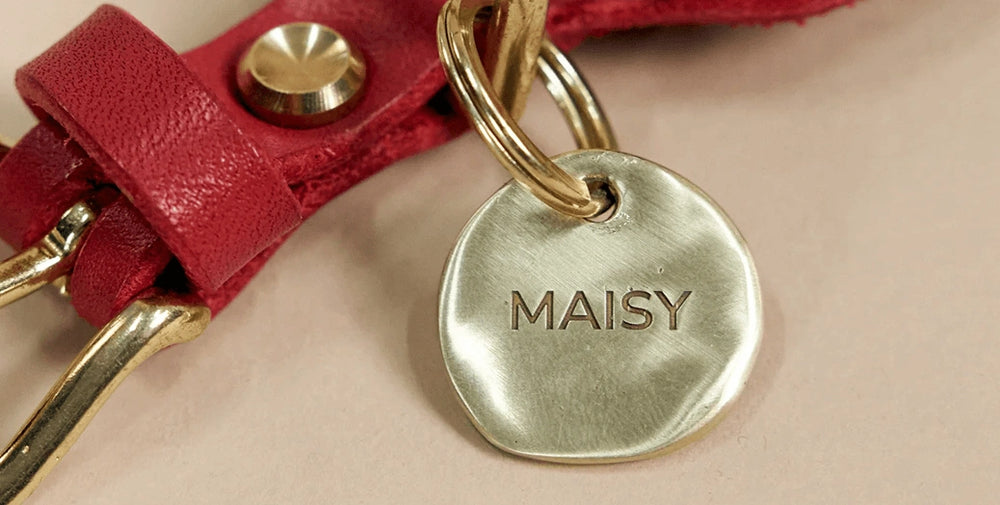
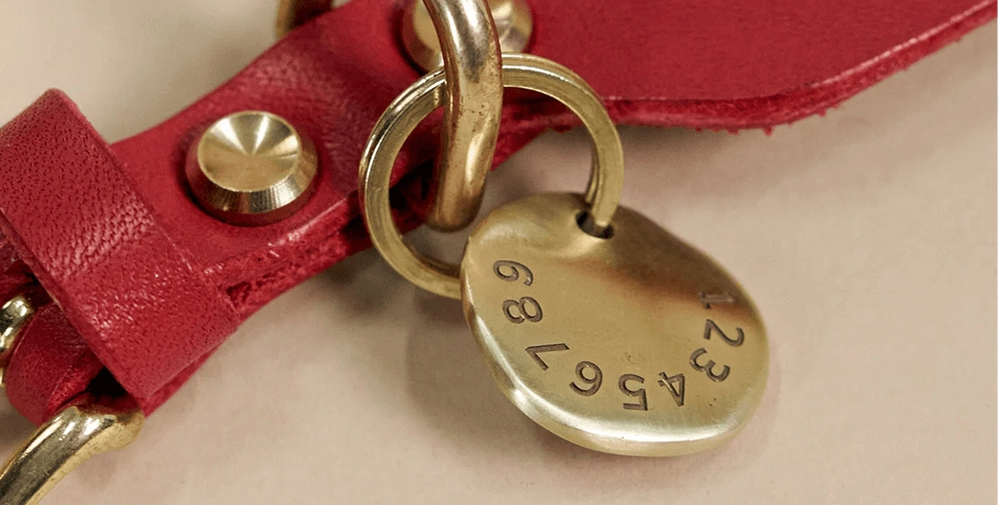
Clean a Pebble or Ripple brass nametag the same way as any other brass hardware: soft dry cloth for routine upkeep, a barely damp cloth for fingerprints, and jewelry-grade brass polish only if you want to remove the patina entirely. The recycled brass construction means the nametag develops the same protective oxide layer as the collar hardware, so routine buffing is all it needs to stay looking intentional rather than neglected.
| Avoid | Why It Damages Leather or Brass | Use Instead |
|---|---|---|
| Alcohol or ammonia-based cleaners | Strip natural oils from leather and can dull brass | Mild, pH-neutral soap |
| Soaking the leather | Saturates leather fibers, leading to stiffening and warping as it dries | A damp, not wet, cloth |
| Direct heat or sunlight to dry | Pulls moisture out of leather faster than it can be replaced, causing cracking | Air drying away from vents and windows |
| Abrasive household metal polish on brass | Scratches the surface and strips patina unevenly | Jewelry-grade brass polish, used sparingly |
| Conditioning a dirty piece | Seals dirt and oils into the leather instead of nourishing the fiber | Clean first, condition only once fully dry |
| Baby wipes or wet wipes | Contain alcohol, fragrance, or surfactants that degrade the leather surface with repeated use | A plain damp cloth with no additives |
| Vinegar or baking soda on leather | Both alter the leather's pH balance, weakening the fiber structure and accelerating drying | Mild, pH-neutral soap only |
The safest household option is a small amount of mild, pH-neutral dish soap diluted in lukewarm water. Unscented castile soap diluted at roughly 1 part soap to 10 parts water also works well. Both clean effectively without stripping the natural oils from the leather's fiber structure.
Safe to use
Do not use
When testing any cleaner for the first time, apply it to a small hidden section first, such as the underside of the leather near a hole, and wait 10 to 15 minutes before cleaning the full piece.
Odour in leather comes from two sources: the buildup of skin oils and bacteria from daily contact with your dog's coat and skin, and the breakdown of those organic compounds inside the leather's fiber structure over time. A piece that smells is one that has not been cleaned frequently enough for how actively it is used.
Start by removing the piece and airing it out for 24 to 48 hours in a well-ventilated spot away from direct sun. This resolves light, surface-level odour on its own. For persistent smells, clean using the four-step method above, paying close attention to high-contact zones: the buckle area and keeper loop on collars, the chest plate underside on harnesses, and the handle loop on leashes. Once fully dry, apply a thin layer of vegetable-tanned leather conditioner. Replenishing the natural oils inside the fiber neutralises the organic compounds causing the smell, rather than masking it.
Avoid spraying with deodorizers, perfume, or baking soda. Alcohol-based sprays dry the leather. Baking soda in direct contact with leather alters its pH. Fragrance covers the smell temporarily but does not address what is causing it. If odour returns quickly after cleaning, the cleaning schedule needs to be more frequent going forward.
Mold appears as white, grey, or green fuzzy spots and forms when leather is stored in a damp or poorly ventilated space, or when a wet piece is put away before fully drying. The earlier it is treated, the less likely it is to leave a permanent surface mark.
Mold removal: step by step
Light surface mold treated promptly usually leaves no lasting mark. Deep staining that has penetrated the grain may not fully disappear, but it does not compromise structural integrity if the leather remains supple after conditioning. Storing pieces in a breathable cotton bag or hanging them openly prevents recurrence.
Storage has a direct effect on how long leather holds its shape, suppleness, and surface finish. The two main risks during storage are moisture and compression. A piece stored damp in a sealed space develops mold. A collar or leash coiled tightly for weeks develops permanent creases along the grain.
Storage: do this
Storage: avoid this
A full-grain, vegetable-tanned leather collar, harness, or leash with solid brass hardware, cleaned and conditioned on a regular schedule, can realistically last for many years of daily use. The tightly packed fiber structure of full-grain leather resists surface breakdown far better than split-grain or "genuine leather" alternatives, which use lower layers of the hide and are more prone to cracking, peeling, and delaminating under daily stress.
The realistic lifespan depends on three things: how actively the piece is used, how consistently it is cleaned and conditioned, and whether it is removed when not needed. A harness worn by a high-energy dog through mud and water every day will naturally wear faster than a collar on an indoor dog used for short walks. Both can last for years with correct maintenance.
A well-maintained full-grain leather piece does not peel because the grain layer is intact and continuous. It does not fray because the fiber structure is dense throughout. What it does do is develop a rich, burnished patina that tracks exactly how and where it has been used. This is one of the few collar and harness materials that genuinely improves in character with time rather than simply degrading. Explore our leather dog collars, leather harnesses, and leather leashes if you are choosing your next piece.
Remove the piece from your dog. Wipe with a dry cloth to remove loose dirt. Clean with a damp cloth and a small amount of mild pH-neutral soap using small circular motions, focusing on the buckle area, keeper loop, and any zones with heavy skin contact. Wipe off soap residue with a second clean damp cloth. Air dry fully away from heat and sun, then condition with a product made for vegetable-tanned leather.
No. Machine washing saturates leather fibers completely, causing them to swell, then stiffen and warp as they dry. It also corrodes plated hardware and can cause solid brass to tarnish unevenly. All leather accessories should be cleaned by hand using a damp cloth and mild soap only.
Every 2 to 3 weeks for daily-wear pieces. Every 6 to 8 weeks for occasional or indoor use. After any muddy or wet outing, clean promptly rather than waiting for the next scheduled clean. Condition every 4 to 6 weeks for daily-wear items, and every 2 to 3 months for pieces used less frequently.
Use a conditioner specifically formulated for vegetable-tanned or full-grain leather. Avoid products containing petroleum distillates, silicone, or heavy wax formulations, which can clog the leather's pores and reduce breathability. Apply a small amount to fully dried leather using a soft cloth, working it in using small circular motions. Let it absorb before your dog wears the piece again.
Wipe solid brass hardware with a soft, dry cloth for routine upkeep. A barely damp cloth is sufficient for fingerprints or light dirt. To restore shine, apply jewelry-grade brass polish sparingly using small circular motions, keeping all residue away from the leather. Avoid abrasive household metal polishes, which scratch the surface and strip patina unevenly.
Darkening is patina: a natural change caused by friction, absorbed skin oils, and exposure to air and light. On full-grain, vegetable-tanned leather, this is the fiber structure compacting and the surface burnishing, not damage. Patina develops most visibly at the highest-friction points, such as the buckle and keeper loop on collars, and the chest plate junction on harnesses.
Removing leather accessories at night extends their lifespan by reducing continuous friction and moisture from body heat. It gives the leather time to breathe and the brass hardware a chance to stay dry between wears. For dogs in a safe indoor environment, overnight removal is a simple habit that noticeably slows surface wear over time.
Air the piece out for 24 to 48 hours in a ventilated spot away from sun. If the odour persists, clean with a damp cloth and mild pH-neutral soap, then condition once fully dry. Replenishing the natural oils in the leather's fiber neutralises the organic compounds causing the smell. Avoid deodorizer sprays, which mask odour temporarily but do not address the underlying cause.