Quick Summary
A personalized leather dog collar is one of the most reliable forms of dog identification available: your dog's name sits permanently pressed into the collar itself, visible from a distance, designed to outlast any printed label or heat-transfer alternative, and far less likely to fall off than a tag on a split ring. The difference between lettering that stays legible for one year and lettering that stays legible for a decade comes down to two things: the personalization method used and the quality of the leather underneath it.
This guide covers the decisions that actually matter: how each personalization method works, why full-grain vegetable-tanned leather is built for personalization that has to last, how to size a personalized collar correctly, what information to include in the embossed field, and how to care for a personalized leather collar so it remains sharp and readable for the life of your dog.

Why a Personalized Collar and an ID Tag Work Better Together
A personalized collar and a traditional tag each solve a different part of the identification problem. Tags carry detailed contact information but sit under the chin, an area that's harder to spot at a glance and harder to reach on a dog that's nervous, moving, or already in motion toward a stranger. A collar with your dog's name embossed across the top strap solves that visibility gap: it's readable the instant anyone sees the dog, no handling required.
Tags also serve a function a collar can't: they're easy to swap between collars, easy to replace on their own if lost, and can carry more text than an embossed strap has room for. That's the reason the two forms of ID work best together, each covering ground the other doesn't.
The ASPCA's pet identification guidance describes collar-based ID as likely the fastest route to returning a lost pet home, precisely because it can be read by any person who finds the animal, with no scanner or database lookup required. Collar-based identification works because it requires zero cooperation from the dog and zero effort from the person who finds them.
For dogs who are shy, reactive, or slow to warm up to people, this distinction matters even more during a recovery effort. Someone trying to help a lost dog can use the embossed name immediately to engage the animal, which can help calm a nervous dog and make securing them significantly easier. It also signals immediately that the dog has an owner and a home, which changes how the finder responds and how quickly they act.
Personalization Methods Compared: Embossing, Engraving, Embroidery, and Laser
The four main personalization methods used on dog collars each behave differently over time, and the base material determines which method is even viable. Understanding what each technique actually does to the collar material is the only way to evaluate which will serve you for years versus months.
| Method | Best Base Material | Longevity | Key Weakness |
|---|---|---|---|
| Hand Embossing | Full-grain vegetable-tanned leather | Exceptional: letters deepen and darken as leather develops patina over years | Requires high-quality leather base to hold definition; does not work on synthetic materials |
| Laser Engraving | Leather, metal nameplate | Good on metal; variable on leather depending on tanning method and surface finish | Burns the surface rather than compressing fiber; can dry out leather around the mark over time |
| Embroidery | Nylon webbing, canvas | Moderate: thread holds color well initially but frays at contact points after heavy use | Thread sits above the collar surface and is vulnerable to abrasion; dirt embeds in fiber gaps |
| Printed / Heat Transfer | Nylon, polyester | Poor: fades within 6-18 months depending on UV exposure and washing frequency | Surface application only; no bonding with base material; degrades fastest of all methods |
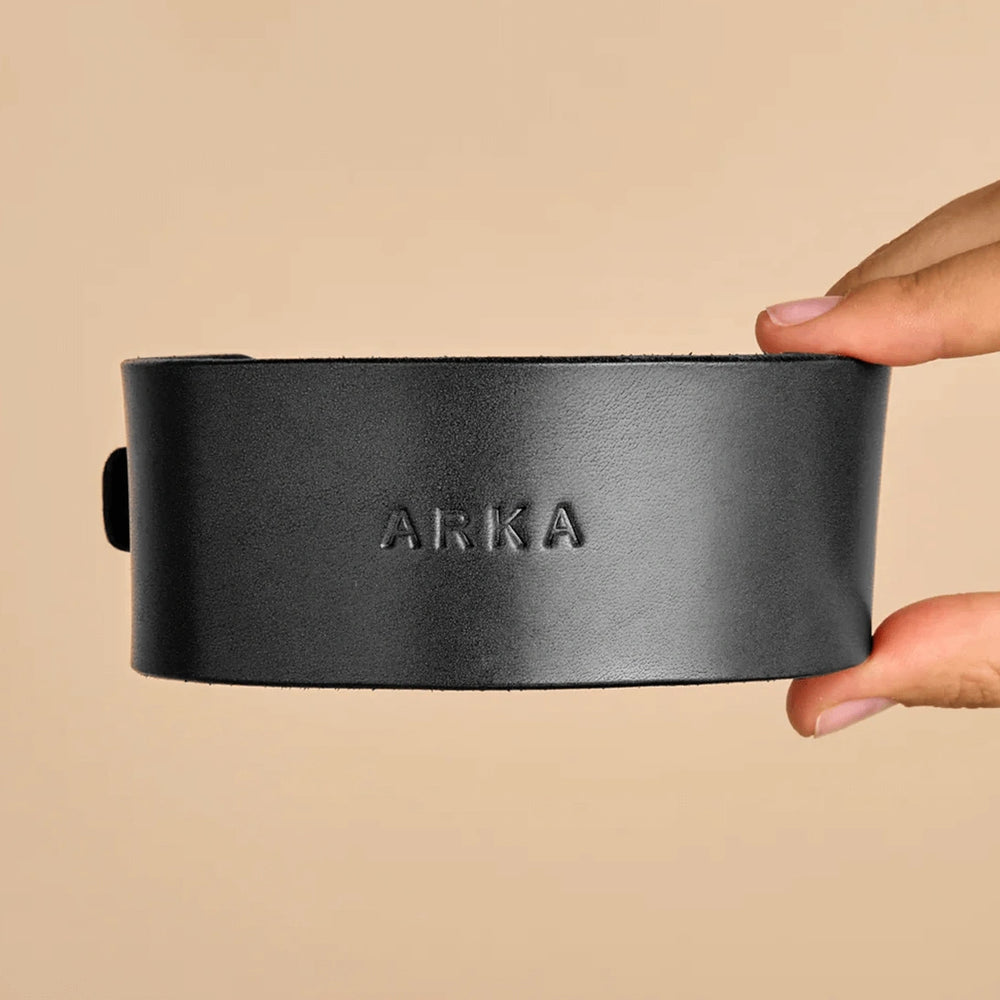
Hand embossing on vegetable-tanned leather is in a category of its own. The process uses shaped metal dies pressed into the dampened leather surface under controlled pressure, physically compressing and realigning the fiber structure of the hide itself. The letter is not applied to the surface. It becomes part of the leather's structure. As the collar ages and the leather darkens through natural oils, handling, and patina development, the compressed areas of the embossed letters become more visually distinct, not less. A well-embossed personalized leather collar at five years of age is more legible than it was on day one.
This is the direct opposite of what happens with embroidered thread on nylon webbing, where the raised fibers that carry the color are the first thing to abrade, snag, and lose contrast with daily use.

Why Full-Grain Vegetable-Tanned Leather Is Built for Personalization That Lasts
A personalized collar that stays sharp and legible for years starts with what sits underneath the lettering. Most owners feel the difference within weeks of daily wear: a collar that holds its structure, softens with use, and develops a rich surface character that looks more intentional with time, rather than cracking and peeling toward the end of its first year. The hidden problem is that most mass-market personalized collars are cut from chrome-tanned or corrected-grain leather that looks premium in product photos but is far more likely to lose embossing definition under regular daily use. Understanding the three material pillars that determine longevity is the most useful thing you can know before ordering a custom piece.
Leather grade: full-grain versus generic "genuine." Full-grain leather retains the complete outer surface of the hide, which contains the tightest, most interlocked fiber structure of any layer. When a metal embossing die is pressed into full-grain leather, the fibers compact cleanly and hold the impression with precision. "Genuine leather" and corrected-grain alternatives use split hides or buffed surfaces where the tight fiber layer has been removed: the resulting material accepts embossing poorly, producing shallow impressions that are far more likely to flatten and lose definition over the first year of regular wear.
Tanning method: vegetable-tanned versus chrome-tanned. Vegetable tanning uses natural plant-based tannins, derived from tree bark and other botanical sources, rather than chromium salts. This produces a firmer, denser hide that responds to embossing pressure by compressing cleanly, resulting in letters with crisp walls and a defined floor. Chrome-tanned leathers, which make up the majority of mass-market dog collar leather, are processed for fast-production softness at the cost of fiber density. Under regular daily wear, embossing on chrome-tanned leather commonly begins to lose definition far sooner than full-grain vegetable-tanned alternatives. If you want to minimise your dog's exposure to heavy-metal tanning compounds, chromium-free vegetable-tanned full-grain leather is the smarter long-term choice. You can read more about the health implications of different tanning processes in our guide to collar materials and skin allergy prevention in dogs.
Hardware: solid brass versus plated alloys. A personalized collar is a long-term piece, and the hardware must match that timeline. Solid brass resists rust and corrosion far more effectively than zinc alloy or plated steel alternatives, which are far more likely to show surface corrosion within the first year of daily exposure to moisture, sweat, and outdoor conditions. The patina solid brass develops is controlled and predictable: a warm, darkening tarnish that pairs naturally with the deepening color of aged vegetable-tanned leather. The two materials age in parallel, which is covered in more detail in the section below.
The realistic outcome of choosing correctly across all three pillars: a collar designed to last for years, not months, built to outlive the average replacement cycle of cheaper alternatives, free of the chromium compounds, and looking more characterful with each passing season.
Real Patina, Documented Over EIGHT Months
The Vero Classic collar shown below documents this process directly. Worn daily for approximately 8 months, including regular outdoor walks with occasional exposure to rain and water, the leather has darkened and developed visible burnishing at the buckle and keeper loop, the two points that see the most friction and flex with every wear. The body of the collar away from these contact points shows comparatively less change, illustrating how patina develops unevenly and tracks directly with where the leather actually works. The collar shows no cracking, flaking, or surface damage from the water exposure it encountered during normal use.

NEW, UNWORN

EIGHT MONTHS OF DAILY WEAR
The Lille Björn Vero Classic collar: new in box (first) and after approximately eight months of daily wear (second), including regular outdoor walks with occasional water exposure. Darkening and burnishing are most visible at the buckle and keeper loop, the highest-friction points on the collar.

How to Choose the Right Width for a Personalized Leather Collar
Collar width is determined by your dog's neck size, breed, and build, the same considerations that apply to any leather collar, personalized or not. A wider strap distributes pressure from pulling across more surface area, which matters for dogs with thicker necks, strong pullers, and working breeds, as well as dogs with long, slender necks where pressure concentrates more narrowly on a thin band. A narrower strap suits smaller dogs with proportionate, compact necks, where a wide collar would sit disproportionately and add unnecessary weight.
Sighthounds are the clearest example of the long-slender-neck case. Whippets, Greyhounds, and Italian Greyhounds have head circumferences that are often close to or smaller than their neck circumference, which means a dog can back out of a standard collar entirely by pulling backward and retracting its head through the loop. A wider collar reduces this risk, but only if it's fitted correctly so it tightens to a safe, non-slip size under tension. The wider strap then has less room for the head to slip through, and it spreads pressure more evenly across a neck that's more sensitive to concentrated force than a typical breed's. Our guide to choosing the right collar width by dog breed covers breed-specific guidance in detail, and our dedicated guide to the best collars for long-necked sighthound breeds goes further for owners of Whippets, Greyhounds, and Pharaoh Hounds specifically.
| Breed or Build |
Recommended Width |
Why It Fits |
|---|---|---|
| Toy and small breeds (Chihuahuas, dachshunds, small terriers) |
Classic (2 cm) |
Matches slender, compact neck proportions; lighter weight avoids overwhelming a small frame |
| Medium dogs with proportionate necks | Classic (2-3 cm) | Comfortable everyday fit without unnecessary bulk |
| Large or strong-pulling breeds | Wide (4.5 cm) | Distributes leash pressure across more surface area for dogs that pull |
| Sighthounds (Whippets, Greyhounds, Italian Greyhounds) |
Wide (4.5 cm) |
Reduces backing-out risk and spreads pressure across a neck that's more sensitive to concentrated force |
Sizing a Personalized Collar Correctly: Why You Cannot Guess
A standard dog collar is forgiving on sizing because you can exchange it if the fit is wrong. A personalized leather collar is made to order, which means the embossing is completed before the collar ships. Returning or exchanging a custom piece is either unavailable or requires a full reorder. Getting the measurement right the first time is not optional.
The correct method is to use a soft fabric tape measure, wrap it around the base of your dog's neck (where the collar sits naturally), and note the circumference with one or two fingers slipped underneath the tape to replicate the clearance a well-fitted collar should have. Do not measure a collar your dog currently wears and add to that figure. Measure the neck directly.
For leather specifically, account for a break-in period. Full-grain vegetable-tanned leather is stiffer on arrival than it will be after two to four weeks of daily wear. During this period the leather softens slightly and conforms to the neck. If your measurement sits at the upper end of a size range, order the size up. Most owners find the fit excellent once the leather has settled. Ordering too small on a personalized collar that cannot be returned is the most common mistake buyers can make.
Our detailed collar sizing guide walks through the exact measurement process with breed-specific notes, and our guide on the most common collar-buying mistake covers exactly why under-sizing a custom piece is such a costly error.

What to Emboss on the Collar, and What Goes on the Nametag
The Lille Bjorn Vero collar carries your dog's name, hand-embossed into the leather. That single piece of information does more work than most owners expect, particularly in the moments right after a dog goes missing. Anyone trying to help a lost dog, a neighbor, a passerby, animal control, can read the name without handling the animal, and a dog that hears its own name is often calmer and easier to approach. That alone can shorten the time between a dog going missing and getting home.
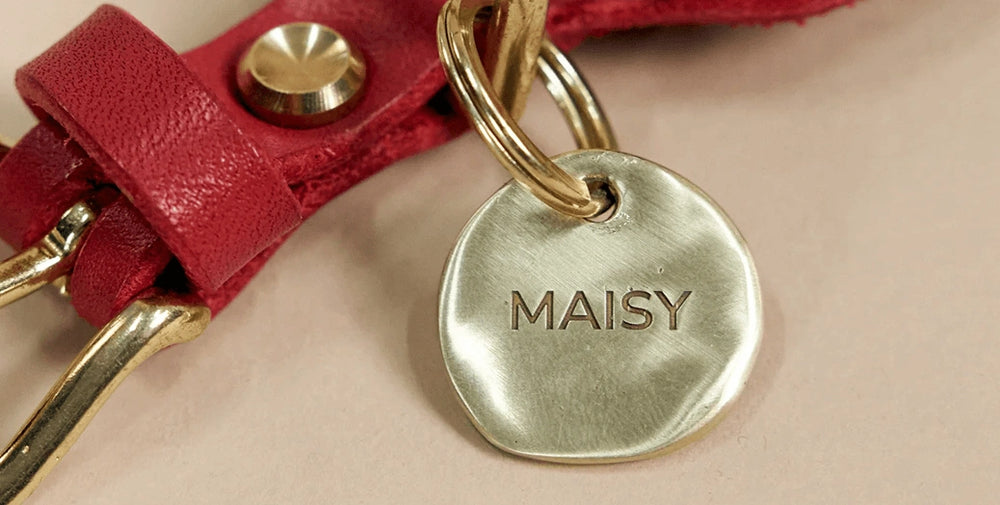
Contact details, your phone number and any secondary number, belong on your dog's brass nametag, not on the collar strap. A nametag worn alongside a named collar creates a complete identification system: the collar communicates identity at a glance, the tag communicates how to reach you. The two serve different functions and work best together.
What the collar carries: your dog's name. Choose the name your dog responds to.
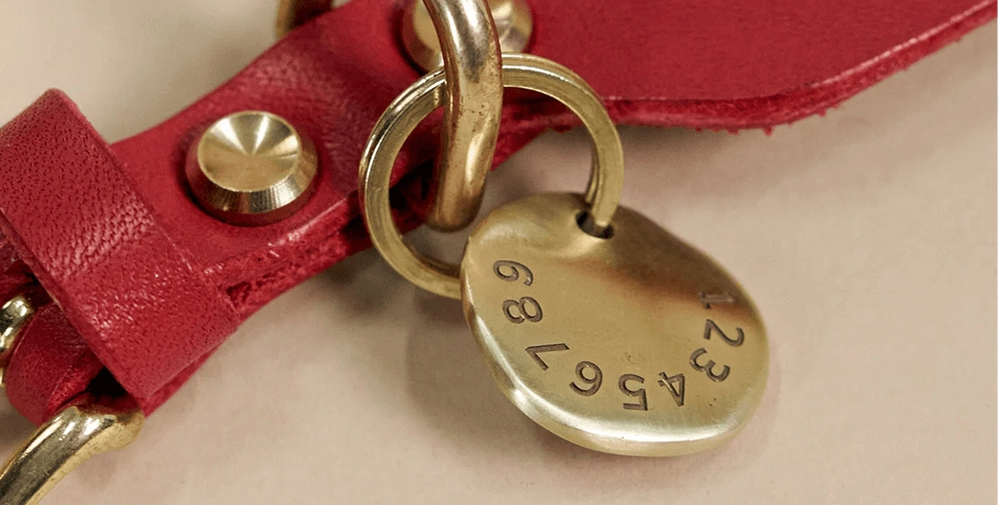
What the nametag carries: your contact details. Your mobile number is the most important piece of information for lost dog recovery. A phone number allows the person who finds your dog to reach you immediately, with no internet, no database lookup, and no microchip scanner required. A secondary number, a partner, a neighbor, a trusted contact, adds a useful backup layer. Our brass nametag collection uses deep laser engraving rather than surface printing, so the details stay legible instead of wearing off with daily use, and pairs directly with any Vero collar, carrying your contact details in engraved brass that ages as gracefully as the leather it hangs from.
What to leave out: Your home address. An address on any identification tells anyone who finds your dog exactly where you live and confirms you are likely not home. A phone number achieves the same recovery outcome without the exposure.
For additional context on what information works best for dog identification, the American Kennel Club's dog identification guidance offers a useful framework for combining collar ID with microchip registration.
Solid Brass Hardware: The Correct Pairing for a Personalized Leather Collar
A personalized collar is a long-term investment, and the hardware it carries must match that time horizon. Zinc alloy buckles and D-rings, which are standard on mass-market collars, are far more likely to show surface corrosion within the first year of daily exposure to moisture, sweat, and outdoor conditions. The corrosion products that form on zinc alloy can stain vegetable-tanned leather in ways that are difficult to reverse, and in some cases transfer residue to the skin underneath the collar.
Solid brass hardware resists rust and corrosion far more effectively than zinc alloy, and the patina it develops over time is controlled and predictable: a warm, darkening tarnish that pairs naturally with the deepening color of aged vegetable-tanned leather. The two materials are designed to age in parallel. The Lille Bjorn collar fitted with solid brass hardware at purchase will, after two years of regular daily wear, typically display a coherent aesthetic story between the hardware finish and the leather patina, rather than a mismatch between corroded metal and still-fresh leather.
The D-ring on a personalized collar also carries specific requirements. It must be welded or cast as a single unit, not bent from flat bar stock and left with an open seam. An open seam D-ring can catch the embossed edge of a leather strap during repeated leash attachment and removal, creating a wear point that degrades the collar surface adjacent to your dog's name. A solid cast D-ring eliminates this risk entirely.

Caring for a Personalized Leather Collar to Keep the Embossing Sharp
The leather around and within an embossed letter requires slightly more deliberate care than the plain strap sections of a collar. The compressed fiber within the letter channels is denser than the surrounding leather, which means it absorbs conditioner more slowly. Applying too much product too quickly can cause the surrounding leather to darken unevenly, creating a contrast differential that draws attention to the conditioning pattern rather than the lettering.
The correct approach is a thin, even application of a wax-based leather conditioner applied with a soft cloth in circular motions across the entire collar surface. Allow it to absorb fully before applying a second coat if needed. Avoid silicone-based sprays or oil-based conditioners with petroleum carriers on embossed leather. Silicone fills the compressed letter channels with a residue that, once dried, blurs the crisp wall definition of the embossing and is difficult to remove without damaging the surface.
For cleaning around embossed lettering, a slightly damp cloth with no soap is the safest method for daily grime. For deeper cleaning, a very small amount of saddle soap applied with a soft-bristled brush and worked gently in the direction of the grain (not across the letter edges) is appropriate once or twice per year. Rinse with a barely damp cloth and allow to dry completely in a shaded area before conditioning.
With correct care, a well-made full-grain vegetable-tanned leather collar can realistically last for many years, often outlasting multiple cheaper alternatives purchased over the same period. The compressed fiber structure of the embossed lettering has no surface coating to fade and no thread to fray, which means it is built to be the last collar you want to buy, not the next one you have to replace. Our full leather care walkthrough is in the seasonal leather collar care guide.
The Lille Björn Personalized Collar: What Makes It Different
Every personalized collar in the Lille Bjorn range starts from a single piece of Italian full-grain vegetable-tanned leather, cut to width and length before any hardware is attached. The embossing is completed by hand using steel dies on dampened leather, which allows the artisan to control the depth and definition of each letter individually. There are no laser burns, no printed transfers, no sewn thread sitting above the surface waiting to fray.
The Vero line is the personalization-specific collection within the range. Both the Vero Classic and Vero Wide are offered in five colors: black, brown, blue, green, and red. Each can be embossed with your dog's name during the ordering process.

The brass hardware on every Vero collar is solid brass: cast as single units, not bent bar stock, with a D-ring profile wide enough to accommodate any standard leash clip without the leveraged wear that narrower rings produce over time. The buckle features a roller bar for clean, low-friction adjustment.
Lead times on personalized orders are typically five to ten business days. Many embroidered or custom-printed collar makers quote lead times of two to four weeks due to batch production models. Hand-embossing on pre-cut leather strap does not require that kind of queue. The leather is ready; the embossing is the final step before dispatch.
Personalized Collar vs. ID Tag: When to Use Each
A personalized leather collar and a traditional ID tag are not competing products. They serve complementary functions and the strongest identification setup uses both. The collar provides passive, always-visible information that works without any physical interaction with the dog. The tag provides a second layer of redundancy, carrying the contact details that don't fit in the embossed field, and one that can be updated or swapped on its own without needing to re-order the collar itself.
If you are choosing between the two as a first purchase, the personalized collar takes priority. It is permanent, it is visible, and it is far less likely to detach. The tag is an excellent addition once the collar is in place, since it carries the contact details the embossed strap doesn't have room for, rounding out the identification system rather than working as a separate, independent layer. Our guide to ID tags versus plate collars covers the decision framework in detail, and the Lille Bjorn brass name tag collection pairs directly with any Vero collar for a complete identification system. For a broader look at how collar-based and chip-based identification work together, our complete dog ID tag guide covers the full picture.
Matching a Personalized Collar with a Leash and Harness
A personalized collar is most often a dog's primary daily wear piece, which means the leash and harness it pairs with should match its quality and aesthetic register. Clipping a mass-market nylon leash to a hand-embossed full-grain leather collar is a functional mismatch that most owners notice within the first week of walking.
The Lille Bjorn leash range is cut from the same Italian leather stock as the Vero collars, which means the patina they develop over time will track in parallel. A black Vero collar paired with the Classic Leash in black will, after a year of daily use, display the same warm darkening and surface character. Bought together as a walk kit, they also carry a combined discount relative to individual pricing. For owners who also use a harness for longer walks or reactive dog management, the Vero Harness in matching color completes a coherent three-piece set that ages as a single unit.
You can explore the full leather collar collection, complete walk kit bundles, and use the size guide to confirm your dog's measurements before ordering a personalized piece.

How to Buy a Personalized Leather Dog Collar Online
Ordering a premium personalized dog accessory online from The Lille Björn takes four steps. First, choose your collar line: the Vero Classic (2cm or 3cm width) for small to medium dogs, or the Vero Wide (4.5cm) for large breeds and sighthounds. Second, select your colour: black, brown, blue, green, or red, all cut from full-grain Italian vegetable-tanned leather. Third, measure your dog's neck directly with a soft tape measure and select the correct size from the sizing chart. Fourth, enter your dog's name in the personalisation field at checkout: the name is hand-embossed into the leather before dispatch. Lead times on personalized orders are typically five to ten business days. Every order ships worldwide from our studio, with the collar embossed and packaged before it leaves.
For the full ordering process across walk kits and bundles as well as single collars, see our complete guide to ordering personalized collars, walk kits, and bundles.
Frequently Asked Questions: Personalized Dog Collars
What is the difference between embossing and engraving on a dog collar?
Embossing uses a metal die pressed into dampened leather to compress the fiber structure and create a recessed letter that becomes part of the leather itself. Engraving removes material from a surface, most commonly metal, using a laser or cutting tool. On leather, laser engraving burns the surface rather than compressing it, which can dry out the leather around the mark over time. On metal nameplates attached to a collar, laser engraving is durable and produces strong contrast. On the leather strap itself, hand embossing is the superior method because it strengthens rather than weakens the material at the personalization point.
How do I know what size to order for a personalized dog collar?
Measure your dog's neck directly with a soft tape measure at the base of the neck where the collar sits. Slip one or two fingers under the tape to simulate the clearance a well-fitted collar provides. Full-grain vegetable-tanned leather softens and conforms to the neck over the first two to four weeks of wear, so a collar that feels slightly firm on arrival will typically settle into an excellent fit within a month. Do not measure an existing collar and add to that figure; measure the neck itself.
What should I emboss on my dog's personalized collar?
The Vero collar carries your dog's name. That is the single piece of information embossed into the leather strap, and it matters most in the moments after a dog goes missing. A name on the collar communicates identity instantly: someone trying to help a lost dog can read it without handling the animal, and a dog that hears its own name is often calmer and easier to secure. Contact details belong on the nametag that pairs with the collar. The collar identifies your dog; the tag tells the finder how to reach you. Together they form a complete identification setup that covers both functions without asking either product to do the other's job.
Can I get a monogrammed dog collar with initials instead of a full name?
Yes. The embossed field on the Vero collar isn't limited to a full name, you can choose initials, a two-letter monogram, or any short text your dog responds to. The embossing process is identical regardless of what you choose: hand-pressed into the leather with the same steel dies, so a monogram holds its definition exactly as well as a full name over years of wear.
How long does the embossed lettering on a leather collar last?
On full-grain vegetable-tanned leather, hand-embossed lettering does not fade or degrade the way printed or embroidered alternatives do. The compressed fiber structure that forms the letter is physically part of the leather and has no surface coating to peel or thread to fray. With correct conditioning and care, the embossing on a well-made leather collar can realistically remain legible for many years. The letters frequently become more visually distinct over time as the surrounding leather darkens through patina development, while the compressed channels retain a lighter tone.
Can I add a personalized collar to a harness setup?
Yes. A personalized leather collar and a harness serve different functions and are frequently worn together. The collar carries the ID information and is the dog's permanent identification layer. The harness attaches to the leash for walk control and distributes pressure across the chest and shoulders rather than the neck. For dogs who pull, have tracheal sensitivities, or are in training, this combination provides identification security without putting leash pressure through the collar. Matching the collar and harness to the same leather and color makes the combination aesthetically coherent as well as functionally complete. For full buying and fitting details, see our guide to buying and fitting a leather dog harness.
Are personalized leather collars a good option for dogs with sensitive skin?
Full-grain vegetable-tanned leather processed without chromium compounds or synthetic dyes is often a better-tolerated option for dogs with contact sensitivities than chrome-tanned or synthetic alternatives. The natural tannins used in the vegetable tanning process are derived from plant sources, primarily tree bark, and do not carry the heavy metal residues more commonly associated with chrome-tanned leathers. Many dogs with reported sensitivity to nylon or chrome-tanned materials have been better tolerated by vegetable-tanned Italian leather in practice. If your dog has a history of collar-related skin reactions, our guide to collar materials and skin allergy prevention provides a detailed breakdown of which materials to avoid and why.
How do I care for the embossed lettering on a leather collar?
Apply a thin, even coat of wax-based leather conditioner across the full collar surface every two to three months, or more frequently in dry climates. Allow it to absorb fully before applying additional coats. Avoid silicone-based sprays, which fill the embossed letter channels with a residue that blurs definition over time. For cleaning, a slightly damp cloth is sufficient for daily grime. Use a soft-bristled brush with a small amount of saddle soap for deeper cleaning once or twice per year, working in the direction of the grain. Dry in a shaded area before applying conditioner.
What makes Italian leather a strong choice for a personalized dog collar?
Italian full-grain vegetable-tanned leather is produced under tighter controls for fiber density, tannin penetration, and surface finish than most commercially available leather. The dense, tight fiber structure of the full-grain surface layer holds embossing with precision and depth, producing letters with crisp, defined edges rather than the softer impressions that are far more likely to result from embossing into chrome-tanned or corrected-grain leather. Vegetable tanning is a chromium-free process by definition, since it relies on plant-based tannins rather than chromium salts, which is why it is held to a different chemical standard than chrome tanning from the outset. The material ages predictably and develops a genuine patina rather than cracking or peeling, which is the standard failure mode for lower-grade leathers after two to three years of use.