Quick Summary
Dog collars get stinky when the material absorbs moisture and skin oils and lets bacteria build up. Absorbent nylon traps the most odour, chrome-tanned leather lacks bacteria resistance, breathable full-grain vegetable-tanned leather resists smell for daily wear, and non-absorbent biothane wipes clean for swimmers.
You lean in for a cuddle and catch a sour, cheesy whiff. That is the short answer to why does my dog's collar smell. The collar sits against warm skin all day, collecting oil, dead skin, food, drool, and rain. Most guides stop at cleaning tips. The bigger truth is the material, because material and construction decide how much odour a collar holds.
Two things about a material decide the smell: whether it absorbs moisture and bacteria, and whether it lets the neck breathe. Get the material right for how your dog lives, and the smell mostly takes care of itself. This guide covers the real cause of collar odour, how the four main materials compare, how to clean each one safely, and how to stop the smell for good.

Why Dog Collars Start to Smell: The Real Cause Most Guides Miss
A dog collar smells because it is a warm, damp strip wrapped around the neck all day. Three things build up in that gap: moisture, organic matter, and bacteria. Moisture comes from sweat, saliva, rain, swimming, and natural skin oils. Organic matter means dead skin, loose fur, dirt, grass, and food. Bacteria and yeast feed on that mix, and their waste is what your nose reads as a stink.
The neck is one of the hardest-working odour zones on a dog. Skin folds, long fur, and floppy ears all hold humidity close to the collar. A collar that cannot dry out never gets a break, so bacteria keep working and the smell compounds. It is the same process that makes a wet dog smell so strong after rain. This is why a collar can smell sour even after a fresh bath. You cleaned the dog, but the bacteria in the strap kept working.
Material is the variable most cleaning articles ignore. A absorbent material soaks up moisture, oil, and bacteria, so it holds odour deep in the strap. A non-absorbent material stays clean because there is nothing for odour to sink into. A breathable material lets the neck dry between wears, which gives bacteria less to feed on. Those three traits, absorbency, non-absorbency, and breathability, explain why two dogs bathed just as often can smell completely different.
Diet, skin health, and hidden skin infections can also make collar odour worse. A collar that suddenly smells far worse than usual is worth a vet mention. For most dogs, though, the smell follows a simple loop. Moisture and bacteria go into the material, they multiply, and odour comes out. The fix is to choose a material that does not feed that loop, then clean and dry it properly.
The Material Problem: Why Some Collars Trap Odour and Others Do Not
Not all collars smell equally, and it is not about price alone. It comes down to two things: whether the material absorbs moisture and bacteria, and whether it lets the neck breathe. Four materials cover almost every collar on the market: full-grain vegetable-tanned leather, biothane, nylon, and chrome-tanned. They behave very differently, and the best one depends on how your dog lives. For everyday, around-town wear, breathable full-grain vegetable-tanned leather keeps odour down best. For swimming and wet, muddy activity, non-absorbent biothane is the smarter pick.
| Factor | Veg-Tanned Full-Grain Leather | Biothane | Nylon | Chrome-Tanned Leather |
|---|---|---|---|---|
| Absorbs moisture and odour | Absorbs a little, but tannins resist bacteria and it dries out | Non-absorbent, nothing soaks in, wipes clean | Hydrophilic and absorbent: draws in and holds moisture, oil, and bacteria | No tannin resistance, so nothing slows odour-causing bacteria |
| Breathability | Breathable, a single layer lets the neck breathe | Not breathable, a solid coated band | Low, damp lingers in the webbing | Low, the heavy finish seals the surface |
| Odour tendency | Low, tannins resist odour-causing bacteria | Very low, nothing for odour to sink into | High, can stay smelly even after washing | Moderate to high as the finish breaks down |
| Best for | Everyday and city wear, the best all-round odour choice | Swimming, wet and muddy activity | Budget use, not for odour-prone dogs | Best avoided for daily wear and sensitive skin |
Nylon Webbing: Absorbent and Prone to Lasting Odour
Nylon webbing is cheap and popular, and it is the material most likely to turn permanently smelly. Nylon is hydrophilic, meaning it absorbs and holds water, so moisture, skin oil, saliva, and bacteria sink into the fibres, and the woven webbing wicks and traps them. Those fibres hold onto odour, and once a strong smell sets in, even a vinegar soak may not fully wash it out. The weave also traps fine dirt and fur where a quick wipe cannot reach. A nylon collar that stays damp is a warm, moist home for bacteria, and it can go sour again within days of a wash.
You can machine wash or scrub nylon, and it helps for a while, but the material keeps recreating the damp conditions that caused the smell. Owners of active or water-loving dogs often notice a nylon collar smelling again almost immediately. If odour is your main concern, nylon is the material to avoid. If you already have one, wash it often, dry it completely before it goes back on, and replace it once the smell no longer washes out.
Biothane: Non-Absorbent and Washable, but Not Breathable
Biothane is a coated webbing, and it behaves nothing like nylon. It is non-absorbent, so water, oil, and odour do not soak in. That means it does not develop the deep, set-in smell that nylon does, and it wipes clean with a little soap and water in seconds. For that reason biothane is a genuinely good material for the right job. Its one real drawback is that it is not breathable. It sits as a solid coated band, so it does not let the neck breathe the way a single layer of leather does.
That tradeoff makes biothane the smart choice for water. If your dog swims, wades, or loves mud, a biothane collar shrugs off the wet. It rinses clean and dries almost instantly, so there is nothing for odour to build on. For all-day, everyday wear on a dry dog, a breathable material is more comfortable against the skin. The simple rule: keep a biothane collar for swimming and wet outings, and use breathable leather for normal daily wear.
Chrome-Tanned Leather and Hide Grade: What Affects Smell
Leather is described by two separate things, and it helps to keep them apart. The first is the grade, meaning which layer of the hide it is: full-grain is the strong top layer, while lower grades such as "genuine leather" are usually split or corrected grain. The second is the tanning method: vegetable tanning uses plant tannins, while chrome tanning uses chromium salts. These two are independent. A hide can be full-grain or low-grade, and either one can be vegetable-tanned or chrome-tanned.
Each choice affects odour in its own way. On tanning, chrome-tanned leather lacks the natural bacteria resistance that plant tannins give vegetable-tanned leather, so it does less to slow the odour-causing bacteria that settle in. On grade, lower grades are usually heavily finished to look premium in photos, and that coating seals the surface so it holds moisture rather than letting it go; as the finish cracks and peels with daily use, moisture and bacteria work into the surface and the collar starts to smell. For the freshest result you want both variables in your favour: a full-grain grade that breathes, tanned the vegetable way so the tannins resist bacteria.
There are also well-documented concerns around chromium(VI) in leather that touches skin. That is why we choose chromium-free vegetable tanning instead. Chrome tanning uses chromium compounds, typically chromium(III). Under poor process control, some of that can convert into chromium(VI), a form regulators classify as carcinogenic. It is subject to regulatory restrictions on chromium(VI) in skin-contact leather. This is a reason to prefer plant-tanned leather as a precaution, not a claim that your current collar is dangerous. For the skin side of this, see our guide on chrome-tanned leather and sensitive-skin reactions.
Full-Grain Vegetable-Tanned Leather: Breathable and Odour-Resistant
Full-grain leather is the top layer of the hide, with the strongest fibre structure. Vegetable-tanned means it is cured with plant tannins rather than chromium. This combination is breathable and chromium-free, so a single layer lets the neck breathe and dry between wears. The plant tannins also make the surface naturally more resistant to odour-causing bacteria than untanned or chrome-finished leather. So it is less likely to trap moisture and odour against the skin than nylon or low-grade leathers. It is also often better tolerated by many dogs with sensitive skin.
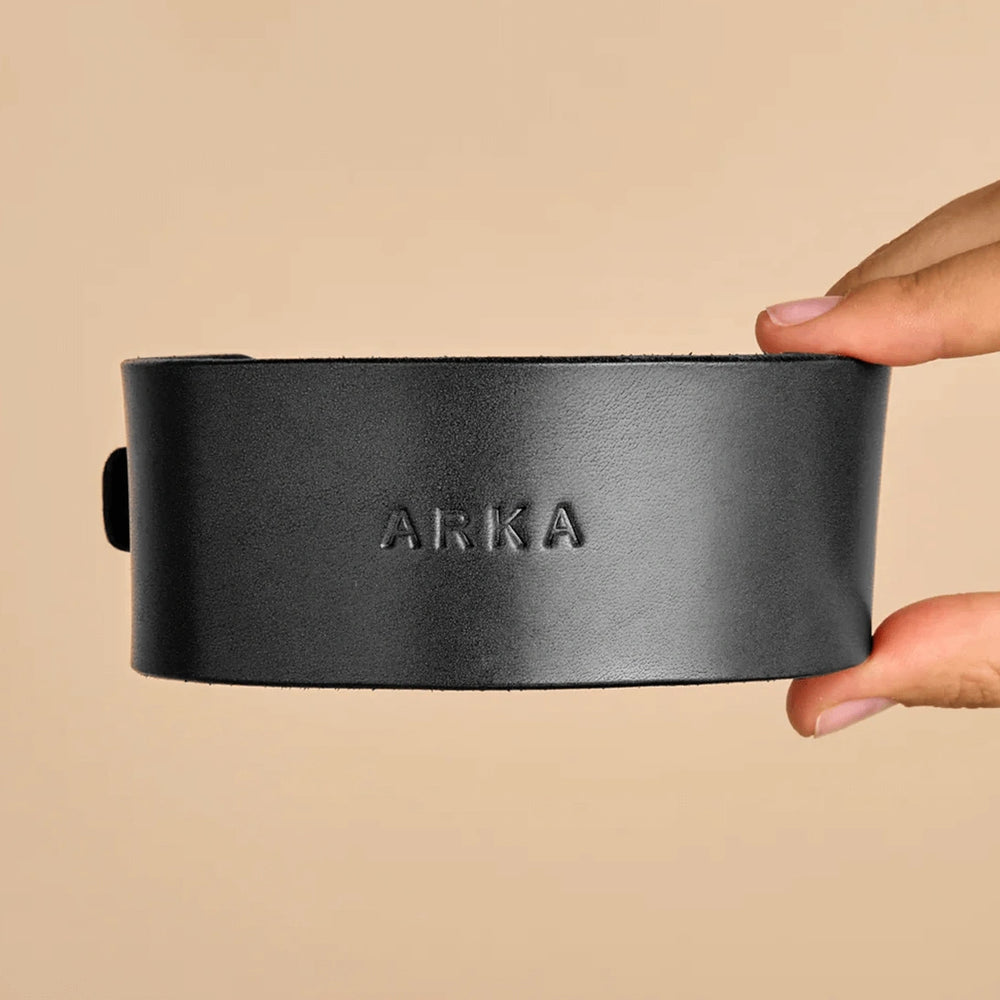
Vegetable-tanned full-grain leather is also one of the few collar materials that genuinely improves with time. It softens and conforms to the shape of your dog's neck, and it develops a rich patina rather than cracking or peeling. With simple care it can last for years, and it often outlasts multiple cheap synthetic collars. A wide, single-piece option like the Aeris Wide full-grain leather dog collar shows the idea in practice. To go deeper on grades and tanning, see our explainer on full-grain vegetable-tanned leather dog collars, or browse the full full-grain leather dog collar collection.
So which material should you choose? For daily, around-town wear, full-grain vegetable-tanned leather is the best all-rounder for keeping odour at bay, because it breathes and its tannins resist bacteria. If your dog swims or spends time in water and mud, keep a biothane collar for those outings, then switch back to leather for dry days. Avoid nylon if odour is your main worry. For leather, vegetable tanning resists bacteria far better than chrome tanning, and full-grain outlasts lower 'genuine' grades, so a full-grain vegetable-tanned collar is the one to choose.

How Construction and Hardware Affect Smell
Material sets the ceiling for how much a collar can smell. Construction and hardware decide how close it gets to that ceiling. Two collars from the same hide can smell very differently, depending on how they are built. Seams, backing layers, padding, and cheap metal all create hidden pockets. Moisture and bacteria collect there, out of reach of a cloth.
Single-piece construction is the cleanest approach. A collar cut from one solid strip of full-grain leather has no stitched seams or fabric backing to trap moisture and bacteria. So there is nowhere for odour to hide, and the whole surface dries evenly. Padded or fabric-lined collars do the opposite. The soft lining feels nice on day one, then becomes a sponge. It soaks up drool and rain, holds it against the skin, and is almost impossible to dry fully. If a collar smells no matter how often you clean it, a hidden lining is a common culprit. Our breakdown of single-piece leather collars that resist moisture buildup explains this in more detail.
Hardware matters more than most owners expect. Cheap plated steel and low-grade alloy buckles corrode when they get wet. That corrosion adds its own metallic, sour tang on top of the bacterial smell. Solid brass hardware is highly corrosion-resistant and does not rust like cheap plated steel. So it resists rust and corrosion and stays clean where the collar gets wet most. It also maintains its strength where it matters most, the D-ring junction, the part under the most stress on every walk. A corroded buckle warns that the metal is breaking down, and washing the strap will not fix it. The single-piece Aeris Classic leather dog collar pairs full-grain leather with solid brass fittings for exactly this reason.
When you are choosing a collar, look for a single solid strip of full-grain leather. Look for minimal or no fabric lining, and solid brass fittings. That combination has the fewest hiding places for moisture and the fewest parts that degrade. Our guide to solid brass collar hardware and the D-ring junction covers what separates durable construction from a collar that fails, and smells, at the worst moment.
How to Clean a Smelly Dog Collar, by Material
The right cleaning method depends entirely on the material. Using the wrong one can make things worse. Soaking full-grain leather like a nylon strap will dry it out and crack it. A biothane collar only needs a quick wipe, while a nylon collar needs a deep soak and may still hold some smell. Match the method to the material, and clean on a schedule rather than waiting for the smell.
| Material | How to Clean | What to Avoid |
|---|---|---|
| Full-Grain Leather | Wipe with a damp cloth and a little mild soap, blot dry, air-dry away from heat, then condition | Soaking, machine washing, direct heat, harsh solvents |
| Biothane | Wipe or rinse with soap and water, no soaking needed, air-dry in minutes | Overthinking it, this is the easiest material to clean |
| Nylon | Soak in warm water with mild soap or white vinegar, scrub the weave, rinse, air-dry fully | Leaving it damp, skipping the buckle, expecting set-in smell to fully lift |
| Hardware | Wipe brass with a damp cloth, dry immediately, use a dedicated brass cleaner if tarnished | Leaving plated metal wet, abrasive pads on finished hardware |
Cleaning a Nylon Collar
Nylon needs the most work, because the smell lives inside the fibres. Fill a bowl with warm water and a little mild dog shampoo or dish soap, and add a splash of white vinegar to help neutralise odour. Let the collar soak for ten to twenty minutes, then scrub the webbing with a soft brush, working into the weave where dirt and fur hide. Pay special attention to the buckle and the folds near the D-ring, where moisture sits longest. Rinse well so no soap residue is left to attract more dirt.
Drying is the step most people rush, and with nylon it decides whether the smell comes back. Squeeze out excess water, blot with a towel, then hang the collar to air-dry completely before it goes back on. For stubborn odour, a pet-safe enzymatic cleaner breaks down the residue rather than masking it. Be honest with yourself, though. If a nylon collar still smells after a proper wash and full dry, the odour has set into the fibres. At that point, the fix is to replace it with a material that does not hold smell.
Cleaning a Biothane Collar
Biothane is the easiest material to keep fresh, because nothing soaks in. Wipe it down with a cloth, a little mild soap, and water, or simply rinse it under the tap. There is no need to soak it, and it does not hold odour the way nylon does. Rinse off the soap, wipe or shake off the water, and it air-dries in minutes. This quick clean, plus its non-absorbent surface, is exactly why biothane is such a good choice for swimming and muddy walks. The only thing to remember is that it is not breathable. For a dog that wears a collar all day in dry conditions, leather is still the more comfortable everyday option.
Cleaning a Full-Grain Leather Collar Safely
Full-grain vegetable-tanned leather needs a gentler hand. Soaking or harsh chemicals strip the natural oils that keep it supple. Never put a leather collar in water for long, in the washing machine, or near direct heat. Start by wiping the collar with a barely damp cloth to lift surface dirt. For a deeper clean, add a tiny amount of mild soap or leather cleaner to the cloth. Wipe the whole strap including the underside, then wipe again with a clean damp cloth.
Blot the collar dry with a towel, then let it air-dry naturally. Keep it away from radiators, hair dryers, and direct sun, all of which can crack leather. Once it is fully dry, work in a small amount of leather conditioner or a pet-safe balm. Conditioning keeps veg-tanned leather soft, so it develops a patina instead of drying out. Supple leather also resists odour better than dried, cracked leather. For the full routine, follow our complete leather and brass collar care guide, and our notes on seasonal leather collar care cover wet and cold weather.
Cleaning the Hardware and Getting Out Skunk Smell
Do not forget the metal, because a smell can come from corroded hardware as easily as the strap. Wipe brass hardware with a damp cloth every time you clean the strap, and dry it right away. If solid brass tarnishes, a dedicated brass cleaner brings it back. Brass resists corrosion far better than plated steel to begin with. If your hardware is visibly corroding or flaking, that is a sign of cheap plated metal, and replacing the collar is the honest fix.
Skunk smell is its own emergency and does not respond to soap alone. For nylon or biothane collars, mix hydrogen peroxide, baking soda, and a drop of dish soap to neutralise the odour compounds. It may lighten colour, so test a hidden spot first. For full-grain leather, skunk oil is much harder to remove without damaging the leather. A heavily sprayed leather collar is often best replaced. Airing any collar outdoors for a day or two also helps clear lingering smells.

How to Stop Your Dog's Collar From Smelling for Good
Prevention beats cleaning, and it is roughly eighty percent material choice, drying discipline, and fit. If you are constantly fighting collar smell, the collar itself is usually the problem. For everyday wear, choose a breathable, single-piece, full-grain vegetable-tanned leather collar with solid brass hardware, and keep a biothane collar on hand for water days. That removes most of the hiding places where odour builds. It is the difference between managing a smell forever and rarely dealing with one.
Beyond the collar itself, a few simple habits keep odour from ever taking hold. Build these into your normal routine, and the collar stays fresh between deeper cleans:
- Dry the collar after every soaking. After swims, baths, or heavy rain, take the collar off and let it air-dry. A collar that never stays damp cannot grow the bacteria that cause smell.
- Rotate two collars. A spare lets each collar dry fully between wears. This is the single most effective odour-prevention habit for active dogs.
- Match the collar to the day. Use breathable leather for dry, everyday wear, and switch to biothane for swimming or muddy adventures.
- Wipe it down weekly. A quick damp-cloth wipe once a week clears oil and dirt before it has time to turn.
- Take it off at night. A nightly break lets the neck and collar dry out and reduces moisture against the skin.
Fit deserves a closer look. A collar that is too tight presses into the skin and traps moisture in the fold. One that is too loose slides and rubs. You should be able to slip two fingers under the collar comfortably. The right width helps too, since a wider collar spreads pressure and sits flatter. Our wide collar size guide shows how to measure, and our guide to what makes a dog collar comfortable walks through width and fit by size. A refined everyday option like the Vero Classic leather dog collar keeps the neck breathing. Invest once, then dry and rotate it, and you get a collar that ages with your dog instead of falling apart around them.
Rotating between two collars, or a collar and a matching walk kit, is the easiest way to guarantee each one dries fully between wears. Browse our leather collar and leash walk kits if you want a second set that matches your daily collar.

Which Dogs Need Extra Attention: Breed, Coat, and Swimmers
Some dogs are simply harder on collars than others. Knowing where your dog sits helps you set the right routine. Odour risk rises with anything that adds moisture or holds it against the neck. Coat type, body shape, and lifestyle all play a part. A short-coated house dog that stays dry may need only an occasional wipe. A shaggy swimmer needs a non-absorbent collar and a strict drying habit.
Double-coated and long-haired breeds trap humidity close to the skin, so the collar area stays damp longer after rain. Breeds with loose neck skin, and dogs with heavy jowls that drool, keep the collar wet from above. Water-loving breeds soak the collar again and again, and nylon is the worst choice for them because it holds that water in the weave. For a dedicated swimming or wet-weather collar, biothane is the smart pick: it is non-absorbent, so it does not hold odour and wipes clean in seconds. For everyday dry wear, breathable vegetable-tanned leather still keeps odour down best.
Neck shape matters too, especially for sighthounds and other long-necked breeds. A wider collar distributes pressure and sits flatter without trapping moisture in one spot. A broad, single-piece option like the Vero Wide full-grain leather dog collar suits these dogs well. Whatever the breed, the rule is the same. Reduce how long the collar stays wet, and match the material to the day. A chromium-free, vegetable-tanned full-grain leather collar is the smarter long-term bet for daily wear. It breathes, its tannins resist bacteria, and it minimises exposure to heavy-metal tanning chemicals. If your dog has genuinely sensitive skin, a clean, toxin-free collar matters even more. Our guide on how to keep your dog's leather accessories clean and toxin-free pulls the care and safety pieces together.

Frequently Asked Questions
Why does my dog's collar smell so bad even after I wash it?
If a collar smells again soon after washing, the material is usually holding the odour, or the collar went back on damp. Nylon is the common offender, because it soaks smell deep into the fibres where washing cannot fully reach. Let any collar air-dry completely before wearing. If a nylon collar will not come clean, switch to a breathable full-grain leather collar or a non-absorbent biothane one.
Is biothane or leather better for a dog that smells?
It depends on the dog's lifestyle. For a swimmer or a dog in wet, muddy conditions, biothane is excellent, because it is non-absorbent, does not hold odour, and wipes clean in seconds. For everyday, dry, around-town wear, breathable full-grain vegetable-tanned leather is the better choice, since it lets the neck breathe and its tannins resist odour-causing bacteria. Many owners keep one of each.
Do leather dog collars smell less than nylon?
Yes, in most everyday situations. Full-grain vegetable-tanned leather is breathable and its tannins resist odour-causing bacteria, while nylon is hydrophilic and soaks moisture, oil, and bacteria deep into the weave. Once a nylon collar sets in a strong smell, even vinegar may not remove it, whereas a well-cared-for leather collar tends to stay fresher for far longer.
How often should I clean my dog's collar?
A quick damp-cloth wipe once a week suits most dogs, with a deeper clean every few weeks. Active dogs, swimmers, and heavy droolers need more frequent attention, ideally after every soaking. Cleaning on a schedule, rather than waiting for a smell, keeps odour-causing bacteria from ever building up.
Can I put a dog collar in the washing machine?
Nylon collars can usually handle a gentle machine wash inside a laundry bag, followed by full air-drying, and biothane simply wipes or rinses clean by hand. Full-grain leather collars should never go in the machine, because soaking and tumbling strip the natural oils and crack the leather. Clean leather by hand with a damp cloth and mild soap instead.
Does baking soda get smell out of a dog collar?
Baking soda helps on nylon collars, either dissolved in the soak water or worked into a paste and rinsed off after about thirty minutes. It neutralises odour rather than masking it. Biothane rarely needs it, and on full-grain leather you should avoid pastes and heavy scrubbing, relying on a gentle damp-cloth clean and conditioning instead.
Is it the collar or my dog that smells?
Take the collar off and smell it separately from your dog. If the collar is the source, cleaning and drying it will fix the problem. If your dog still smells strongly after a bath, or the collar smell returns unusually fast, it is worth checking with your vet for a yeast or skin infection like canine yeast dermatitis that may need treatment.