Quick Summary
Padded dog collars add a foam or neoprene layer for cushioning, but padding is not automatically better. For most dogs, a breathable full-grain vegetable-tanned leather collar that softens and conforms to the neck gives real comfort without trapping the heat and moisture that foam padding can hold against the skin.
The padded dog collar is sold as the comfortable upgrade. It wraps a soft sleeve of foam or neoprene around a webbing or leather core. The pitch is simple: softer must be kinder on the neck. The truth is more specific. Padding fixes one thing, pressure at a single point. It also adds new costs. It cuts breathability, traps moisture, and can hide a low-grade material underneath. This guide compares padded collars with full-grain leather in plain terms. It shows where padding earns its place. It also shows why good leather often gives the comfort padding only promises.

What a Padded Dog Collar Actually Is
A padded dog collar is a collar with a separate cushion layer on the strap that touches the neck. That cushion is almost always synthetic. It is usually neoprene, closed-cell EVA foam, memory foam, or a microfiber anti-sweat lining. The padding sits between your dog and the main strap. That strap may be nylon webbing, biothane, or leather. The job of the padding is to spread pressure and soften the strap edges.
Each padding material behaves differently against skin. Neoprene is the foam used in wetsuits, so it holds water and heat. Memory foam molds to the neck, but its cells break down and it loses that response over time. Microfiber and fleece feel plush in the store. They mat and hold odour once walks, rain, and drool are added. None of these are unsafe on their own. All of them are less breathable than one layer of quality leather.
It helps to split two things the word "padded" blurs. The first is cushioning, the softness you feel when you press the collar. The second is pressure distribution, how the collar spreads force under load. Padding improves the softness directly. It only spreads pressure well when the strap is also wide. A narrow padded strap still loads a thin band of the neck. That is why width often matters more than padding, as our guide to choosing the right collar width explains.
So the mass-market padded collar is a synthetic comfort layer. It solves a comfort problem that better materials and shape can fix at the source. That single distinction drives the whole decision.
What Padding Solves, and What It Quietly Costs
Padding does one job well. It takes the hard edge off a stiff or narrow strap. That helps a puppy learning to walk. It helps a short-haired breed that chafes easily. It helps a dog with a healing neck. If your current collar is stiff with sharp edges, padding will feel better right away. That much is fair to say.
The costs are less obvious. They show up over weeks and months, not at the first fitting. The first cost is breathability. Foam and neoprene sit flush against the neck. They trap warmth and moisture underneath, especially in humid weather or on long walks. That warm, damp layer is where matted fur, odour, and irritation start. This hits dogs with sensitive skin hardest. Vegetable-tanned full-grain leather is breathable. It is less likely to trap moisture and odour against the skin than most synthetic padding. That makes it a better long-term choice for many dogs prone to reactions.
The second cost is wear. Foam is a consumable. It compresses, thins, and goes flat. The cushioning you paid for fades while the collar still looks fine from the outside. The third cost is concealment, and buyers rarely see it coming. A soft padded sleeve is an easy place to hide a cheap core. Padding can also make fitting harder, because the squish hides the true two-finger gap. For correct fit, the American Kennel Club's advice on how to fit a dog collar correctly is a reliable reference.
So padding is neither a scam nor a shortcut to comfort. It is a trade. You get a softer touch now. In return you accept less breathability, a cushion that fades, and a layer that can mask what sits beneath it.

Full-Grain Leather vs. Padded Collars: A Direct Comparison
The honest comparison is not leather against padding in the abstract. It is a full-grain vegetable-tanned leather collar against a typical synthetic padded collar, over a year of daily use. Full-grain is the top layer of the hide with the strongest fibre structure. It does something foam cannot. It softens and conforms to each dog's neck with wear. The collar becomes custom-shaped over time, instead of compressing and going flat.
| Factor | Full-Grain Vegetable-Tanned Leather | Synthetic Padded Collar |
|---|---|---|
| Comfort mechanism | Softens and conforms to the neck with use | Foam cushioning that compresses over time |
| Breathability | Breathable, less likely to trap heat and moisture | Neoprene and foam hold warmth and moisture against skin |
| Skin tolerance | Chromium-free tanning, better tolerated by many sensitive dogs | Synthetic lining can trap moisture and encourage irritation |
| Ageing | Develops a patina and looks better with age | Padding flattens, lining mats and frays |
| What it can hide | Single-piece build, nothing concealed under a sleeve | Sleeve can conceal split or chrome-tanned core material |
| Realistic lifespan | Designed to last for years with proper care | Often outlived by a single quality leather collar |
Read across the table and a clear pattern shows. Padding wins the first impression, the moment you squeeze it. Leather wins the year. Its comfort comes from the material shaping to the dog, not from foam that fades. For the deeper case on why grade drives all of this, see our guide to full-grain leather dog collars. It breaks down how fibre structure turns into durability and feel.
The Hidden-Grade Problem: What Padding Often Conceals
Here is the part padded-collar marketing leaves out. A padding sleeve is an ideal place to hide a low-grade core. The buyer only ever touches and sees the soft outer layer. Many mass-market collars called leather use chrome-tanned or low-grade genuine leather under the padding. Genuine leather is usually a lower tier, split or corrected grain. It is often heavily finished to look premium in photos, while being less durable than full-grain. These materials are more prone to cracking, peeling, stretching, and surface breakdown over time, especially with daily use.
Tanning method matters as much as grade. Chrome tanning uses chromium compounds, typically chromium(III). It is fast and cheap to produce at scale. That is why so many budget collars rely on it. There is also a well-documented regulatory concern. Under poor process control, some chromium(III) in chrome-tanned leather can convert into chromium(VI). Regulators classify that form as carcinogenic. Because of this, they set strict, very low limits on chromium(VI) in leather that touches skin. Products over those limits can be restricted or recalled. You can read the framing in the European Chemicals Agency's work on regulatory limits on chromium(VI) in leather.
The point is not that a padded collar will harm your dog. It is not that chrome-tanned leather is dangerous in normal use. The point is exposure and honesty. To lower your dog's exposure to heavy-metal tanning chemicals, chromium-free, vegetable-tanned full-grain leather is the smarter long-term bet. It also removes the guesswork about what sits under the padding. Our brand avoids chromium-based tanning as a precaution. We choose vegetable-tanned, chromium-free leather instead. For dogs that already react to their collars, our breakdown of the best collar materials for dogs with sensitive skin goes deeper on tolerance.
A single-piece full-grain collar has nothing to conceal. What you see is the material, all the way through. That is a quiet but real form of transparency.
When Padding Genuinely Helps
Padding is not the villain here. Pretending it was would be dishonest. There are clear cases where a padded layer is the right call. A fair guide has to name them, not steer every dog toward one answer.
Padding helps most for strong pullers on a flat collar. A dog that lunges puts sharp, repeated load on a narrow band of the neck. Cushioning softens those spikes. Still, for a committed puller the fuller fix is often load management, not a softer strap. That is why the American Kennel Club's comparison of when a harness suits a dog that pulls is worth reading next to any collar choice.
Padding also helps short-haired and thin-coated breeds. Whippets, boxers, and pointers lack the fur buffer that longer coats provide. It can help a dog recovering from a neck irritation or a recent clip, when any friction is unwelcome for a few weeks. It can help an anxious dog who accepts gear better when the first touch feels plush. Even so, the smarter version is a wide, breathable collar in a skin-friendly material, not the thickest foam you can find. A wide full-grain strap spreads pressure across more of the neck and stays breathable. That captures most of padding's benefit without its trade-offs.
The rule of thumb is simple. Reach for padding when the problem is sharp and short-term: a healing neck, a young puller in training, a thin-coated dog in a rough season. Reach for quality leather and correct width when you want a durable everyday collar that stays comfortable for years. The two are not enemies. They suit different timeframes.
How Full-Grain Vegetable-Tanned Leather Delivers Comfort Without Padding
A good leather collar does not need a foam layer. The material and the build do the work padding is bolted on to do. Full-grain vegetable-tanned leather is stiff for the first few wears. Then it softens and conforms with use. It follows the dog's neck the way a broken-in belt follows the wearer. That is comfort earned through the material, not a cushion that wears out. It is also one of the few collar materials that genuinely improves with time. It develops a rich patina and looks better with age instead of degrading.
Construction is the second half. Single-piece construction removes the seams and stacked edges that padding is often added to mask. There is no hard internal ridge pressing into the neck. Clean edge finishing rounds and seals the leather's edges. That is what stops a strap from feeling sharp. Built this way, the softness comes from the leather and the shape. Nothing is left for a foam sleeve to fix. Our piece on single-piece leather collars explains why this build is gentler on skin.

This is the core of the answer on whether padding is better. For most dogs, breathable full-grain leather that conforms to the neck gives the comfort padded collars advertise. It does so without trapping heat and moisture, and without a wear part. The specific benefit of vegetable tanning is covered in our guide to vegetable-tanned leather dog collars. It explains the chromium-free process in plain terms.
Hardware and Longevity: Why the D-Ring and Buckle Decide the Outcome
A comfortable collar that fails at the hardware is not comfortable. It is a risk. The D-ring and buckle take every ounce of a pulling dog's force. The metal at those points decides whether a collar lasts for years or becomes a weak link. Padded collars rarely discuss this. A plush sleeve pulls attention away from a cheap fitting.
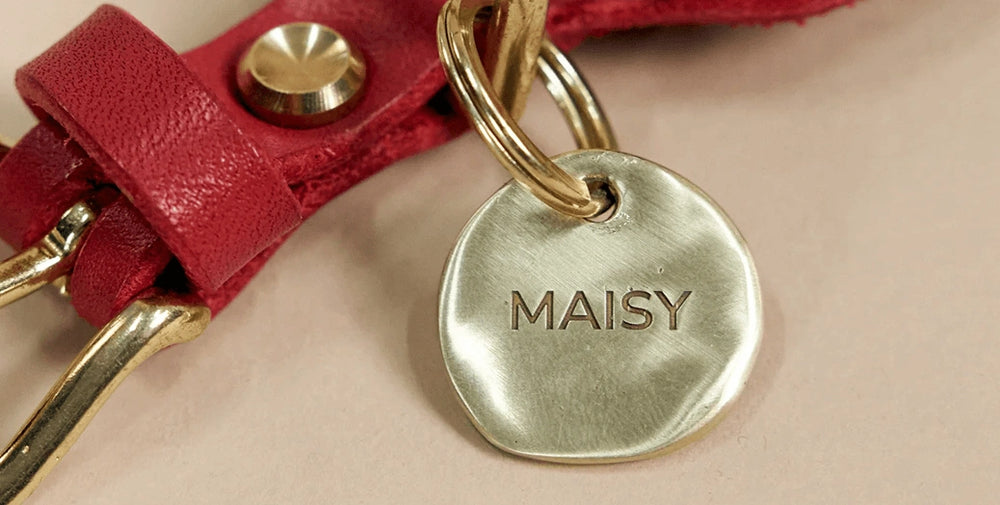
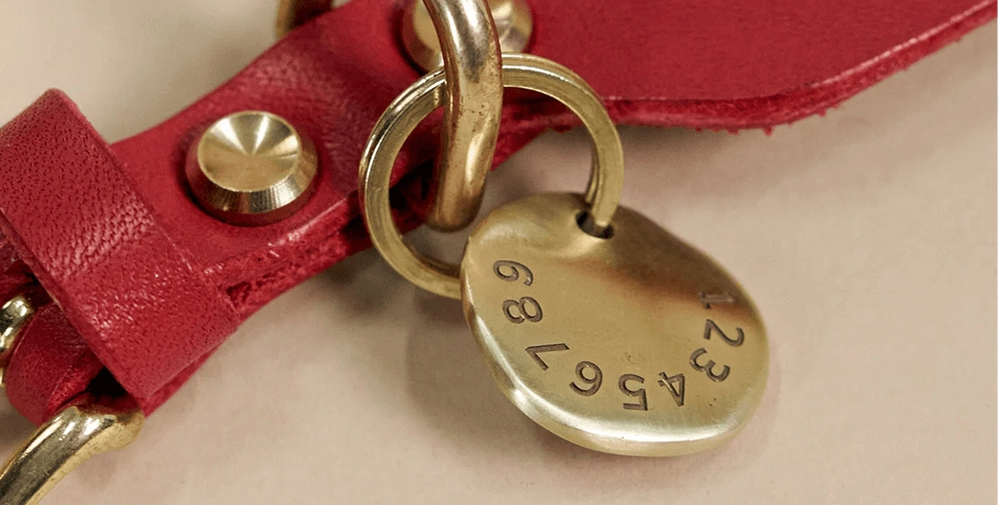
Solid brass hardware is highly corrosion-resistant. It does not rust like cheap plated steel or low-grade alloys. It maintains its strength and integrity well at the D-ring and buckle under normal dog-collar use. That is exactly where a collar is asked to hold. Plated alloys can shed their coating, corrode underneath, and weaken at the join over time. Rain, sweat, and saltwater at the beach speed that up. Choosing solid brass means choosing durability and safety at the one point that matters most, the D-ring junction. Our explainer on solid brass dog collar hardware covers the metallurgy behind that claim.
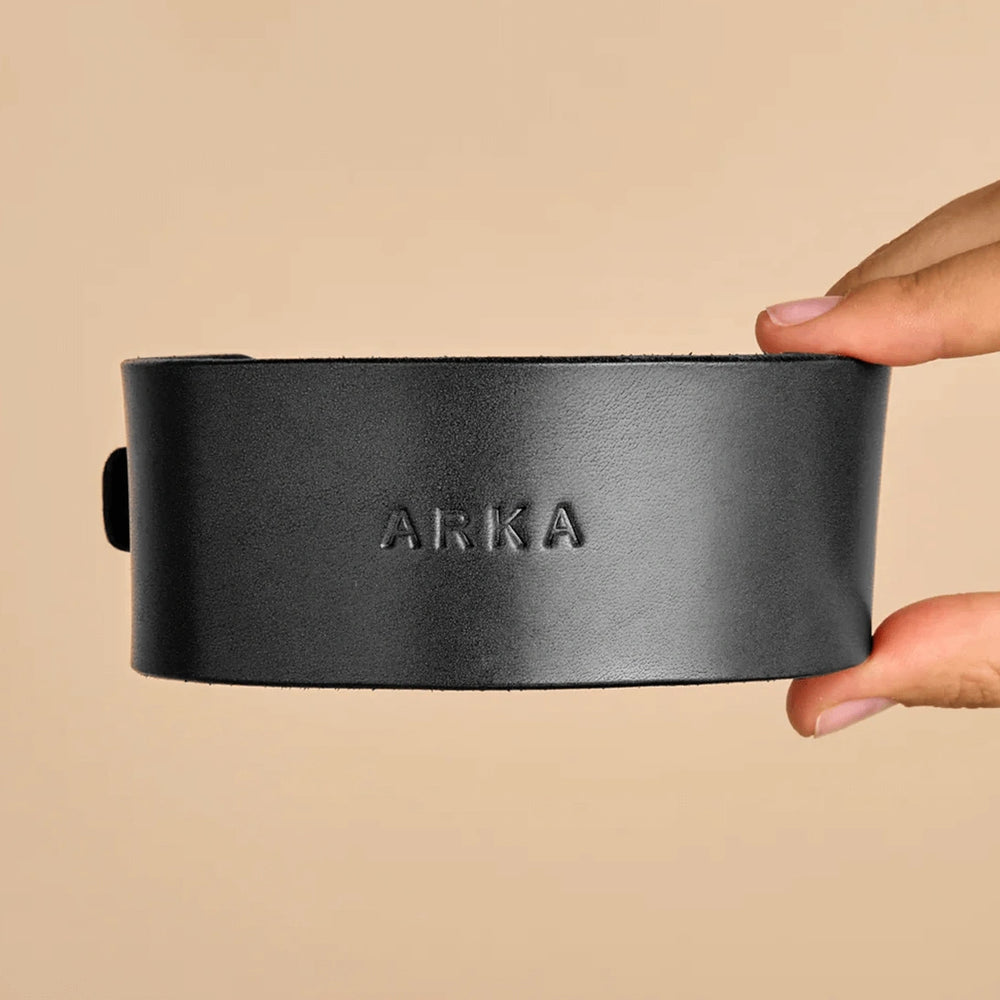
Longevity is where the padded-versus-leather math settles. A well-made full-grain, vegetable-tanned leather collar with solid brass hardware is designed to last for years with proper care. It often outlasts several cheap synthetic or low-grade padded collars, whose foam flattens and whose plated hardware corrodes. It is built to outlive the average collar. It is made to be the last collar you want to buy, not the next one you have to replace. A wide leather strap paired with solid brass, like the collar above, spreads pressure across the neck while staying breathable. That is padding's promise delivered through better materials.
Choosing the Right Collar for Your Dog's Breed and Neck
The right collar matches three things: your dog's neck, coat, and pulling habit. Get those right and the padded-versus-leather question mostly answers itself. Start with fit, because no material saves a badly sized collar. Measure the neck and leave room for two fingers between the collar and the coat. Our guide to measuring your dog's neck for the perfect fit walks through the method.
Match width to size and strength. Small and toy breeds do best with a narrower classic strap that does not overwhelm a slim neck. Medium and large dogs, and any committed puller, do best with a wide strap that spreads pressure across more of the neck. Width is the single most effective way to improve comfort for a strong dog. It works without a foam layer that traps heat. A slim-necked small dog rarely needs padding at all. A broad-chested puller gains far more from a wide, breathable full-grain collar than from a narrow padded one.

Factor in coat and skin last. Thin-coated and sensitive-skin dogs need the most breathable, most skin-friendly surface. That points to chromium-free vegetable-tanned leather with clean edge finishing, not a moisture-holding synthetic sleeve. Thick double-coats already carry their own buffer, so fit and width drive comfort more than any added cushion. Browse the full range of handcrafted full-grain leather dog collars to match strap width and colour to your dog. Weigh neck, coat, and pull together, and padding turns out to fit a narrow set of cases. A breathable, well-built leather collar is the better everyday choice for most dogs.
Frequently Asked Questions
Are padded dog collars better than leather collars?
Not as a rule. Padded collars feel softer at first touch and help specific dogs, such as strong pullers and thin-coated breeds. For everyday use on most dogs, a breathable full-grain vegetable-tanned leather collar that conforms to the neck gives comparable comfort. It does so without trapping heat and moisture or relying on foam that flattens over time.
Do padded collars help dogs that pull?
Padding softens the pressure spikes a puller makes on a flat collar, so it can help in the short term. A wide leather strap spreads that force across more of the neck and lasts longer. For a committed puller, load management with a properly fitted harness is worth weighing alongside the collar.
Is padded leather better than plain leather for dogs?
Padded leather adds a synthetic cushion that can trap moisture and eventually compress. That sleeve can also hide a lower-grade core. Plain full-grain vegetable-tanned leather stays breathable, softens to the neck with use, and has nothing hidden under a sleeve. That makes it the more transparent long-term choice for many dogs.
What is the most comfortable dog collar material?
Comfort comes from breathability, fit, and how the material ages, not from softness alone. Full-grain vegetable-tanned leather scores well because it is breathable, conforms to the neck, and is chromium-free. Many dogs with sensitive skin tolerate it better than synthetic padded linings or chrome-tanned leather.
Can padded dog collars cause skin irritation?
They can, indirectly. Neoprene and foam linings hold warmth and moisture against the neck. That damp layer is where matting and irritation tend to start, mostly on sensitive-skin dogs. A breathable, chromium-free leather collar is less likely to trap moisture and odour, which removes one common trigger.
How long does a quality leather dog collar last?
A well-made full-grain, vegetable-tanned leather collar with solid brass hardware is designed to last for years with proper care. It often outlasts several cheaper synthetic or padded collars. Lifespan depends on use, conditioning, and the dog's growth, so it is built to outlive the average collar rather than promised to last forever.
Should I choose brass or plated hardware on a collar?
Solid brass resists rust and corrosion and holds its strength at the D-ring and buckle, the points that take the most load. Plated alloys can shed their coating and weaken over time, mostly with exposure to rain and saltwater. For durability and safety, solid brass is the stronger long-term choice.
Is chrome-tanned leather safe for dog collars?
Chrome-tanned leather is common and generally used without issue. Still, there are well-documented regulatory concerns around chromium(VI) forming under poor process control, which is why regulators limit it in skin-contact leather. Choosing chromium-free vegetable-tanned leather removes that variable and lowers your dog's exposure to heavy-metal tanning chemicals.