Quick Summary
A durable dog collar is not the one that survives the hardest single pull. It is the one still working after three years of daily use. That distinction matters, because most buying advice measures collars by tensile strength while owners experience them as a service life. Choosing a walking dog collar gets far simpler once you sort by how the dog actually lives rather than by how tough the product photograph looks.
The most durable dog collar for your dog is the one matched to their activity level, not the one with the highest strength rating. Everyday walkers need corrosion-resistant hardware and a strap that softens with use. Trail dogs need width scaled to body weight. Frequent swimmers need coated webbing instead of leather.
Below is the framework. It covers what durability means mechanically, four activity tiers with the spec that matters most in each, and an honest account of where leather is the wrong answer.
What Durability Actually Means on a Dog Collar
Gear reviewers test collars by hanging weight from them and rubbing them on asphalt. Those tests measure resistance to a single event. They say little about the failure owners actually meet. That failure is gradual, and it usually starts at the hardware rather than the strap.
Collars fail in three predictable places. The first is the D-ring junction. Every leash correction drives its force into one small metal loop. The second is the buckle, which absorbs repeated fastening stress. The third is where hardware meets the strap, at the rivets and stitching. Two materials with different flex rub against each other there thousands of times a year.
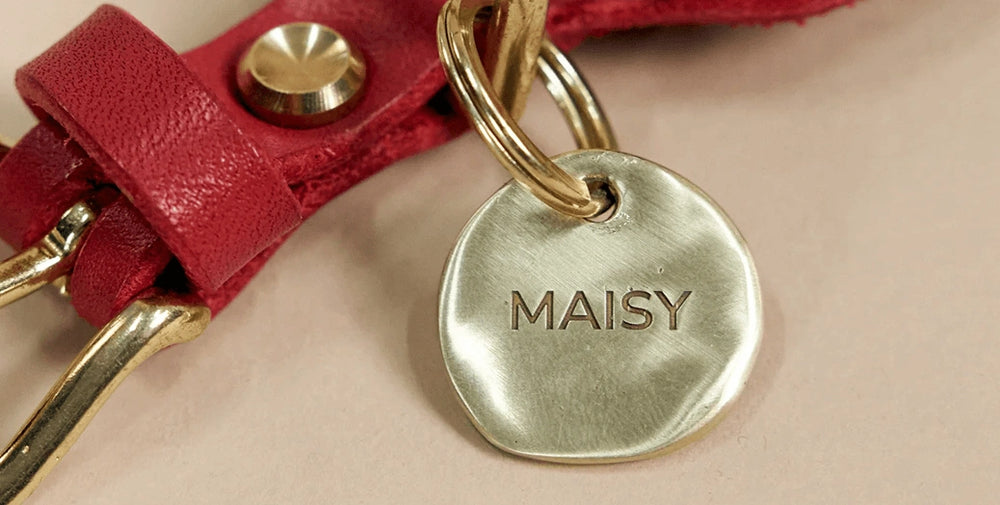
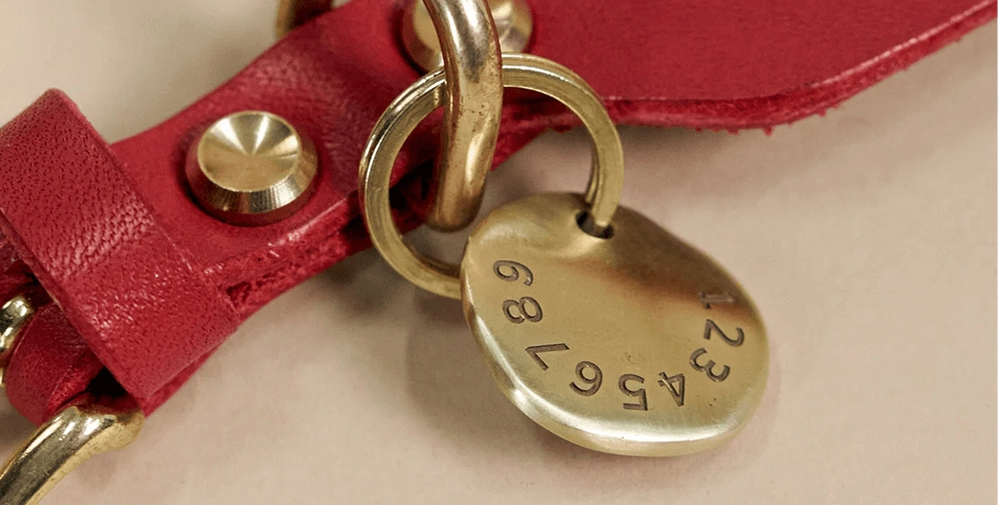
Plated hardware fails differently from solid hardware, and the difference is invisible at purchase. Plating is a thin coating over a cheaper base metal. It resists corrosion until it wears through at friction points. Once moisture reaches the base metal underneath, corrosion spreads from that point outward. Solid brass behaves differently. Its corrosion resistance is a property of the metal itself, not a surface treatment. Every Lille Björn collar uses a solid brass buckle, D-ring, and Chicago rivets for exactly this reason.
The strap material matters second, not first. For the full picture on buckles and D-rings, see our guide to dog collar hardware. The material comparison sits in the complete leather dog collar buyer's guide.
Four Activity Tiers and What Each One Demands
Sorting by activity level is more useful than sorting by breed or by price, because two Labradors living completely different lives need different collars. The American Kennel Club makes the same point in its overview of how to choose the right dog collar. It advises choosing by a dog's lifestyle, age, and activity level. The table below maps each tier to the specification that does the most work.
| Activity Tier | Typical Week | What Matters Most | Weak Point to Check |
|---|---|---|---|
| Everyday walking | Two to three neighbourhood walks a day on pavement | Corrosion-resistant hardware and a strap that softens rather than stiffens | Plating wearing through at the D-ring |
| Trail and off-leash | Weekend hikes, scrub, rock, uneven terrain | Abrasion resistance and width scaled to body weight | Surface scuffing and edge wear |
| Strong pullers | Consistent leash tension on every walk | Load spread across a wider contact surface, plus a harness for the walk itself | Stitching and rivets at the hardware junction |
| Water and mud | Regular swimming, wet fields, coastal walks | A non-absorbent strap that wipes clean | Any material that holds moisture against the skin |
Three of these four tiers are well served by leather. One is not, and that section is further down.
Everyday Walking: The Tier Most Owners Are Actually In
Most dogs are everyday walkers. They cover a few kilometres a day on pavement and grass. They meet rain now and then rather than constantly, and the collar is on for most of their waking hours. Gear roundups underserve this tier, because outdoor publications organise around hiking, running, and swimming instead. If you are still deciding between collar styles rather than materials, start with our ranking of dog collar types from worst to best.
For this tier, the collar is under low force but a very high cycle count. Nothing dramatic happens to it. It takes thousands of small flexes, thousands of buckle fastenings, and steady low-level exposure to skin oils and weather. Materials that resist a single hard pull can still degrade fast under that pattern. Materials that look unremarkable in a strength test can outlast them by years.
Full-grain vegetable-tanned leather suits this pattern because it responds to use rather than resisting it. At 3mm thick and chromium-free, it starts firm and breaks in gradually. It moulds to the shape of the dog's neck instead of holding a factory shape. It also develops a patina with wear, so the visible ageing is a change in character rather than a sign of decline. It is one of the few collar materials that genuinely improves with time.

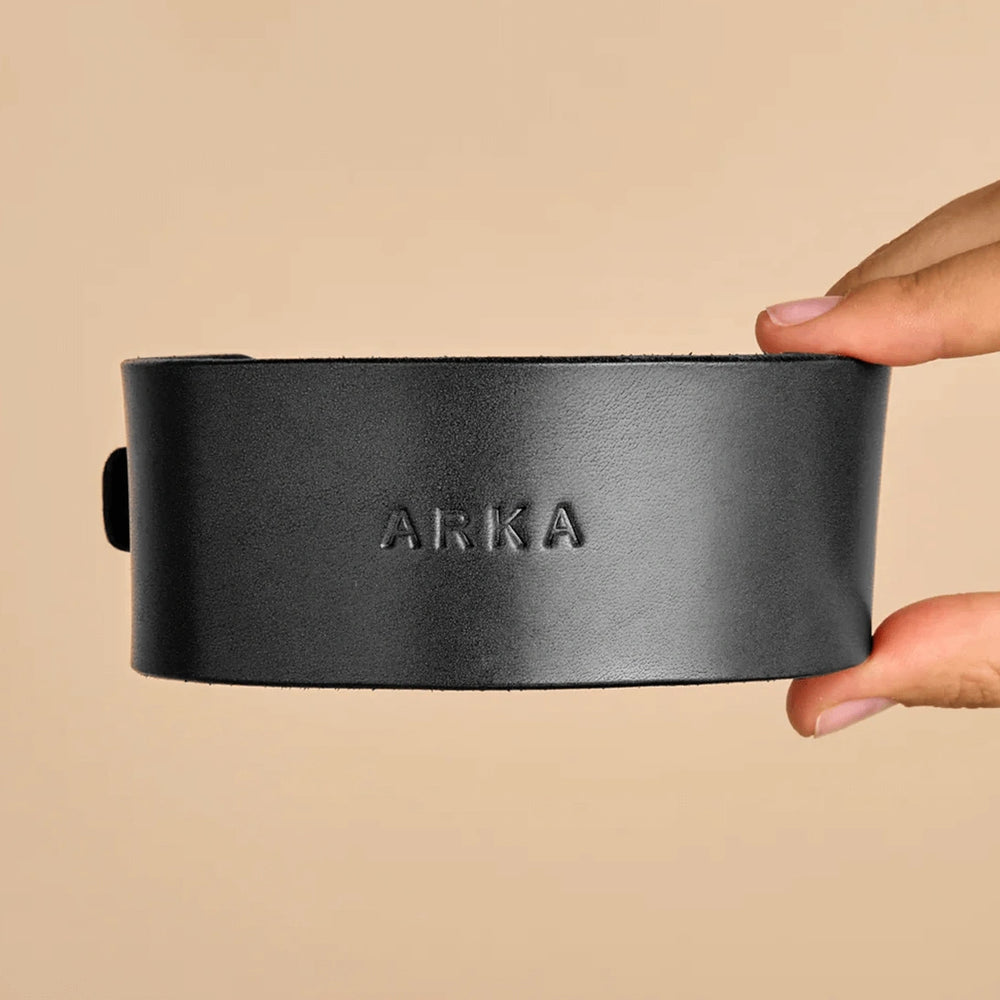
The Vero Classic leather dog collar is the everyday reference point in our range. It comes in 2cm (0.79 inches) and 3cm (1.18 inches) widths, sized XXS to XL. Your dog's name can be debossed into the leather, which gives you identification without a jingling tag. For thicker or longer coats, the Aeris Classic collar runs at 3cm (1.18 inches). Hand-punched perforations run the full length of the collar body. That reduces the solid contact area sitting against the coat.
Trail, Off-Leash, and High-Activity Dogs
Once a dog is regularly on trails, the main wear mechanism shifts from flexing to abrasion. Collars catch on scrub. They drag across rock when the dog lies down, and they take grit into the gap between strap and hardware. Surface wear becomes the visible story, not hardware fatigue.
This is where leather grade separates products that photograph alike. Full-grain leather is the outermost layer of the hide, with the densest fibre structure. It is left unsanded, so that structure stays intact. Lower grades are cut from deeper, weaker layers, then heavily finished to look premium. Under trail abrasion, a finished surface scuffs away and exposes the weaker layer beneath. Full-grain scuffs into patina instead. The full explanation sits in our guide to full-grain leather dog collars and why grade changes everything.
Construction matters as much as grade here. Our collars are cut as a single piece of leather. There are no bonded plies and no glue in the leather construction. That means no adhesive layer can separate when the collar gets wet and dries out repeatedly on a long day. A collar built from two thin layers glued together carries a failure mode that a single-piece collar does not have.
For active dogs at the larger end, width does more work than any other variable. Wider straps spread the same leash force across a bigger contact area, which reduces pressure on the neck and reduces localised stress on the collar itself. We set out the width reasoning by breed structure in the guide to choosing collar width by breed. Large-breed specifics sit in the large breed collar buying guide.

Strong Pullers Need a Harness, Not a Stronger Collar
A collar that holds a hard-pulling dog is not the same as a collar that is safe for one. Sustained leash tension against the front of the neck concentrates force on the trachea. No amount of strap width removes that mechanism. Width reduces pressure per square centimetre. It does not change where the force lands.
For a dog that pulls consistently, the practical setup is a harness for the walk and a collar for identification. That keeps leash force on the chest and keeps the collar doing the job it is well suited to. Certified trainer Cathy Madson takes a similar line in her guide to choosing a collar for your dog. Her view is that a flat collar works for dogs with reliable loose leash manners, and works less well for those without. The comparison between the two is covered in our comparison of dog collars and harnesses.
If you are keeping a collar on a puller for ID and occasional lead work, the wider option carries the load better. The Vero Wide leather dog collar runs at 4.5cm (1.77 inches) and is sized XXS to XL. That width spreads pressure across a broader surface than a standard flat collar.

Water, Mud, and Swimming: Where Leather Is Not the Right Answer
Leather is not waterproof. A collar soaked and dried again and again will stiffen and degrade faster than one that is not. If your dog swims most days, works in wet conditions, or spends the winter in deep mud, coated webbing is the more sensible material. It does not absorb water. It wipes clean rather than needing to dry out, and it asks almost nothing of you in maintenance.
That is a real trade-off, and it runs the other way too. Coated webbing looks the same on day one and year five. It is also stiffer, particularly in cold weather. It does not soften to the dog's neck, and it does not develop character with use. For a dog who swims twice a summer rather than twice a week, that is a poor exchange.
Leather handles incidental wet conditions without trouble. Rain on a walk, a puddle, a wet field: these are ordinary and the material copes. Let it dry away from direct heat, and condition it occasionally. Our care guide for leather and brass accessories covers the routine, which takes a few minutes every few months.
The honest rule: match the material to the frequency of water exposure, not to the possibility of it.
Matching Width and Size to Activity Level
Width is the variable most owners get wrong, usually by choosing on appearance. It is a fit decision before it is anything else. The strap has to suit the dog's neck circumference, the shape of that neck, and the coat sitting under it. A wide band on a short, fine neck restricts head movement, and a narrow band on a broad neck concentrates pressure into a small line.
The case for going wider comes from leash load, not from activity level. A dog can be highly active and still put almost nothing through the collar, because a loose leash transmits very little force no matter how many hours the dog is out. A dog that leans into the lead, or a heavy dog that lunges without warning, sends a real load into a narrow band of the neck, and a wider strap spreads that across more surface. The question to ask is how much pull the collar actually absorbs, and whether the neck has room for the extra width.
| Collar Width | Suits | Activity Note |
|---|---|---|
| 2cm (0.79 inches) | Toy breeds and dogs with finer, narrower necks | Keeps weight off a small frame. Suited to everyday walking rather than heavy load. |
| 3cm (1.18 inches) | Small through to large breeds | The versatile everyday width. Handles daily walking and regular trail use across most dogs. |
| 4.5cm (1.77 inches) | Sighthounds and larger breeds with substantial neck circumference | Spreads leash pressure across the widest contact surface in the range. |
Collar sizes run XXS to XL across the range. Neck circumference is a more reliable guide than breed or weight alone. Two dogs of the same weight can differ a lot through the neck. Measure at the base of the neck, then check that two fingers slide flat under the fastened collar. Our neck measuring guide walks through it, and the sizing chart by dog weight gives a starting range if you cannot measure right away. The full range sits in the leather dog collar collection.
Frequently Asked Questions
What is the most durable dog collar material?
It depends on the failure mode you are guarding against. Full-grain vegetable-tanned leather has the longest service life under everyday and trail use, because it softens with wear instead of degrading. Coated webbing lasts longer under constant water exposure. Nylon is the least expensive but tends to fray at the edges and loosen at the stitching under repeated stress.
What kind of collar is best for everyday walking?
A flat collar with a solid buckle and a corrosion-resistant D-ring suits most dogs for everyday walking. Width should scale with the dog's size, with 3cm working across small to large breeds. If your dog pulls consistently, pair the collar with a harness and use the collar for identification.
How long should a good dog collar last?
A well-made full-grain leather collar with solid brass hardware can last for years of daily use with basic care. It often outlives several cheaper collars bought over the same period. Lifespan depends on the dog, the terrain, and whether the collar is dried properly after heavy wet exposure.
Is leather a good collar for an active dog?
For trail, off-leash, and general high-activity use, yes. Full-grain leather resists abrasion well and ages into patina rather than surface failure. The exception is a dog that swims frequently, where a non-absorbent coated webbing collar is the more practical choice.
Does a wider collar mean a more durable collar?
Not directly. Width spreads leash force across a larger contact area, which reduces pressure on the neck and reduces localised stress on the strap. Durability is driven more by hardware quality and leather grade. Width and durability are related but they are not the same variable.
How do I know if collar hardware is solid brass or plated?
Look at any scratch or wear mark. Solid brass keeps a consistent warm tone through the scratch, because the colour runs through the metal. Plated hardware often reveals a silvery or grey base metal once the surface coating is worn or scratched.
Should my dog wear their collar all the time?
Many owners remove the collar indoors and overnight, which gives the coat and skin a break and reduces the chance of the collar catching on furniture or crates. If your dog wears a collar continuously, check the fit regularly and look for any rubbing at the contact points.