Quick Summary
To get a personalized engraved dog name tag, select a shape, enter your dog's name and your phone number at checkout, and the tag ships laser-engraved to order. Deep laser engraving cuts permanently into the brass surface rather than scratching it, which is why the text stays sharp and legible for years of daily outdoor use rather than fading within months like stamped or printed alternatives.
This guide covers every decision that actually matters: which engraving method holds up over time, which material resists corrosion under daily use, what information to put on the tag and what to leave off, how to attach it to a collar correctly, and how The Lille Björn ordering process works from shape selection to dispatch.

Engraving Methods Compared: Laser, Stamped, and Embossed
Three methods are used to personalize dog name tags. They behave differently under daily wear and the base material determines which method is even viable. The history of dog tag materials tracks how engraving methods shifted from hand-stamped tin to precision laser engraving on solid brass as production standards improved.
| Method | Best Material | Longevity | Key Weakness |
|---|---|---|---|
| Deep laser engraving | Solid brass, stainless steel | Excellent: cuts permanently into metal surface, does not fade or scratch off | Requires quality base metal to hold definition long-term |
| Stamped engraving | Aluminum, thin steel | Moderate: pressed impression can flatten under daily wear and become harder to read | Shallow depth means text loses definition faster, particularly on soft metals |
| Printed or surface-applied | Plastic, coated metal | Poor: fades within 6 to 18 months depending on UV and moisture exposure | No bonding with the base material, degrades fastest of all methods |
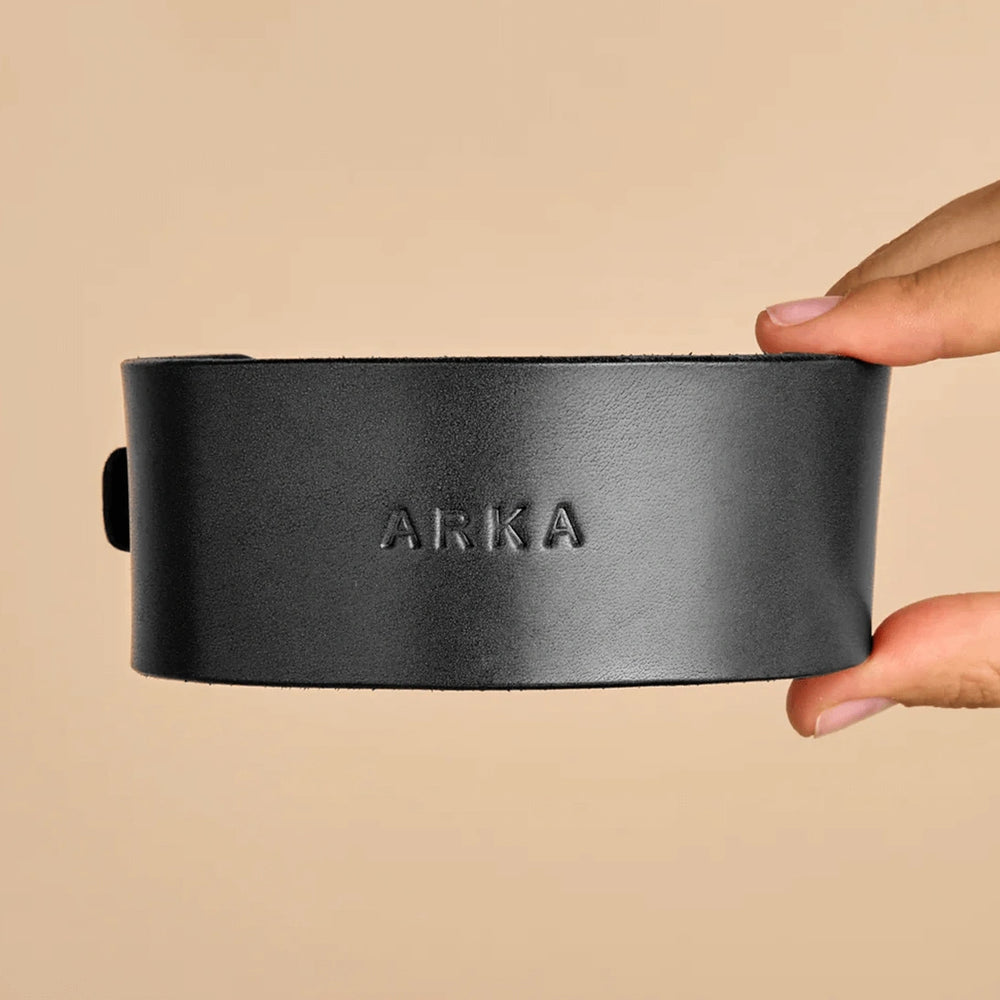
| Collar embossing | Full-grain vegetable-tanned leather | Exceptional: pressed into leather fiber structure, becomes more defined as leather develops patina | Carries name only, not contact details, best used alongside a brass name tag |
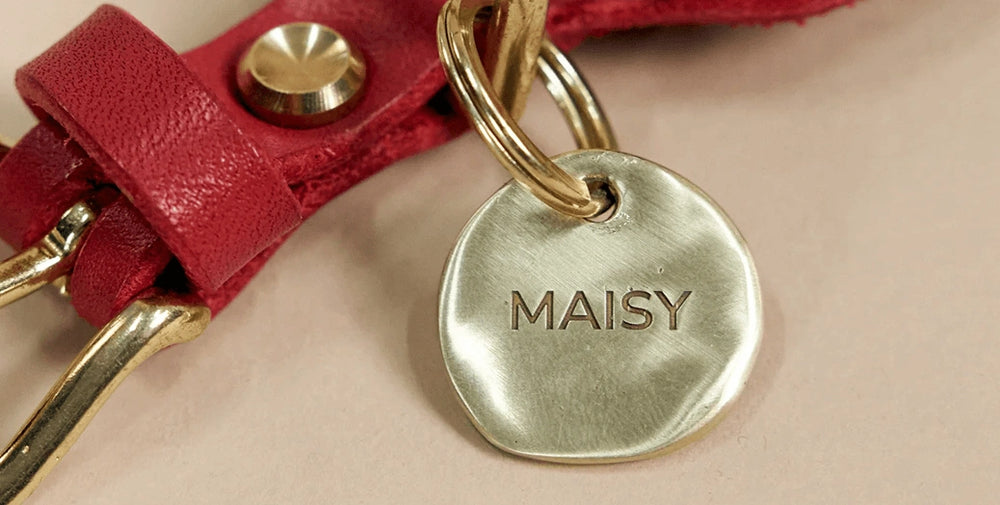
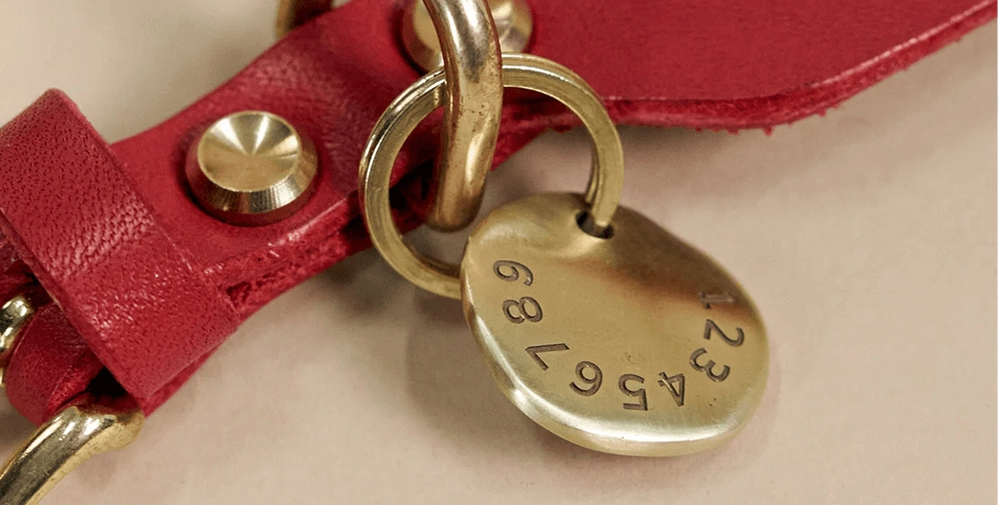
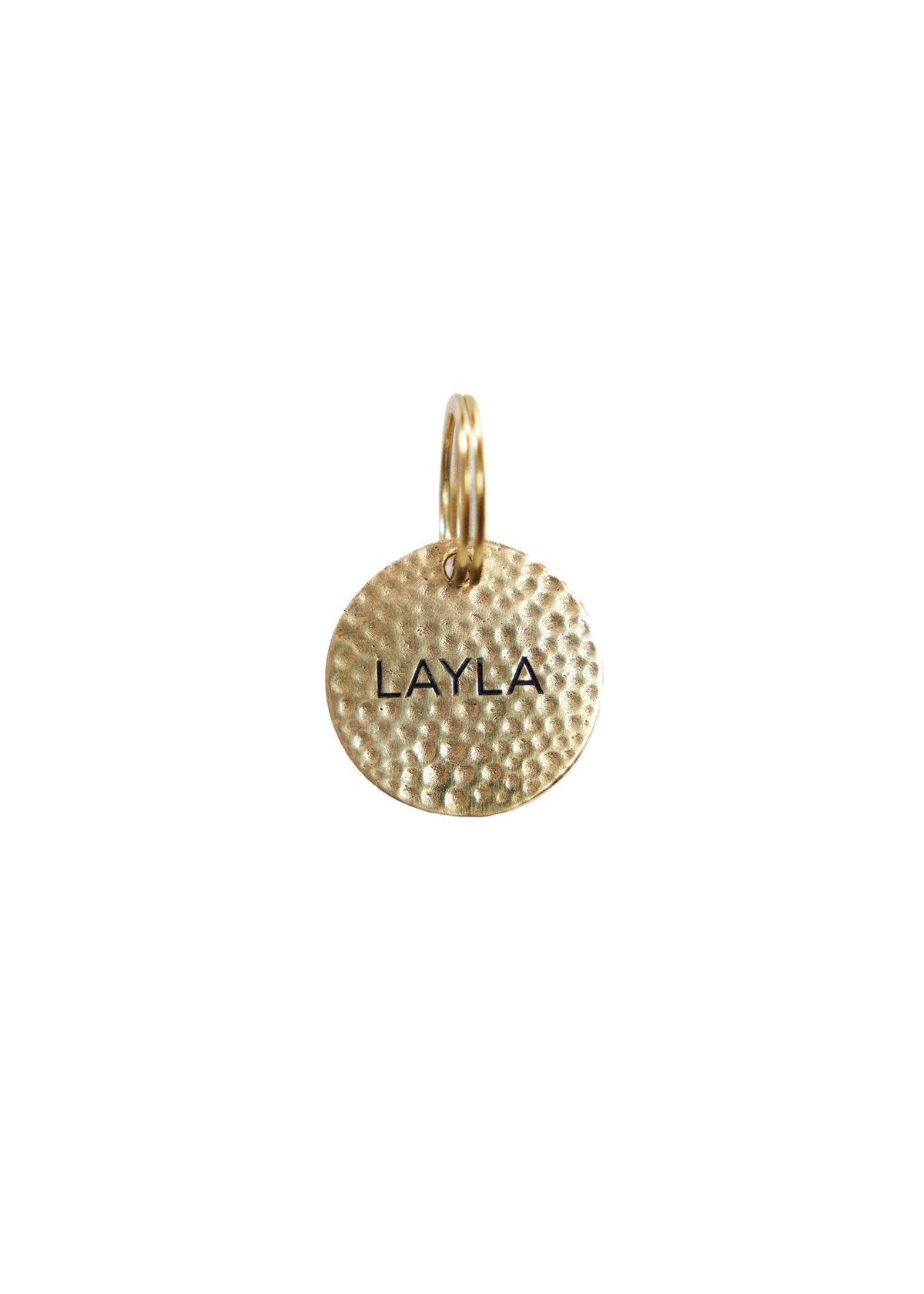
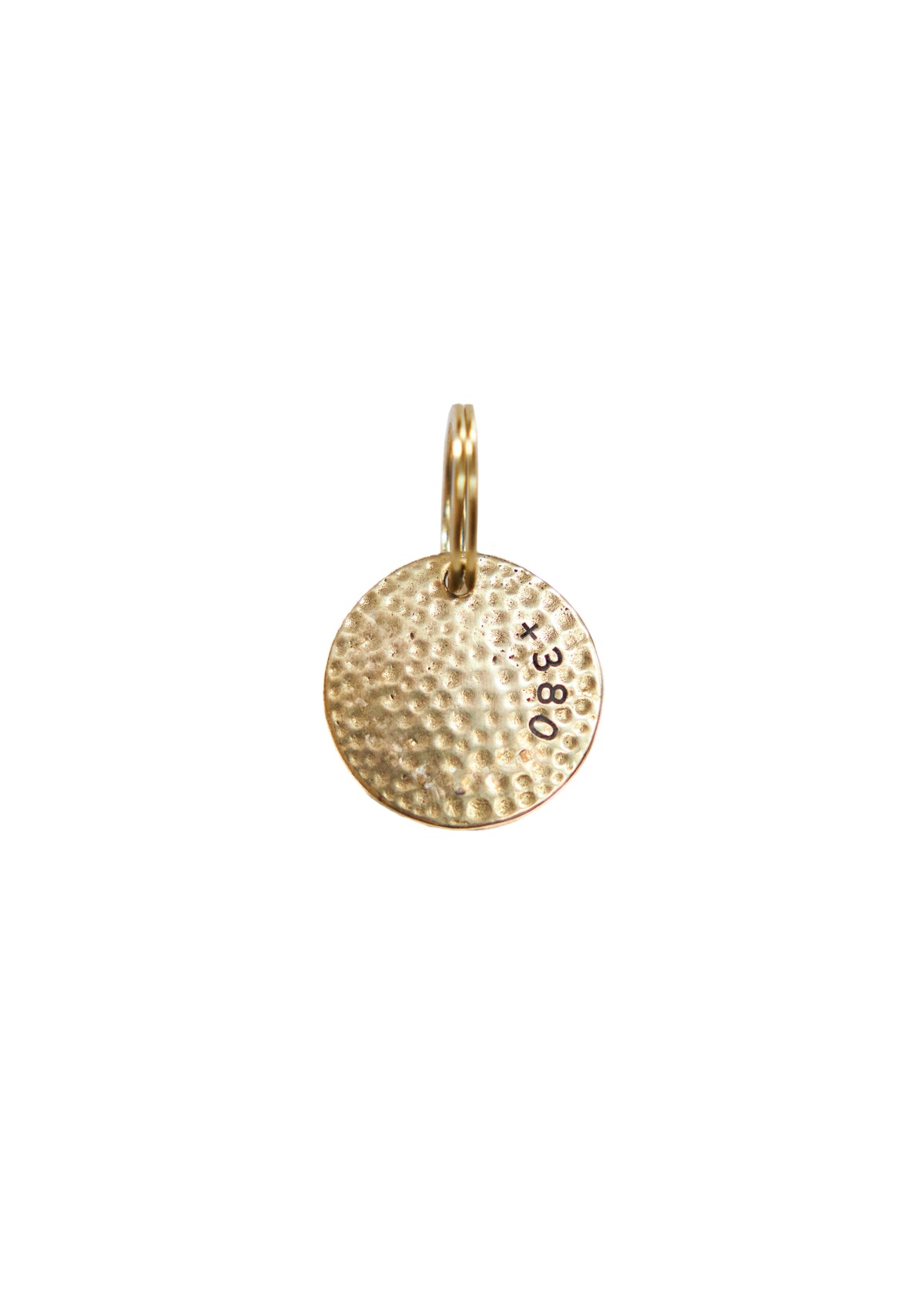
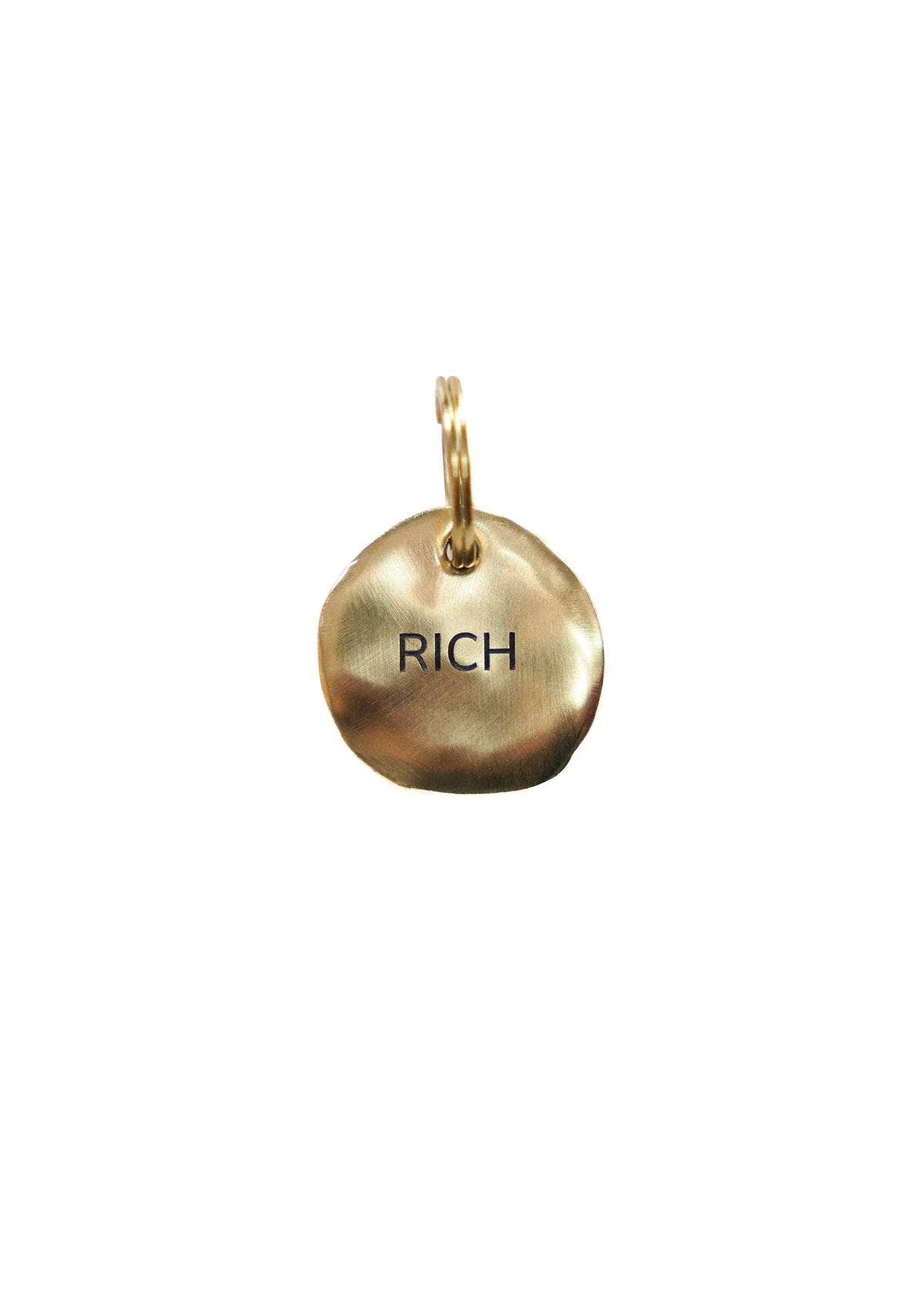
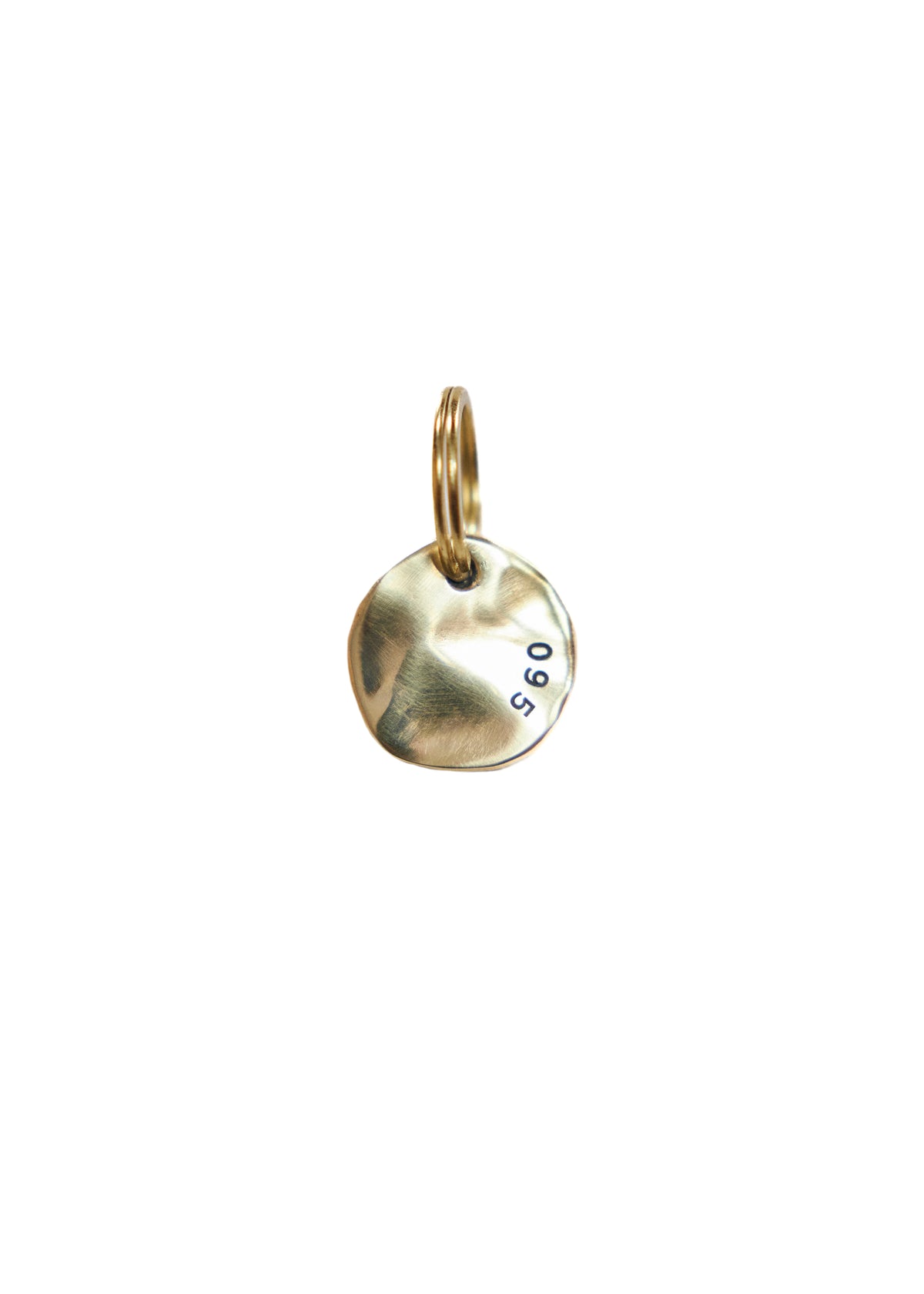
Deep laser engraving on solid brass is the most durable combination available for a dog name tag. The laser cuts permanently into the metal surface rather than pressing or scratching it, producing text with clean walls and a defined floor that holds its legibility through years of contact with moisture, outdoor surfaces, and daily wear. The Lille Björn name tags use deep laser engraving on recycled solid brass for exactly this reason.
Tag Materials: Brass, Stainless Steel, and Aluminum Compared
Solid brass resists rust and corrosion without plating or coating. It develops a warm patina over time rather than degrading, and deep laser engraving holds its definition in brass better than in softer metals. Brass is heavier than aluminum but lighter than stainless steel, sitting at a practical middle weight for most collar configurations. The Lille Björn name tags are made from recycled solid brass, meaning the material is sourced from reclaimed brass rather than newly extracted metal. For a deeper comparison of why brass hardware outperforms zinc and plated alternatives on dog accessories, the material differences extend beyond corrosion resistance to structural weight and long-term buckle integrity.
Stainless steel is the most corrosion-resistant tag material and holds up well under heavy water exposure. It is harder to engrave deeply than brass, which means laser engraving can be shallower and take longer to show contrast development. For dogs that swim daily or live in very humid climates, stainless steel is a practical alternative to brass.
Aluminum is lightweight and inexpensive. It corrodes faster than brass or stainless steel under sustained moisture and outdoor exposure, and stamped engraving on aluminum is particularly prone to losing definition as the soft metal wears. Aluminum tags are a lower-cost option but typically need replacing sooner than brass or stainless alternatives.
What to Put on a Dog Name Tag (and What to Leave Off)
Dog name tags have limited surface area. The information you choose determines how useful the tag is in the moments after a dog goes missing, which is the only situation in which the tag truly matters. Every line of text should earn its place.
What to include
Your dog's name. A name on the tag allows anyone who finds your dog to address them directly, which can calm a nervous or reactive dog and make securing them easier. A dog that hears its own name responds in a way that an unaddressed animal does not. For guidance on sizing the collar that carries the tag, the full collar and harness size guide covers measurements from XXXS through XL across all breed categories. Browse the full range of personalized engraved dog name tags from The Lille Björn, each made to order in recycled solid brass with deep laser engraving and free personalization on every tag.
Your mobile phone number. This is the most important piece of contact information for lost dog recovery. A phone number allows the person who finds your dog to reach you immediately, with no internet required, no database lookup, and no scanner. Include the number most likely to be answered at any hour. A secondary number adds a useful backup layer. The Humane Society recommends a collar and ID tag with current contact information as the most immediate tool for lost dog recovery, noting that private citizens who find a dog do not have access to microchip scanners.
What to leave off
Your home address. An address on a dog tag tells anyone who finds your dog exactly where you live and confirms you are likely not at home. A phone number achieves the same reunion outcome without the exposure. The ASPCA supports pairing a collar and personalized ID tag as the primary identification layer for companion animals, with a phone number as the core contact detail. The ASPCA advises including a current phone number and relevant contact information on a pet's collar tag, prioritizing contact details that allow a finder to reach you immediately over static address information.
Lengthy personal messages. Phrases like "I'm friendly" or "Reward if found" use engraving space that could carry a second phone number. Keep the tag functional rather than decorative. The AKC describes a collar and ID tag as the first line of defense against losing your dog, the universal signal that your dog has a home and family. The harder it is for the person who finds your dog to identify you, the less likely your dog returns home quickly.
The collar and tag system
A personalized leather collar with your dog's name embossed directly into the leather and a brass name tag carrying your phone number creates a two-layer identification system. The collar communicates identity at a glance without requiring the tag to be read. The tag carries the contact information. Each does what the other cannot. For dogs wearing the Vero collar with name embossing, the tag only needs to carry a phone number, which frees up the full engraving surface for a primary and secondary contact number. The leather used in both the collar and the tag's setting is full-grain Italian vegetable-tanned leather, the same chromium-free material used across every piece in the collection. As the Humane Society notes, identification tags are a pet's first ticket home because a private citizen who finds a lost dog is unlikely to have a microchip scanner.

How to Attach a Dog Name Tag to a Collar
Tag attachment method affects how securely the tag stays on the collar and how much noise it makes during walks. Two attachment methods are standard.
Split ring. The standard attachment. A split ring threads through the tag hole and clips around the collar's D-ring. Split rings are secure and widely available but require two hands and a fingernail to open, which makes swapping tags between collars slower than a lobster clip. They are the most common attachment on mass-market tags.
Lobster clip. A lobster clip hooks directly onto the D-ring in one motion and can be removed and reattached quickly. This is a practical choice for owners who use multiple collars for the same dog, since the tag moves between them without tools. Lobster clips are slightly bulkier than split rings but add no meaningful weight for most tag and collar combinations.
On The Lille Björn collars, the D-ring sits on the top strap of the collar at the center of the neck. Attaching the name tag here keeps it visible from above rather than tucking it under the chin where it can be harder to spot on a nervous or moving dog. For wide collars (4.5cm), use a D-ring clip wide enough to sit flat against the strap without torquing sideways under the tag's weight.
For guidance on how the collar and tag work together as a complete identification system, see our guide to why personalized dog name tags are more than just an accessory.
How to Order a Personalized Engraved Dog Name Tag from The Lille Björn
- Select a shape. The Lille Björn offers the Pebble tag shape in recycled solid brass. The shape is designed to sit flat against the collar without excessive movement during walks.
- Enter your engraving details at checkout. The tag is engraved with your dog's name and your phone number. Personalization is free on every tag.
- Allow for production time. Personalized items ship within 1 to 10 business days. If you are unsure of your dog's size, the neck measurement guide covers the two-finger rule and breed-specific size ranges from XXXS to XL.
- Pair with a matching collar. For a complete identification setup, the brass tag pairs directly with any Vero collar. The Vero collar carries your dog's name in embossed leather. The tag carries your contact number in engraved brass. Together they cover both identification functions without asking either product to do the other's job. For the full ordering walkthrough across collars, walk kits, and bundles, see our guide to ordering personalized collars, walk kits, and bundles.
For more on how a collar and tag work together as a complete identification system, see our guide to ID tags versus metal plate collars and our complete dog ID tag guide.
Frequently Asked Questions: Personalized Engraved Dog Name Tags
How can I get a personalized engraved dog name tag?
Select a tag shape from The Lille Björn name tag collection, enter your dog's name and your phone number at checkout, and the tag ships laser-engraved to order. Personalization is free on every tag. Production takes 1 to 10 business days depending on order volume.
What is the best material for a dog name tag?
Solid brass with deep laser engraving is one of the more durable combinations available. Brass resists rust and corrosion under daily outdoor use and holds laser engraving with greater long-term legibility than aluminum, which is softer and more prone to surface wear. Stainless steel is the most corrosion-resistant option and suits dogs that swim regularly.
What information should I put on my dog's name tag?
Your dog's name and your mobile phone number are the two most useful pieces of information for lost dog recovery. A secondary phone number adds a useful backup layer. Leave your home address off: a phone number achieves the same reunion outcome without revealing where you live to strangers.
Is laser engraving better than stamped engraving on a dog tag?
For long-term legibility, yes. Laser engraving cuts permanently into the metal surface, producing text that does not fade or scratch off under daily wear. Stamped engraving presses an impression into the metal surface. On softer metals like aluminum, stamped impressions can flatten over time and become harder to read. Deep laser engraving on solid brass holds its definition through years of outdoor use.
Should I put my address on my dog's tag?
No. An address on a dog tag tells anyone who finds your dog exactly where you live and signals that you are likely away from home. A mobile phone number achieves the same lost dog reunion outcome without the privacy exposure. If space allows, a secondary phone number is more useful than a street address.
How do I attach a dog tag to a collar?
Thread a split ring through the tag hole and clip it around the collar's D-ring, or use a lobster clip for faster tag swapping between collars. On The Lille Björn collars, the D-ring sits at the center-top of the collar strap. Attaching the tag here keeps it visible from above, which makes it easier to read on a moving or nervous dog without requiring the animal to be handled.
Can I use a name tag and a personalized collar together?
Yes, and this combination covers both identification functions more completely than either alone. A personalized leather collar with your dog's name embossed directly into the leather is readable at a glance without the tag needing to be turned over or held still. The brass tag carries your phone number. For dogs wearing the Vero collar with name embossing, the tag's full engraving surface is available for contact information rather than sharing space with the dog's name.