Quick Summary
Dog tags serve two entirely separate purposes depending on context: in the military, they are metal identification discs worn by soldiers that carry their name, serial number, blood type, and religious preference; in the context of pet ownership, they are small engraved metal discs attached to a dog’s collar carrying the owner’s contact information. Both types share a common origin in the need for reliable identification and both have evolved significantly from their earliest forms into the durable, personalised accessories they are today. This guide covers the history of dog tags from military origins through to modern pet ID, and explains what makes a quality dog tag in 2026.

What Are Dog Tags?
The term “dog tag” refers to two different types of identification disc depending on context.
Military dog tags are metal identification tags worn by armed forces personnel on a chain around the neck. They carry standardised personal information designed to identify a soldier in the event they are killed or incapacitated in combat. The US military format includes: last name, first name and middle initial, service number, blood type, and religious preference (or “NO PREF” for none stated). The tags are typically issued in pairs so that one can remain with the body for identification while the other is removed for record-keeping.
Pet dog tags are small engraved metal discs or shapes attached to a dog’s collar D-ring. They carry the owner’s contact information, typically the dog’s name and the owner’s phone number, to allow a finder to reunite a lost dog with their owner quickly. In many countries, some form of visible identification on a dog’s collar is a legal requirement.
The Purpose of Dog Tags
The purpose of dog tags in both military and pet contexts is the same at its core: to provide immediate, readable identification without requiring any technology, scanner, or database access. A person who encounters a dog tag whether on a fallen soldier in 1917 or on a lost Labrador in a park can read the relevant information immediately and act on it. This simplicity is precisely what has kept the dog tag relevant through a century of technological change.
The History of Dog Tags
Origins: Late 19th Century Pet Identification
The first known use of dog tags for pet identification dates to the late 19th century. Responsible pet owners began attaching small metal tags to their dogs’ collars carrying the animal’s name and the owner’s address. By the early 20th century this had become standard practice in many urban areas where dogs frequently became separated from their owners in crowded environments.
Military Adoption: The Civil War and Standardisation
Parallel to civilian pet identification, the concept was adopted by the military. During the American Civil War (1861–1865), soldiers began creating makeshift identification markers from whatever materials were available including paper, cloth, and eventually metal to ensure they could be identified if killed in battle. The absence of any official system meant many casualties were never positively identified.
By 1906, the US Army had introduced standardised metal identification tags for the first time, requiring soldiers to wear them at all times in the field. France, Britain, and Canada adopted similar systems during World War I, and by World War II the use of metal identification tags by all major military powers was universal. The nickname “dog tag” emerged during this period, reportedly from the resemblance of the small metal discs to the identification tags used on dogs.
What Information Is on Military Dog Tags?
The standard US military dog tag format carries five pieces of information:
- Last name
- First name and middle initial
- Service number (or Social Security Number in more recent formats)
- Blood type
- Religious preference (used to determine appropriate burial rites)
Tags are issued in pairs: one remains with the body for official identification, the other is collected for military records. This dual-tag system, established during World War II, remains the standard format in the US military today. The AKC notes that the same principle of immediate readable identification that made military dog tags effective applies directly to pet identification.
Civilian Adoption and the AKC
One of the very first institutions to promote proper pet identification was the American Kennel Club. By the early 20th century, the AKC made it a requirement that all registered dogs needed to have official ID tags, and this definitely marked a defining moment in pet ownership across the country.
As well as the simple concept of owner identification, dog tags soon started to be used for additional uses including:
- Confirmation of rabies vaccination.
- Credentials for any type of service dog like therapy animals, guide dogs and search and rescue dogs.
- Working dogs in the military and in law enforcement.
Once they were firmly established as a functional piece of equipment, the trend then started to move into the more fun and unique world of style and customization!

Beyond Functionality: The Modern Pet ID Tag
Nowadays, there is no doubt that dog owners around the world like to reflect a bit more creativity and personality into their pup’s tags! The trend towards customization has seen a huge boom in variety, with tags available in a range of different materials, designs and colors. Some even boast ultra modern features like NFC chips, QR codes and handy GPS trackers, all really taking the concept of a simple ID tag into a new tech savvy world.
The thing to remember, though, is that no matter how cool and stylish modern tags get, the factors of readability and durability remain absolutely essential. It’s all about striking that perfect balance between function and fashion.
What Are Dog Tags Made Of?
The material choice for a dog tag determines both its longevity and its legibility over years of daily wear. Common materials include:
- Stainless steel: the most common military material. Highly resistant to corrosion and physically durable. The standard choice for military dog tags because it resists the conditions of field use. Cold to the touch and somewhat industrial in aesthetic.
- Brass: the premium choice for pet ID tags. Naturally corrosion-resistant, warmer in aesthetic than steel, and develops a distinctive patina over time that adds character without compromising legibility. Recycled brass sourced from repurposed metal adds an environmental dimension.
- Aluminium: lightweight and inexpensive but significantly less durable than brass or steel. Prone to scratching and surface corrosion that can affect legibility over time. Suitable for short-term use but not the best choice for a tag expected to last years.
- Zinc alloy: commonly used in budget tags. Less corrosion-resistant than brass or steel, prone to snapping under pressure, and the plating that gives zinc alloy its initial appearance fades quickly with daily wear.
Brass Dog Tags: Recycled and Sustainable
One of the most interesting developments in modern dog tag production is the creative repurposing of brass from recycled sources. We think that this is a really interesting and unique way to turn military waste into something stylish and durable for your pup to wear! We take pride in guaranteeing that the items we sell are always of the highest quality, and eco-friendly to boot!
Why Choose Brass?
-
Durability
Brass is a material that is naturally resistant to corrosion, which makes it the perfect option for daily wearing. -
Sustainability
The repurposing of things like old bullet casings helps to reduce the amount of waste used in the making of the tags, promoting an all round better level of eco consciousness. -
Aesthetic Appeal
The lovely golden finish that brass has gives it a really chic and timeless look, all the while retaining the all important practical and functional benefits too.
Alongside the matter of material choice, the fine details of the engraving method can also have a big impact on the quality, readability and longevity of any dog tag.
Precision Engraving: Laser vs Hand Stamping
Traditional hand stamped engraving has certainly served a purpose over the years, but from a modern point of view it can suffer from:
- Lots of surface creasing that can weaken the metal over time.
- Inconsistent depth of letters that can result in issues with readability.
- Text fading over time due to the unavoidable nature of wear and tear.
In complete contrast, the more modern practice of deep laser engraving offers a wide range of benefits:
- Sharper, cleaner lines that will remain easy to read for years.
- No risk of surface distortion which ensures that your tag keeps all of its original integrity.
- Much more versatility and customizability in design, like multiple fonts, intricate details and symbols.
With the combination of far superior materials and advanced engraving techniques, it’s fair to say that our brass dog tags truly stand out from the crowd in terms of both quality and longevity!

Why The Lille Björn’s Brass Tags Stand Out
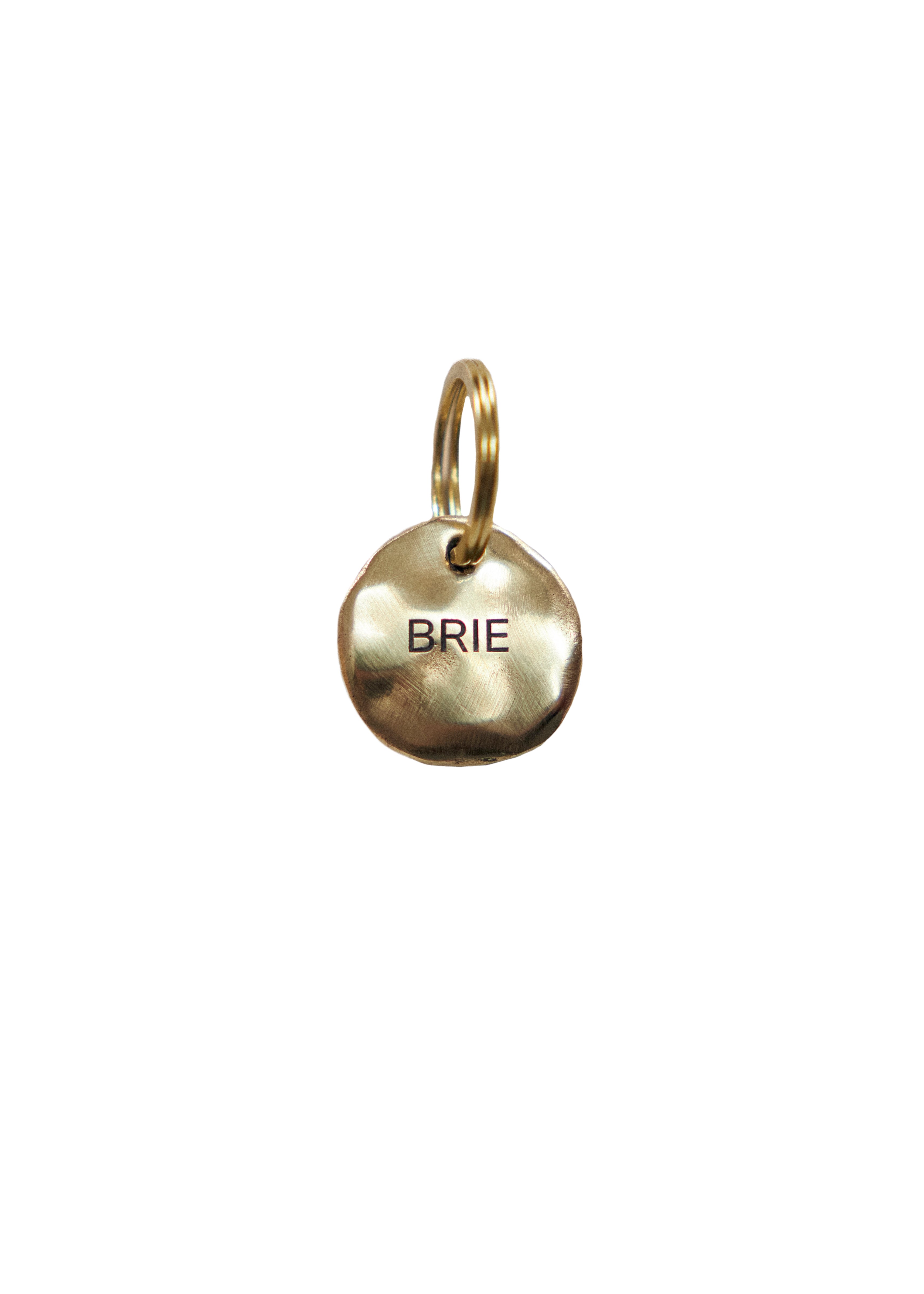
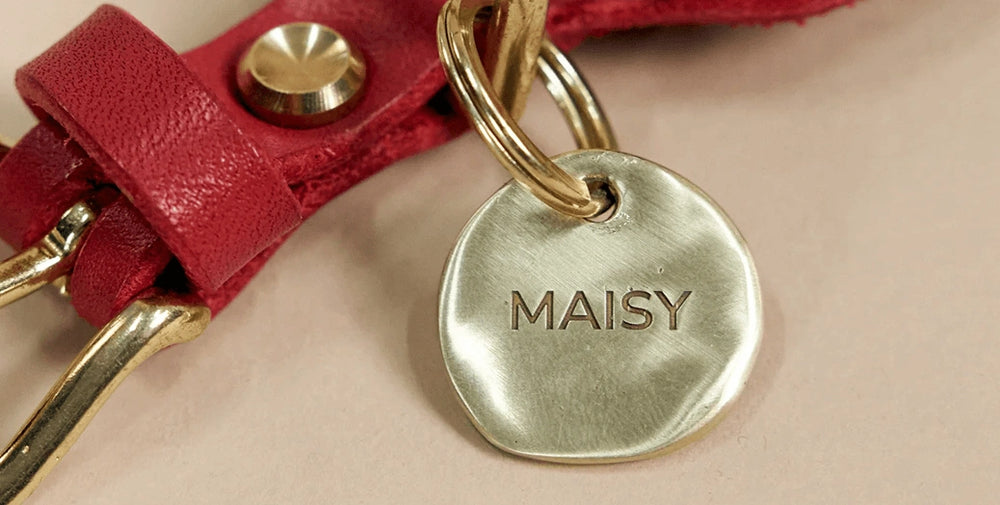
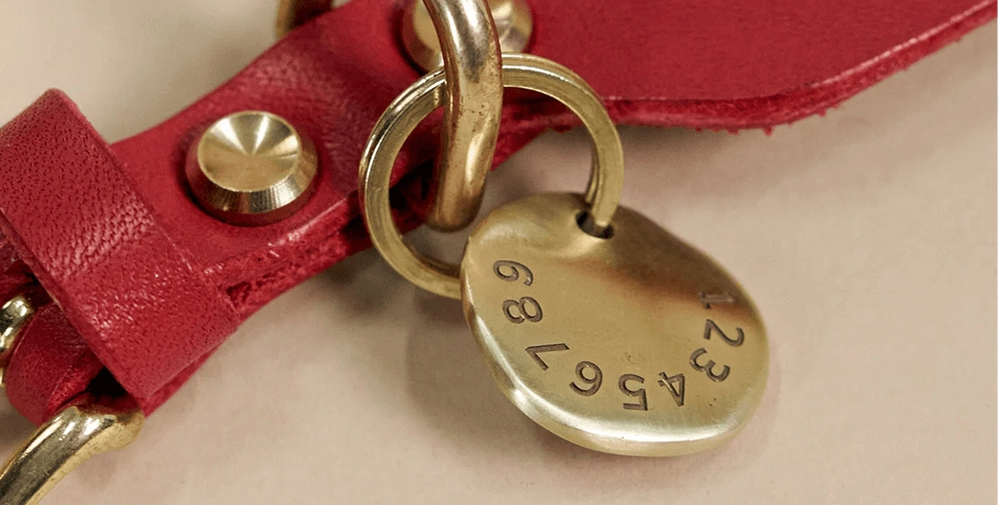
The Pebble and Ripple name tags combine the best of all the above:
-
Eco-Friendly Production
They are made from recycled shell and bullet casings that serve to reduce the environmental impact that our production process has. -
Exceptional Durability
Brass is about as tough as it gets! It is able to withstand corrosion, rust and all kinds of extreme weather conditions that you and your pup might encounter. -
High Quality Engraving
The deep laser engraving method guarantees the best possible clarity and longest lasting readability. -
Stylish and Customizable
The combination of visual appeal and functional practicality makes these tags a real win-win for any dog owner who wants to add some fun and uniqueness to their dog's accessory collection.
Material and engraving quality settle the question of durability; what actually goes on the tag, and how to submit it at checkout, is covered in how to get a personalized engraved dog name tag.
Frequently Asked Questions: Dog Tags
What are dog tags for?
Dog tags serve identification purposes in two contexts. Military dog tags identify soldiers in the field, carrying their name, service number, blood type, and religious preference so they can be identified if killed or incapacitated. Pet dog tags carry the owner’s contact information, typically the dog’s name and the owner’s phone numbe, so that a lost dog can be quickly reunited with their owner. In many countries, visible collar identification for dogs is a legal requirement.
What is the history of dog tags?
Pet identification tags first appeared in the late 19th century. The military adopted the concept during the American Civil War, when soldiers began creating improvised ID markers to ensure identification if killed in battle. The US Army standardised metal identification tags in 1906; Britain, France, and Canada adopted similar systems during World War I. The civilian nickname “dog tag” emerged from the resemblance of military ID discs to pet identification tags. The American Kennel Club formally promoted pet ID tags in the early 20th century, cementing them as standard practice in responsible pet ownership.
What are dog tags made of?
Military dog tags are typically made from stainless steel for its exceptional corrosion resistance in field conditions. Pet dog tags are made from a range of materials: brass (the premium choice: corrosion-resistant, aesthetically warm, develops a patina), stainless steel (durable and functional), aluminium (lightweight but less durable), and zinc alloy (budget option, least durable). Recycled brass with deep laser engraving is the best combination for a pet tag expected to remain legible through years of daily wear.
What information is on a military dog tag?
The standard US military format carries five fields: last name, first name and middle initial, service number (or Social Security Number), blood type, and religious preference. Tags are issued in pairs: one stays with the body for identification, the other is collected for official records. The same basic principle is readable identification without requiring any technology underlies both military and pet dog tags.
How do you read a dog tag?
Military dog tags are read top to bottom: the first line is the surname, the second is the given name and middle initial, the third is the service or Social Security number, and the fourth and fifth lines are blood type and religious preference. Pet dog tags typically carry the dog’s name on one side and the owner’s phone number on the reverse, though layouts vary by design and the amount of information engraved.
Why is brass the best material for pet dog tags?
Brass is corrosion-resistant under everyday conditions (unlike zinc alloy or aluminium, which corrode and lose legibility over time), physically durable without being brittle, and develops a warm patina that improves aesthetically with age. Recycled brass adds a sustainability dimension. Paired with deep laser engraving which produces sharper, more permanent text than hand-stamping it is the most reliable combination for a pet tag expected to remain functional and legible for years.
Are personalised dog tags worth it?
Yes. A personalised tag that carries your dog’s name and your current phone number is the fastest possible identification method in a lost-dog emergency faster than microchip scanning (which requires a vet or shelter), faster than GPS trackers (which require battery and signal), and faster than any other technology. A high-quality personalised tag that remains legible for years is one of the most cost-effective safety investments available for any dog owner.
From Battlefield to Dog Park
The journey of the dog tag from Civil War improvisation to military standardisation to modern pet accessory is a story about one simple, persistent idea: that readable, immediate identification saves lives. In the 19th century that meant returning lost dogs to their owners. In the 20th century it meant identifying soldiers on the battlefield. In 2025 it still means the same thing it always has: that when something goes wrong, a small piece of engraved metal carries all the information needed to make it right.
Browse The Lille Björn’s custom name tag collection, the Pebble and Ripple, in recycled brass with deep laser engraving, available in multiple sizes and fully personalised with your dog’s name and your contact details.