Quick Summary
Yes, dog collars can damage the trachea, but only in specific circumstances. A flat collar used as a leash attachment on a dog that pulls consistently concentrates leash force on a narrow band of neck tissue, and sustained or repeated pressure on the trachea contributes to the weakening of the cartilage rings that support it. The risk is highest with narrow collars, tightening collars (choke chains and prong collars), and in small and toy breeds whose tracheas are more delicate to begin with. A wide flat leather collar used for ID only with a back-clip harness handling all leash attachment during walks eliminates this risk almost entirely.

What Is The Trachea?
Okay, let’s start out with the basics. What are we actually talking about when we say the trachea?
You are probably more familiar with the term ‘windpipe’. The trachea is a crucial part of your pup’s respiratory system, a flexible tube that is supported within the body by a series of C-shaped rings made from cartilage. It is essentially the passageway for air to travel from your dog’s throat to its lungs.
The trachea does an incredibly important job, but it can be very delicate in smaller and toy breeds. If any excessive pressure is ever placed on the throat area, there is a risk of restriction and damage. This can be anything from temporary discomfort to full blown collapse, which is obviously extremely scary for both pup and parent!
The more you understand the role of the trachea in your pet’s health and comfort, the better equipped you will be to make the right choices regarding accessories and gear.
Signs Your Dog May Have Tracheal Damage or Collapse
Tracheal collapse develops gradually and its early signs are often dismissed as normal dog behaviour. Knowing what to look for allows you to act before the condition becomes severe.
Early signs:
- A persistent dry, honking cough, often described as sounding like a goose, that is triggered by excitement, exercise, eating, or drinking
- Gagging or retching after drinking water
- Coughing or choking when the collar applies any pressure during a walk
Progressive signs:
- Exercise intolerance, the dog tires more quickly than expected
- Laboured breathing after mild exertion
- Blue-tinged gums during episodes of distress (indicating reduced oxygen)
- A cough that worsens in hot or humid weather
If your dog shows any combination of these signs, consult your vet promptly. Tracheal collapse is a progressive condition, early intervention and management significantly improve long-term outcomes. Your vet can confirm diagnosis via X-ray or fluoroscopy and advise on the most appropriate management approach for your dog's specific case. For a detailed clinical overview, see VCA Animal Hospitals' reference on tracheal collapse in dogs.
Can Dog Collars Damage Trachea?
Dog collars are an essential part of pet ownership, purely for purposes of control and identification when out for walks, but if they aren’t chosen appropriately, they can pose an unfortunate risk to health. The connection between a vulnerable trachea and a badly fitting collar is something that isn’t hard to imagine, right?
Tracheal collapse is a scary thing to think about, but the more you know, the better prepared you can be. It occurs when the rings of cartilage that support your dog’s trachea start to weaken and flatten, resulting in a restricted airflow. It can be exacerbated by jerking on a leash or too much consistent pulling, as well as a collar that is too tight to begin with.
In terms of what you can do to avoid this, the best answers we can give you involve switching to wider dog collars and harnesses that help to more evenly distribute pressure across the neck. There are plenty of expertly designed accessories that focus on reducing the force around the tracheal area, with a harness in particular avoiding the neck altogether.
No matter what decision you personally make, the key thing is to ensure a proper fit. Collars that are too tight OR too loose can cause their own problems. Follow the two-finger rule: with the collar buckled at its normal position, slide two flat fingers between the collar and your dog's neck. Two fingers with light resistance is the correct fit. Measure snugly at the middle of the neck, that measurement is your collar size directly on The Lille Björn size chart, with no addition needed. See our complete dog collar sizing guide for the full protocol.
Collar Type and Tracheal Risk. Not All Collars Are Equal
The risk a collar poses to the trachea depends significantly on its design. Here is how the most common collar types compare:
- Choke chains and prong collars: the highest tracheal risk of any collar type. Choke chains have no maximum tightening limit, they continue to compress the trachea for as long as the dog pulls. A 2025 review of 21 studies on canine restraint devices published on PubMed confirmed that tightening collars pose the greatest risk of tracheal compression and discomfort. These collar types should be avoided entirely for any dog with tracheal sensitivity.
- Narrow flat collars (under 2 cm) used as leash attachments: moderate risk for consistent pullers. A narrow band concentrates leash force on a small area of the trachea, the smaller the surface area, the higher the pressure per square centimetre. For small breeds whose tracheas are already more delicate, even a well-fitted narrow collar used as a lead attachment during pulling represents a meaningful cumulative risk.
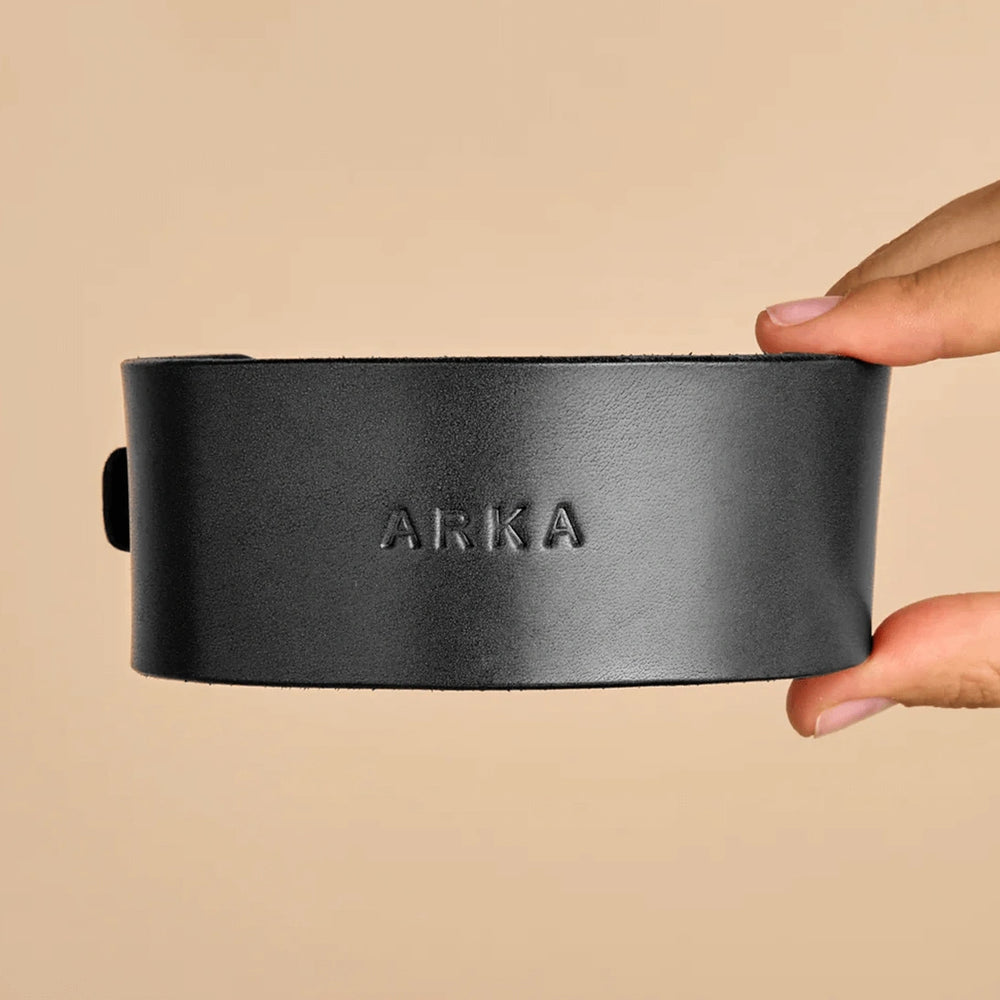
- Wide flat leather collars (3–4.5 cm) used as leash attachments: lower risk due to pressure distribution across a larger neck surface. For larger breeds and as a supplementary walking collar for dogs that do not pull significantly, a wide collar reduces tracheal concentration force compared to narrow alternatives. For small breeds and consistent pullers, however, removing leash tension from the neck entirely through a harness remains the safer approach.
- Wide flat leather collars used for ID only (leash on harness): minimal to zero tracheal risk. When the collar carries only the ID tag and a harness handles all leash attachment, the collar never transmits leash force to the neck. This is the setup that most comprehensively protects the trachea.
Can Choke Collars Cause Tracheal Collapse?
Yes and this is one of the most well-documented risks in veterinary collar research. Choke chains apply unlimited compressive force to the trachea during pulling, and sustained or repeated compression over time contributes to the weakening and flattening of the cartilage rings that support the airway. For any dog and especially for small breeds, brachycephalic breeds, and dogs predisposed to tracheal issues choke collars should be avoided entirely.
Wide Dog Collars And Leather Benefits
When it comes to safeguarding your dog against the risk of tracheal damage, wide dog collars can be an absolute game changer. This is particularly the case if you are the proud parent of a slender necked breed like greyhounds, whippets and Italian greyhounds. Their beautiful, slim neck structures are much more delicate and therefore much more vulnerable to injury. Let’s go through some of the key benefits of a soft vegetable tanned leather wide collar.

Benefits For Long Necked Breeds
Wider collars are a match made in heaven for any dogs with elongated necks, simply because they provide the most enhanced support whilst reducing risk of injury. Breeds like whippets and greyhounds are also likely to have more sensitive skin, and the wider surface area also helps to prevent excess irritation and rubbing as well.
These collars are also perfect for shorter necked breeds and smaller dogs that have thinner frames. For smaller pups, a collar width of between 1 and 3 cm is recommended for best fit that isn’t going to overwhelm their proportions!
The Leather Advantage
In terms of material, you really can’t do much better than vegetable tanned leather. It offers the ideal combination of style, comfort and durability, and thanks to the plant based tannins used in the manufacturing process, it is eco friendly!
The soft nature of vegetable tanned leather means that it will mold to the exact shape of your dog’s neck over time, and the lack of harsh chemicals eliminates potential skin irritation from the leather. All of this, plus being super durable to stand the test of time, it’s a real win-win situation!
Preventing Pressure And Irritation
The bottom line is that a properly fitted wide collar is the key accessory you can have to prevent a whole range of issues from excessive pressure to chafing to irritation and more. We can’t stress enough how importing the two finger rule is when making sure the fit on your dog’s neck is snug yet loose enough.
Leather Dog Harnesses For Added Safety
Can A Harness Cause Tracheal Collapse?
No, a back-clip harness does not cause tracheal collapse. A harness attaches the lead to the dog's back or chest, entirely removing leash tension from the neck and trachea. There is no mechanism by which a correctly fitted back-clip harness can apply pressure to the trachea during normal use. This is precisely why harnesses are the recommended tool for dogs with tracheal sensitivity or existing tracheal collapse, they do not approach the tracheal area at all.
The question arises because some owners confuse harnesses with collars, or because they have seen dogs cough while wearing a harness. Coughing in a dog that wears a harness is almost always a pre-existing tracheal condition rather than a harness-related problem. A harness being present does not mean it is the cause. If your dog coughs while wearing a harness, the issue is almost certainly tracheal in origin and warrants a veterinary assessment, not a collar switch.

Distributing Pressure For Comfort And Safety
The great thing about a harness is that it can distribute pressure much more evenly across a dog’s chest and shoulders, instead of having all the force be focused on the neck. If your doggy likes to pull on the leash, then a harness gives you much more control as the walker, and ensures that you don’t accidentally harm them when trying to slow them down. Everyone is happier!
Ideal For Long Necked And Small Breeds
We keep bringing them up, but greyhounds, whippets and Italian greyhounds really are vulnerable when it comes to tracheal injuries. Harnesses completely eliminate the need to worry as they do not approach the direct neck area, and the same benefit can be felt for the entire range of small dog breeds that have more fragile frames.
The Leather Advantage
The secret power here really is the beauty and quality of the vegetable tanned leather that is used in the best harnesses. They offer the dream combination of comfort, style and durability that will satisfy both you as the buyer and your pup as the wearer! The way that the soft leather molds to your dog’s shape over time creates the most custom fit possible, and being free from harsh chemicals means that you don’t have to worry about pesky skin allergies either.
Best Harness for a Dog With Tracheal Collapse
For dogs already diagnosed with tracheal collapse, a harness is not a lifestyle choice it is a medical recommendation. Any collar used as a leash attachment for a dog with compromised tracheal cartilage applies force directly to the most damaged part of the airway. The harness is the standard veterinary recommendation for tracheal collapse management precisely because it redirects all leash tension away from the neck.
What to look for in a harness for a dog with tracheal collapse:
-
Back-clip attachment
Keeps all leash force on the back and shoulders, away from the neck entirely -
Chest panel that sits below the throat
No straps across or near the tracheal area -
Soft, non-abrasive material
A dog with respiratory sensitivity may also have skin sensitivity; vegetable-tanned leather's hypoallergenic, breathable surface is the most comfortable option for daily wear -
Secure, adjustable fit
The harness must not shift toward the neck during movement; a loose harness can ride up and apply pressure to the throat area it is designed to avoid
A well-fitted leather back-clip harness in vegetable-tanned leather with solid brass hardware provides all of these features while lasting years rather than months, important for a dog who will wear a harness every day for the rest of their walks.
Always follow your vet's specific guidance for a dog with a tracheal diagnosis. The recommendations above are general guidance; your vet may have additional considerations specific to your dog's severity and breed.
Training Tips For Loose Leash Walking
The very best walking experiences happen when both you and your dog are relaxed and confident. Here are some of the best tips to follow to ensure that those are the vibes you can bring to every walkies session!
Start With Treats
Start your walk in a spot that is quiet and free from distraction, and keep a treat in your hand to encourage your pup to stay close to you. When they are behaving in a calm manner and walking alongside without pulling ahead, reward them!
Stop When They Pull
If your dog gets over excited and starts to pull on the leash/harness, stop moving and stand still. When they stop to look back at you or reverse a little, then reward them with another treat. This will teach them to stay closer!
Reward Calm Behavior
Your dog is intelligent, and they will start to notice that they are being given more treats when they are acting calmly. Plenty of verbal praise and gentle patting helps too!
Keep Training Sessions Short
Consistency is key here, so don’t try to do too much too soon with your excitable pup. Just short, focused training sessions of between 5 and 10 minutes are a great place to start to encourage new good habits.
Ensure Proper Gear And Fit
And finally, back to the main point of things, we really can’t stress enough how important it is to have the right gear for your own dog, with the right fit to boot. Remember everything we have laid out about wide collars and back clip harnesses, as well as the two finger rule to guarantee a snug but safe fastening.
Frequently Asked Questions: Dog Collars and Tracheal Health
Can dog collars damage the trachea?
Yes, when used as the leash attachment point on a dog that pulls consistently. The repeated force from a leash on a collar concentrates pressure on the trachea, contributing over time to the weakening of the cartilage rings that support the airway. The risk is highest with narrow collars, tightening collars (choke chains and prong collars), and in small and toy breeds. A wide flat leather collar used only for ID with a back-clip harness handling all leash attachment eliminates this risk.
Can collars cause tracheal collapse?
They can contribute to it, particularly in predisposed breeds. Tracheal collapse is caused by the progressive weakening of the tracheal cartilage rings, a process that can be accelerated by repeated or sustained collar pressure on the neck. Small breeds (Chihuahuas, Pomeranians, Yorkshire Terriers) are genetically predisposed to tracheal collapse regardless of collar use, but inappropriate collar use especially tightening collars or narrow collars used as leash attachments during pulling can accelerate or worsen the condition.
Can a harness cause tracheal collapse?
No, a correctly fitted back-clip harness does not cause tracheal collapse. A harness redirects all leash tension to the chest and back, completely away from the trachea. If a dog wearing a harness is coughing or showing signs of tracheal distress, the issue is almost certainly a pre-existing tracheal condition rather than anything caused by the harness. A harness is the recommended tool for preventing and managing tracheal problems, not a cause of them.
What is the best harness for a dog with collapsed trachea?
A back-clip harness with a chest panel that sits below the throat area, soft non-abrasive material, and a secure adjustable fit that does not ride up toward the neck during movement. Vegetable-tanned leather provides the most comfortable daily wear for a sensitive dog, it is naturally hypoallergenic, breathable, and softens to fit the dog's exact body shape over time. Always follow your vet's specific guidance for a dog with a tracheal diagnosis, as individual severity and breed may require additional considerations.
What are the signs of tracheal damage in dogs?
The most distinctive sign is a persistent honking or goose-like cough triggered by excitement, exercise, eating, or collar pressure. Other signs include gagging after drinking, exercise intolerance, laboured breathing after mild exertion, and in severe cases, blue-tinged gums during respiratory episodes. If you observe these signs, consult your vet promptly, tracheal collapse is progressive and early intervention significantly improves outcomes.
Is a wide collar safer than a narrow collar for the trachea?
Yes. A wider collar distributes leash force across a larger area of the neck, reducing peak pressure at any single point. A 4–4.5 cm wide leather collar applies significantly less concentrated pressure per square centimetre than a 1–1.5 cm narrow collar during the same pulling event. For small breeds and consistent pullers, however, the safest approach is to remove leash tension from the neck entirely through a back-clip harness, regardless of collar width.
Which breeds are most at risk of collar-related tracheal damage?
Small and toy breeds are most at risk due to their naturally more delicate tracheal structures: Chihuahuas, Yorkshire Terriers, Pomeranians, Miniature Poodles, Shih Tzus, and Pugs are among the highest-risk breeds. Brachycephalic breeds (Bulldogs, Pugs, French Bulldogs) are also at elevated risk due to their already compromised airways. For all of these breeds, a flat leather collar for ID and a back-clip harness for all leash activity is strongly recommended.
Protecting Your Dog's Trachea. The Practical Setup
The trachea is a structure that cannot repair itself once damaged which makes prevention significantly more valuable than treatment. The setup that most comprehensively protects it is simple: a well-fitted flat leather collar for identification, worn at all times, combined with a back-clip leather harness for all leash activity. The collar carries the identity; the harness carries the lead. The trachea carries nothing it was not designed to handle.
For dogs already living with tracheal collapse, this setup is the baseline from which your vet's specific management plan builds. For healthy dogs of every breed but especially small breeds, toy breeds, and brachycephalic breeds it is the most considered everyday choice available.