Quick Summary
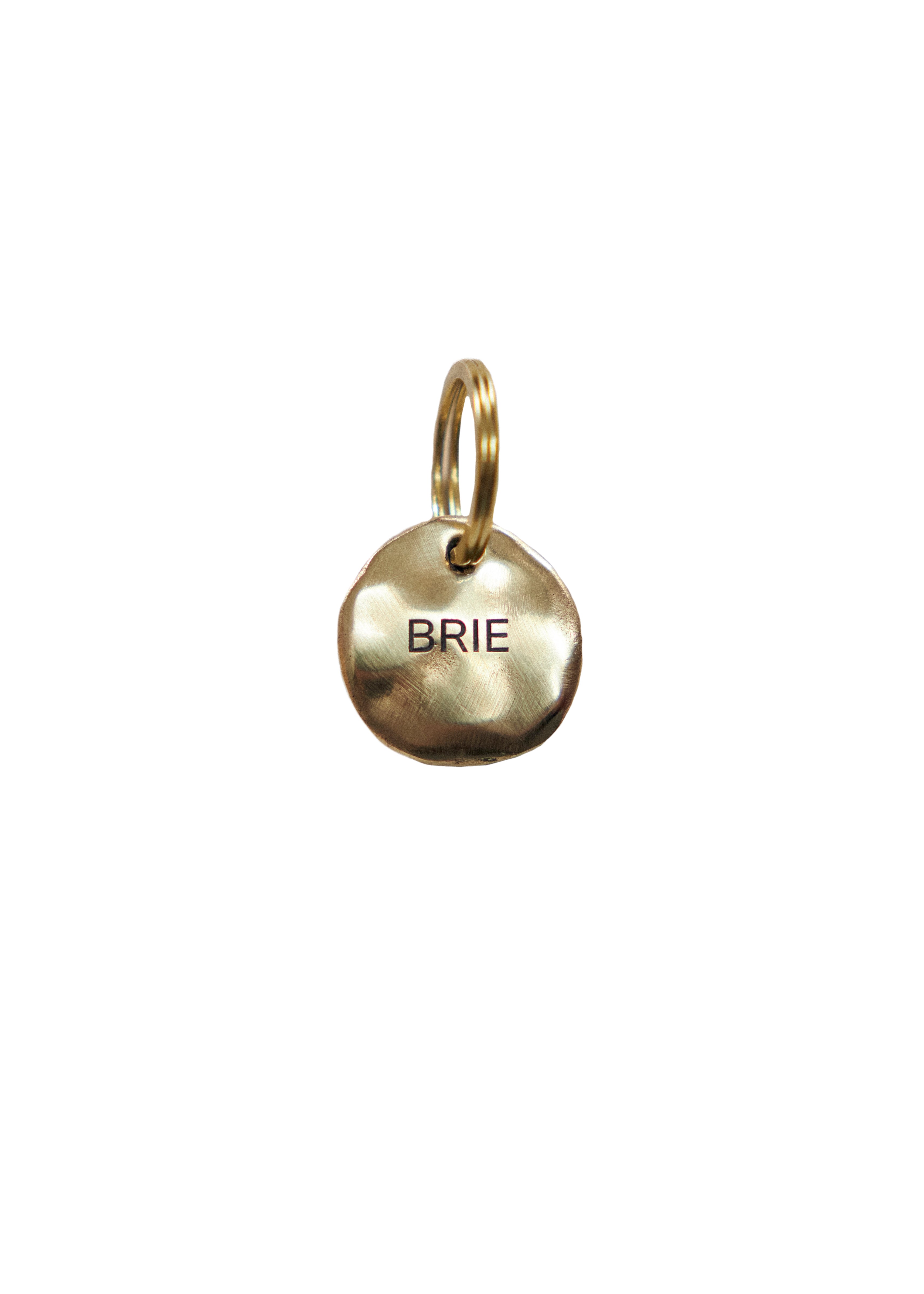
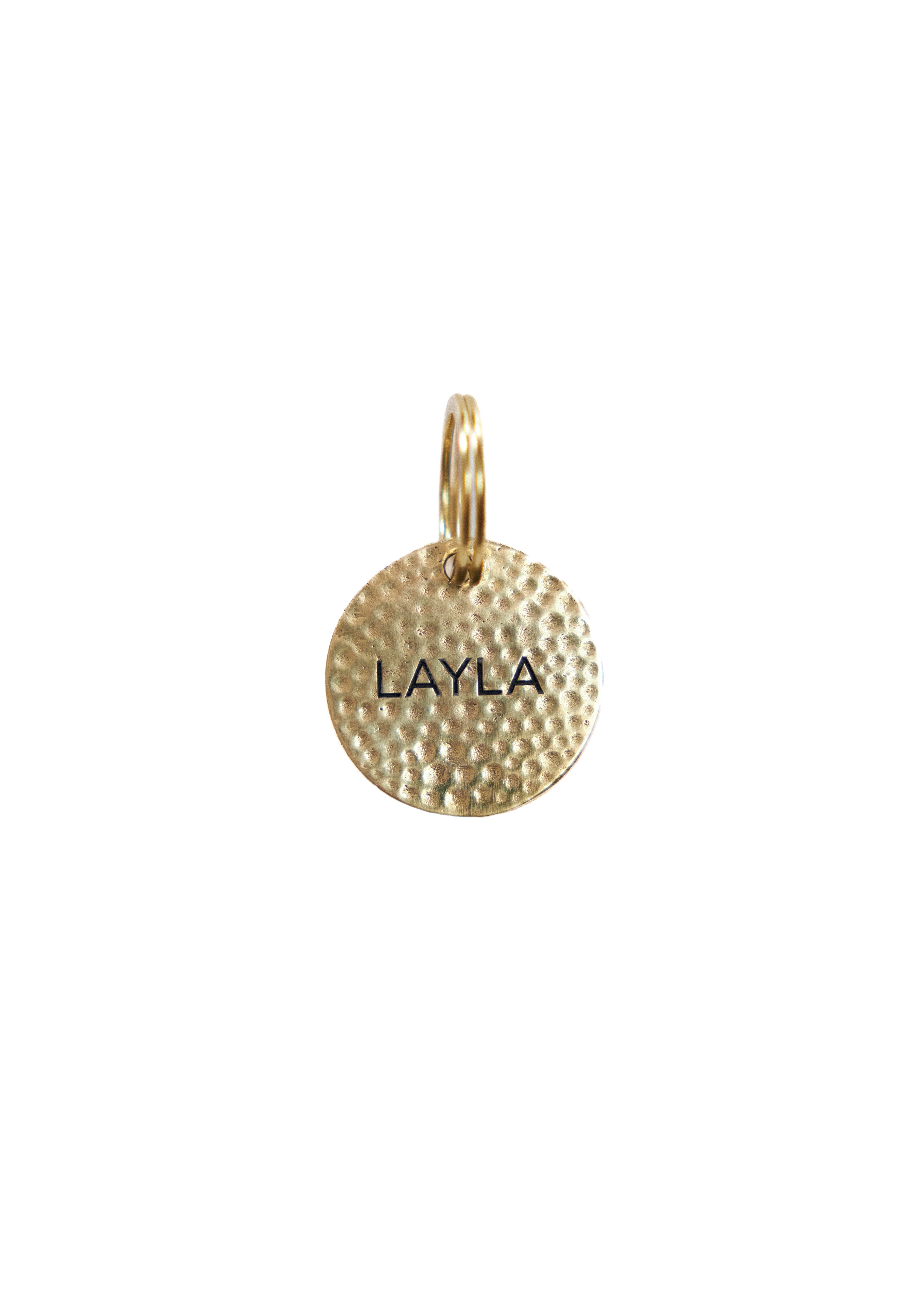
The best dog ID tag is an engraved brass disc attached to your dog’s collar D-ring, displaying your dog’s name and your mobile phone numberб the two pieces of information that allow a stranger to immediately reassure your dog and contact you directly. Even in a world of microchips and GPS trackers, a visible engraved tag remains the fastest and most reliable identification method available: it requires no scanner, no battery, no signal, and no app. Any member of the public who finds your dog can read the tag and call you within seconds. Nothing else in the identification toolkit works this simply or this quickly in an emergency.

What to Put on a Dog ID Tag
When every centimetre of engraving space counts, knowing exactly what information to include and what to leave out is as important as the tag itself.
Essential, Always Include
- Your dog’s name: allows a stranger to speak to your dog with familiarity, reducing their distress in a frightening situation. A dog that hears their own name is significantly easier to approach safely.
- Your mobile phone number: the single most important piece of contact information. Use a number you reliably answer, not a landline that may go unanswered.
Recommended
- A second contact number: a partner, trusted neighbour, or family member in case you cannot be reached immediately.
- “Microchipped”: lets the finder know additional identification is available at any vet or shelter scanner.
- Postcode only (not full address): gives the finder a geographic anchor without disclosing your full home address to a stranger.
Should You Put Your Dog’s Name on the Tag?
Yes, include your dog’s name. The occasional concern that a stranger knowing the name could use it to lure your dog is outweighed by the real benefit: a finder who knows your dog’s name can speak to them calmly and reassuringly, reducing fear and making the dog easier to approach and handle safely in a stressful situation. The name is a welfare benefit in an emergency, not a security risk.
What to Leave Off
- Your full home address: anyone who finds your dog also now knows your address and that you may not be home. A mobile number is sufficient for contact. A postcode is enough for geographic context.
- “Reward offered”: not necessary for a straightforward reunion and can attract unwanted attention.
Why Every Dog Needs an ID Tag, Even Microchipped Dogs
We all know that technology can be amazing, but it isn't always foolproof. Even in a world filled with GPS trackers, microchips and smart collars, a classic engraved dog safety tag still essential.
Picture this scenario… your pup slips their collar at the park and a kind stranger steps in to help out of sight, but there is no visible ID. To find you as the owner, they will then have to take your pup to the vet, wait in line and hope that there is a microchip to be scanned at the end of it. At the same time, there is probably the thought of shelters in the back of their mind.
A visible, engraved tag is a simple fix for these reasons:
-
Microchips can only be read using special scanners, which not every place will have. Every second counts when you are separated from your precious pup!
- GPS trackers run the risk of breaking, running out of battery or losing signal. They are great when they work, but any fault can render them useless.
-
Things like AirTags don’t offer real time tracking, so can’t always be relied on for accuracy when the thing you need most is to know exactly where your lost pet is.
Unlike all of the above, a solid dog ID tag is immediately visible, showing your contact information in a simple, sturdy way to eliminate any issues with a stranger figuring things out for you. In our opinion, nothing matches the speed and simplicity of a tag in an emergency situation!
What Makes a High-Quality Dog ID Tag?
Most solid tags do the job just fine, but the very best dog ID tags go the extra mile in terms of offering peace of mind and expert craftsmanship. Here are some of the key factors to consider.
Material. Why Recycled Brass
All of our products are crafted from recycled brass dog tag materials, and we use brass for a number of reasons. The first is durability, as solid brass is rust-resistant and won’t snap like zinc or aluminum. Next comes longevity, as the metal ages wonderfully and develops a beautiful patina over time. And lastly, our brass is recycled which makes the purchase an eco-conscious one, doing your own bit to reduce waste and environmental impact.
Deep Laser Engraving vs Hand-Stamping
Though hand-stamped tags do have a cute charm, the facts are that the designs can distort the tag, especially when using thinner metals. Shallow stamping will also fade over time, particularly if your pup is active. With deep laser engraving, you get clarity and permanence with crisp, clean lines, no surface distortion and lettering that will not fade even after years.

Design Considerations
You want your tag to be lightweight but solid so that it doesn't burden your pet, and think about versatile sizing because it needs to fit both a collar and a harness. There are plenty of elegants shapes and fonts to choose from because style does matter, but always make sure that readability is as good as possible. The best engraved pet ID tags will blend seamlessly into your dog’s everyday setup, giving both style and substance!
Is an Address Required by Law?
The legal requirements for collar identification vary significantly by country. Here is a summary:
- USA: requirements are state-specific. A phone number is commonly acceptable in most states. Many municipalities also require a current rabies tag to be worn visibly.
- UK: under the Control of Dogs Order 1992, dogs must wear a collar displaying the owner’s name and address in any public place. Fines for non-compliance can reach £2,000. An engraved tag satisfies this requirement directly.
- Ireland: address is required and must be attached to a collar or harness.
- Denmark: name and address are required on dog identification.
- Australia: requirements vary by state. NSW requires name, address, and phone number on the collar or tag.
- Norway: tags are recommended but not legally enforced; microchipping is mandatory.
The practical minimum recommendation for any location: postcode and mobile number. This satisfies most legal requirements and provides sufficient information for a quick reunion without disclosing your full home address.
Other ID Options: How They Compare
We always recommend layered identification using multiple methods as a backup system. But it is important to understand what each option actually delivers in the moment it is needed. For a full comparison, see our guide to ID tags vs metal plate collars.
| Method | Instantly readable | Contact info visible | Requires technology | Can fail |
|---|---|---|---|---|
| Engraved ID tag | Yes | Yes | No | No |
| Microchip | No, scanner required | Via database only | Yes | Rarely |
| GPS tracker | No, app required | No | Yes | Yes, battery/signal |
| AirTag | No – app required | No | Yes | Yes – limited accuracy |
| Name patch | Yes | No | No | No |
Whilst each of these different tools has their own value, there is no arguing with the fact that a visible, engraved tag is the best method in terms of working instantly and providing immediate information to a stranger. No tech to rely on or special gadgets required, a simple, sturdy dog safety tag is the best way to ensure that your vital details are there ready to access.

Frequently Asked Questions: Dog ID Tags
What is the best dog ID tag?
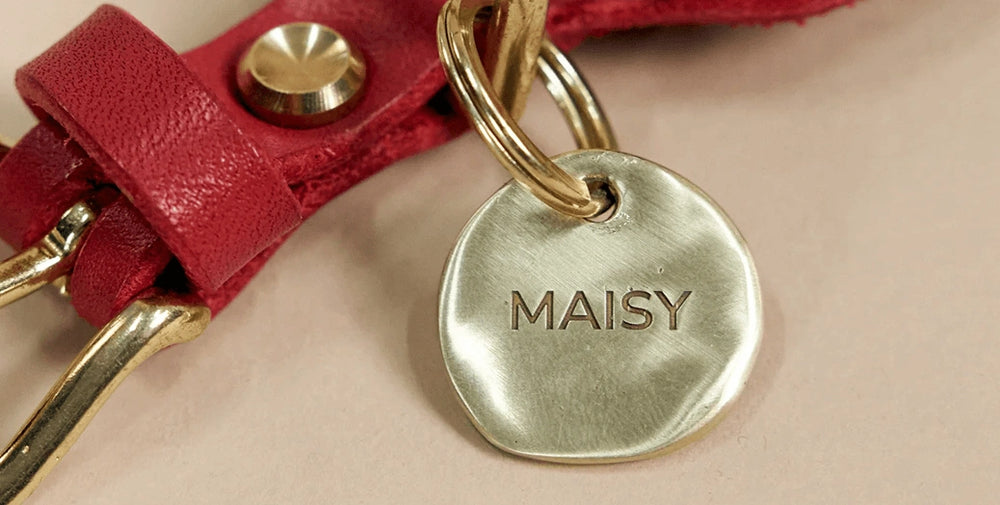
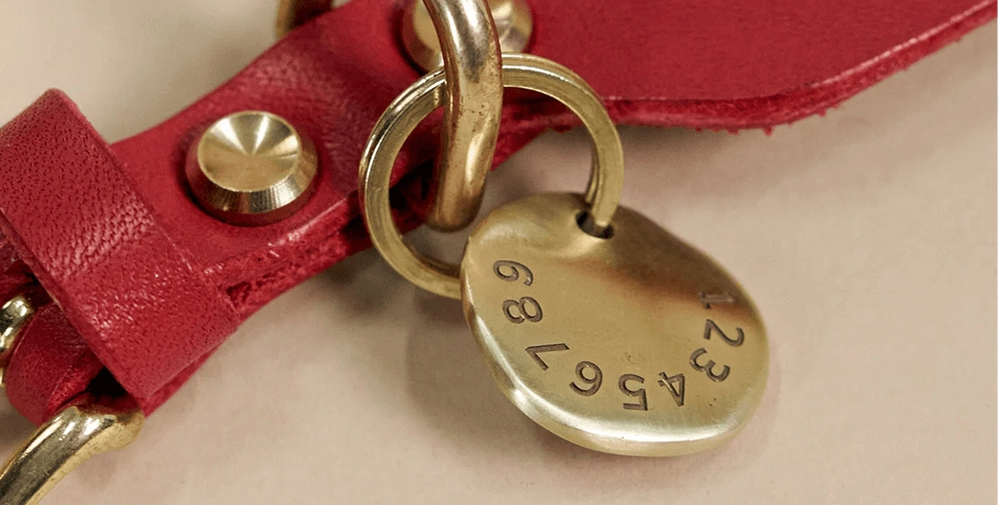
A deep laser-engraved recycled brass tag, proportionately sized to the collar, displaying your dog’s name and your mobile phone number. The Lille Björn’s Pebble and Ripple name tags are made to this specification: recycled brass, deep laser engraving that does not fade, and a solid single-layer design that minimises noise against the collar hardware. Available in multiple sizes to suit collars from XXS to XL.
What information should be on a dog tag?
Your dog’s name and your mobile phone number are the two essentials. A second contact number is a useful addition. “Microchipped” is worth including if your dog is chipped. A postcode provides geographic context without a full address. Leave off your full home address, a stranger who finds your dog now knows your address and that you may not be home. A phone number is sufficient to contact you directly and quickly.
Should I put my dog’s name on their ID tag?
Yes. A finder who knows your dog’s name can speak to them calmly and approach them safely, which matters enormously in a stressful situation. The concern that knowing the name could help someone lure your dog is significantly outweighed by the practical benefit of a dog who hears their name, feels recognised, and becomes easier to handle in an emergency.
Do I need a dog ID tag if my dog is microchipped?
Yes. A microchip requires a specialist scanner to read, available only at vets and shelters. A tag can be read by any member of the public immediately. In the UK, both are legal requirements: microchipping satisfies one obligation, visible collar identification satisfies another. Neither replaces the other. A microchipped dog without a visible tag may wait hours before being reunited with their owner; a dog with a visible phone number can be reunited within minutes.
What is the best material for a dog ID tag?
Recycled solid brass. It is rust-resistant (unlike zinc or aluminium, which corrode), does not snap under daily wear, develops a warm patina over time rather than losing its finish, and is the most environmentally considered metal option available. Stainless steel is a functional alternative with excellent corrosion resistance, but it lacks the warm aesthetic character of brass and does not develop a patina.
How do I attach a dog ID tag to a collar?
Attach the tag to the D-ring of the collar using a split ring or a lobster-claw clip. A split ring is the most secure attachment, it cannot open accidentally under normal use. A lobster-claw clip is faster to change between collars but has a small risk of opening if snagged. Check the attachment monthly: split rings can work open gradually with repeated movement, and a tag that detaches silently during a walk defeats its entire purpose.
How do I stop my dog’s tag from making noise?
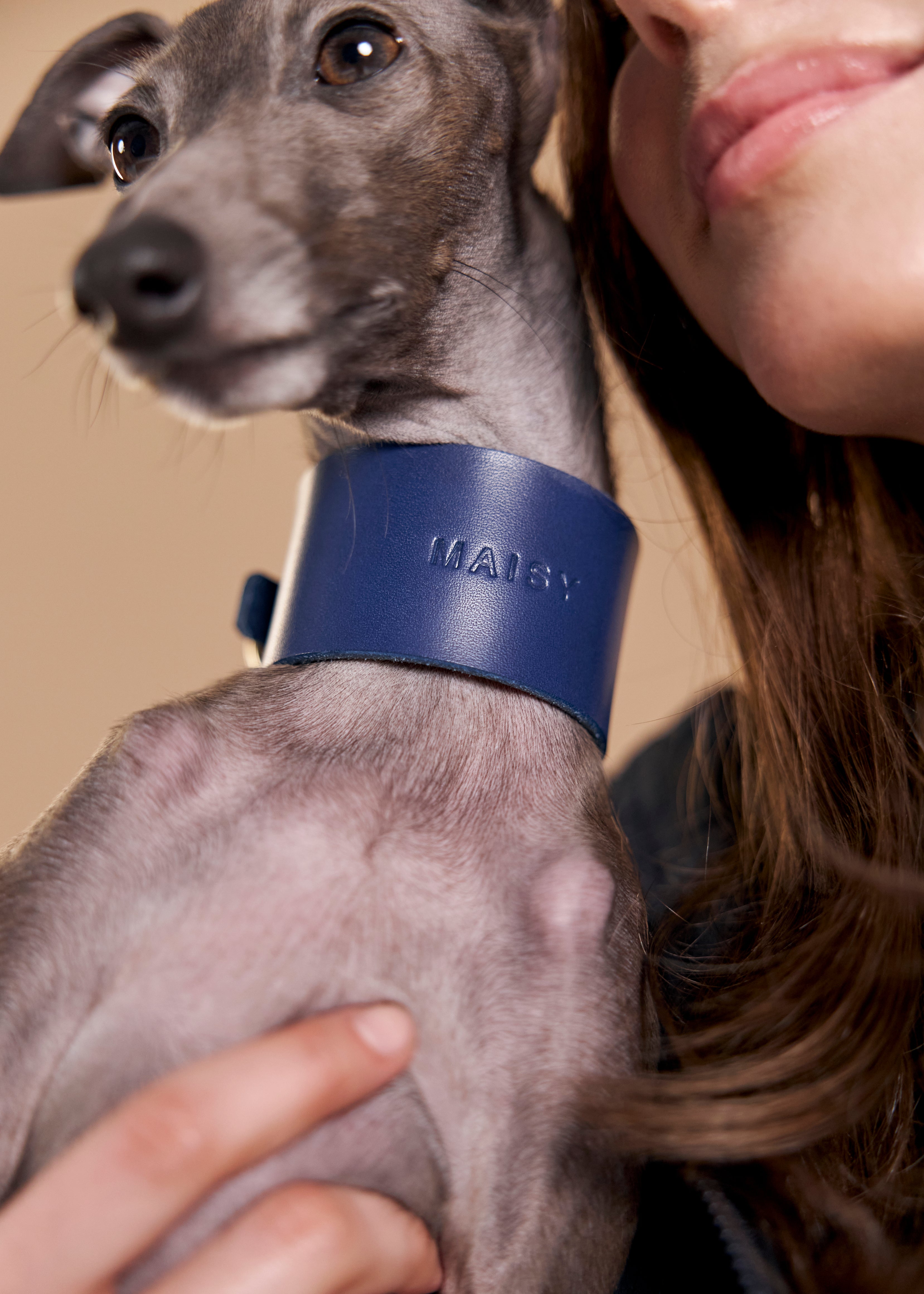
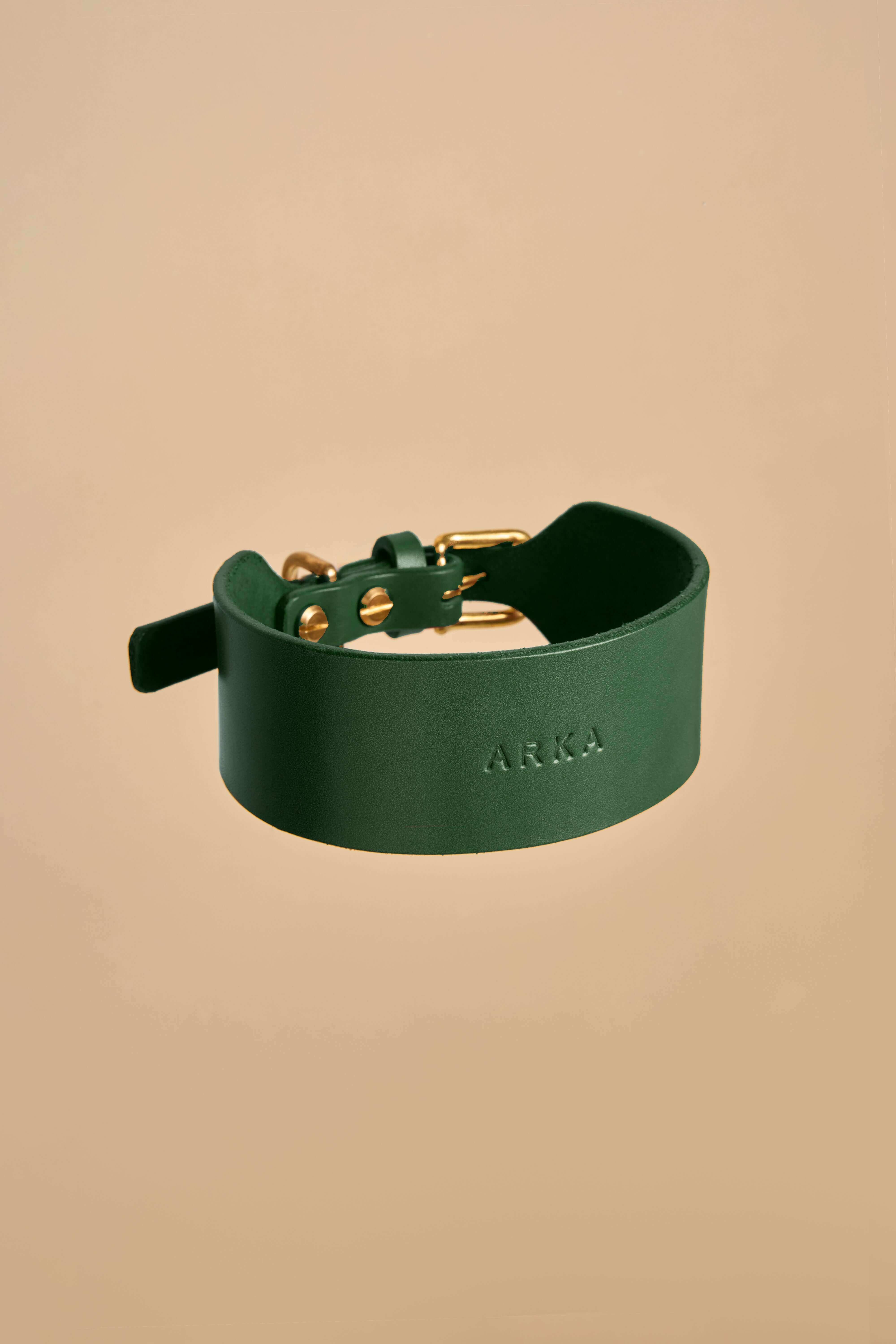
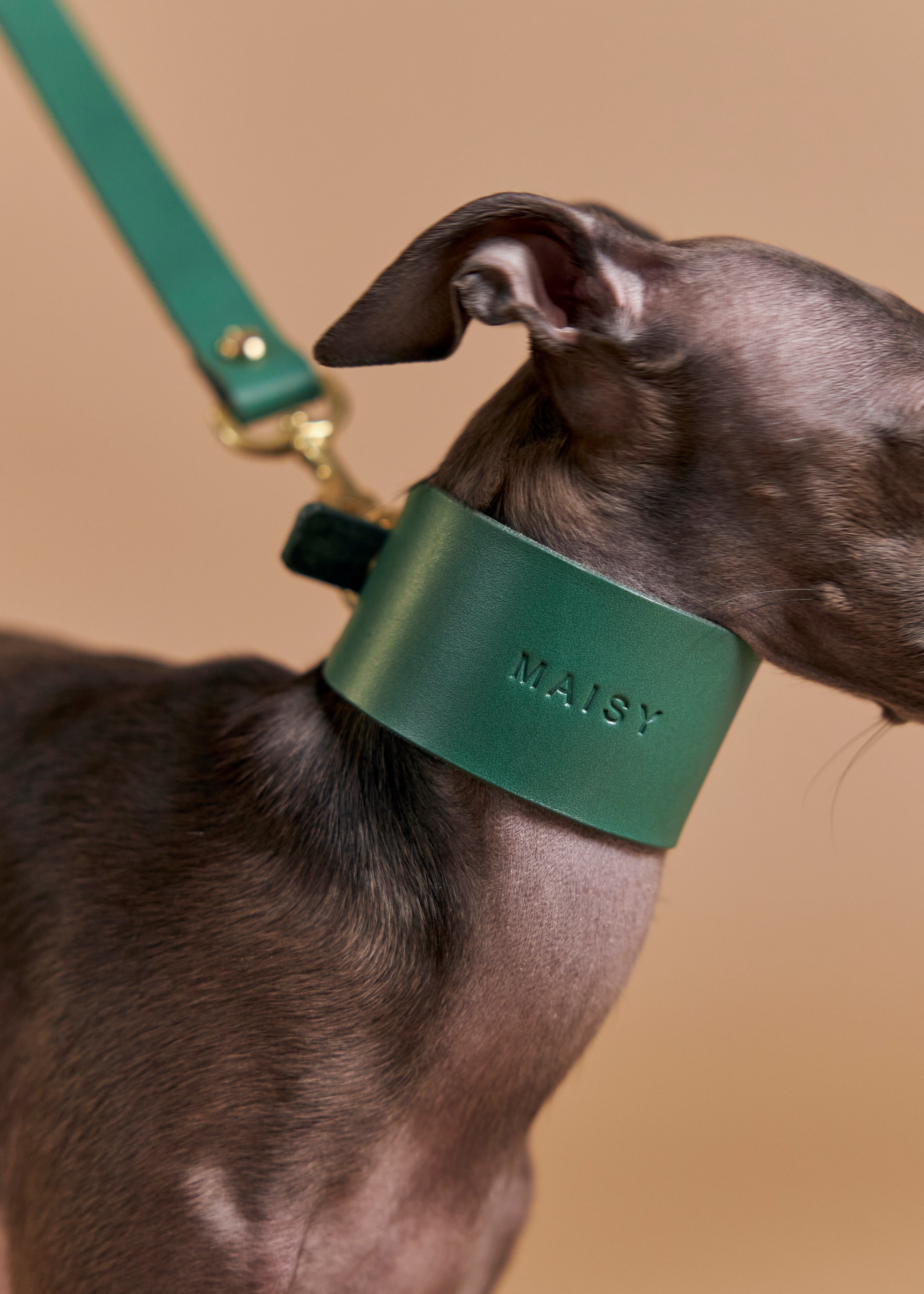
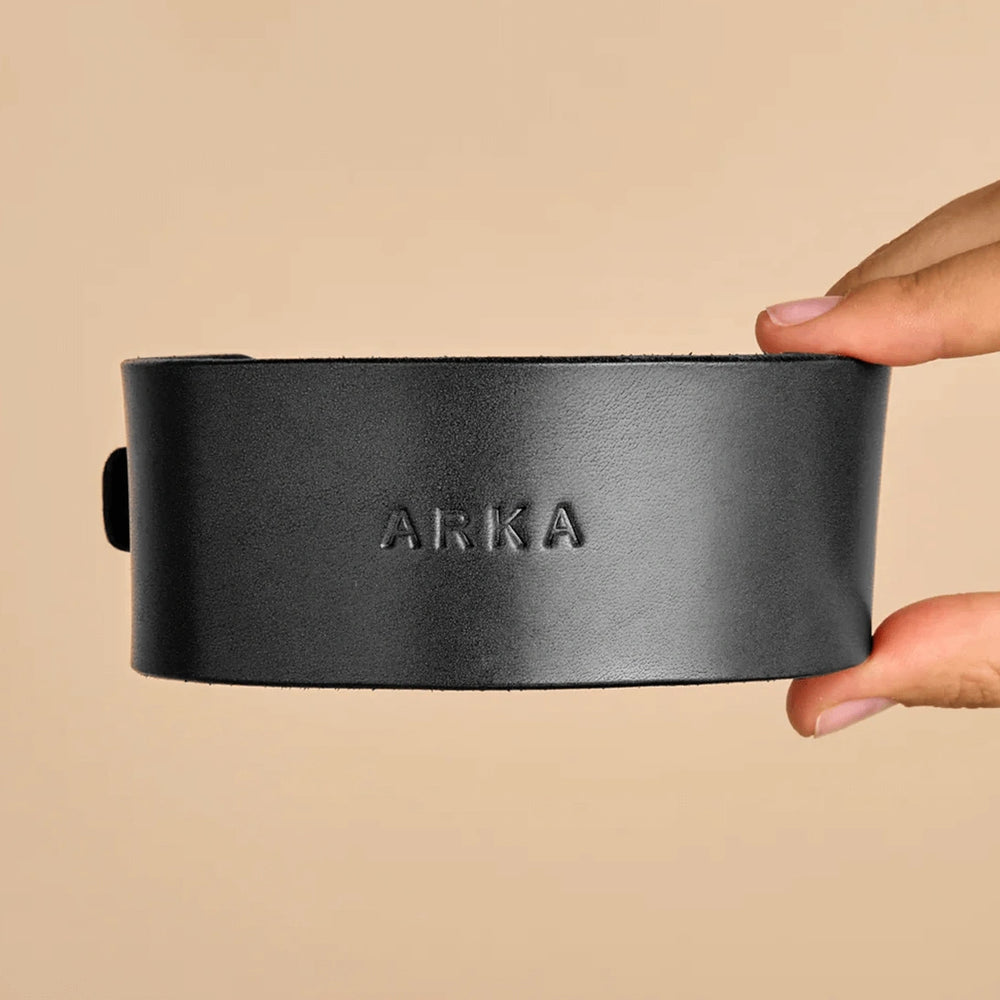
Three approaches work: use a single tag rather than multiple tags stacked on the same ring, which eliminates the clinking between multiple metal discs; use a rubber silencer ring around the tag to dampen contact with the D-ring; or consider engraving your dog’s name and your number directly into the leather collar, a permanently silent alternative that The Lille Björn offers on all leather collars. The Pebble tag’s solid single-layer design also produces minimal noise compared to double-sided disc designs.
The Smallest Accessory With the Biggest Job
Your dog cannot tell someone who they belong to or where they live. Their ID tag does that job for them, instantly, reliably, and without any technology or battery life required. When the tag is made well, it does this job beautifully for years.
Browse The Lille Björn’s custom name tag collection the Pebble and Ripple, both in recycled brass with deep laser engraving, available in multiple sizes and fully customised with your dog’s name and your contact details.