Quick Summary
Anyone who loves dogs is aware that breeds like Whippets and Greyhounds are known for their beautiful sleek and athletic builds, as well as their amazing speed! Sighthounds like these have a natural combination of grace and power which makes them a popular choice for a pet, but it is important to have an understanding of their distinct and unique physical structure. They have very long and slender necks with narrower heads, and this can sometimes make the choice of collar a challenging one.
Making sure that you have the right collar for your dog is a crucial part of their overall safety and comfort. An accessory that fits poorly can risk causing injury, or even slip off entirely in an unsafe environment. Traditional narrow collars are deemed unsuitable for dogs like Greyhounds and Whippets, because they concentrate too much pressure on a small area and can be very dangerous for their delicate tracheas.
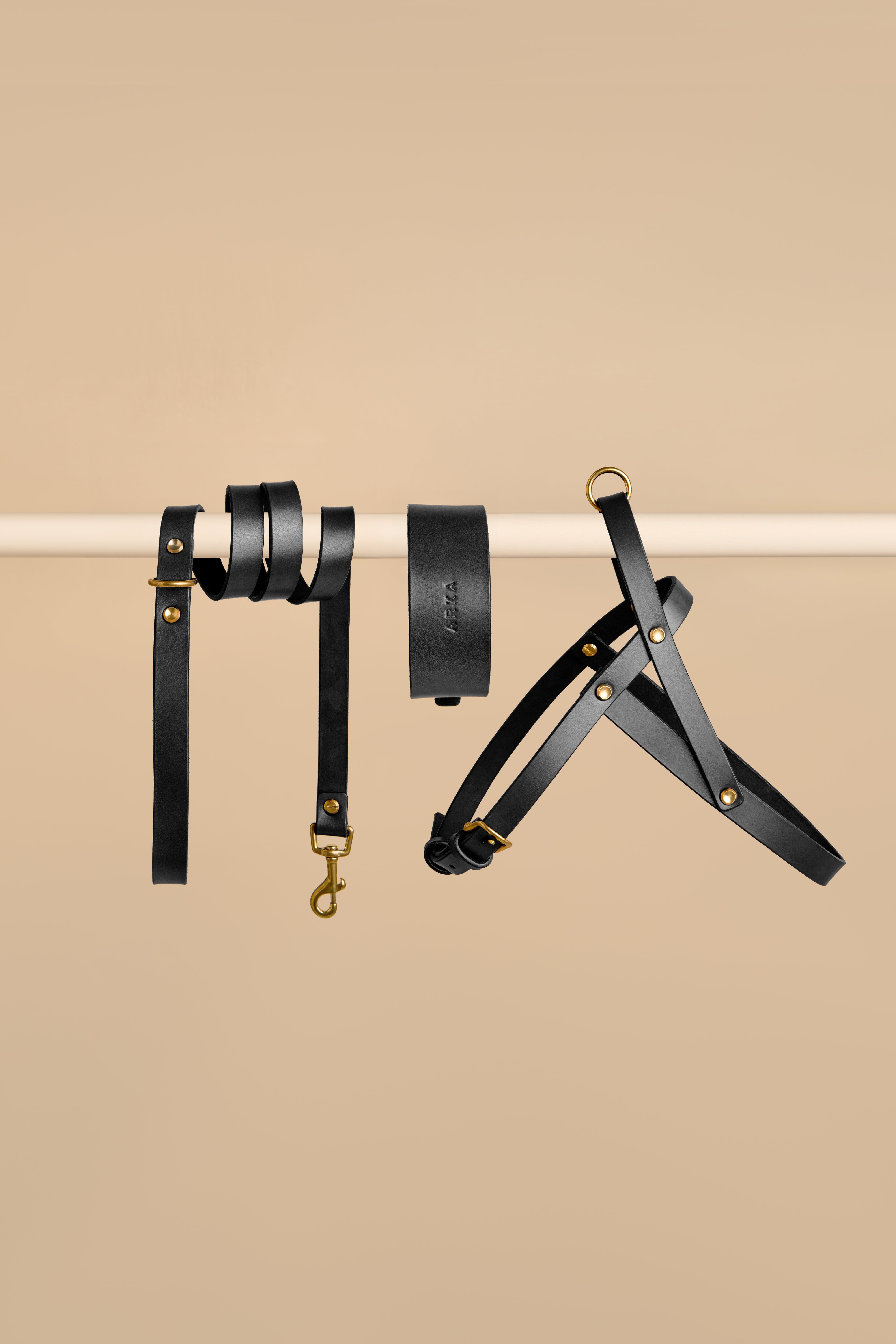
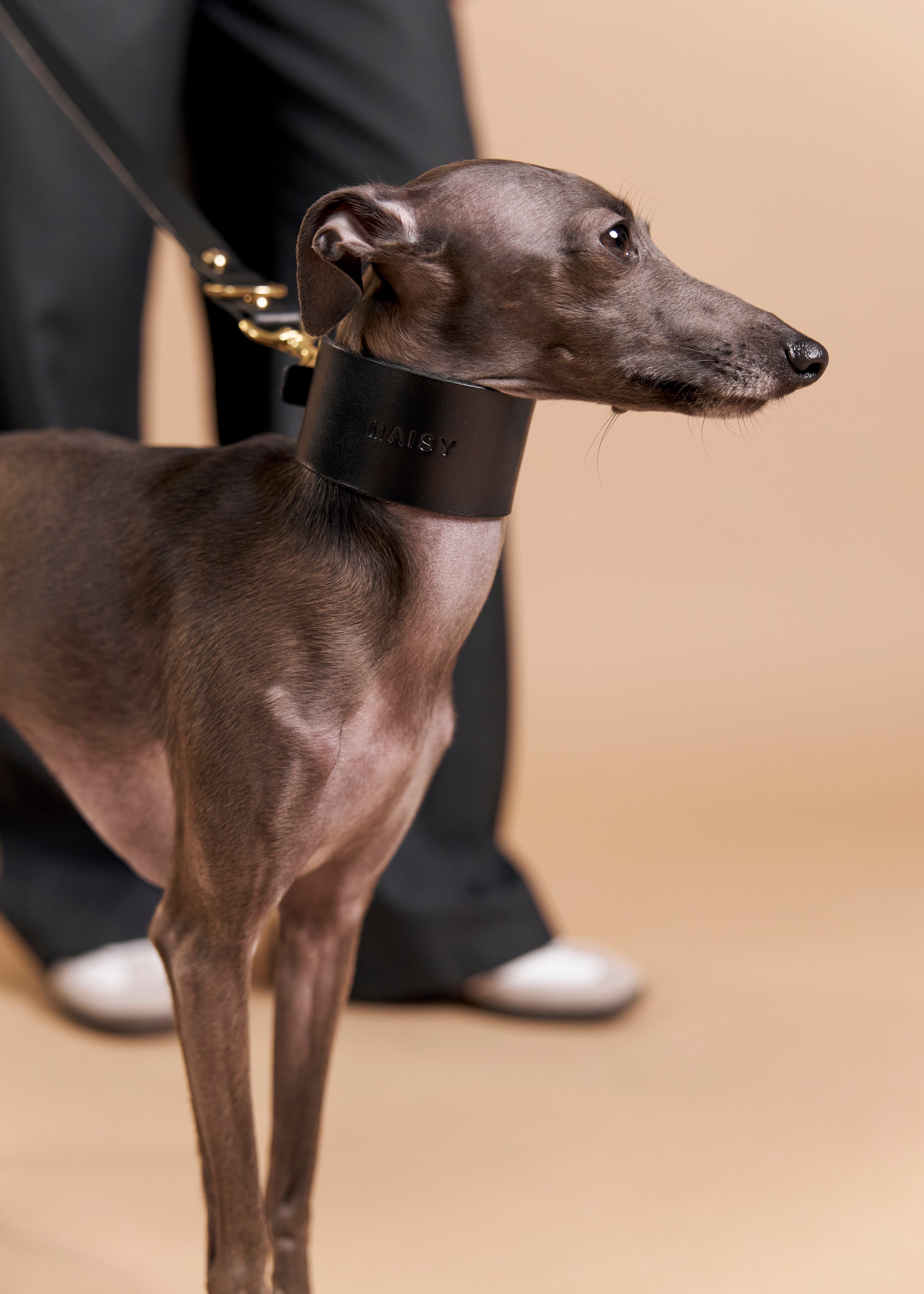
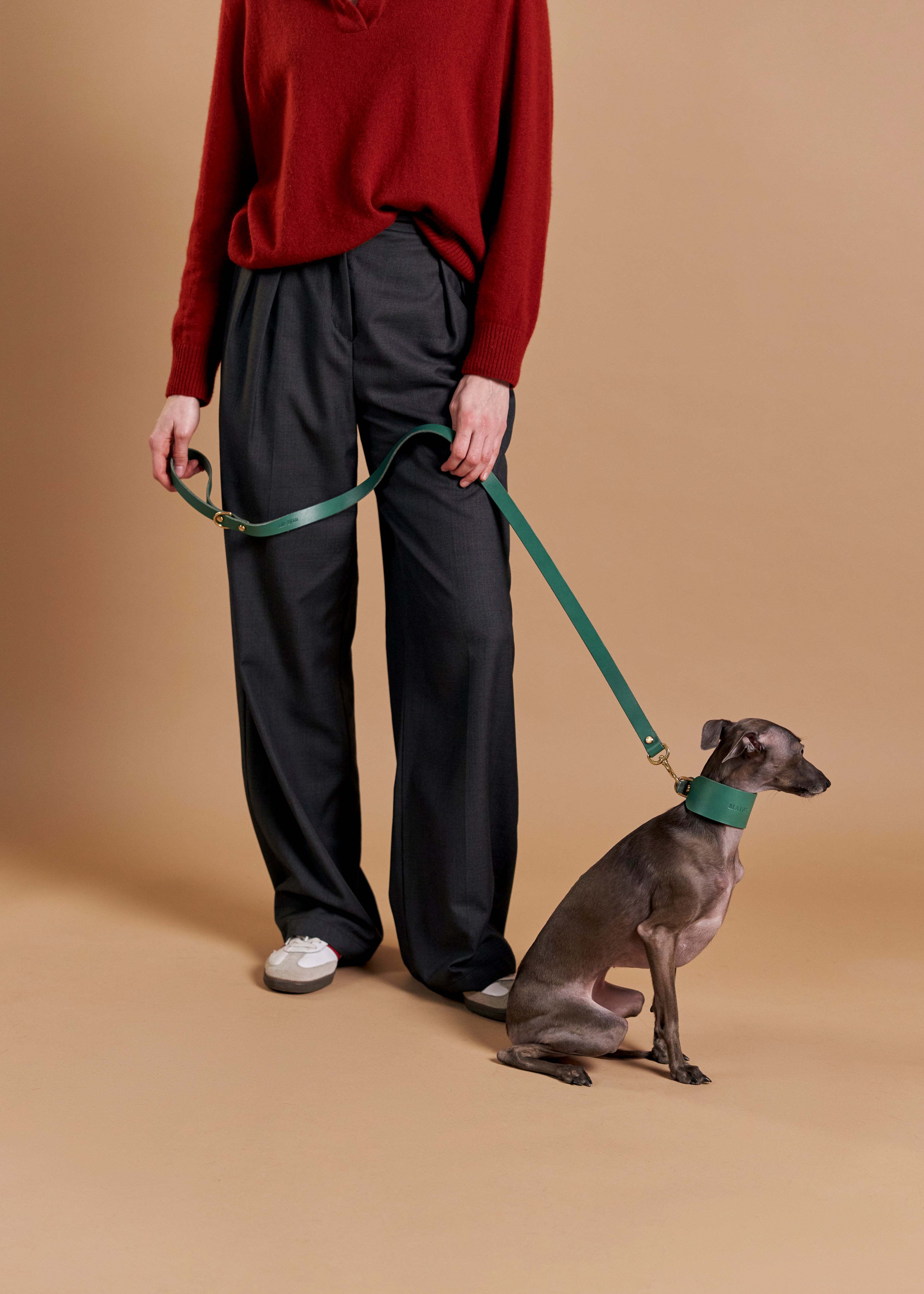
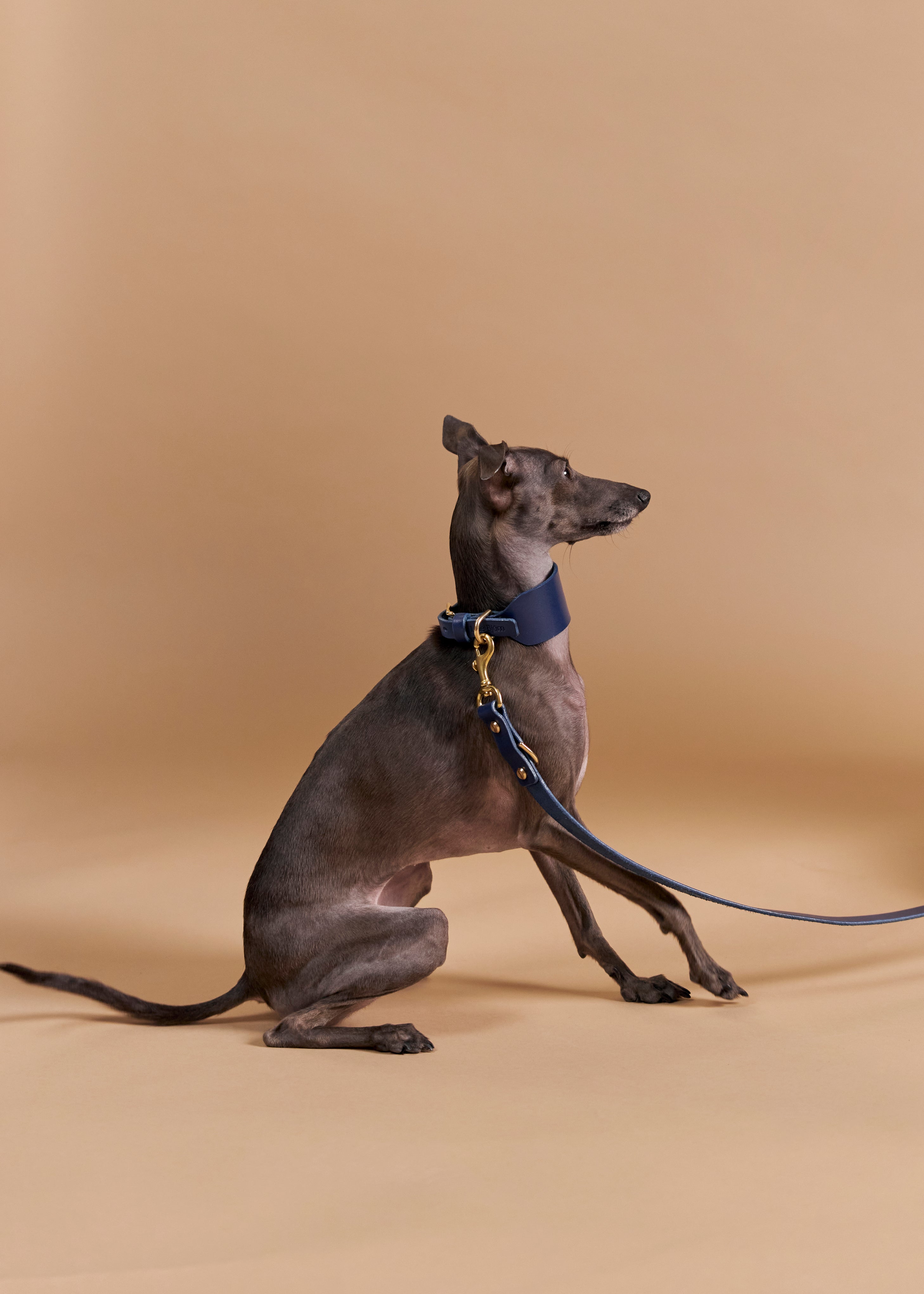
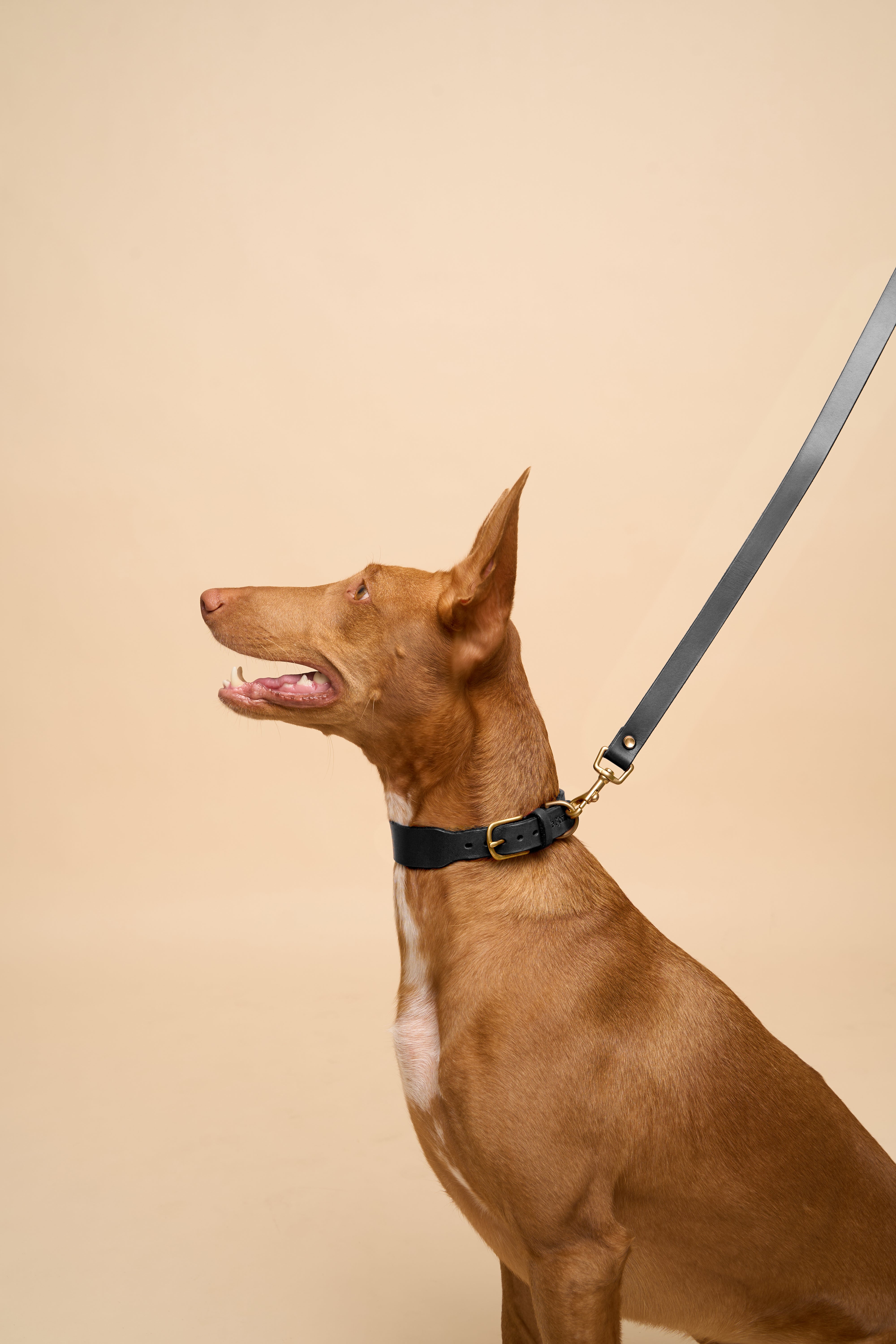
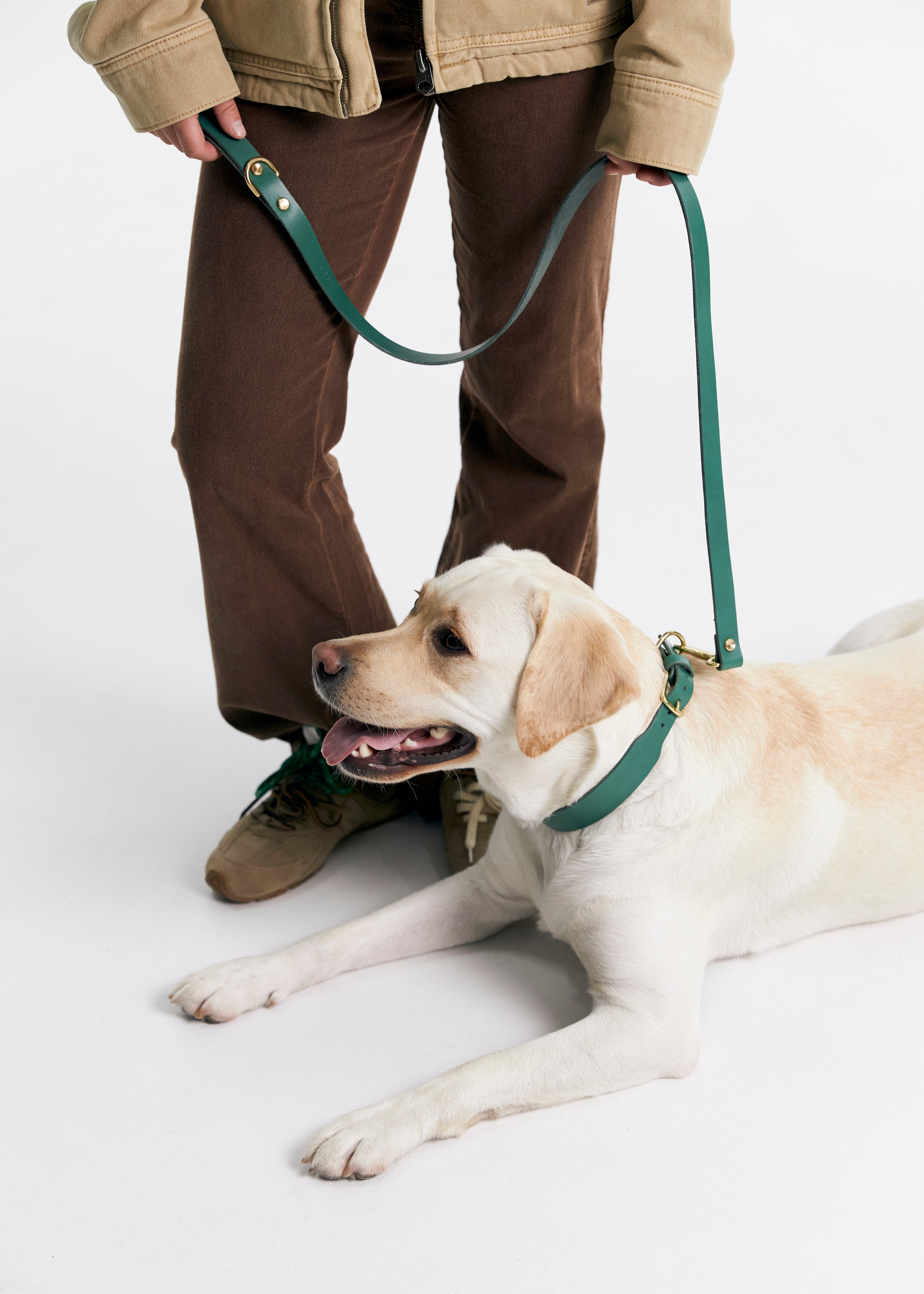
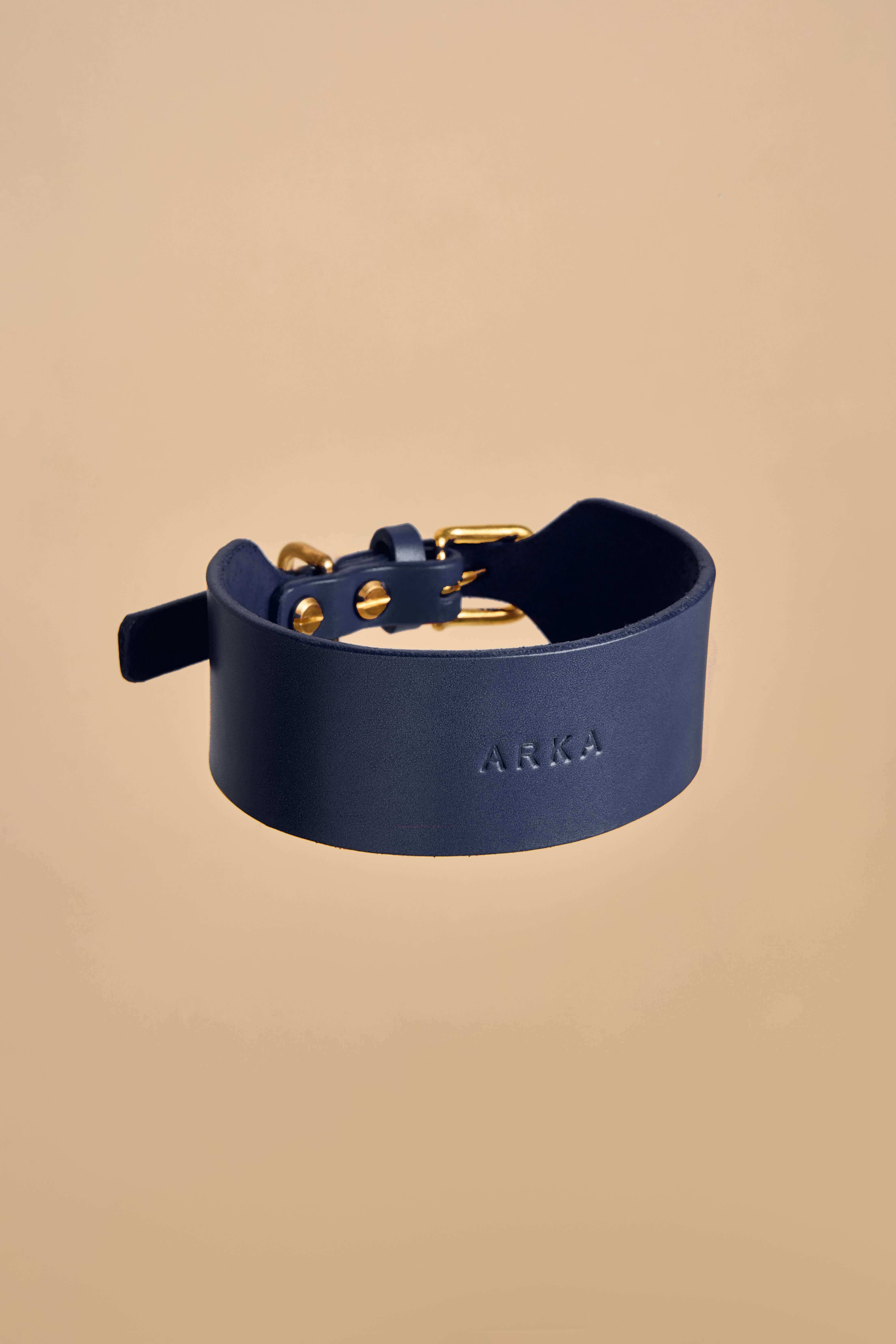
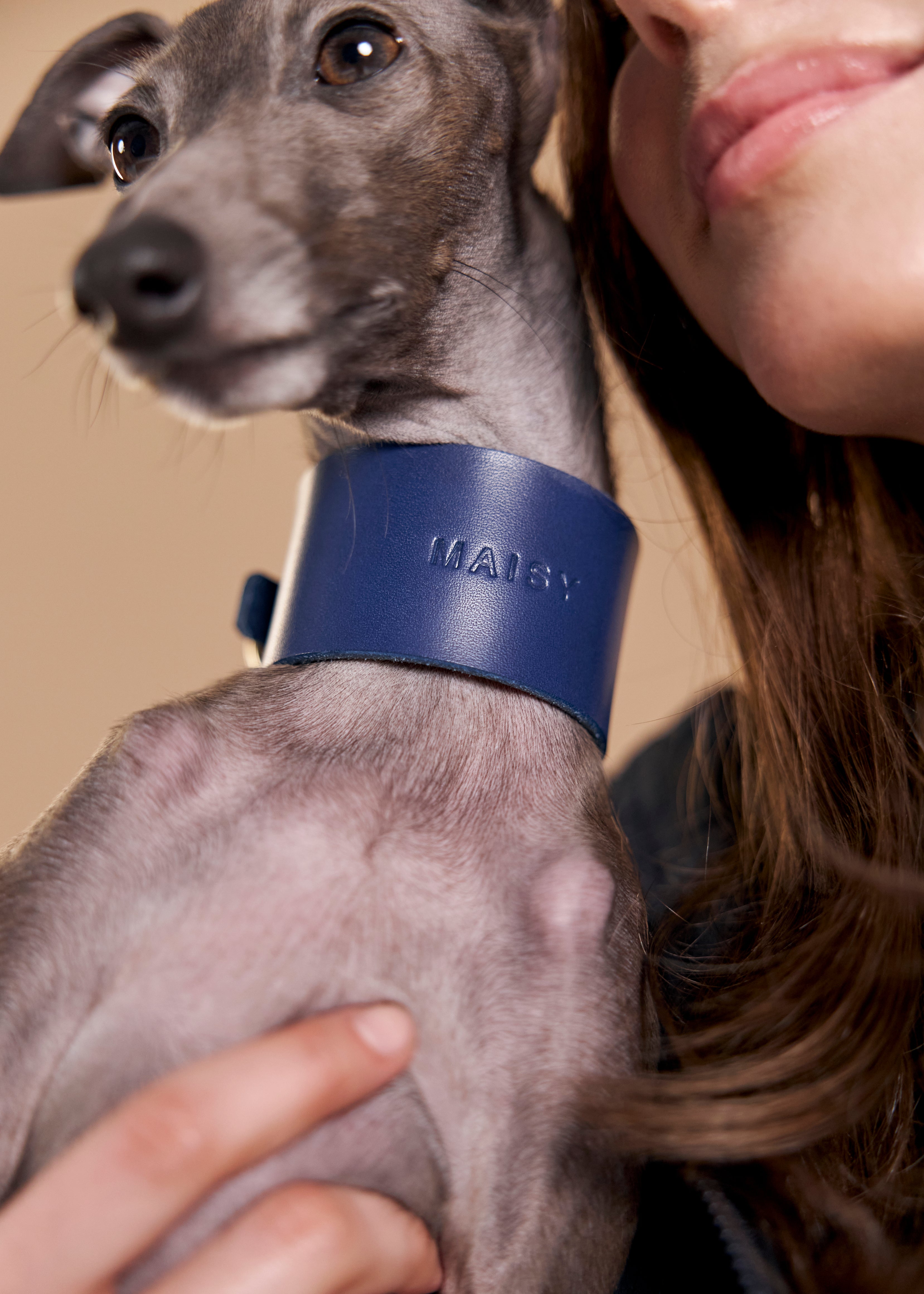
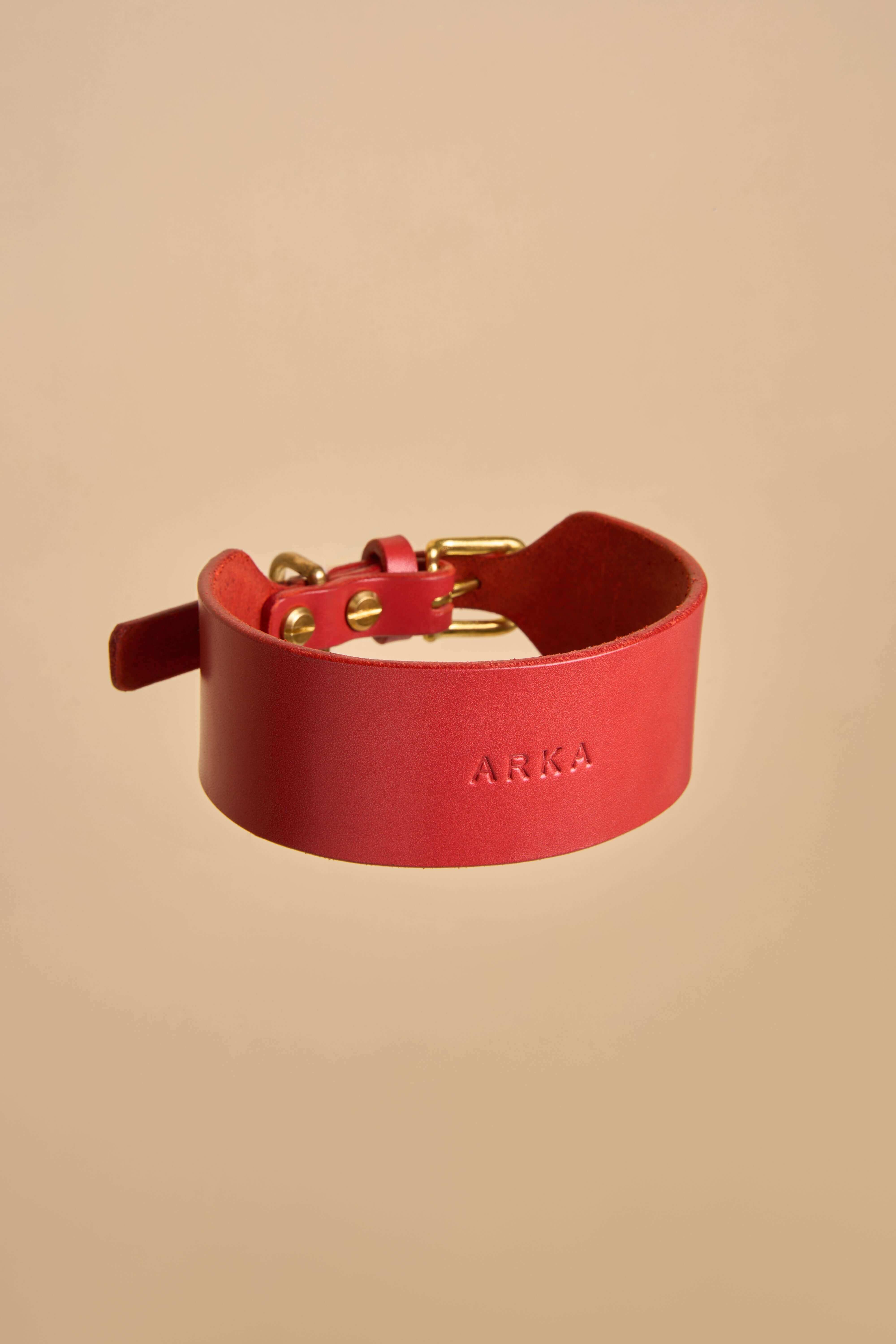
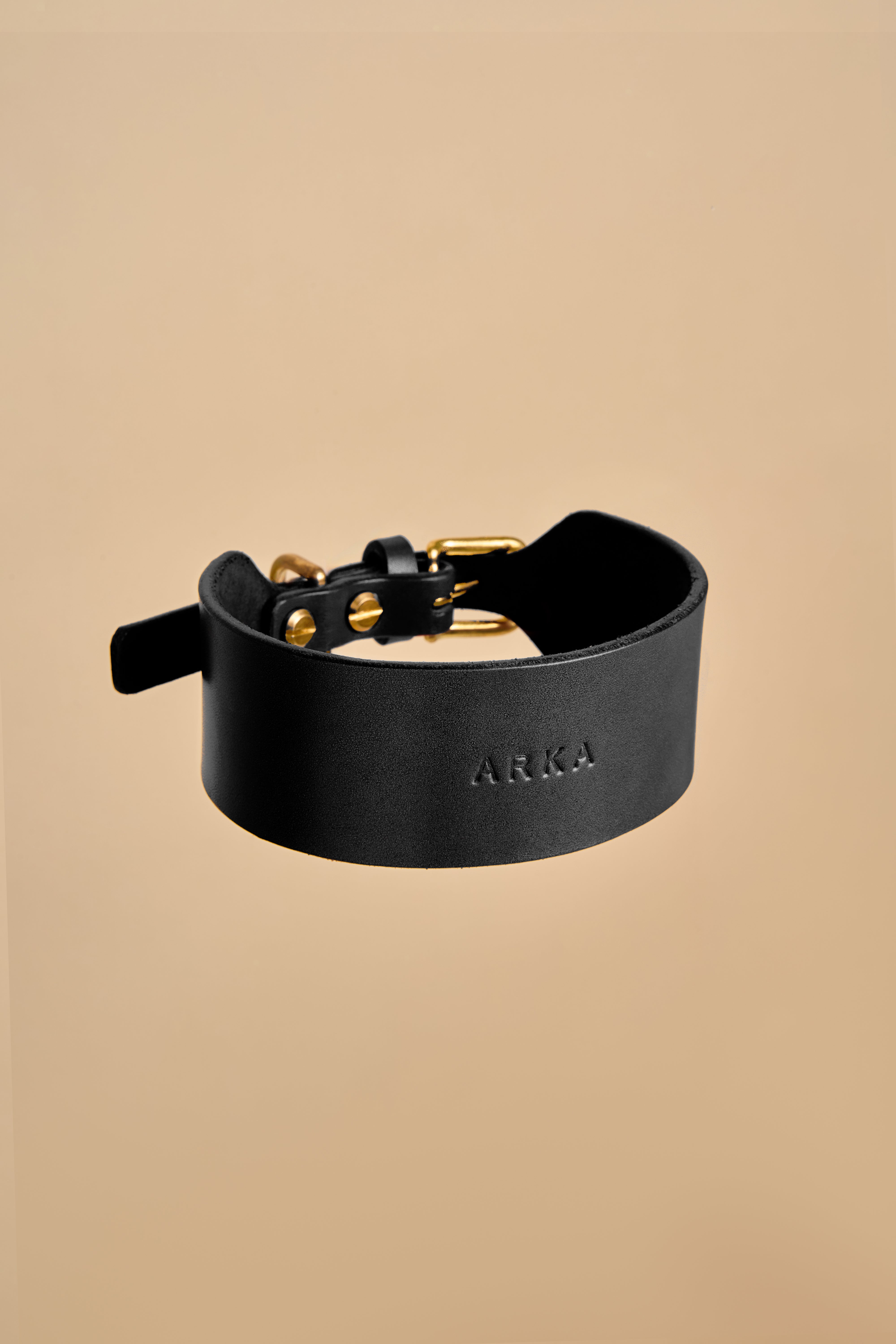
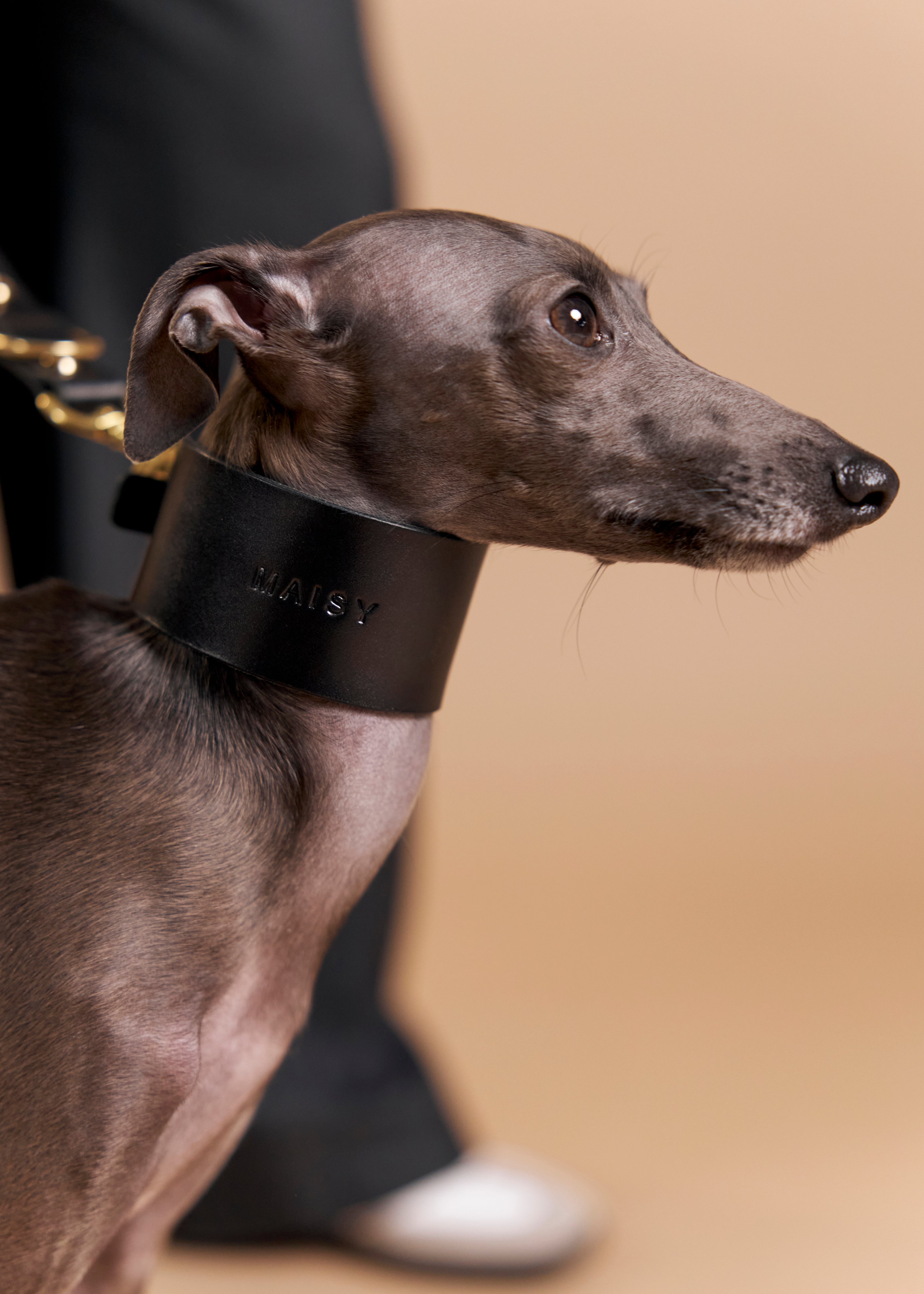
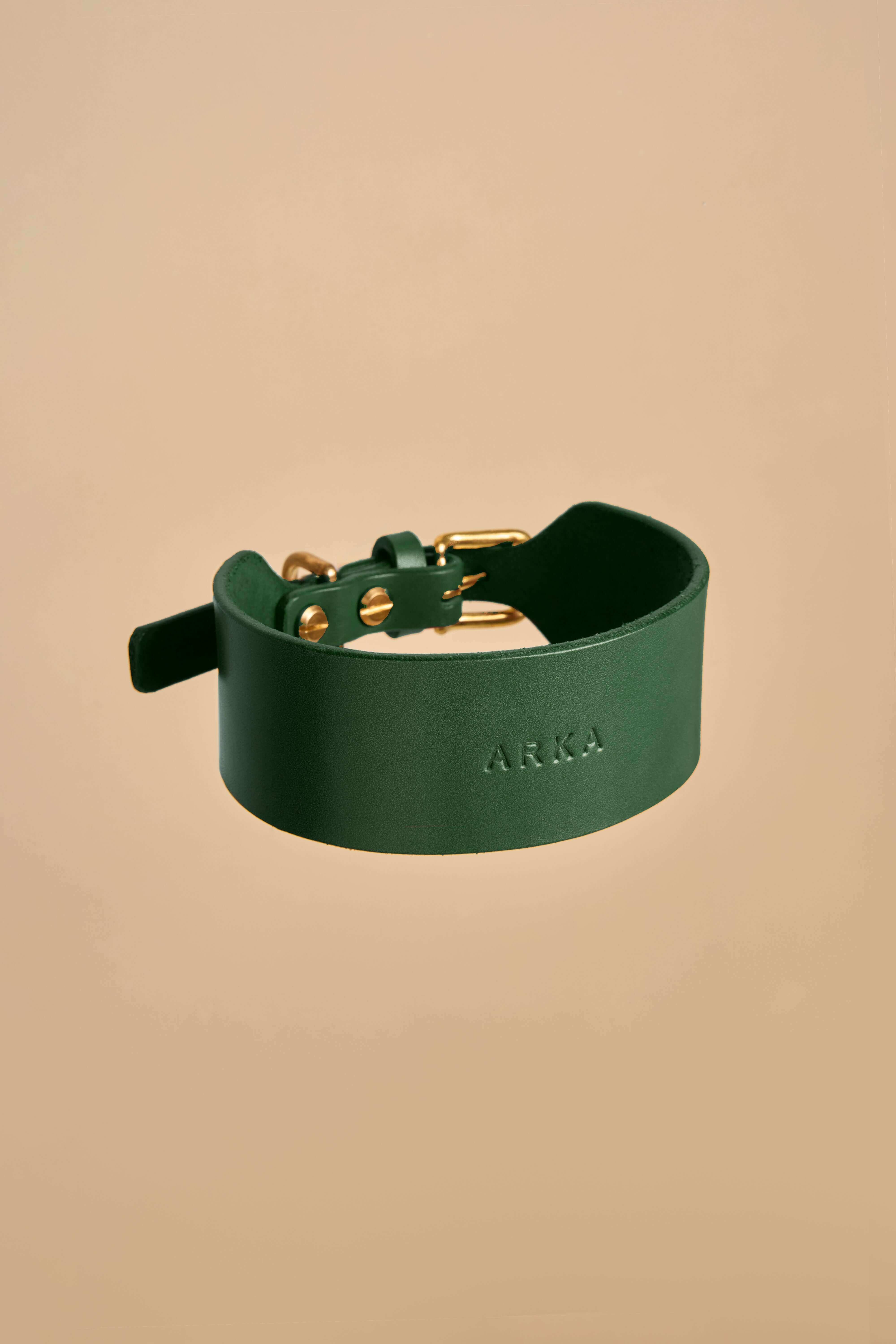
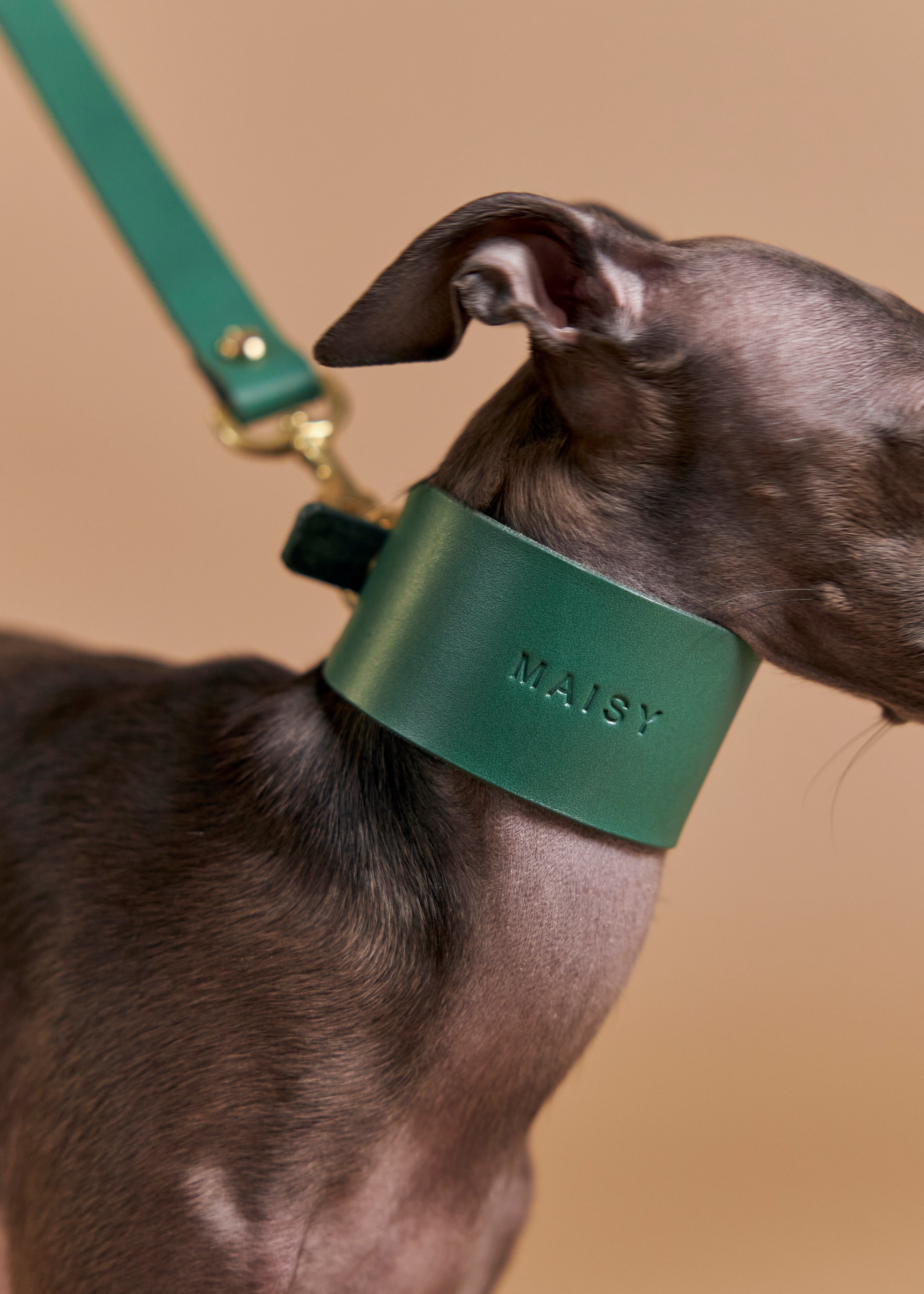
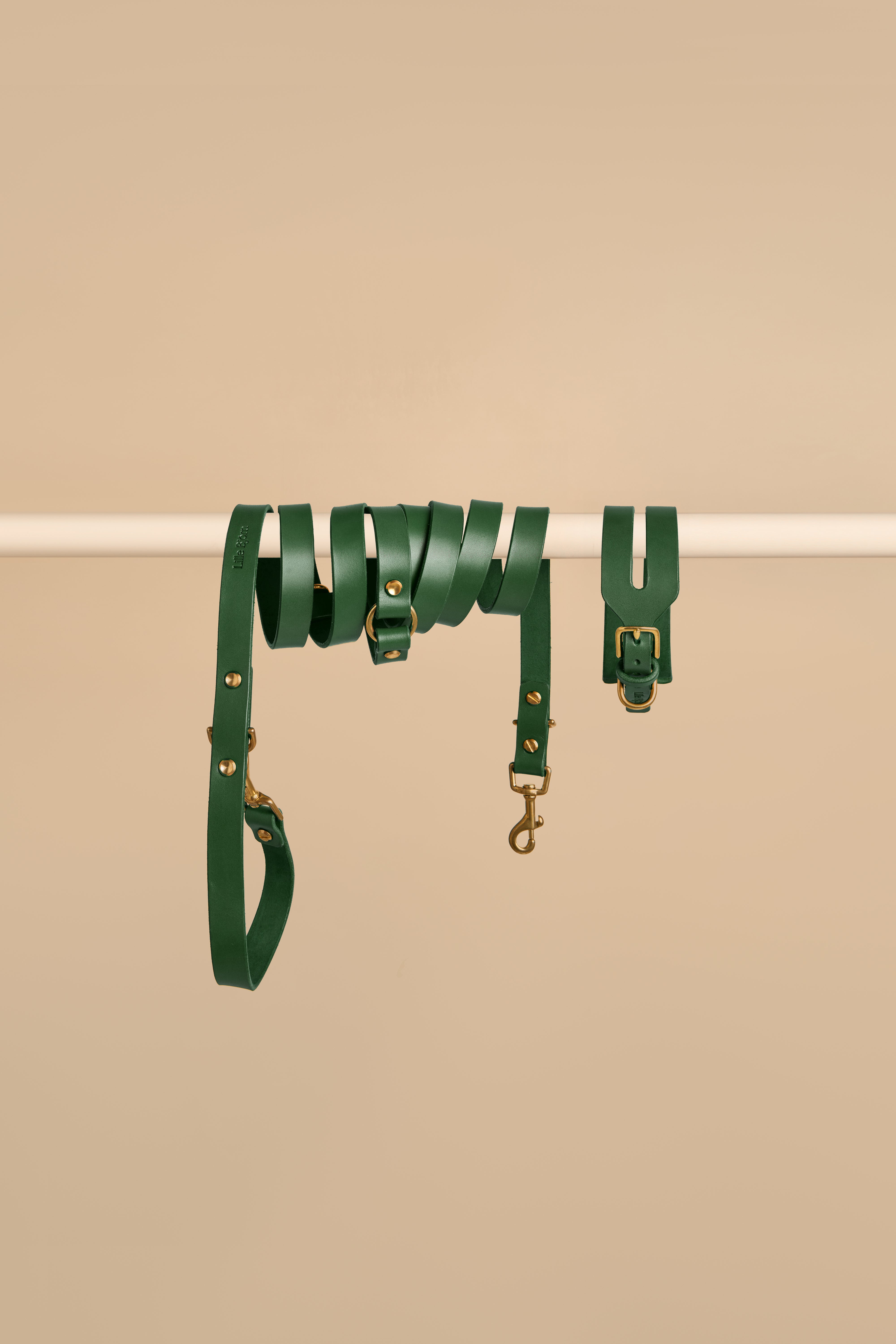
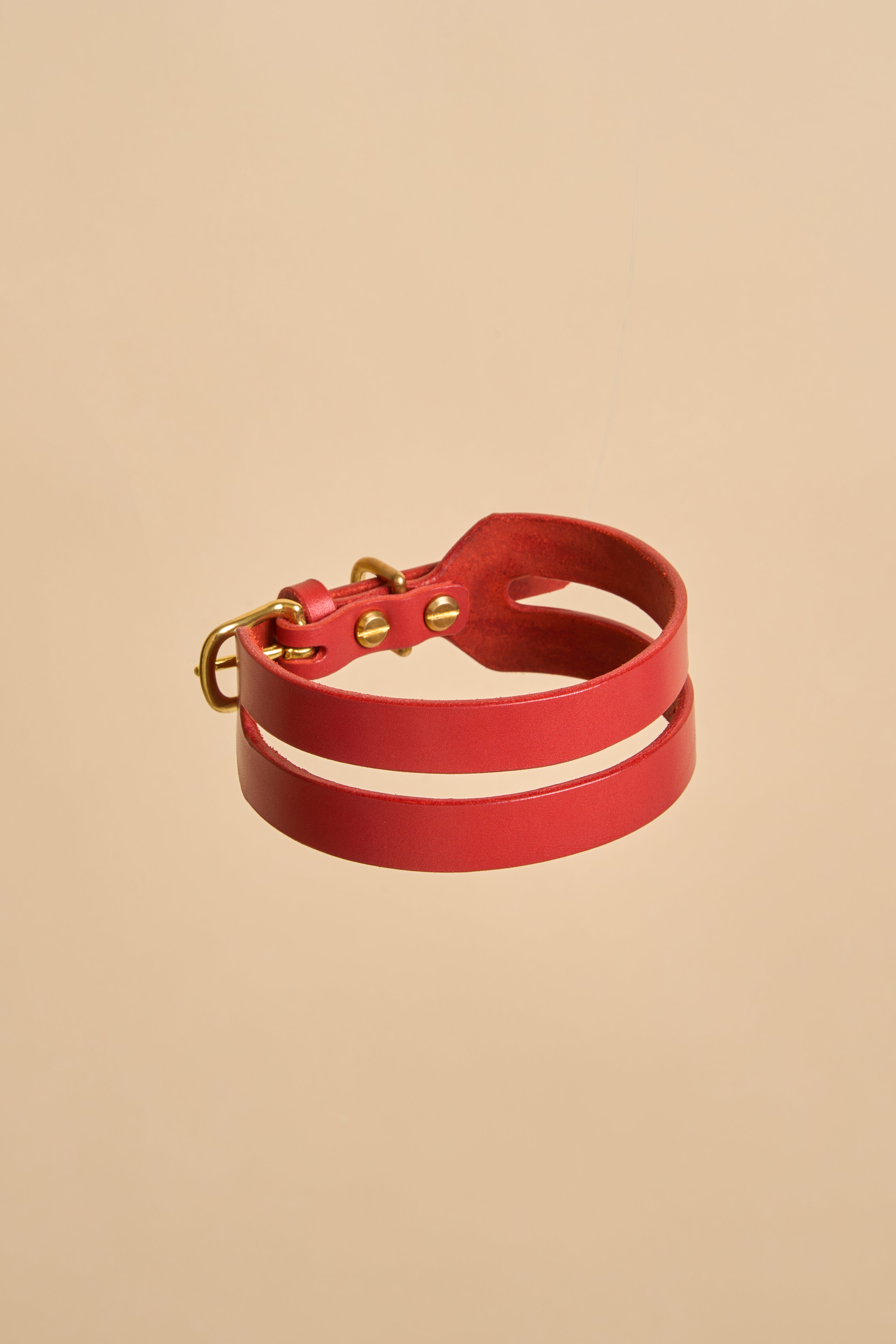
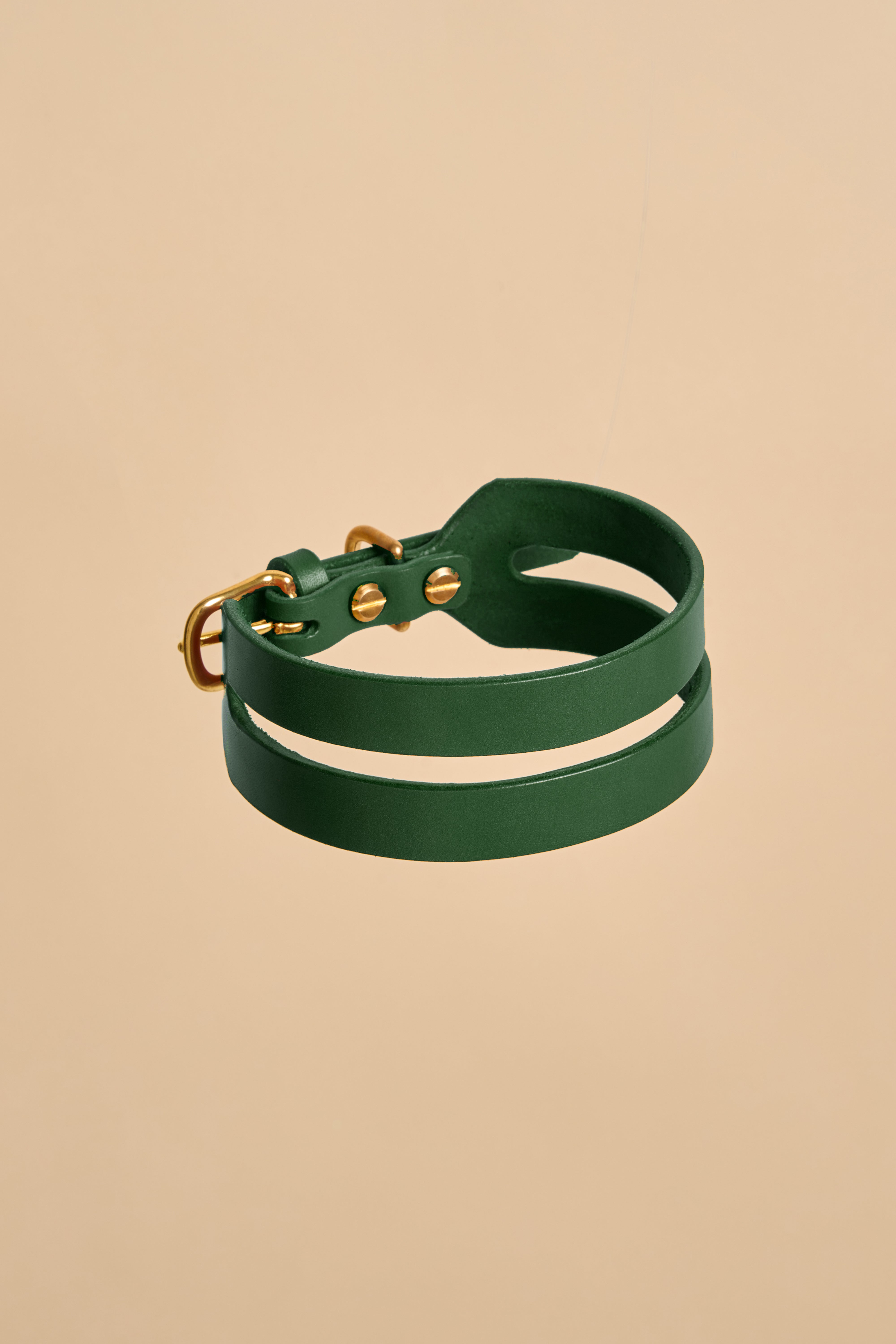
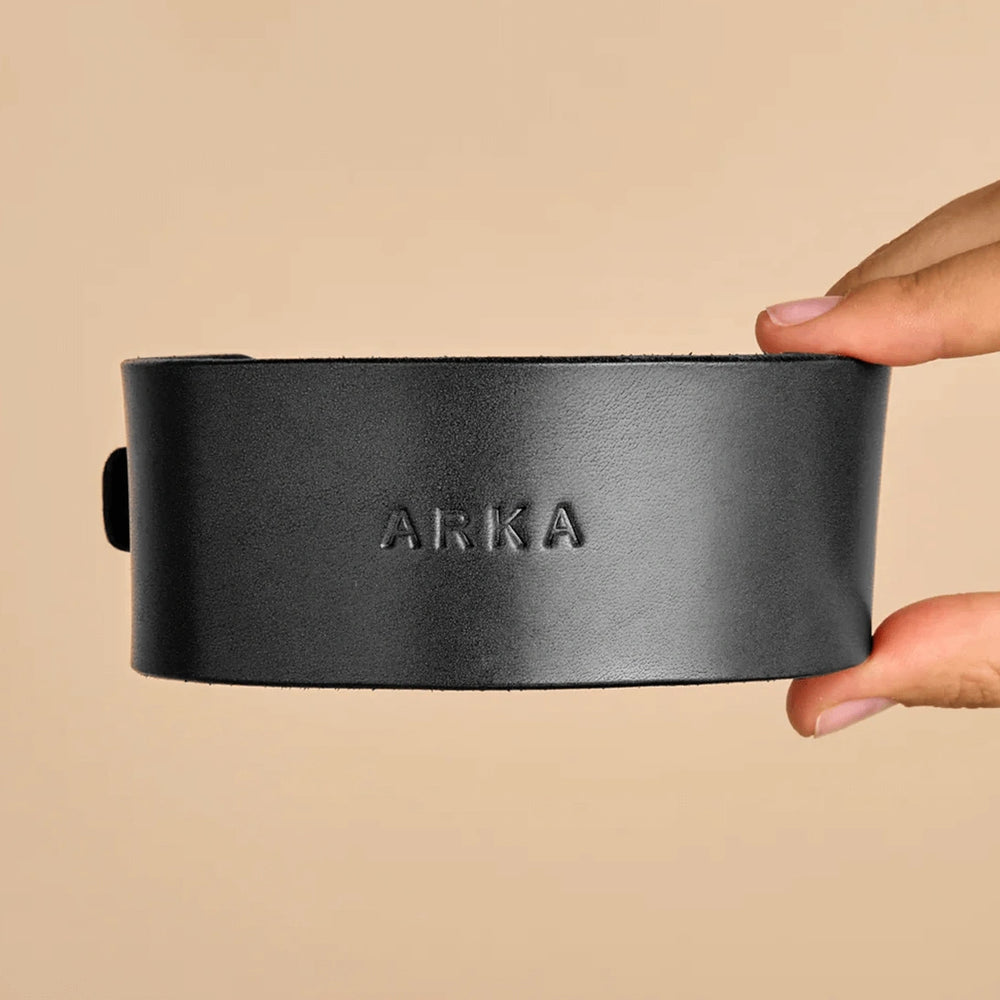
The best collar for a Whippet or Greyhound is a wide leather collar specifically 4–5 cm in width fitted correctly at the middle of the neck. Sighthound breeds require a wide collar for two specific anatomical reasons: their necks have almost no fat padding, meaning narrow collars concentrate pressure on delicate tissue; and their heads are narrower than their necks, making a standard collar an escape risk the moment they back up or shake their head. A wide vegetable-tanned leather collar with a solid brass buckle addresses both problems simultaneously: distributing pressure safely and fitting securely without ever tightening to a choking point.
Don’t worry though, we have the solution! The best option for a long necked breed is a wide vegetable-tanned leather collar, for so many reasons. From better pressure distribution to slippage prevention to superior comfort, a wide leather collar gives you everything you need.
Let’s take a closer look at all of the ways we think this particular collar option is the best for your long necked friend!

Why Wide Collars Are Ideal for Whippets and Greyhounds
Pressure Distribution
The main concern when choosing a collar for a long necked dog is pressure distribution. In contrast to other breeds, sighthounds have hardly any fat around their necks, and this means that traditional collars can put too much pressure on a single small area which leads to discomfort or injury. A wider collar can spread this pressure out much more evenly, reducing the risk of damage to skin and muscle.
If your pup has a tendency to pull on its lead, then a narrow collar will concentrate force on the throat, which poses great risk of tracheal damage. In contrast, a wider collar can minimize this risk by dispersing the pressure.
Prevention of Slipping
Both Whippets and Greyhounds have a unique head shape that is actually narrower than their necks, which makes it very difficult for traditional collars to stay on. If your pup pulls backwards, it could even slip off entirely. To prevent this, a properly fitted wide collar will provide the best coverage, reducing the risk of a daring escape! For this particular purpose, martingale style side collars are great because they gently tighten when a dog pulls, but not in such a way that will hurt them.
Here is the anatomy that explains exactly why this happens: a Greyhound or Whippet's head circumference measured just behind the ears is actually smaller than their neck circumference measured at the middle of the neck. In most breeds the head is larger than the neck and a correctly fitted collar cannot slip over it. In sighthounds it is the opposite. Any collar fitted snugly enough to sit correctly on the neck will have a larger circumference than the head it needs to stay behin, which means the moment the dog shakes, pulls back, or reverses suddenly, there is a genuine exit route. A wide collar minimises this risk by adding structural stiffness: a 4–5 cm wide leather band cannot fold or compress through a narrow gap the way a 1.5 cm band can. Width is the mechanical solution to the sighthound escape problem.
Support for Delicate Tracheas
As we’ve already discussed, tracheal sensitivity is a real hot topic for long necked pups. Using the wrong design of collar can place way too much pressure on that area, resulting in anything from slight discomfort to serious breathing difficulties. A wide collar sits much lower on the neck, well away from the trachea, and this guarantees a much safer and more comfortable fit. If your Whippet or Greyhound has had any previous respiratory issues, then a wide collar is a no brainer.

The Benefits of Vegetable-Tanned Leather for Dog Collars
Natural and Non-Toxic
Vegetable-tanned leather is great for dog collars, especially if your pup has sensitive skin. Unlike chemically treated leather or synthetic materials, vegetable-tanned leather uses natural plant based tannins, which eliminates exposure to toxins or harsh chemicals that could irritate.
You need to be on the lookout for cheaper collars that contain lots of synthetic dyes, because they have the potential to cause rashes that can turn into discomfort. With vegetable-tanned leather, this isn’t something you have to worry about.
Durability and Strength
This kind of lather is also known for its impressive durability and strength, as opposed to synthetic materials that will degrade and crack over time. Vegetable-tanned leather actually improves with age, developing a lovely patina that matches your dog’s elegance!
This is especially important for active, lively dogs like Greyhounds and Whippets because you want to ensure that the collar you are using can stand up to their enthusiasm. The good news is veg-tanned leather is supple and comfortable whilst retaining its original sturdiness.
Breathability and Comfort
One of our favourite things about vegetable-tanned leather is its natural breathability. Synthetic materials do their best to trap all and any moisture, which can lead to nasty odor and bacteria buildup, but vegetable-tanned leather works against this and keeps a collar fresh for extended periods of wearing.
In terms of comfort, you can’t do much better, because the leather softens over time to mold to the unique shape of your pup’s neck. Ideal for a long necked breed that might have short fur and delicate skin.
Aesthetic Appeal
We all want to look great at the dog park, right!? Alongside all of the practical benefits, there is also the simple fact that vegetable-tanned leather has the most visual appeal of the bunch. The beautiful patina that we have already mentioned helps to give the collar a distinguished and elegant look over time, and vegetable-tanned leather can also be selected in a number of different natural hues to suit all kinds of coats.

Wide Collars for Long-Haired Dogs. A Note on Afghan Hounds, Borzois, and Rough Collies
While this guide is primarily written for short-coated sighthound breeds, several long-haired and heavy-coated breeds share the long-necked, narrow-headed profile that makes a wide collar the right choice. Afghan Hounds, Borzois, Rough Collies, and Salukis all benefit from the same pressure-distribution and escape-prevention advantages that make wide collars ideal for Greyhounds and Whippets.
For these breeds, there is one additional consideration: coat interaction. A flat wide collar on a long-coated breed will press the fur flat against the neck over time, causing matting at the collar contact zone. Two solutions:
A wide collar with a smooth, burnished inner surface. Vegetable-tanned leather's naturally smooth finish slides over the coat rather than gripping it, significantly reducing the matting effect compared to textured or rough-finished materials.
A rolled collar for indoor and rest-time wear. For breeds like Afghan Hounds and Rough Collies that are heavily coated around the neck, consider using a rolled leather collar during indoor downtime and reserving the wide flat collar for walks and outdoor activity. The rolled profile does not press the coat flat at all. See our guide to flat vs rolled collars for the full comparison.
What to Look for in a Wide Leather Collar for Whippets and Greyhounds
Width of the Collar
The perfect width of collar for a breed like a Whippet or Greyhounds is between 4cm and 5cm. This width is enough to ensure that pressure is distributed evenly to reduce any chance of discomfort. Avoid a narrow collar at all costs, because it is much more likely to dig into delicate skin.
High-Quality Leather
It’s always best to opt for the best quality leather that you can, and we have already sung the praises of full-grain vegetable tanned leather! It is strong enough, durable enough and won’t crack and wear over time when properly taken care of. It might be more of an investment initially, but you will find that the longevity it provides saves you money in the long run as you won’t have to replace it frequently.
Solid Brass Hardware
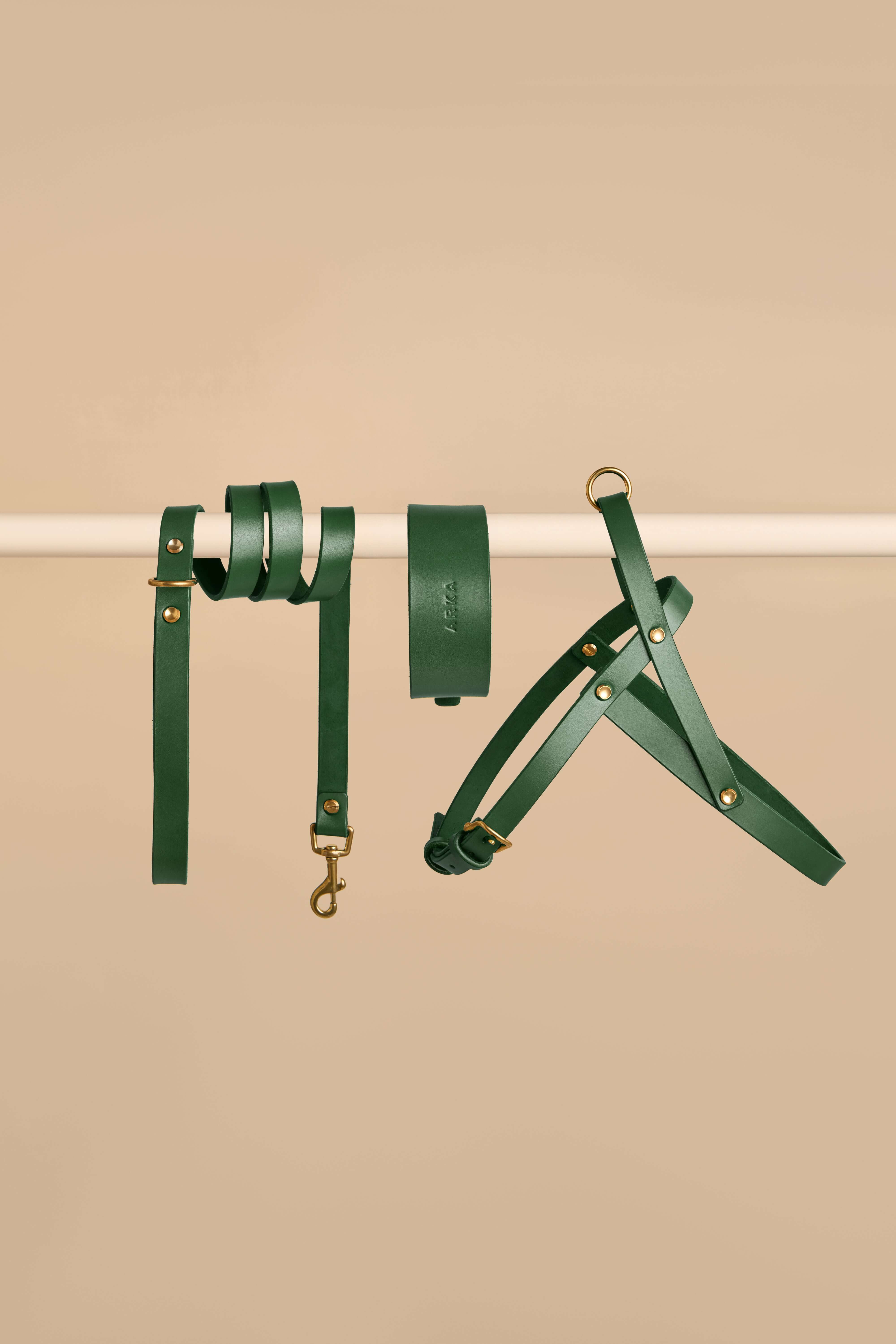
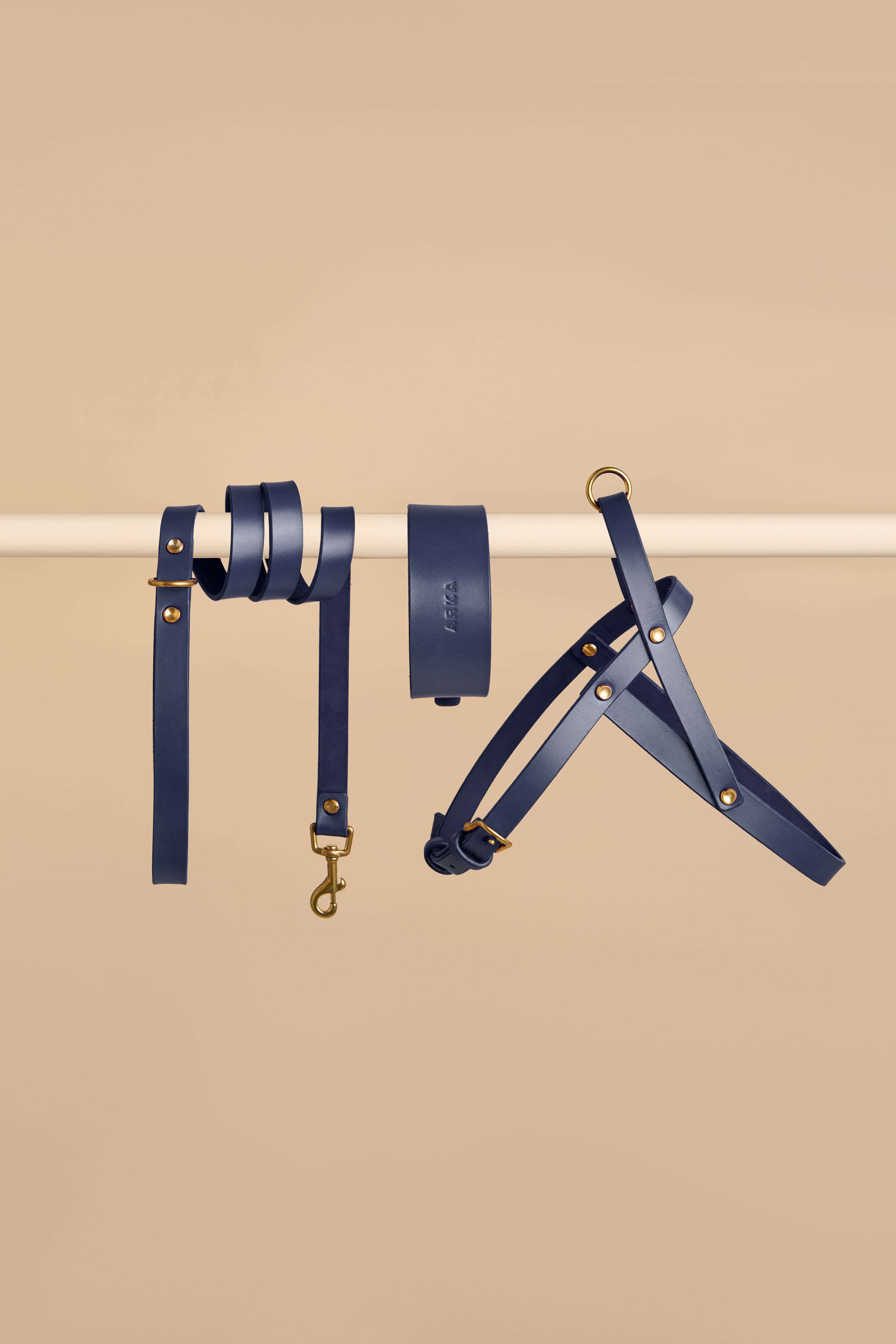
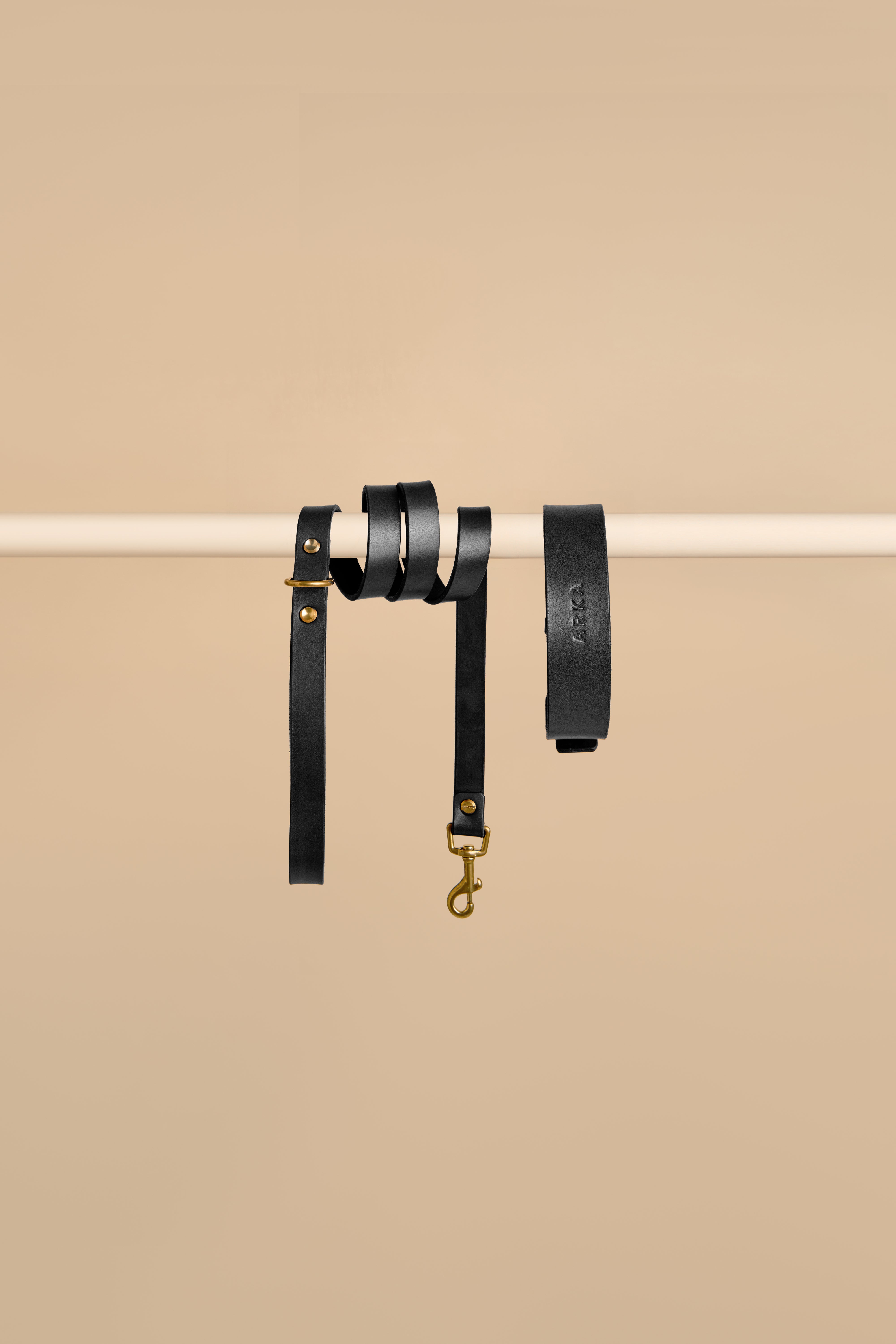
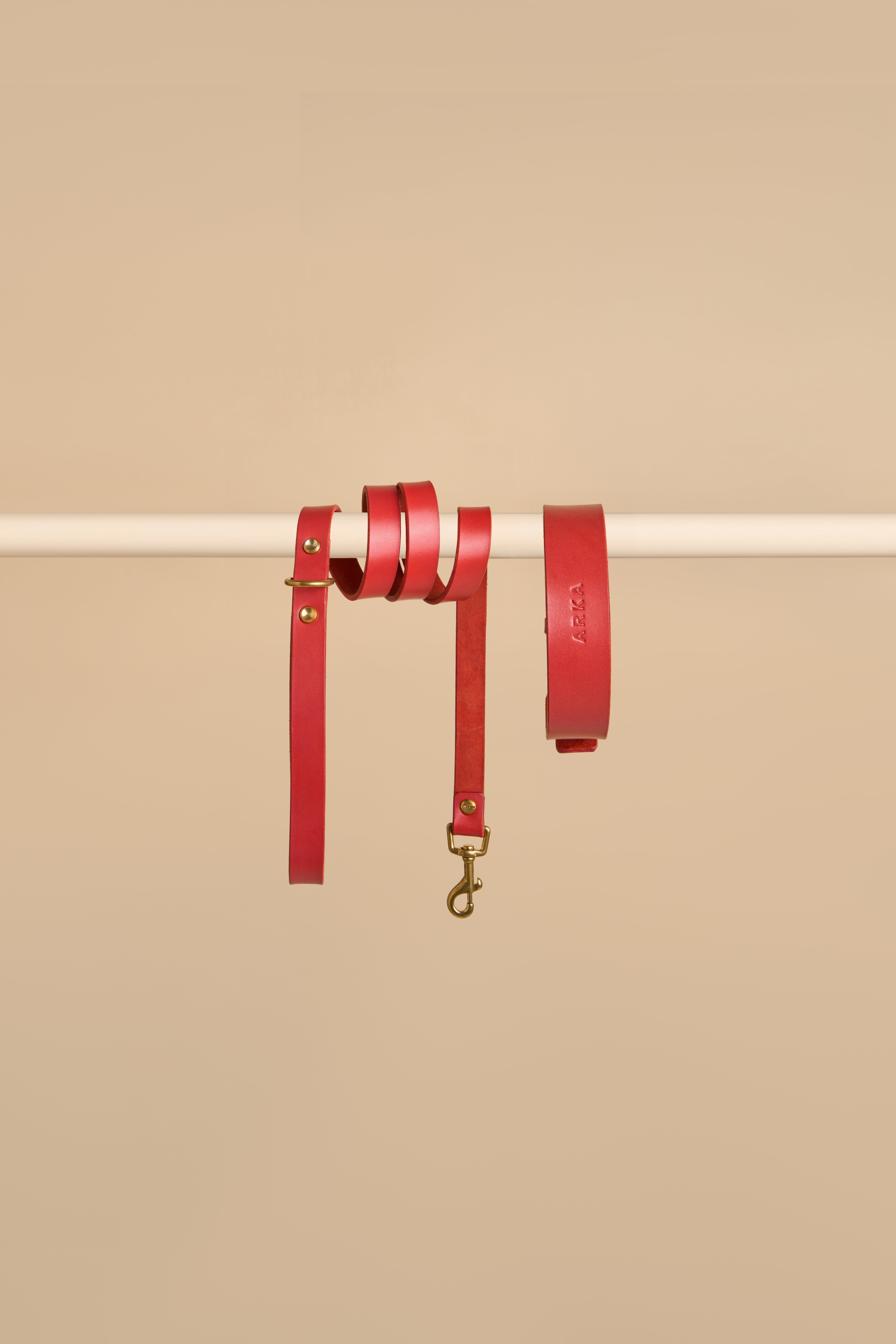
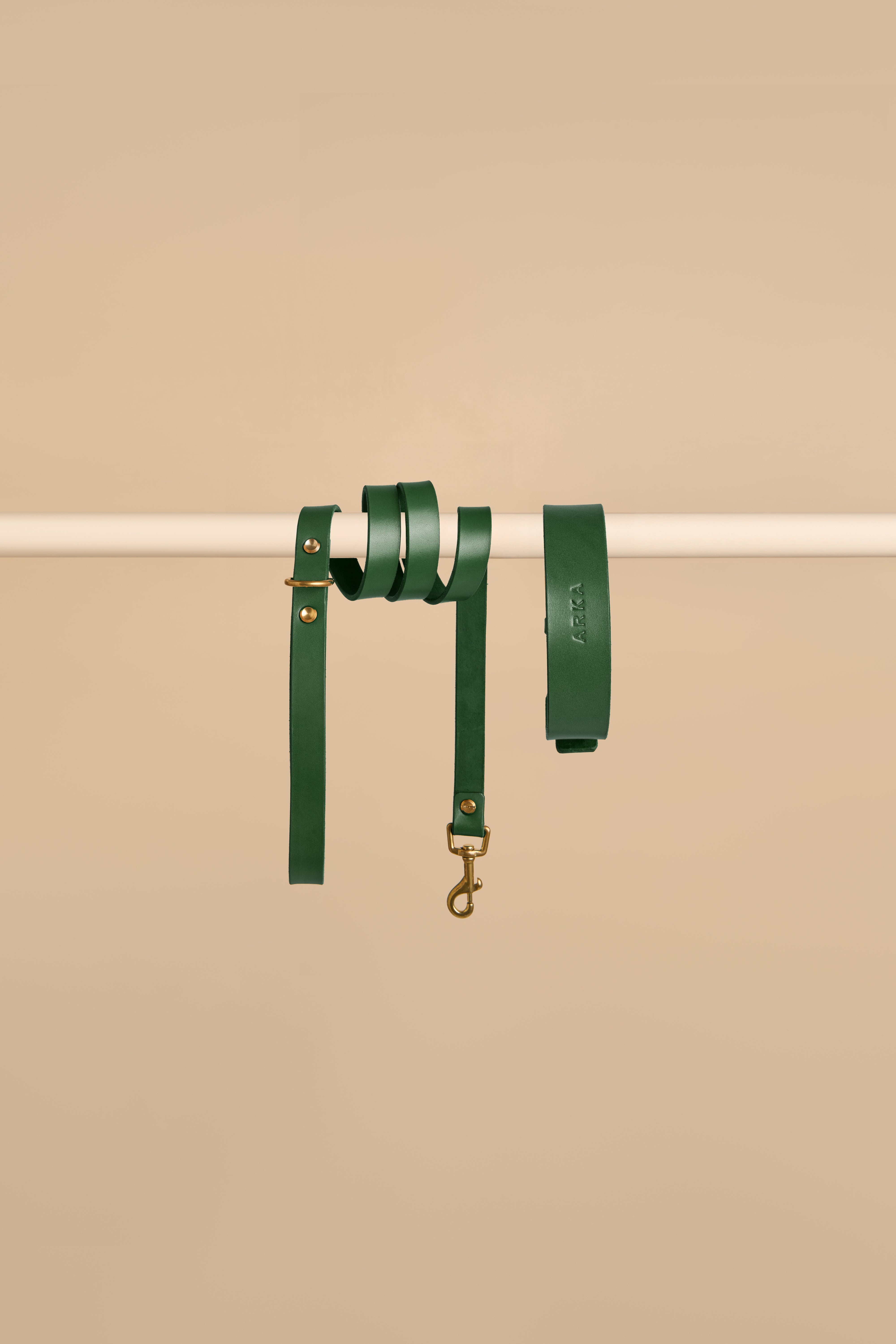
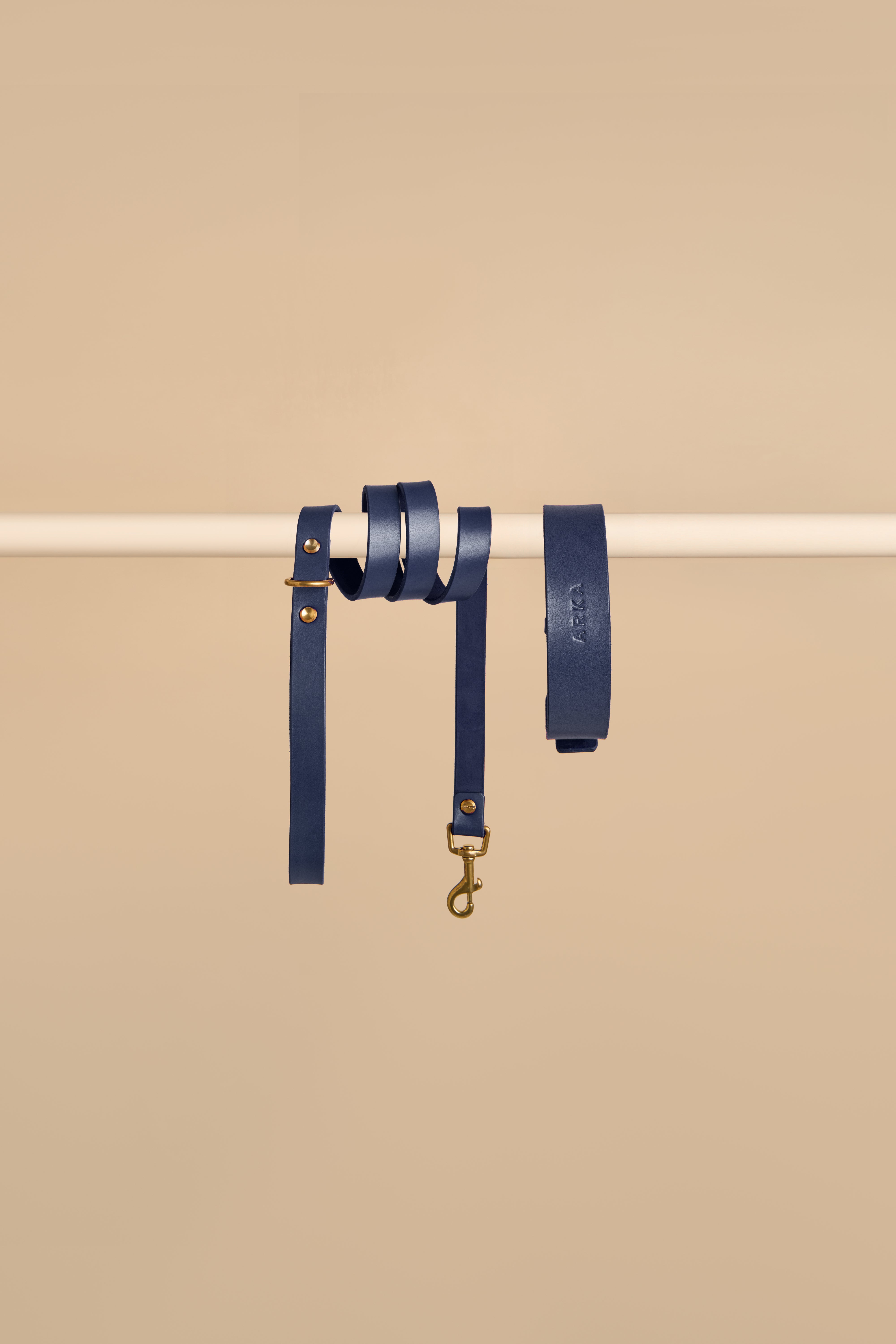
The best pairing with a vegetable-tanned wide collar is a sturdy brass buckle with a D-ring; the perfect combination for durability and style. Lesser quality hardware can rust and break over time, which leaves your dog in potential danger when out on an adventure. Always make sure that the hardware is securely attached to the collar to prevent the chance of unexpected detachment.
Adjustable Fit
Because Greyhounds and Whippets have such unique neck shapes, the ability to adjust a collar is absolutely essential. Seek out a collar that features a good number of adjustment holes that you can find the notch that provides the snuggest and most comfortable fit for your own pup. You don’t need us to tell you that an ill-fitting collar can be uncomfortable and dangerous!

Sizing Your Whippet or Greyhound for a Wide Collar
Getting the measurement right for a sighthound requires more care than for most breeds because the neck shape is distinctive: slender, muscular, and longer than their frame suggests. Follow The Lille Björn's measurement protocol: wrap a soft tape measure snugly around the middle of the neck and record that number. That is your collar size.
| Breed | Typical Neck Circumference | Suggested Size |
|---|---|---|
| Italian Greyhound | 22–29 cm | XS (22–27 cm) or S (27–32 cm) |
| Whippet | 28–36 cm | S (27–32 cm) or M (32–37 cm) |
| Greyhound | 33–42 cm | M (32–37 cm) or L (37–42 cm) |
| Saluki | 30–38 cm | S-M |
| Afghan Hound | 32–40 cm | M (32–37 cm) or L (37–42 cm) |
| Borzoi | 35–44 cm | M-L |
The two-finger rule for sighthounds: once the collar is buckled, slide two flat fingers between the collar and the neck. Two fingers with light resistance is correct. If two fingers fit easily and the collar rotates or shifts it is too loose and is an escape risk. If you cannot fit two fingers it is too tight. For sighthounds specifically, err toward the snugger end of this range rather than the looser end: a collar that sits confidently on the neck is more escape-resistant than one with excess room. See our full dog collar sizing guide for the complete measurement protocol.
Soft Interior Lining
An added feature that can help to prevent irritation and rubbing is a good quality lined or padded interior. This is particularly important for any breeds for short fur because their delicate skin is much more exposed and prone to chafing and rashes. A lot of vegetable-tanned leather collars are fitted with a softer leather lining, which makes them so much more comfortable than cheaper alternatives.
Collars for Whippet Puppies
A Whippet puppy's neck grows significantly and rapidly in the first twelve months. A collar that fits correctly at 12 weeks may be dangerously tight by week 18. Two practices make collar ownership safer during this period:
Check the two-finger fit every two weeks without exception. Whippet puppies grow fast and the consequence of a collar becoming too tight for a breed whose neck is already more pressure-sensitive than most is not trivial. Build the check into your weekly routine.
Start with the correct width from day one. The temptation to use a narrower puppy collar until they are grown is understandable, but even a young Whippet's neck benefits from the pressure distribution of a wider band. A wide collar at the correct size for the puppy's current neck measurement is always the better choice over a narrow collar that will be "replaced later."
The escape risk is higher in puppies. A young Whippet's head-to-neck ratio is even more pronounced than in adults, their narrow muzzle and slim skull make escape from a loosely fitted collar very easy. Fit snugly, check the two-finger fit, and size up promptly when needed.
Start with our XS size (22–27 cm) for most Whippet puppies from 10–16 weeks, moving to S (27–32 cm) around 4–6 months as they grow into their adult neck shape.
Frequently Asked Questions: Collars for Whippets and Greyhounds
What is the best collar for a Whippet?
A wide leather collar (4 to 5 cm in width) made from vegetable-tanned leather with solid brass hardware. The width distributes pressure evenly across the Whippet's fat-free neck, and the structured wide band provides escape resistance that a narrow collar cannot because a Whippet's head is narrower than their neck, a wide collar that fits the neck correctly cannot fold or compress through the head opening during a backward pull or head shake.
Why do Whippets and Greyhounds need wide collars?
Two specific anatomical reasons. First, sighthound necks have almost no fat padding, the skin sits directly over muscle and cartilage, meaning any narrow collar concentrates pressure on delicate tissue rather than distributing it. Second, Whippets and Greyhounds have heads that are narrower than their necks, creating a genuine escape risk from any standard-fitting collar. A wide collar addresses both: it spreads pressure and its structural stiffness prevents the folding that allows escape.
What size collar does a Whippet need?
Most adult Whippets measure 28–36 cm at the middle of the neck, suiting a size S (27–32 cm) or M (32–37 cm) on The Lille Björn chart. Always measure your individual dog as Whippets vary considerably even within the breed. Apply the two-finger rule: your measurement should sit low enough within the size range to leave room for two flat fingers before the upper limit. For sighthounds, err toward the snugger end of the range for better escape prevention.
What size collar does a Greyhound need?
Most adult Greyhounds measure 33–42 cm at the middle of the neck, suiting a size M (32–37 cm) or L (37–42 cm). Greyhounds vary significantly in build, a retired racing Greyhound tends toward the larger end, a female Greyhound toward the smaller. Always measure at the middle of the neck and confirm the two-finger fit before ordering.
What is the best collar for a Whippet puppy?
The same wide leather collar design as for an adult Whippet, sized to the puppy's current neck measurement , typically XS (22–27 cm) for puppies from 10 to 16 weeks, moving to S (27–32 cm) at around 4 to 6 months. Check the two-finger fit every two weeks without exception. Whippet puppies grow rapidly and a collar that fits correctly one week can become dangerously tight the next. The narrow-head escape risk is even more pronounced in puppies, so snug fit matters from the very first collar.
Are wide collars better for dogs with long hair?
For long-haired sighthound breeds (Afghan Hounds, Borzois, Salukis) a wide leather collar is the correct choice for the same pressure-distribution reasons as their short-coated counterparts. The one additional consideration is coat matting: vegetable-tanned leather's smooth burnished inner surface minimises matting compared to rough-textured materials. For very heavily coated breeds like Afghan Hounds, using a rolled leather collar during indoor rest and a wide flat collar for walks is the most practical setup for coat health.
Should Whippets and Greyhounds wear a collar or harness for walks?
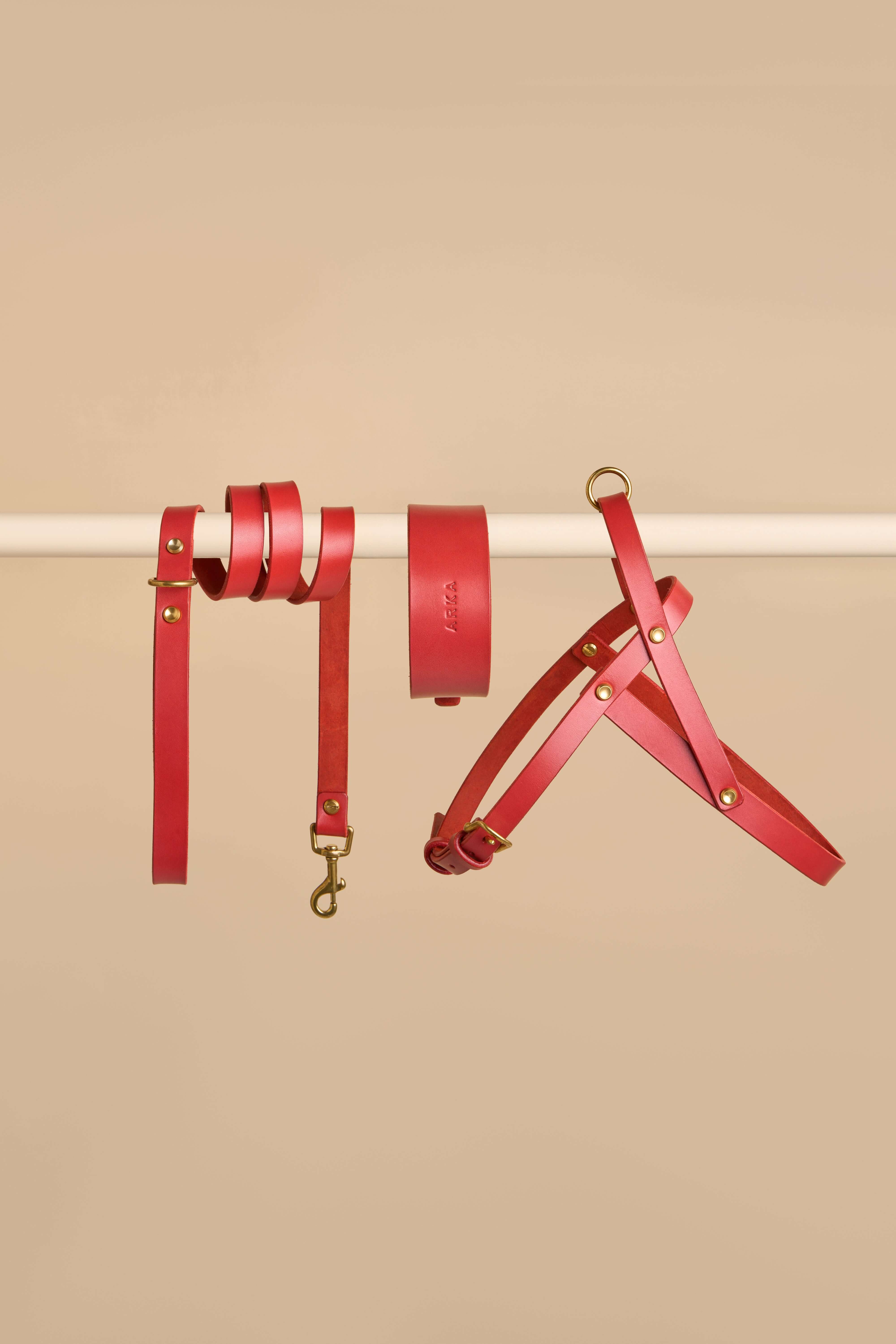
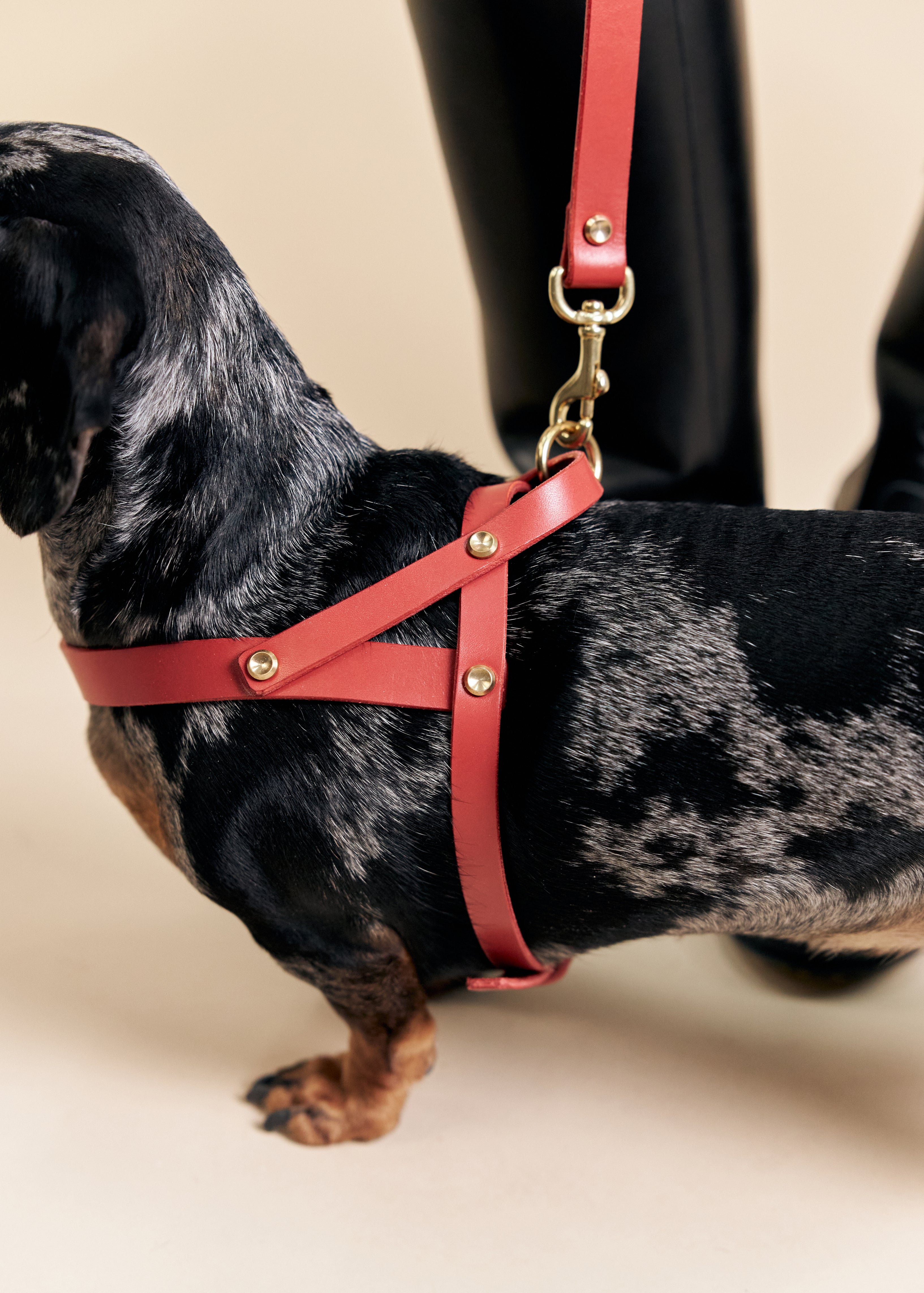
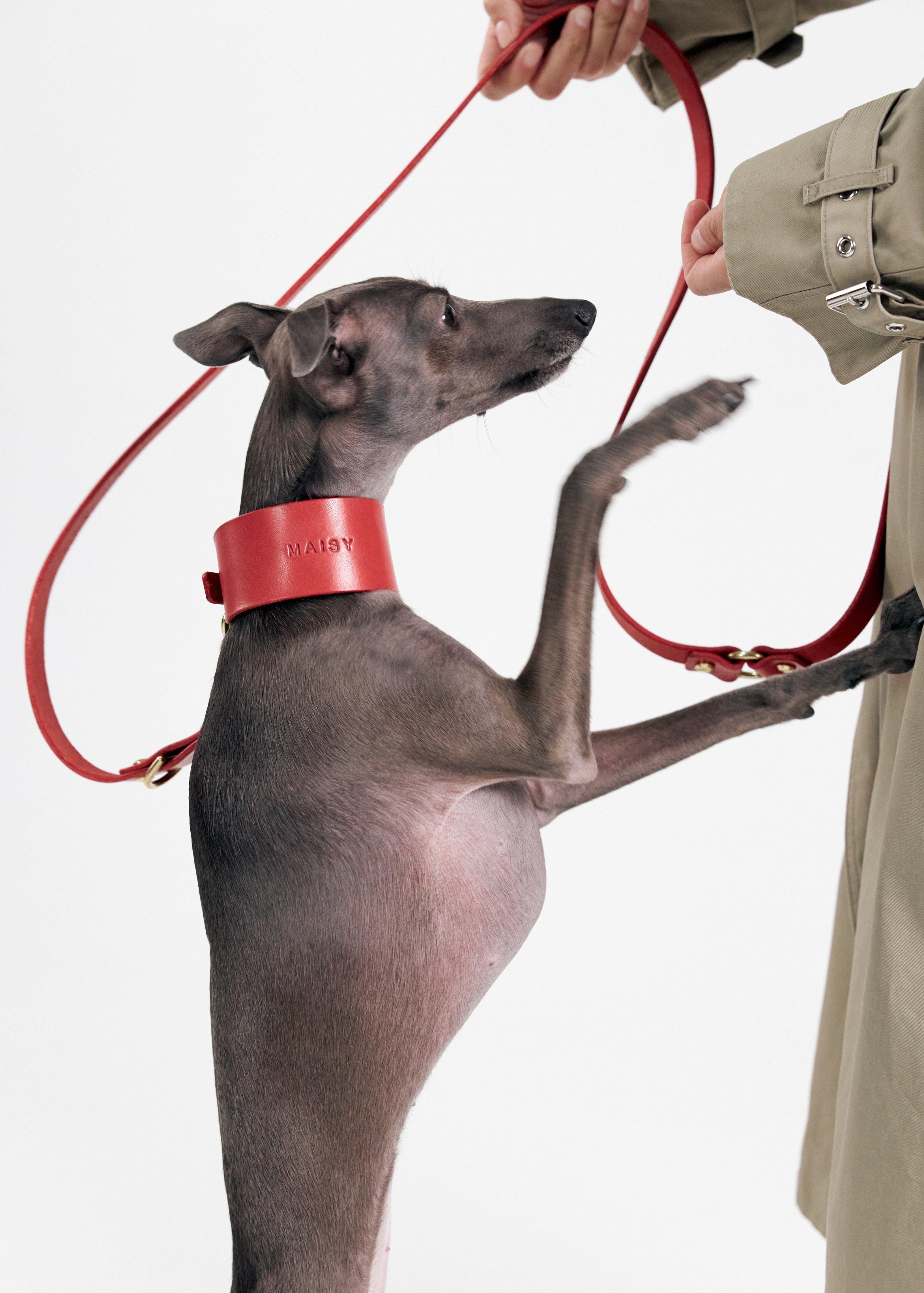
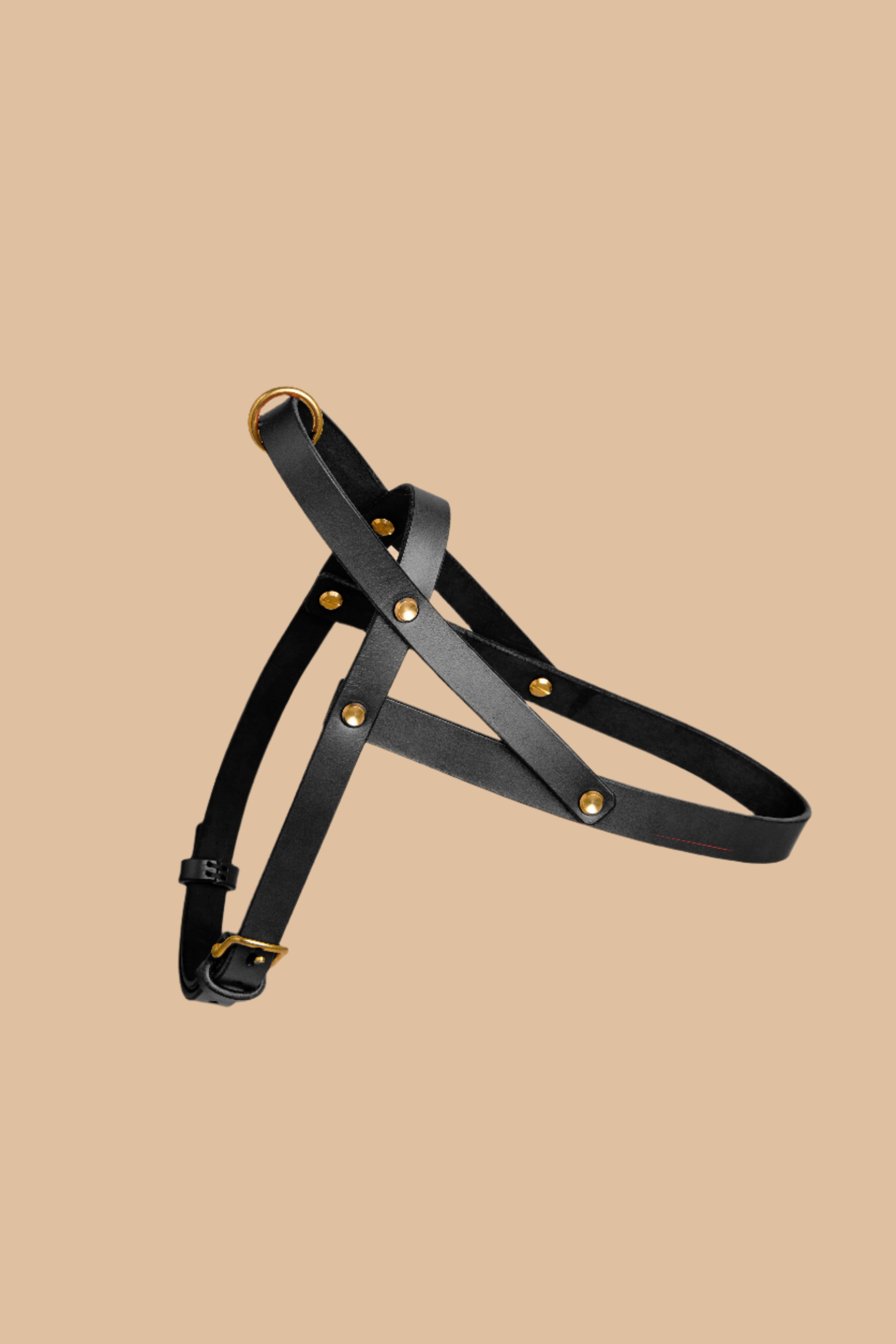
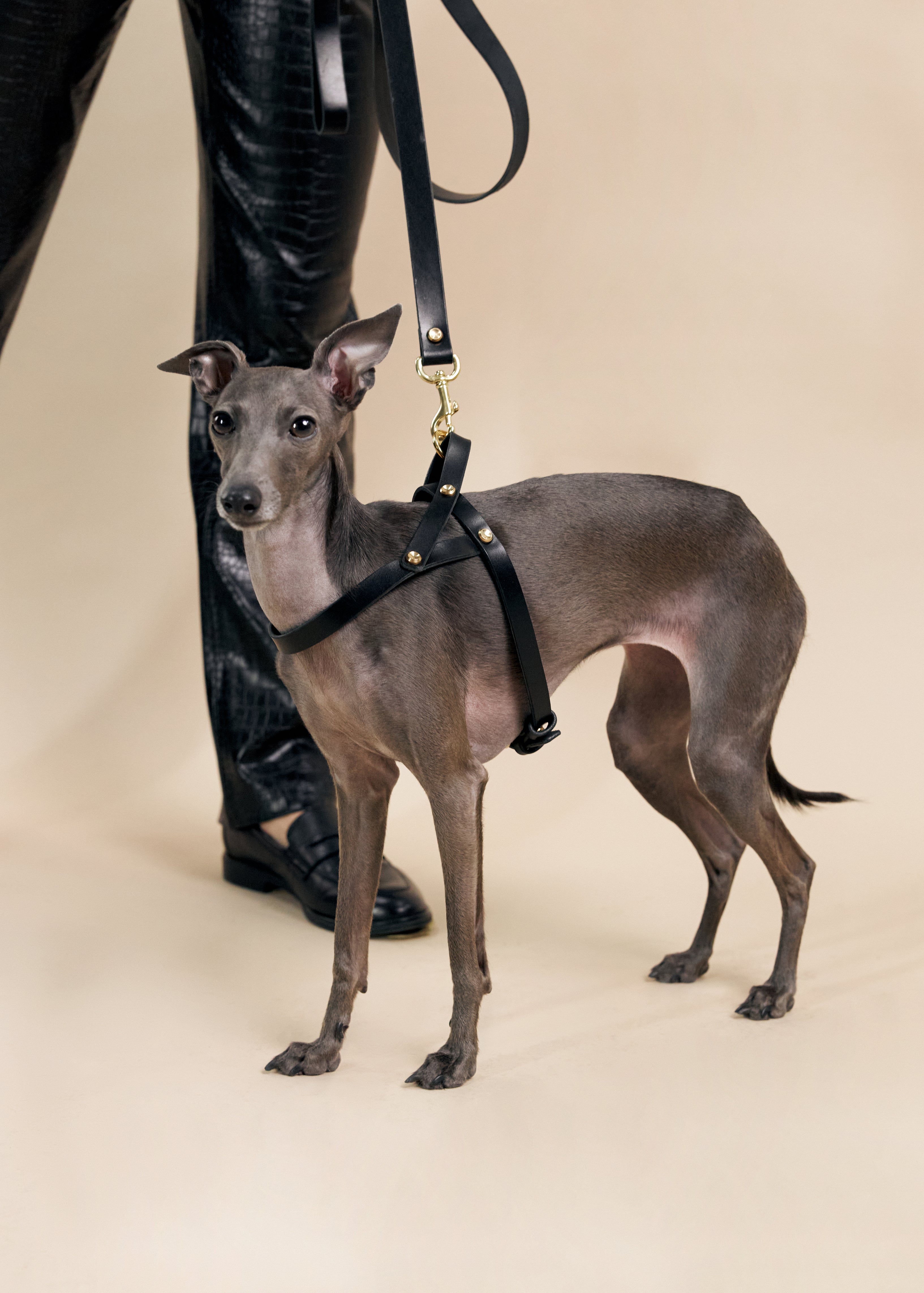
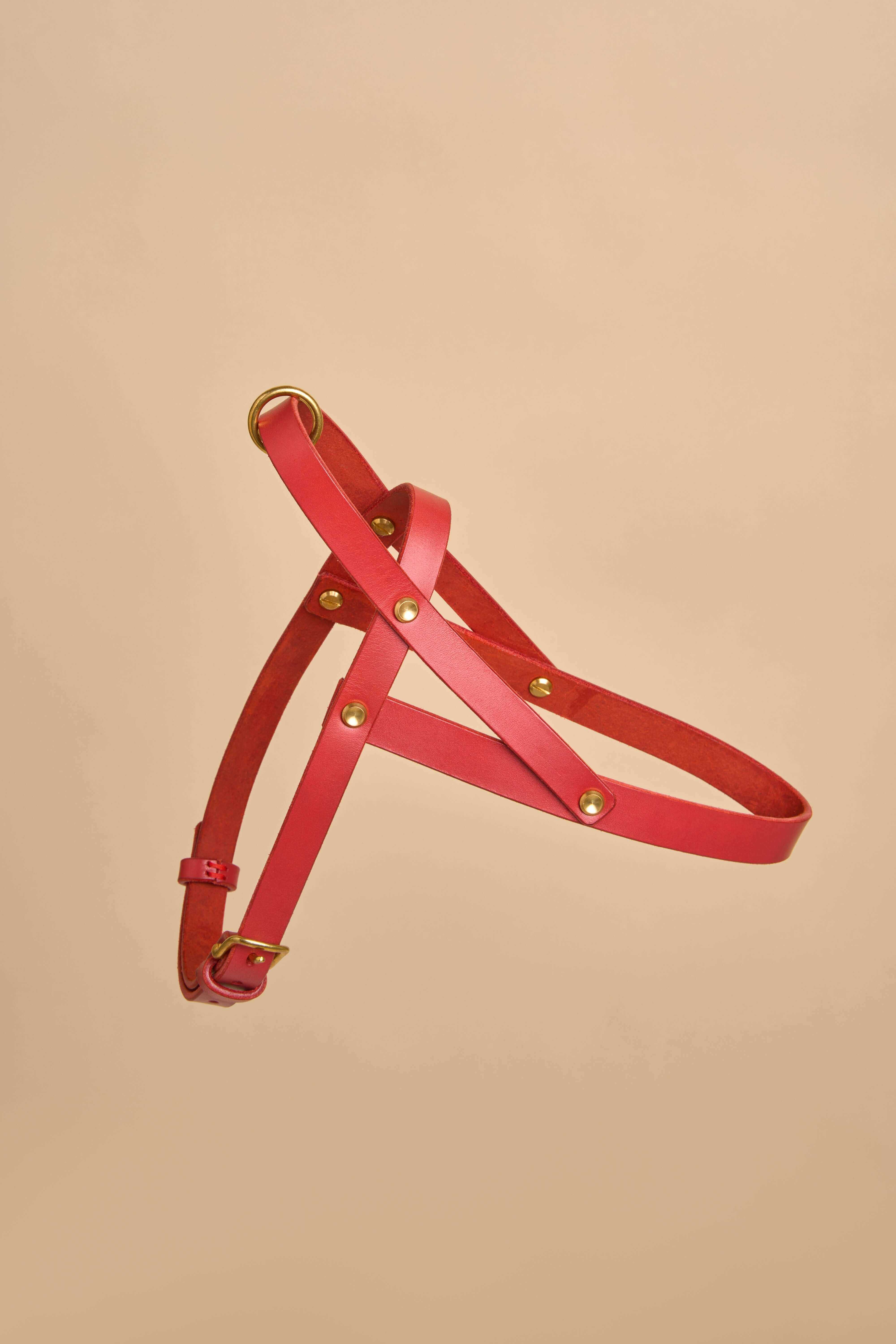
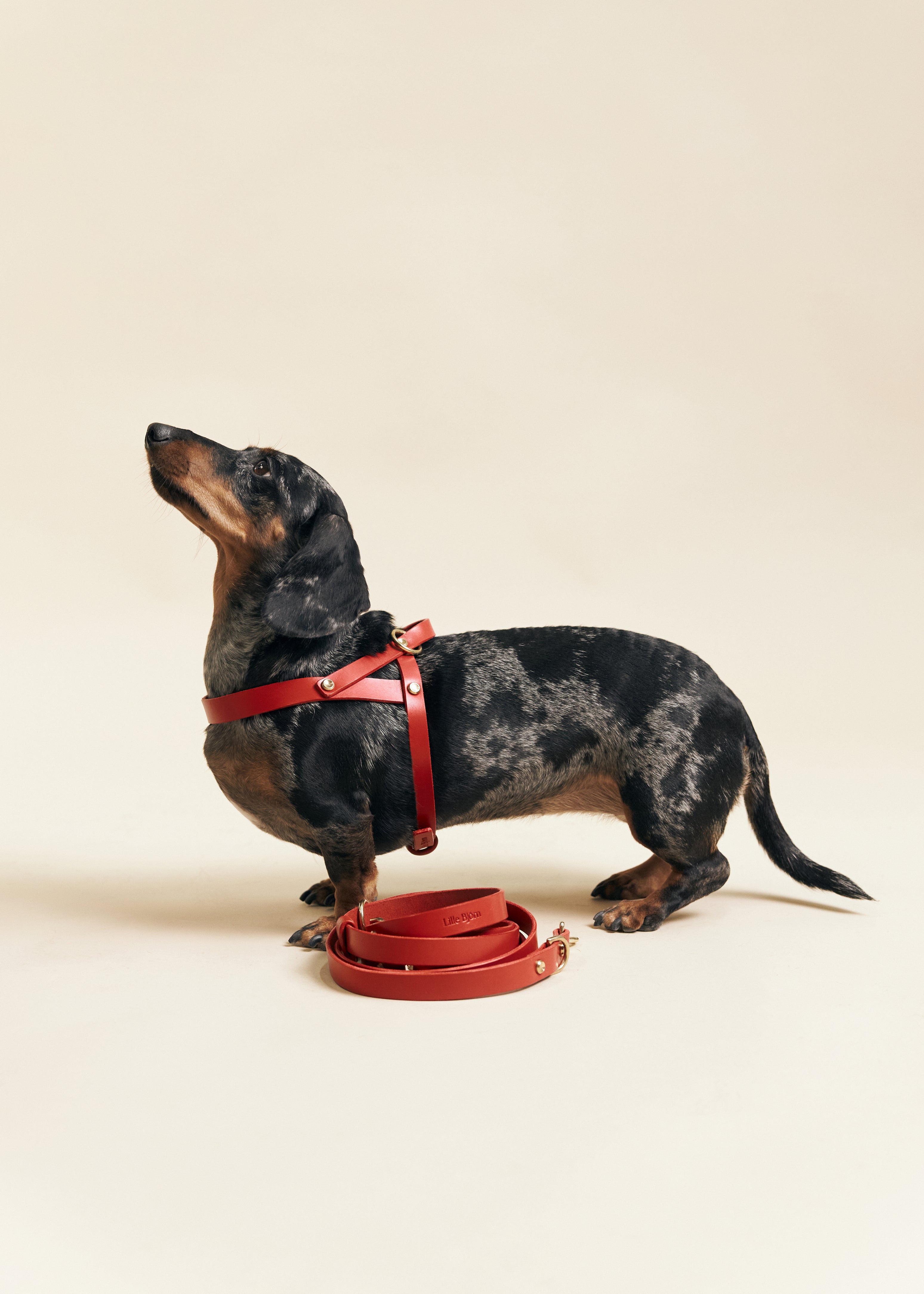
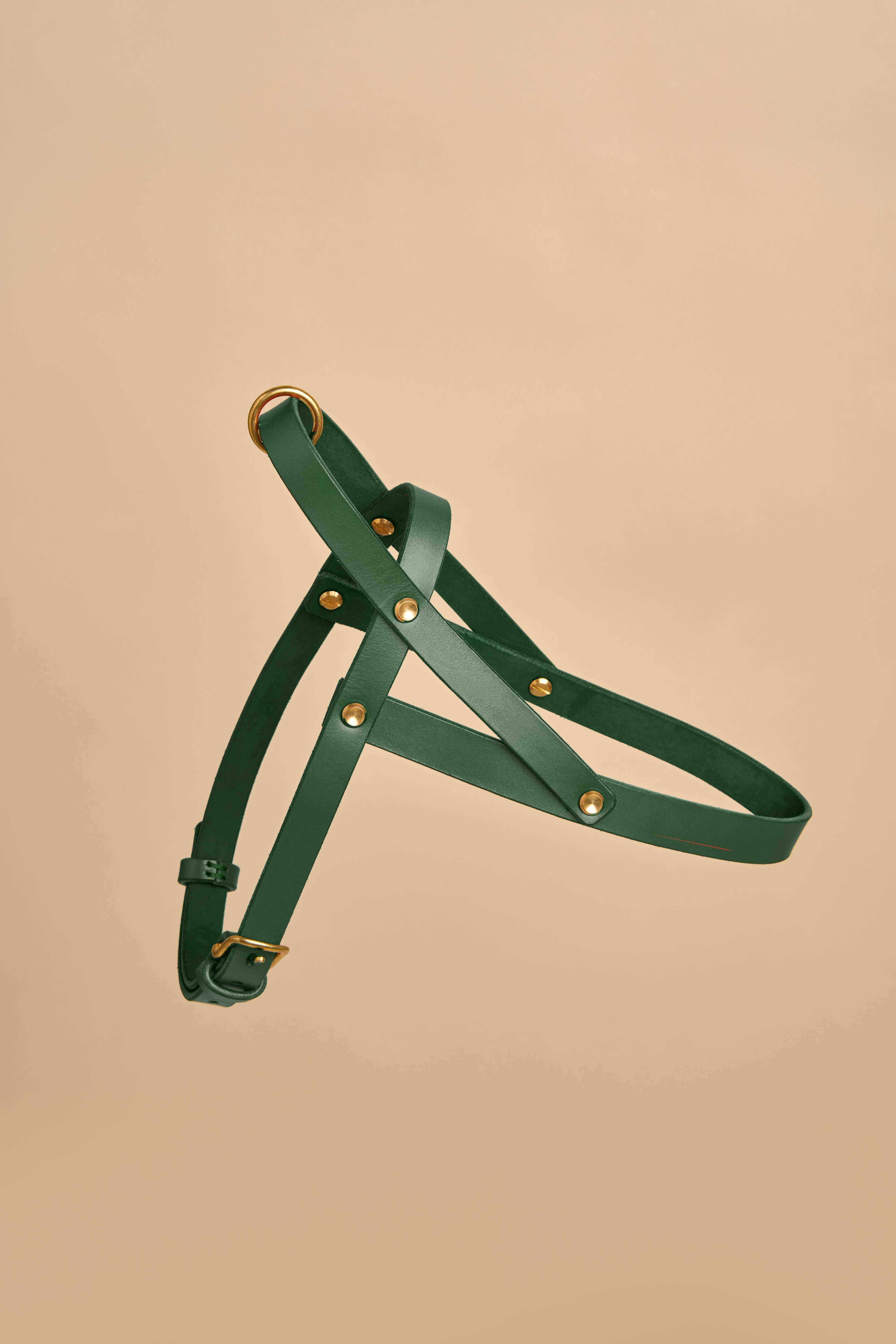
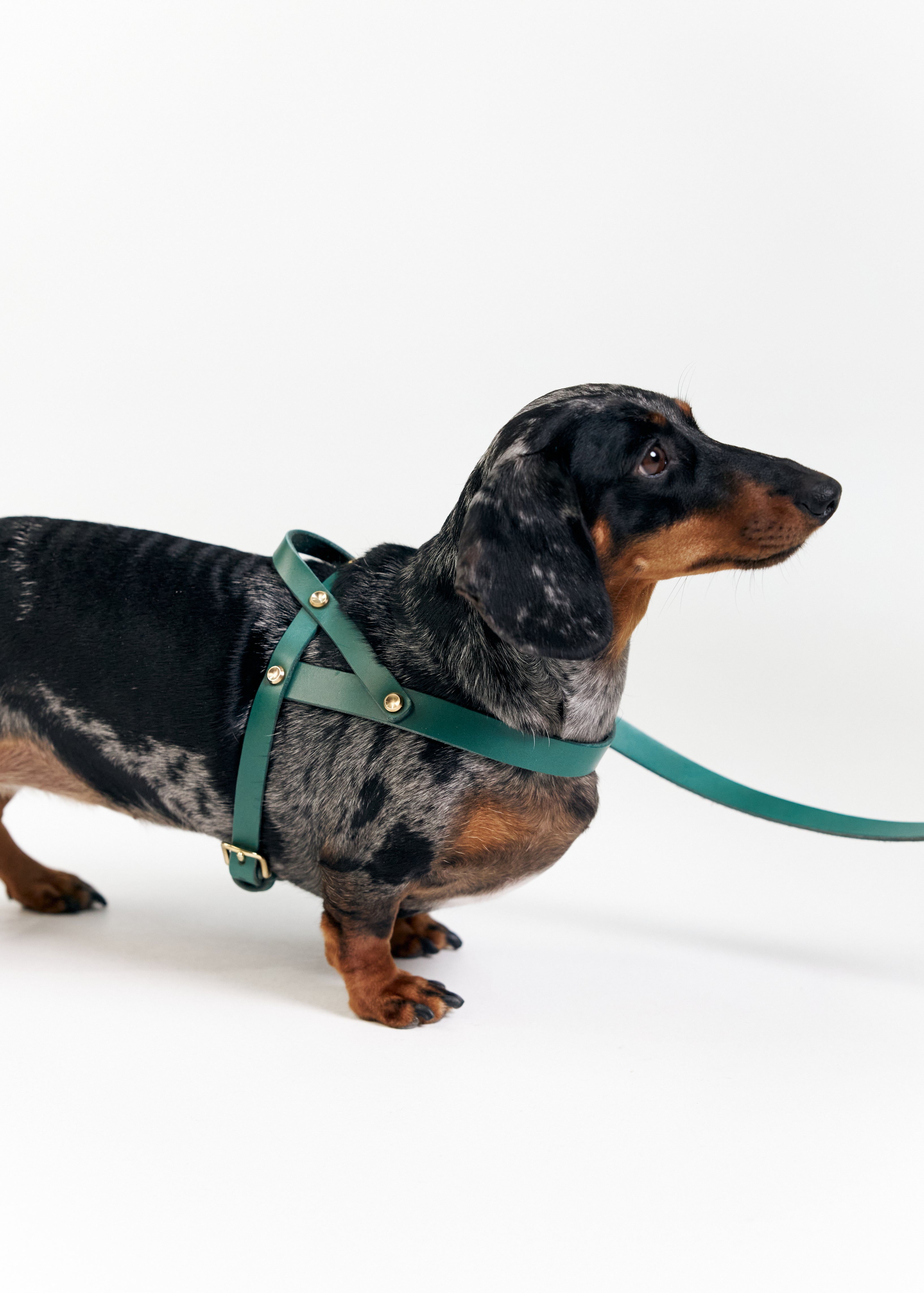
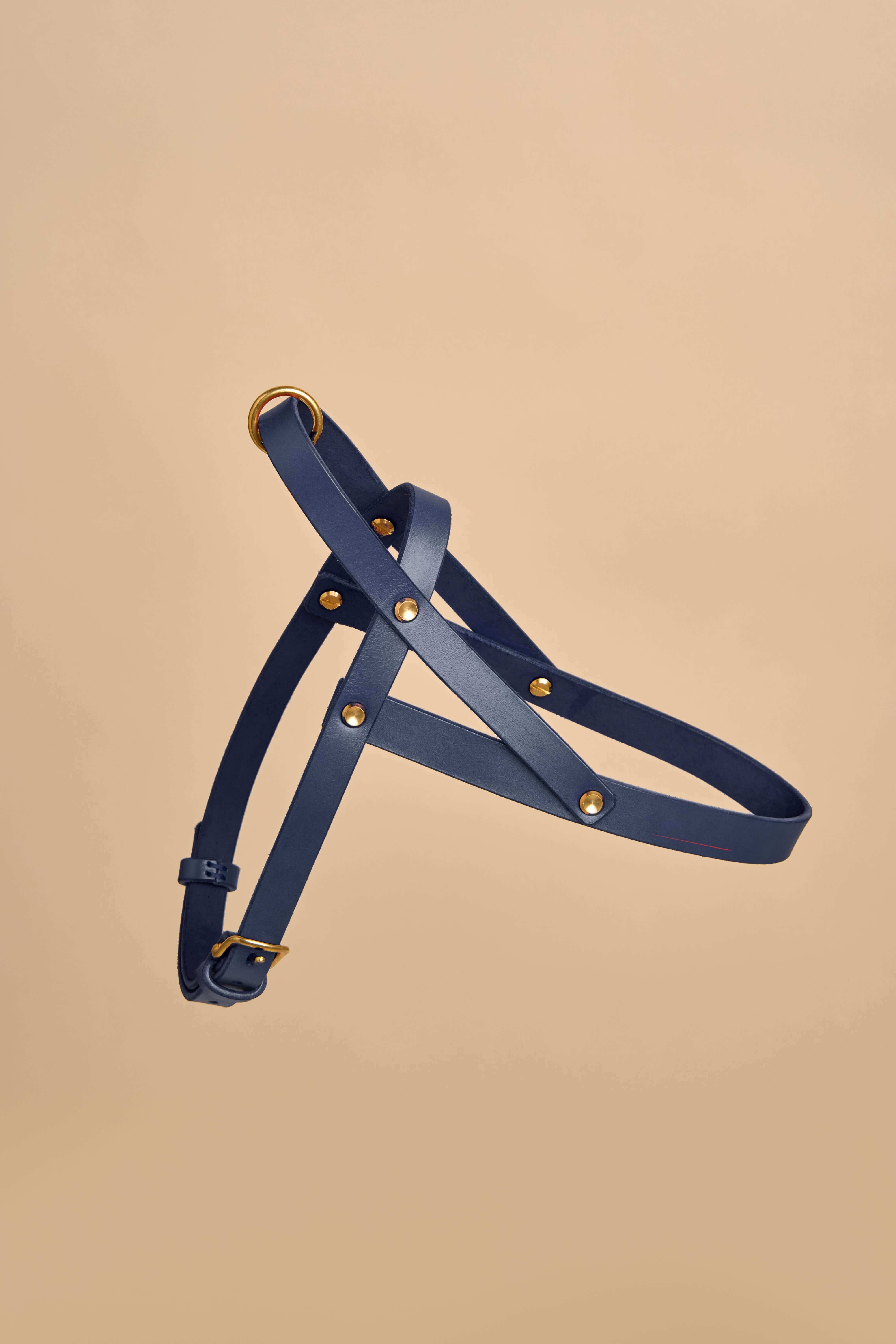
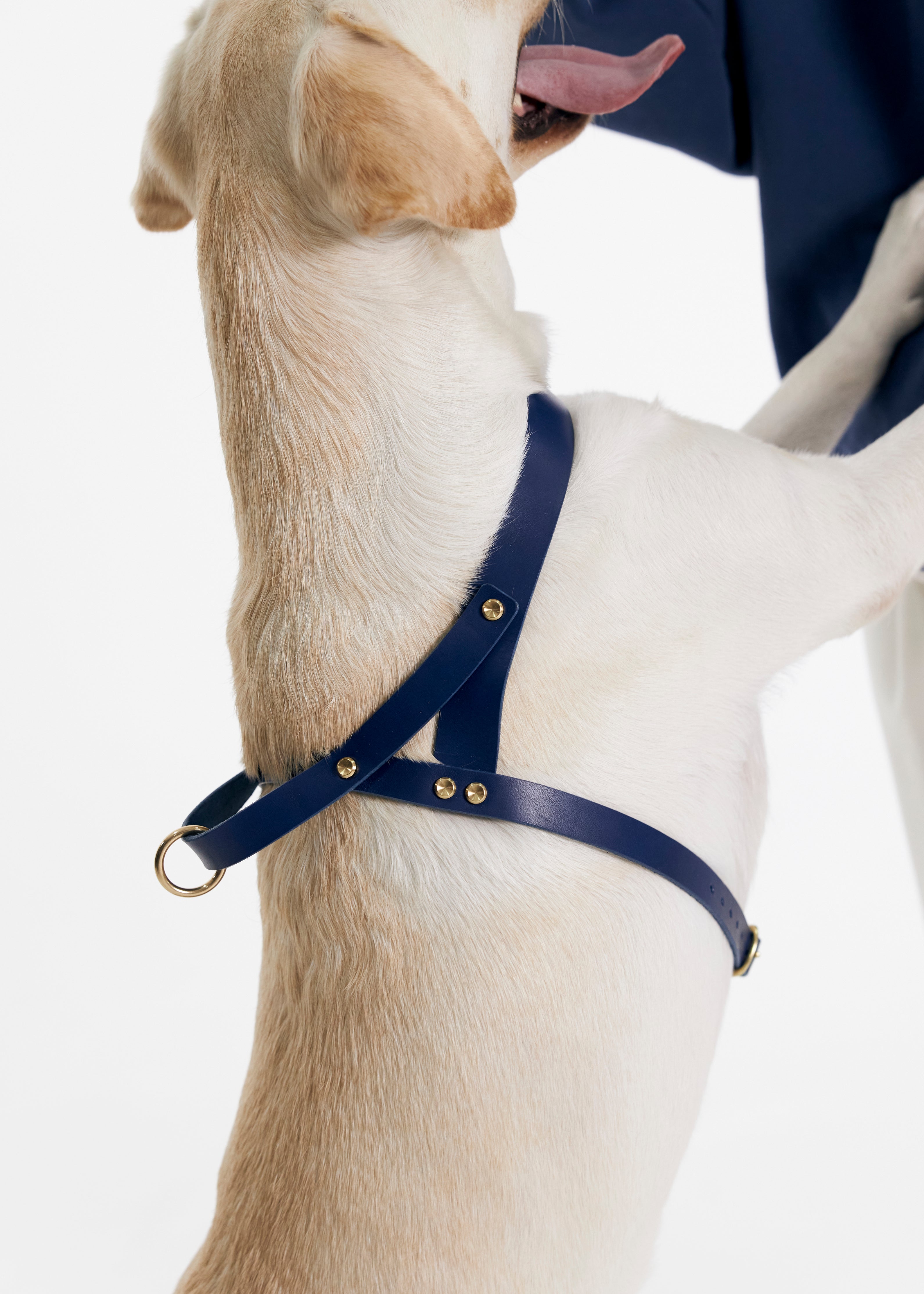
Both for different purposes. The wide leather collar carries identification and ensures your dog is always identified if they slip their lead. A well-fitted back-clip leather harness handles all leash attachment during walks, removing all tension from the neck entirely. This combination is the most considered approach for sighthound breeds: complete identification security plus complete removal of leash pressure from a neck that warrants extra care.
Conclusion
Ultimately, choosing the right collar for your long necked furry friend is one of the most crucial parts of ensuring their comfort, safety and well being. We have no doubts that wide vegetable-tanned leather collars are the best solution in this department, giving you all of the pressure distribution, slip prevention and trachea support that your canine companion needs.
Alongside all of the clear functional benefits, the fact that vegetable-tanned leather is completely natural and non-toxic, breathable and visually appealing all add to the desirability. The rich patina that develops over time is super charming, and you never have to worry about longevity or your pup’s comfort!
When you come to picking a new collar for your furry friend, the combination of width, leather quality, durability, adjustability and interior lining all need to be considered to guarantee that you are making the best choice possible for your pet.
For Whippet and Greyhound owners specifically, the combination of a wide vegetable-tanned leather collar for identification and everyday wear, paired with a well-fitted leather harness for walks, gives your sighthound complete protection: the collar carries their identity, the harness carries the lead. Neither puts pressure on a neck that deserves to be treated with care.