Quick Summary
The best collar size for a French Bulldog is typically a size M or L on The Lille Björn chart as most Frenchies measure 30–40 cm at the neck, which places them in the M (32–37 cm) or L (37–42 cm) range depending on their individual build. Dachshunds typically measure 20–32 cm and suit an XS (22–27 cm) or S (27–32 cm). Because both breeds have unique proportions, the French Bulldog's thick, muscular neck and the Dachshund's elongated, lower-set build accurate measurement at the middle of the neck is essential before ordering. This guide covers exact sizing for both breeds, the two-finger fit check, width guidance, puppy sizing, and important health considerations specific to each breed.

Why Collar Fit Matters (Especially for Mid-Sized Dogs)
You get so much amazing variety in the mid-sized pup category, from broad-chested French Bulldogs to elongated Dachshunds and pretty much everything in between! This kind of variation makes collar fit even more important, because a poorly fitted collar can lead to so many unnecessary issues.
-
Too Tight
A collar this is too tight can cause things like chafing, skin irritation and restricted breathing, and can lead to behavorial problems caused by the discomfort. -
Too Loose
On the other hand, a collar that is too loose can slip over your dog’s head, increasing the risk of an escape, as well as the danger of applying uneven pressure across the neck and shoulders.
For super active dogs and dogs who live in busy urban settings, an ill fitting collar can become a real daily safety hazard.
With all of this in mind, we always recommend a snug, adjustable fit that eliminates the need for any precise measuring slack. Our collars are made with both form and function in mind, and this results in a comfortable and secure fit that keeps your pooch safe and you happy!
How to Measure Your Dog’s Neck
Before browsing for a collar, you should get some accurate neck measurements from your pup. Don’t worry, it’s easier than it sounds!
- Find a soft tape measure or a piece of string.
- Carefully wrap it around the base of your pup’s neck, right at the spot where their collar would sit.
- Pull the tape snugly against the coat with no extra space left in the tape, no compressing the fur. The measurement you record is your collar size.
- Before ordering, apply the two-finger check mentally: your snug measurement should sit low enough within the chosen size range to leave room for two flat fingers before the upper limit of the range. A measurement of 30 cm in a size M (32–37 cm) leaves comfortable room. A measurement of 36–37 cm at the top of M should prompt consideration of size L. See our full dog collar sizing guide for the complete measurement protocol and two-finger rule explained in detail.

The Lille Björn Size Chart Mapped to Mid-Sized Breeds
Our collars are true to size. Measure snugly at the middle of the neck and find your measurement in the chart below. Before ordering, confirm your measurement sits low enough within the range to leave room for two flat fingers approximately 2 cm before the upper limit.
| Size | Neck Circumference | Two-Finger Safe Zone | Consider Sizing Up |
|---|---|---|---|
| XXS | 17–22 cm (6.7–8.7 in) | 17–20 cm | 22 cm |
| XS | 22–27 cm (8.7–10.6 in) | 22–25 cm | 27 cm |
| S | 27–32 cm (10.6–12.6 in) | 27–30 cm | 32 cm |
| M | 32–37 cm (12.6–14.6 in) | 32–35 cm | 37 cm |
| L | 37–42 cm (14.6–16.5 in) | 37–40 cm | 42 cm |
| XL | 42–47 cm (16.5–18.5 in) | 42–45 cm | 47 cm |
Sizing Guide for Popular Mid-Sized Breeds
French Bulldog Collar Size
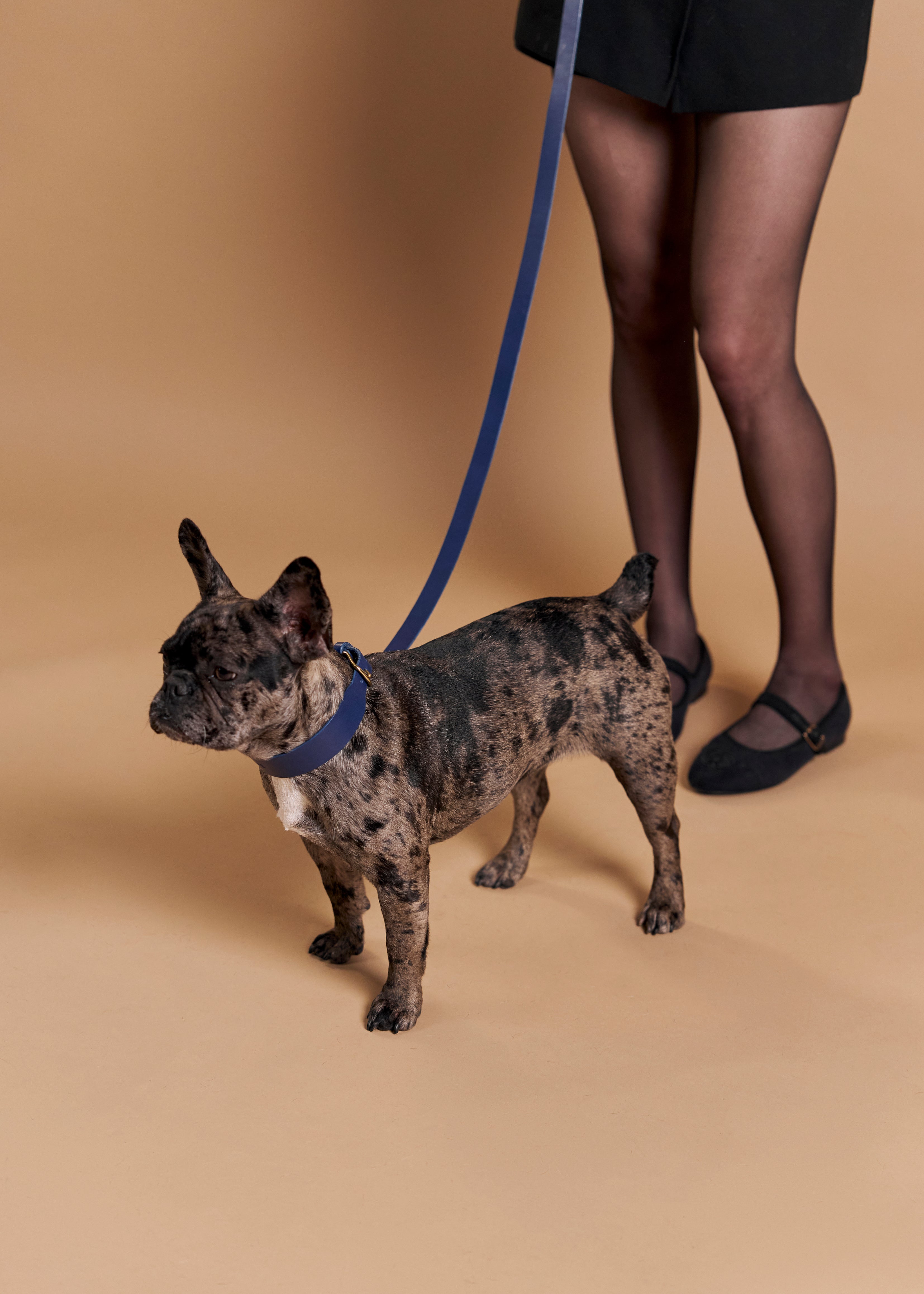
Average neck circumference: 30–40 cm Suggested size: M (32–37 cm) or L (37–42 cm)
The French Bulldog's most defining physical trait from a collar perspective is their thick, muscular neck that is disproportionately wide relative to their body weight. Many owners purchasing for the first time underestimate their Frenchie's neck size significantly. Always measure before ordering rather than estimating from body weight.
Average French Bulldog neck size by build:
- Standard adult Frenchie (compact, typical build): 34–38 cm → size M–L
- Larger or more muscular adult Frenchie: 38–42 cm → size L
- French Bulldog puppy (6–12 months): 28–34 cm → size S–M
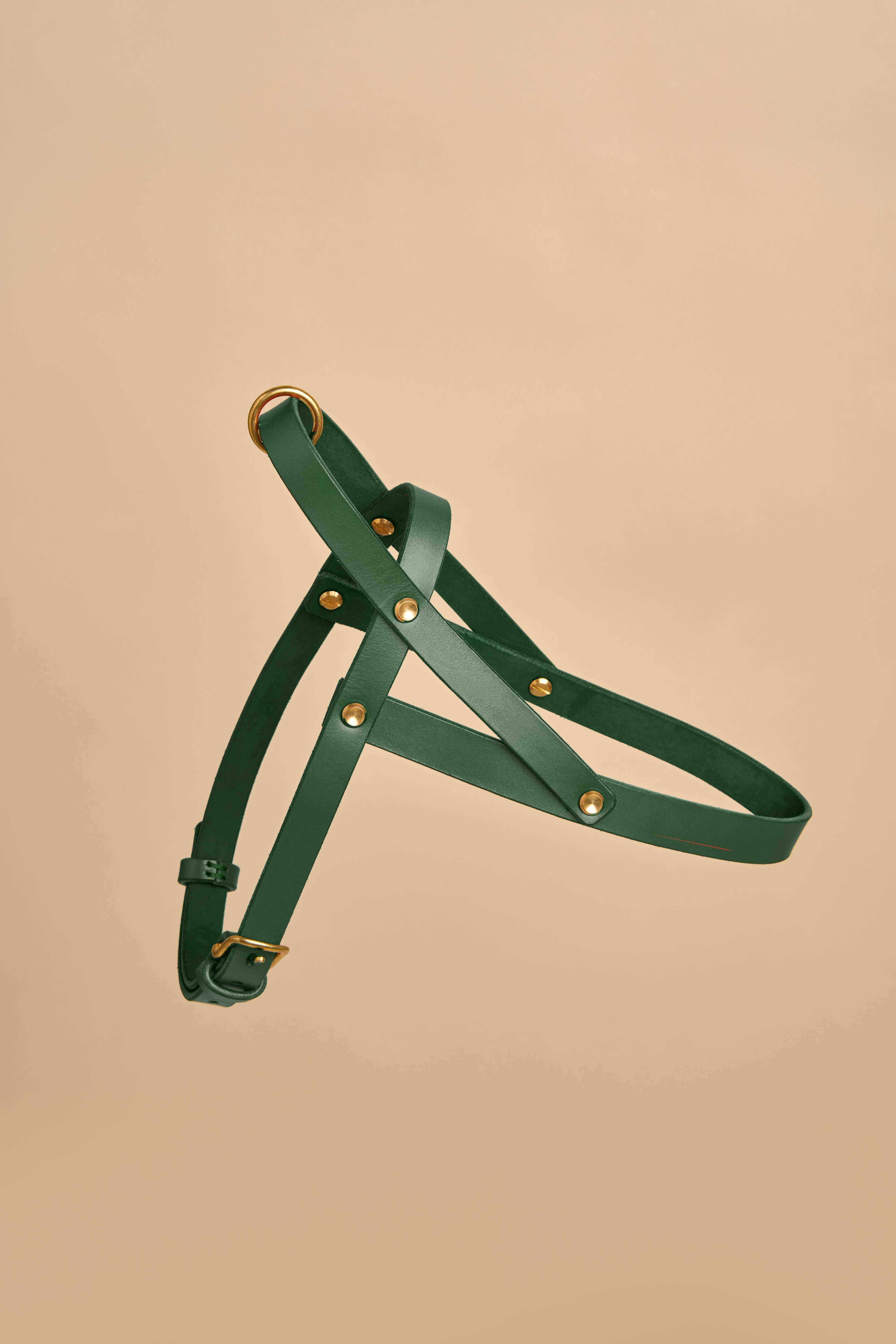
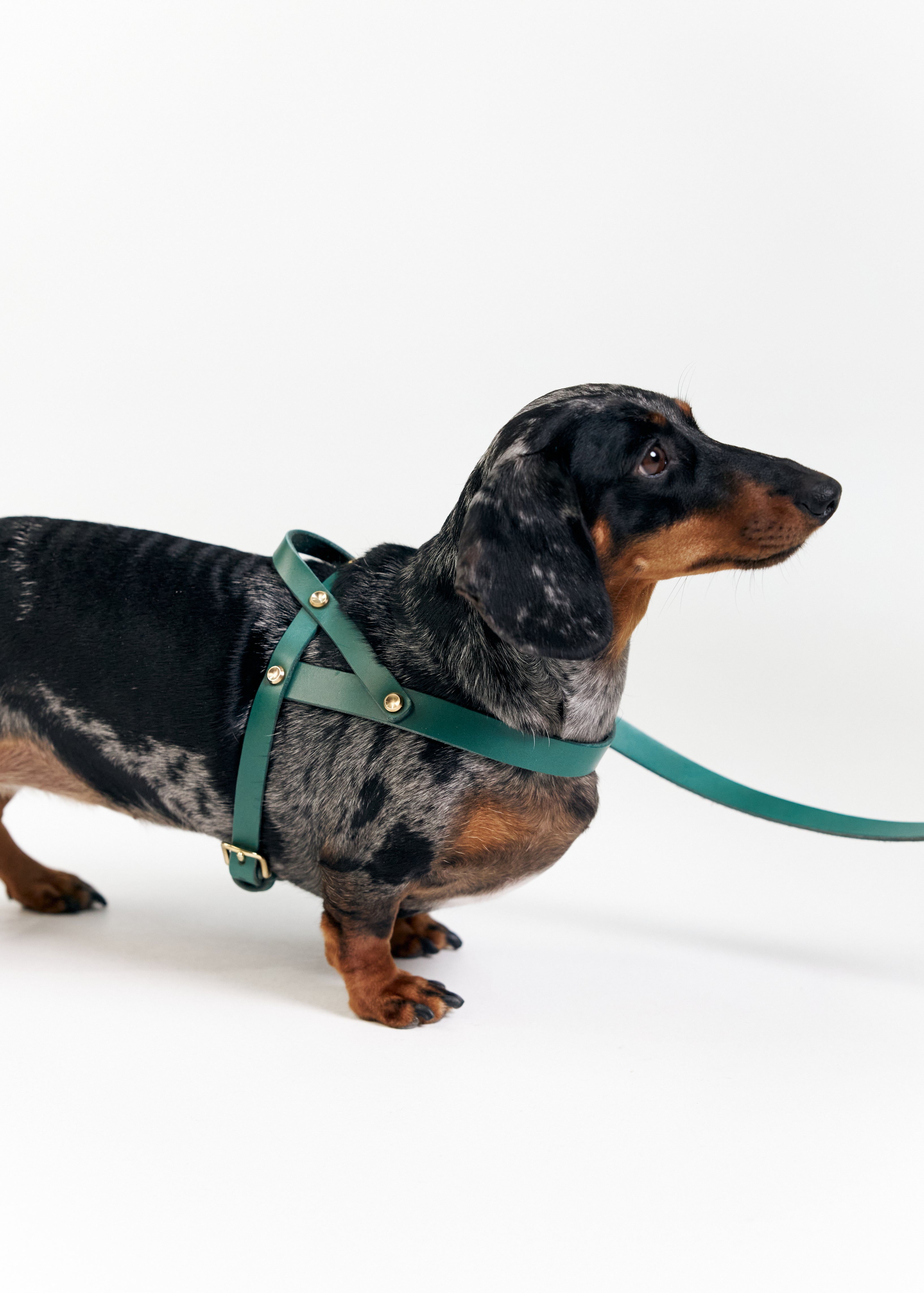
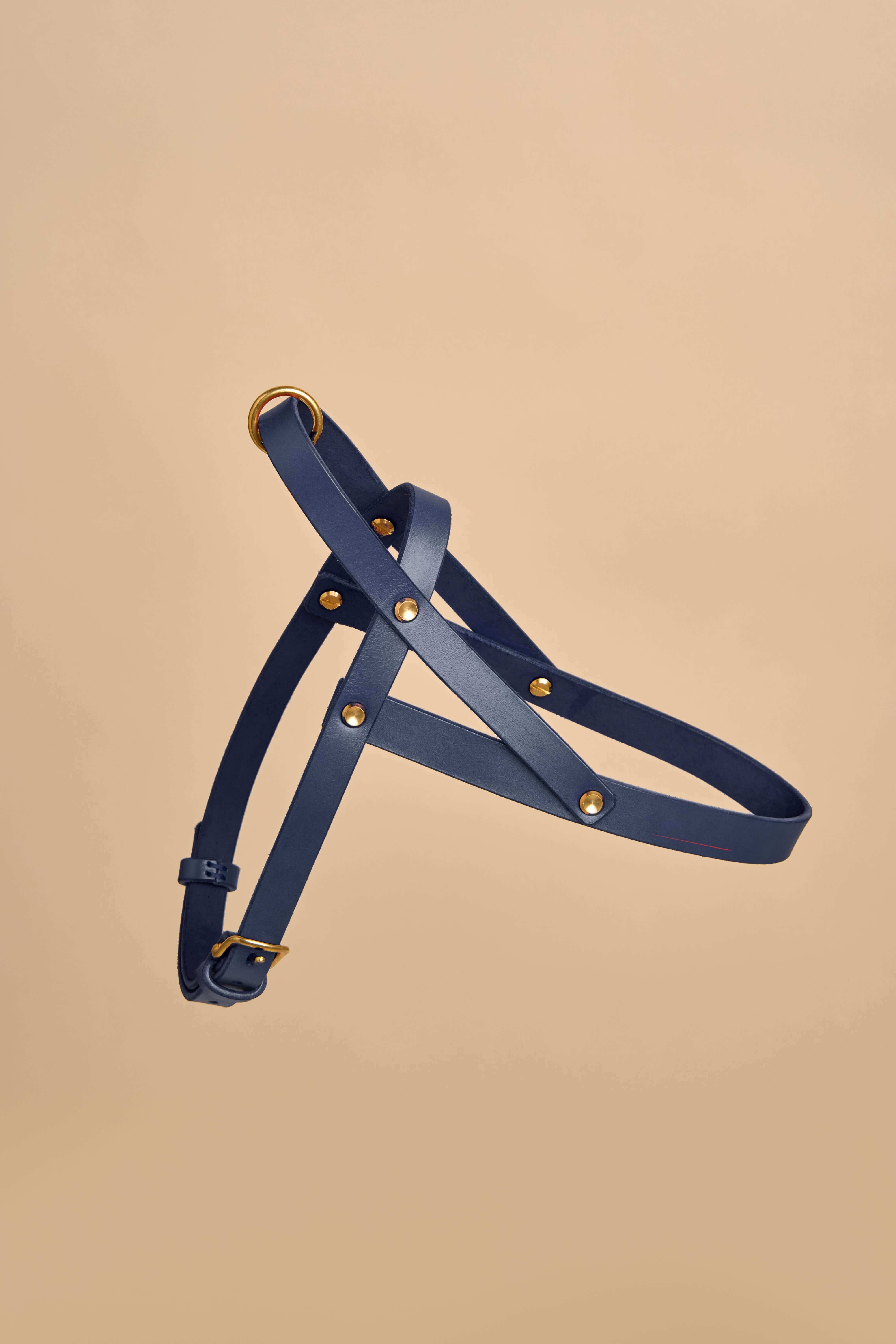
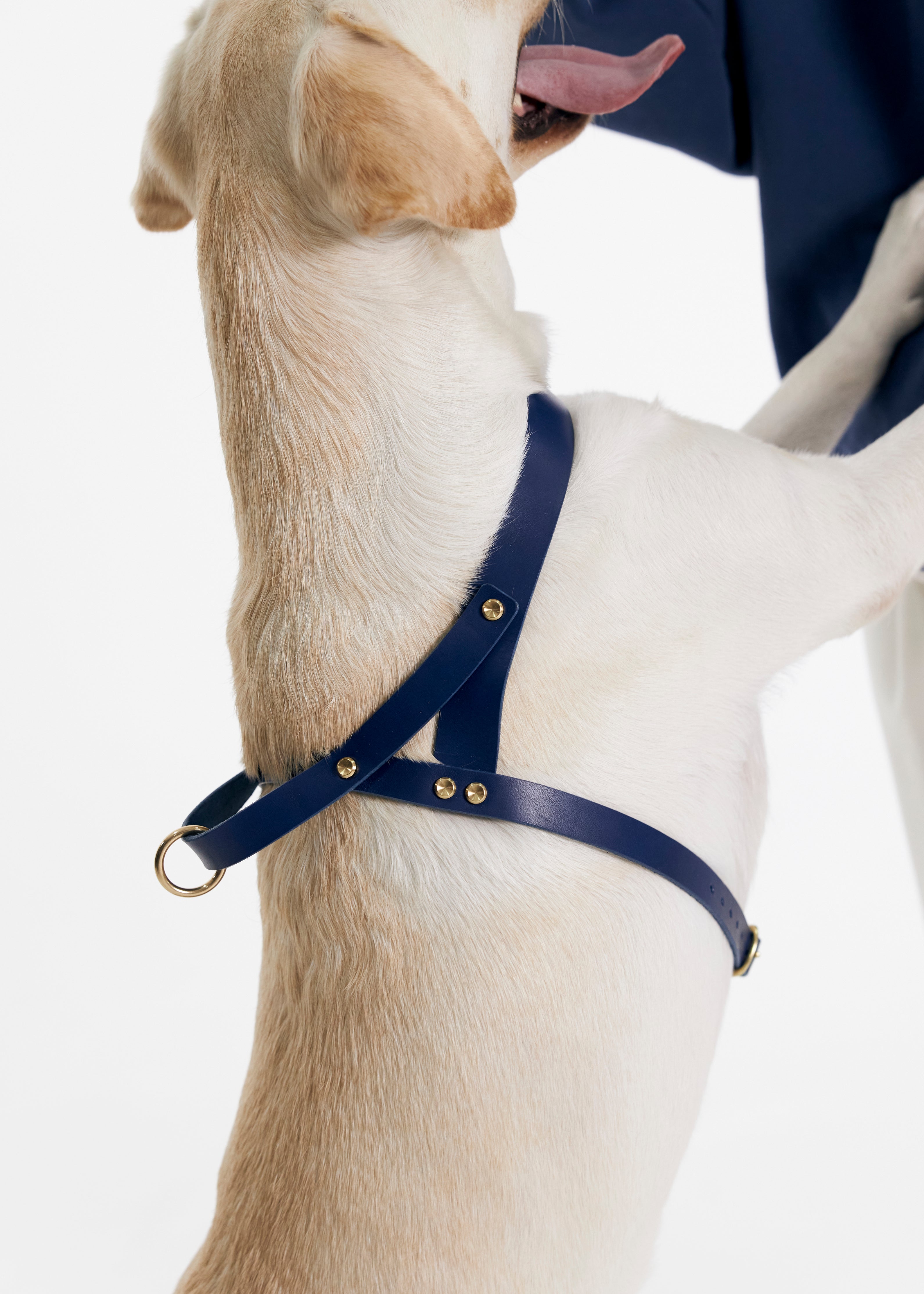
Critical note for French Bulldogs and all brachycephalic breeds: French Bulldogs have compromised airways by anatomy. Any collar used as a leash attachment during walking creates neck compression risk, this is amplified during any excited pulling. The recommended approach is a flat leather collar worn for ID tag attachment only, with a leather harness handling all leash connection during walks. This setup keeps your Frenchie identified at all times while removing all leash pressure from a compromised airway.
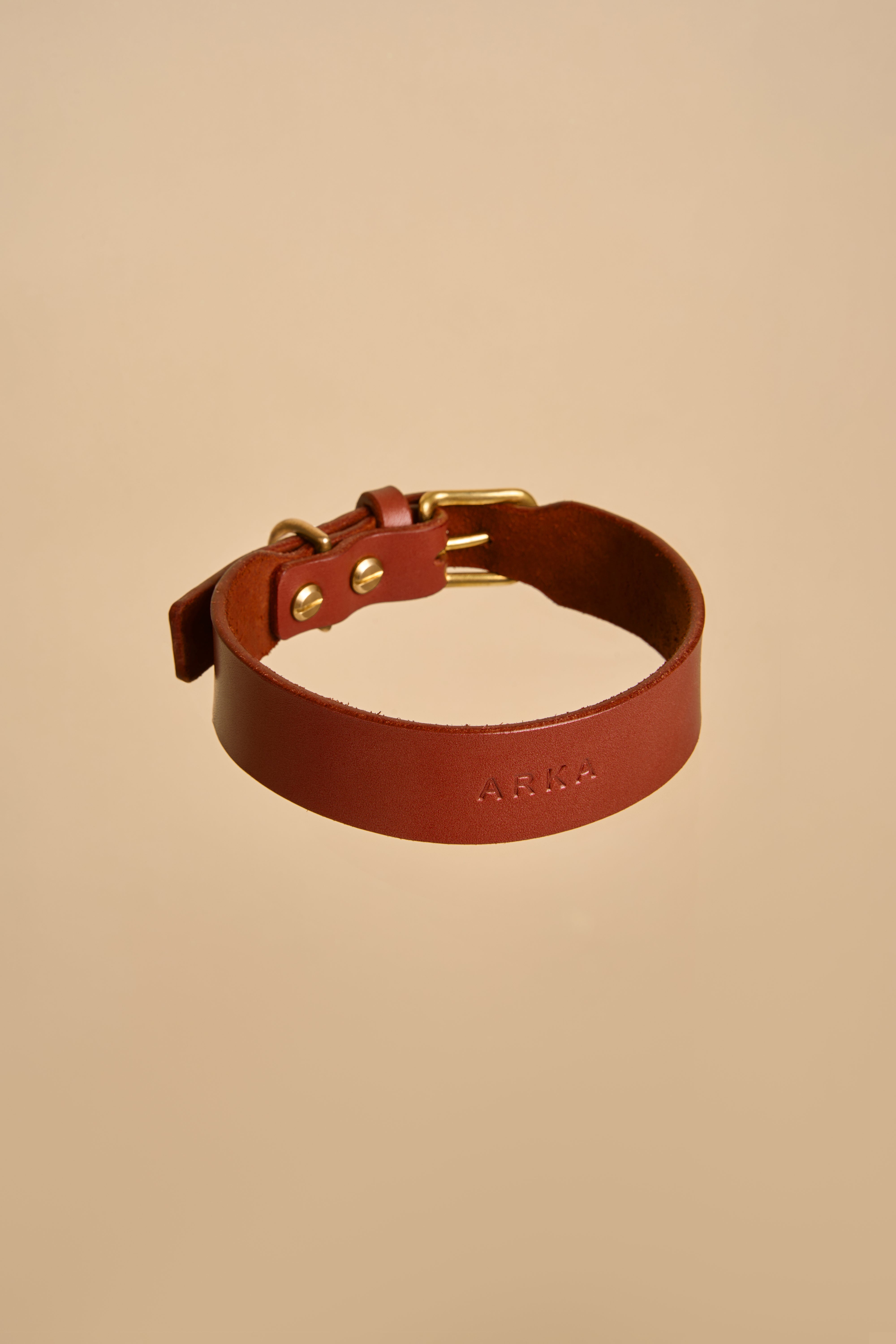
Collar width for French Bulldogs: the Classic 3 cm width is appropriate. The wide collar (4–4.5 cm) is designed for long-necked sighthound breeds and is not necessary for the French Bulldog's short, compact neck profile.
Dachshund Collar Size
Average neck circumference: 20–32 cm Suggested size: XS (22–27 cm) or S (27–32 cm)
Dachshunds present a unique sizing challenge because of the significant difference between Miniature and Standard sub-breeds, and because their long, low-set body means leash tension translates differently to the neck and spine than in most other breeds.
Average Dachshund neck size by sub-breed:
- Miniature Dachshund: 20–26 cm → size XXS–XS
- Standard Dachshund: 26–32 cm → size XS–S
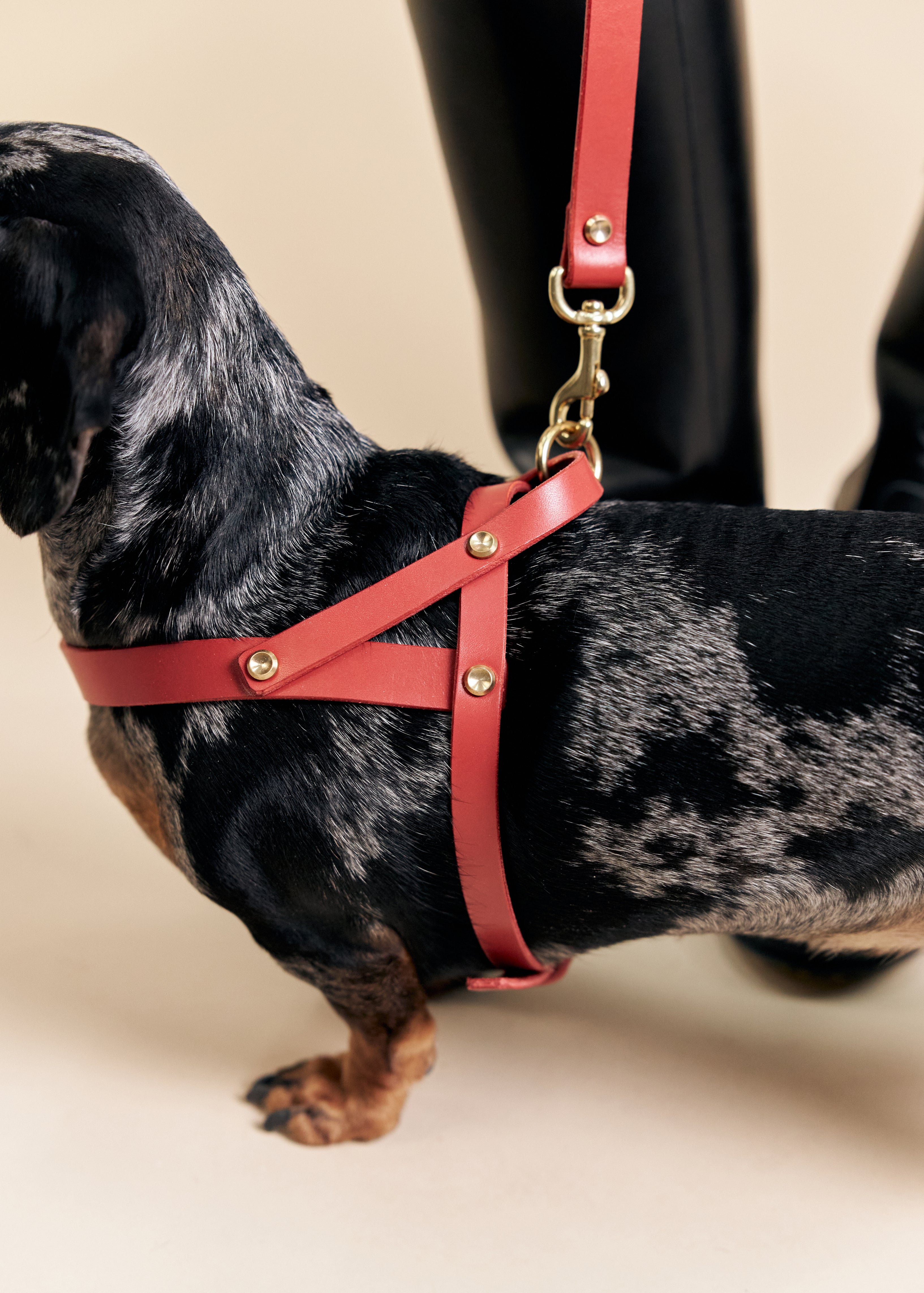
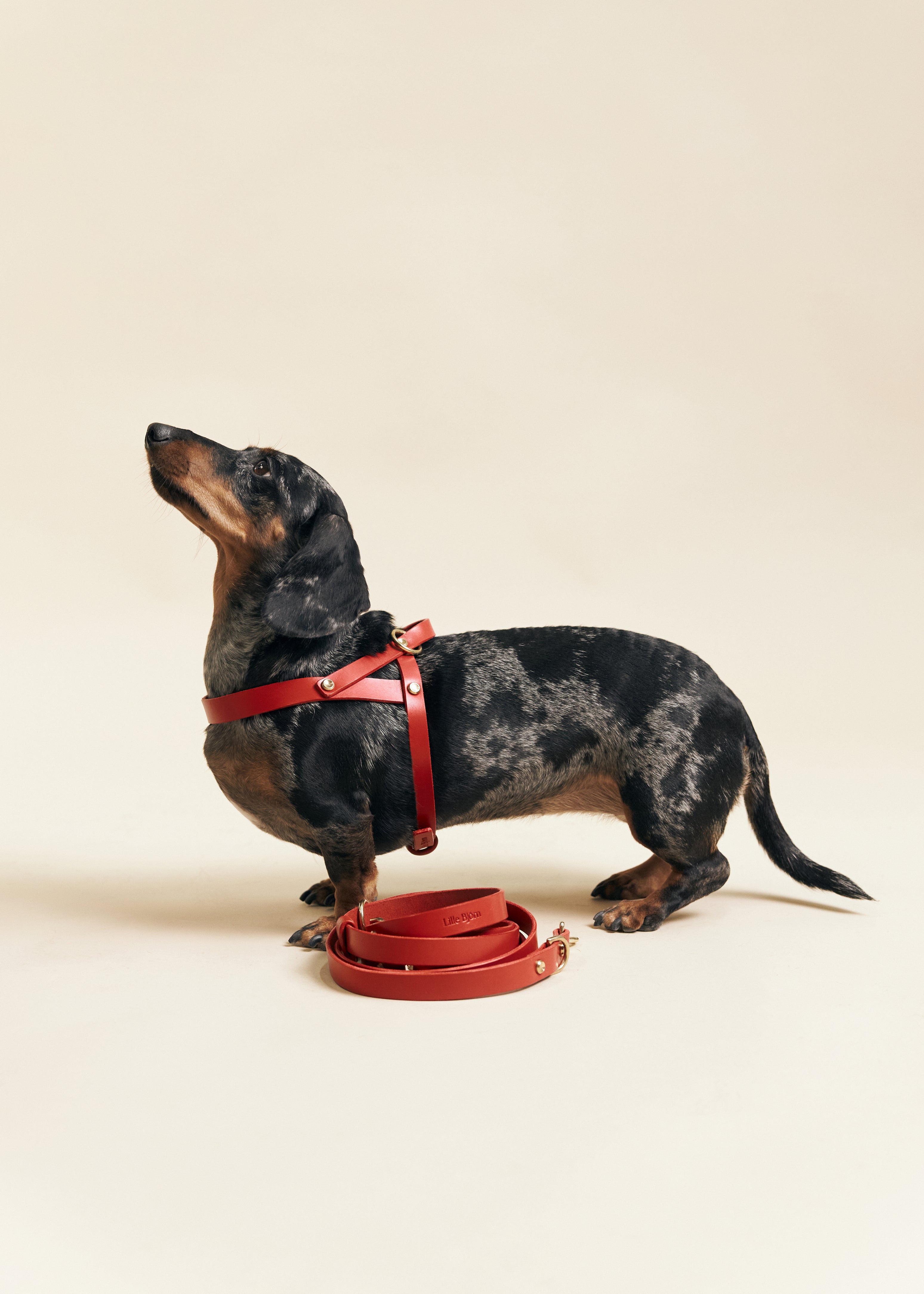
The IVDD consideration is the most important thing Dachshund owners should know: Dachshunds are the breed most associated with intervertebral disc disease (IVDD). This is a spinal condition caused by the compression or rupture of discs between the vertebrae. Because Dachshunds have an elongated spine relative to their leg length, any repeated leash tension through a collar adds cumulative stress to a spine that is already structurally vulnerable. Most veterinary sources recommend that Dachshunds wear a harness for all leash activities, with a flat collar retained purely for ID tag use. This is not an overreaction it is a meaningful, vet-backed welfare practice for a breed with a well-documented structural vulnerability.
The sweater-snagging problem: Dachshunds are frequently dressed in knitwear and jumpers during cooler months. A flat collar's buckle hardware and D-ring can catch on knitwear at the neck, creating a frustrating and occasionally dangerous snagging risk. A rolled leather collar eliminates this entirely. The cylindrical profile has no flat hardware edge to catch fabric; it glides cleanly through even fine-knit sweaters. For Dachshund owners who dress their dogs, a rolled leather collar for everyday wear is the single most practical collar choice available.
What collar colours work best with a red or tan Dachshund: the rich rust and tan tones of a standard Dachshund coat complement warm leather tones naturally. Vegetable-tanned leather in its natural tan develops a patina that deepens to a warm brown over time, a perfect visual match for the red Dachshund's coat. For black and tan Dachshunds, a black or dark brown leather collar provides sharp contrast at the collar line.
Miniature Schnauzer Collar Size
Average neck circumference: 26–32 cm Suggested size: XS (22–27 cm) or S (27–32 cm)
Miniature Schnauzers have slightly longer necks and denser, wirier coats than most mid-sized breeds. A flat leather collar in the Classic 3 cm width sits well above the beard without interfering with the fur. Avoid wide collars, the Schnauzer's narrow neck profile does not require the extra width and a wide collar will appear disproportionate.
Cocker Spaniel Collar Size
Average neck circumference: 28–35 cm Suggested size: S (27–32 cm) or M (32–37 cm)
The Cocker Spaniel's long, silky coat makes rolled leather collars the preferred choice as the cylindrical profile prevents the fur matting and breakage that a flat collar causes at the contact zone over months of wear. A Classic 3 cm flat collar is suitable for walk use where lead attachment is needed. A rolled collar for indoor and everyday wear is the more considered approach for coat health over time.
Boston Terrier Collar Size
Average neck circumference: 28–36 cm Suggested size: S (27–32 cm) or M (32–37 cm)
Boston Terriers share the brachycephalic anatomy of French Bulldogs and carry the same airway caution: collar for ID, harness for walk leash attachment. Their compact, muscular neck suits the Classic 3 cm width.
Border Terrier Collar Size
Average neck circumference: 26–32 cm Suggested size: XS (22–27 cm) or S (27–32 cm)
Border Terriers have slender but strong builds. Both the Classic Vero and Aeris designs suit this breed depending on individual build. The Classic 3 cm width is appropriate.
Dachshund Puppy Collar Size. What You Need to Know
Dachshund puppies grow rapidly in the first six months and their neck circumference can change weekly during peak growth periods. A collar sized for an 8-week-old puppy may be dangerously tight by week 12. Two practices make puppy collar ownership significantly safer:
- Check the two-finger fit every two weeks during the first six months without exception. Puppies cannot communicate when a collar has become too tight, they simply adapt, which means the problem is invisible until it causes real harm.
- Choose a collar with a generous adjustment range. Our XS size (22–27 cm) covers most Miniature Dachshund puppies from approximately 10 weeks through to early adulthood. Standard Dachshund puppies typically move from XS to S (27–32 cm) between 4–6 months.
- Start with a collar for ID only. Puppies should not be walked on a leash attached to a collar, this is especially important for Dachshunds given their IVDD vulnerability. Introduce a harness for all early lead training and reserve the collar for ID tag use from the start.
Collar Width: Why It’s Just as Important as Size
When people talk about mid-sized dog collars, they often make the mistake of focusing only on neck length, but actual collar width is just as, if not more, important. This is particularly the case for breeds that have much shorter necks like French Bulldogs, or breeds that have a reputation for pulling like cheeky Dachshunds!
Our range currently offers two widths for mid-sized breeds:
-
Classic Width 3 cm
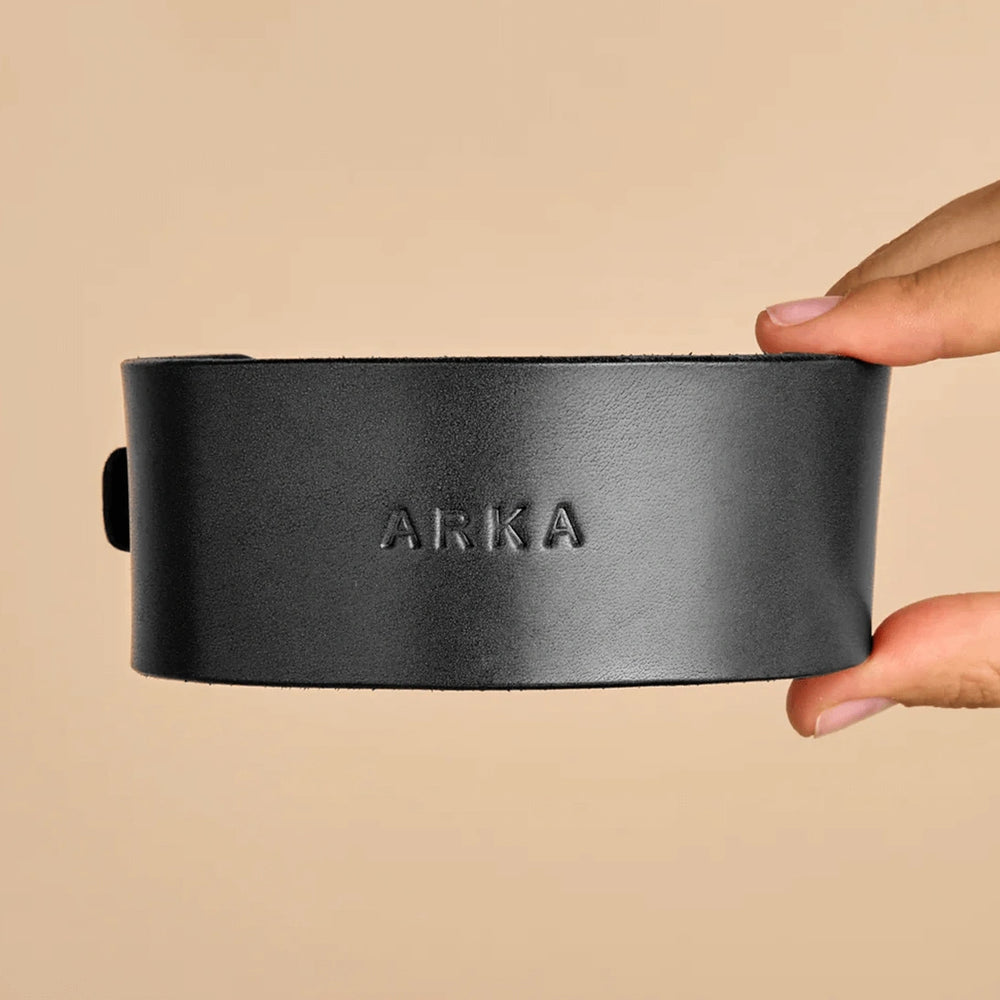
The 3 cm Classic width is the correct choice for the majority of mid-sized breeds covered in this guide including French Bulldogs, Dachshunds, Boston Terriers, Miniature Schnauzers, and Border Terriers. It provides the structural support and pressure distribution these breeds need without adding unnecessary bulk to a compact or sensitive neck profile. -
Wide Collars 4–4.5 cm
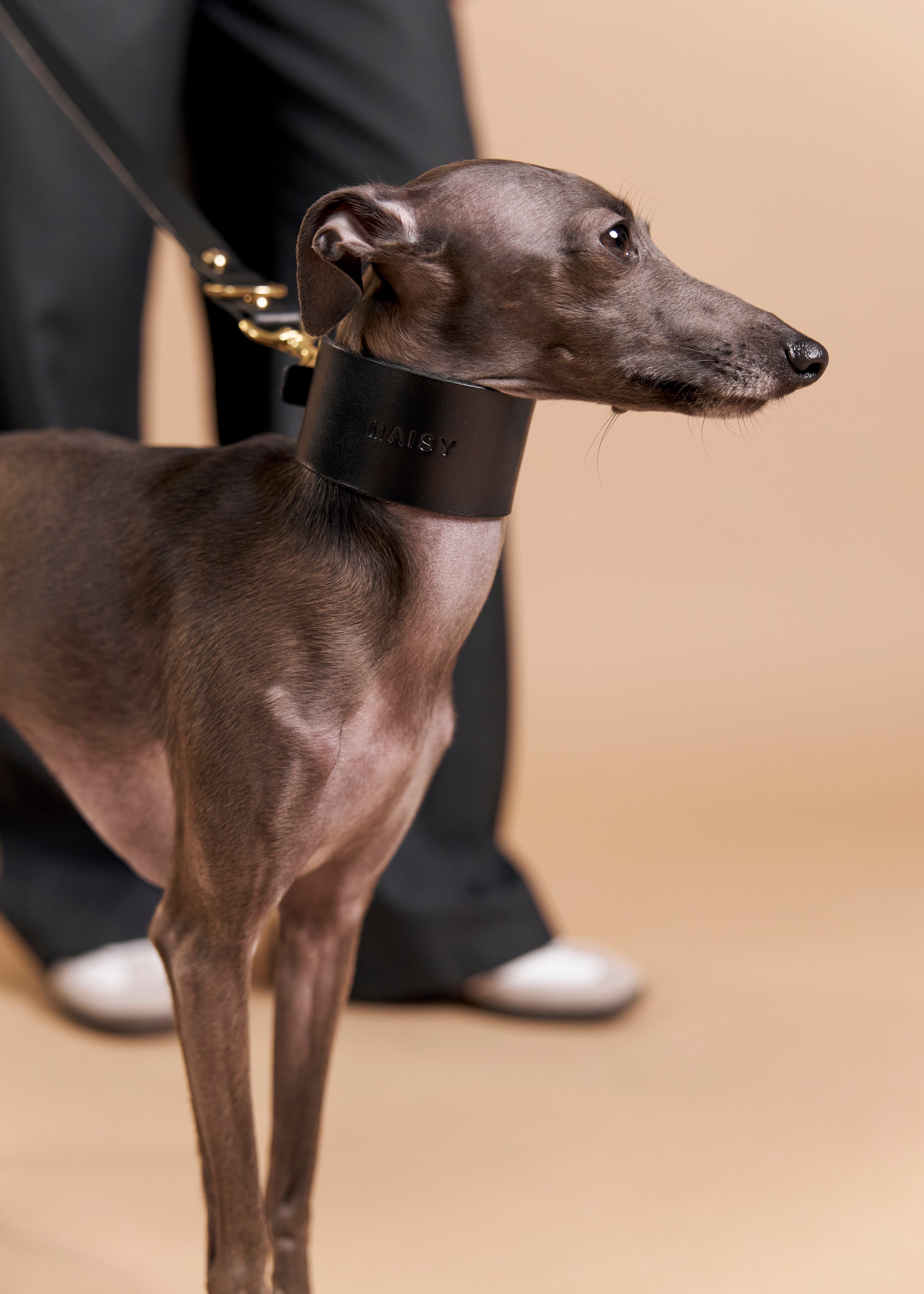
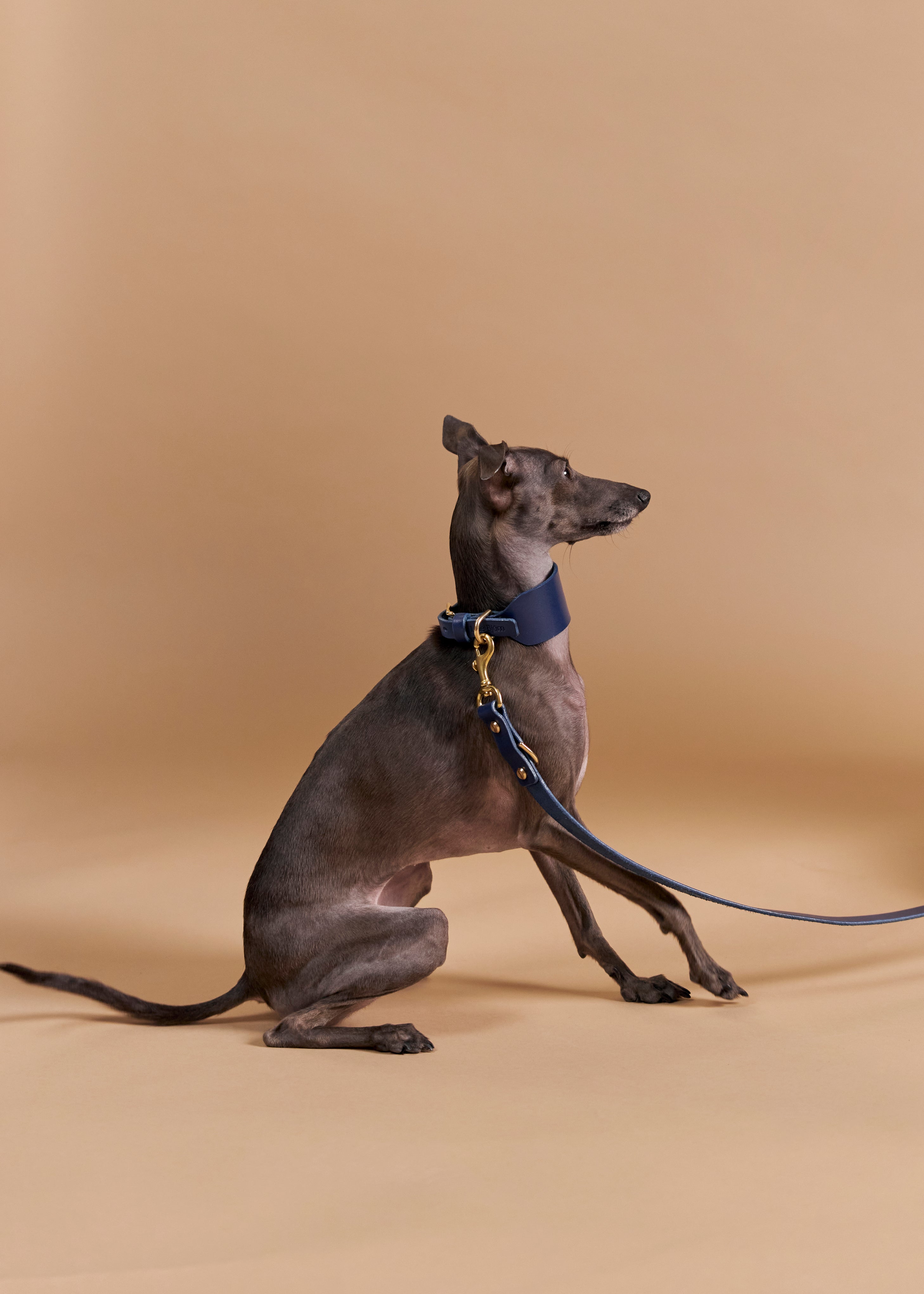
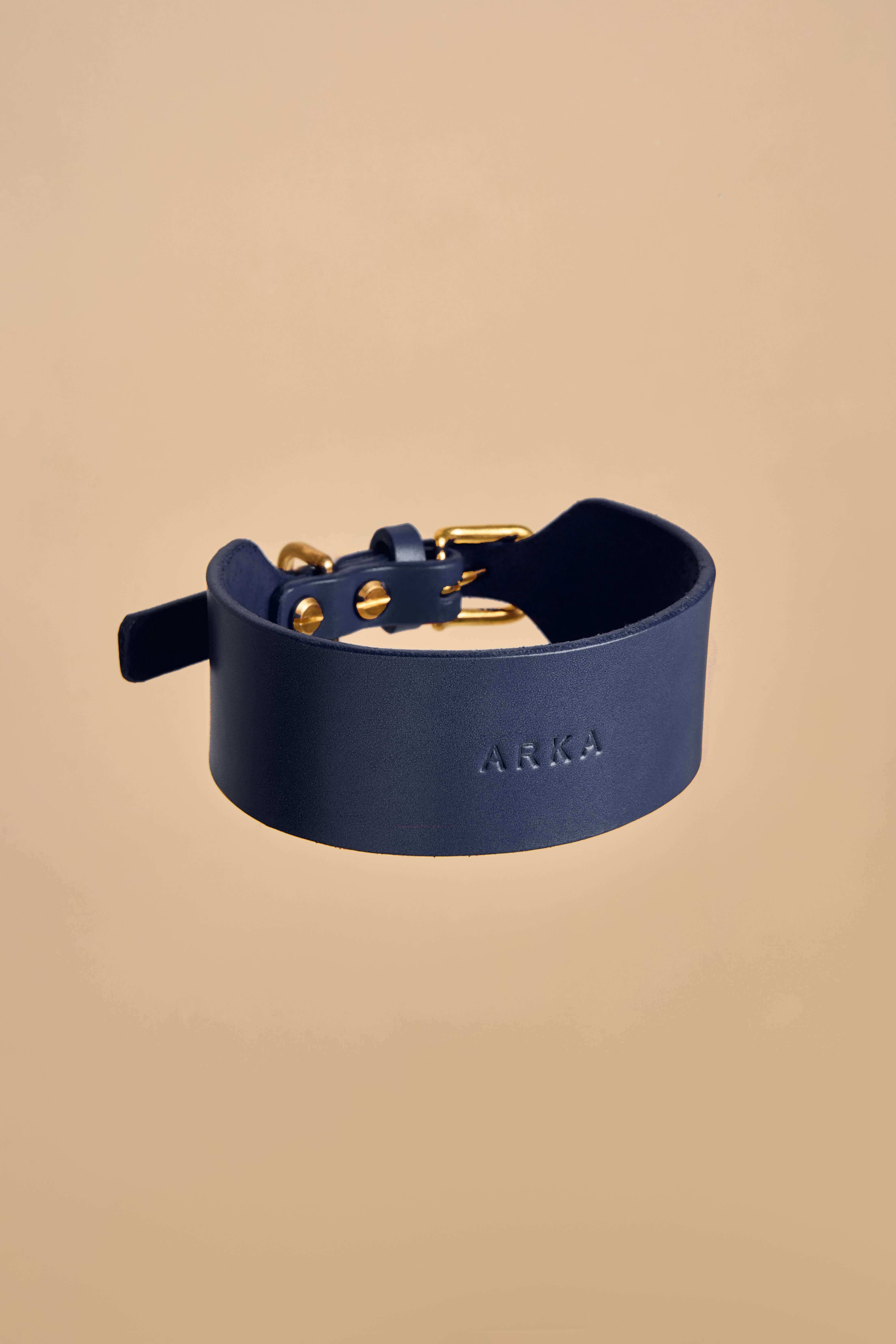
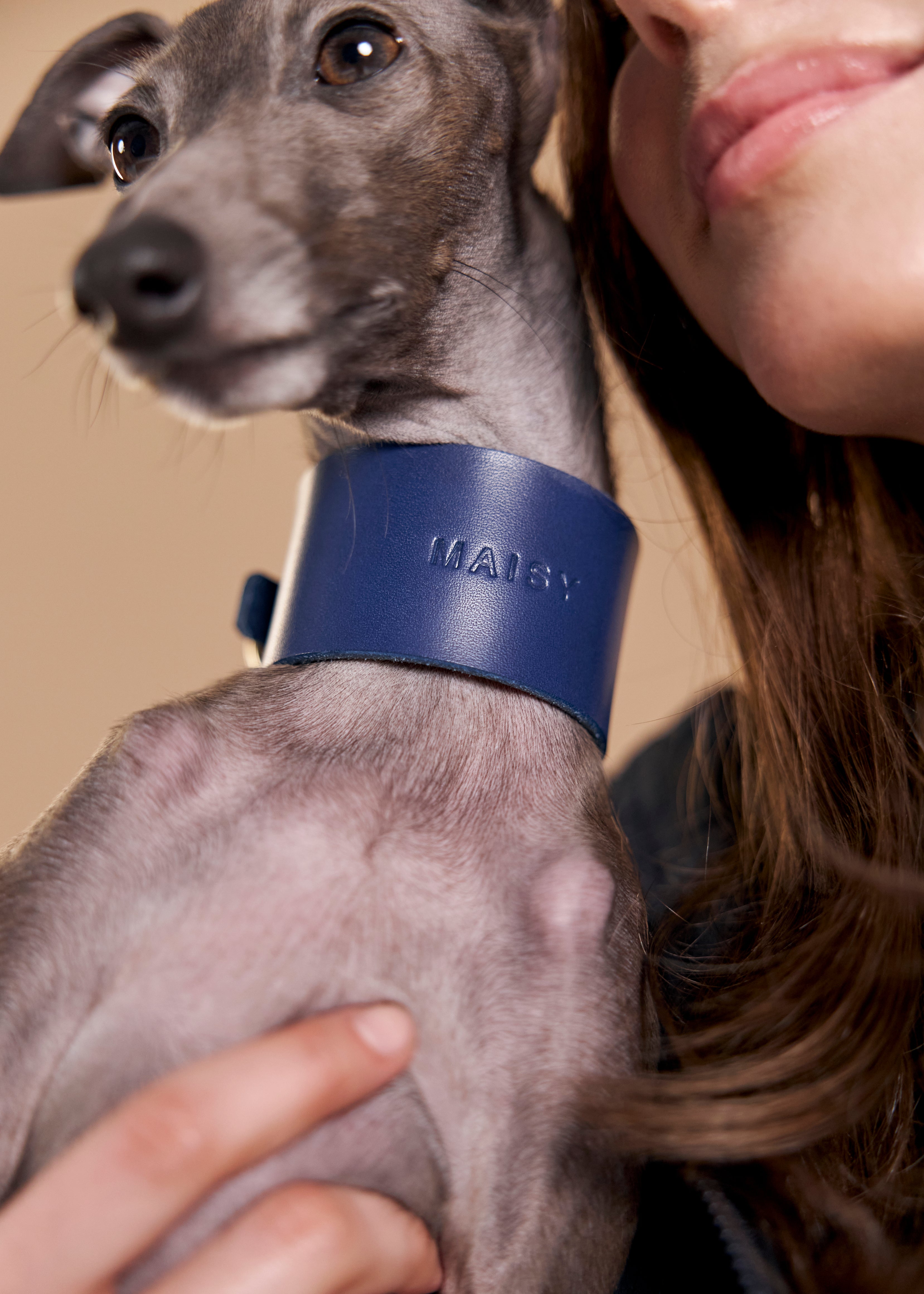
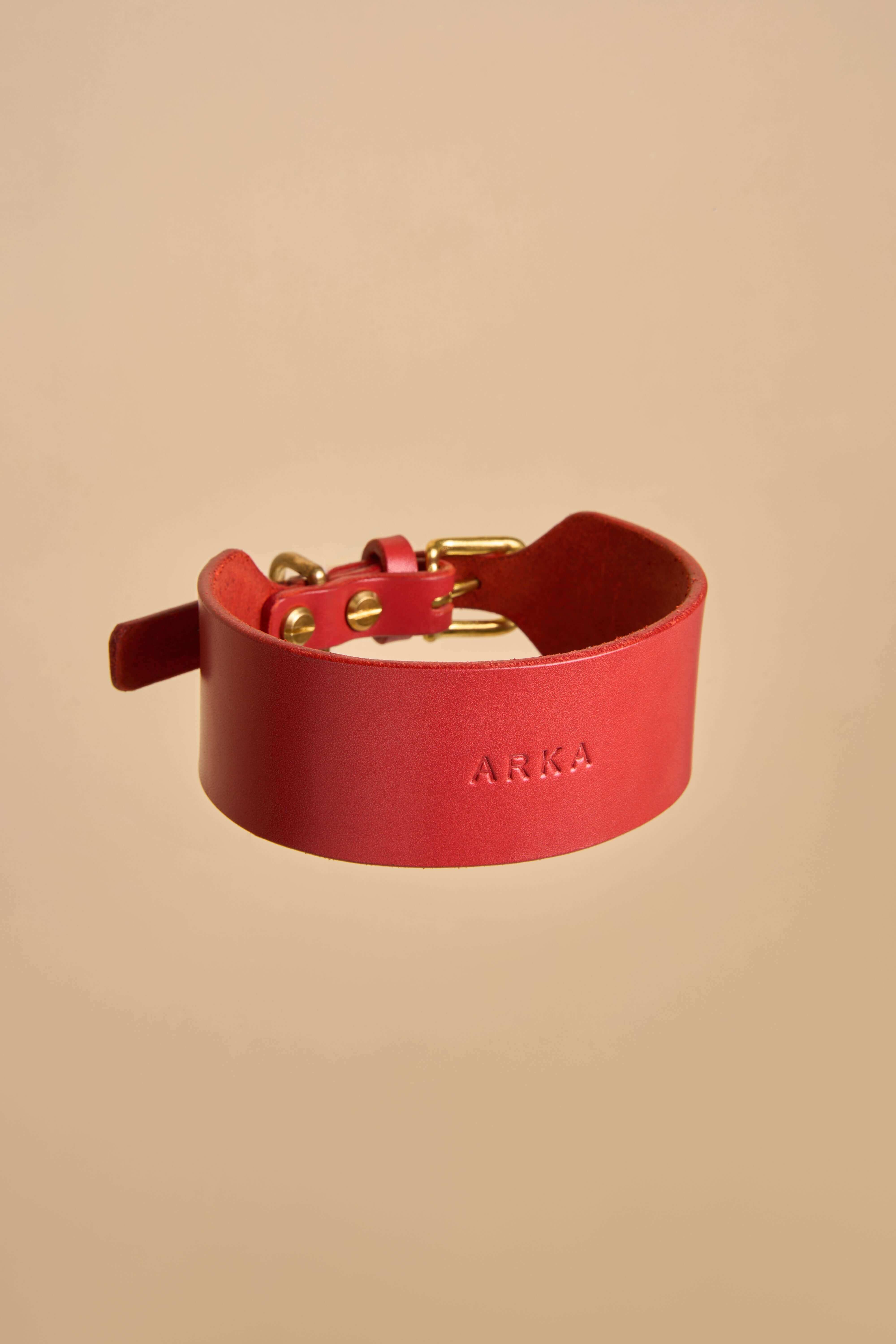
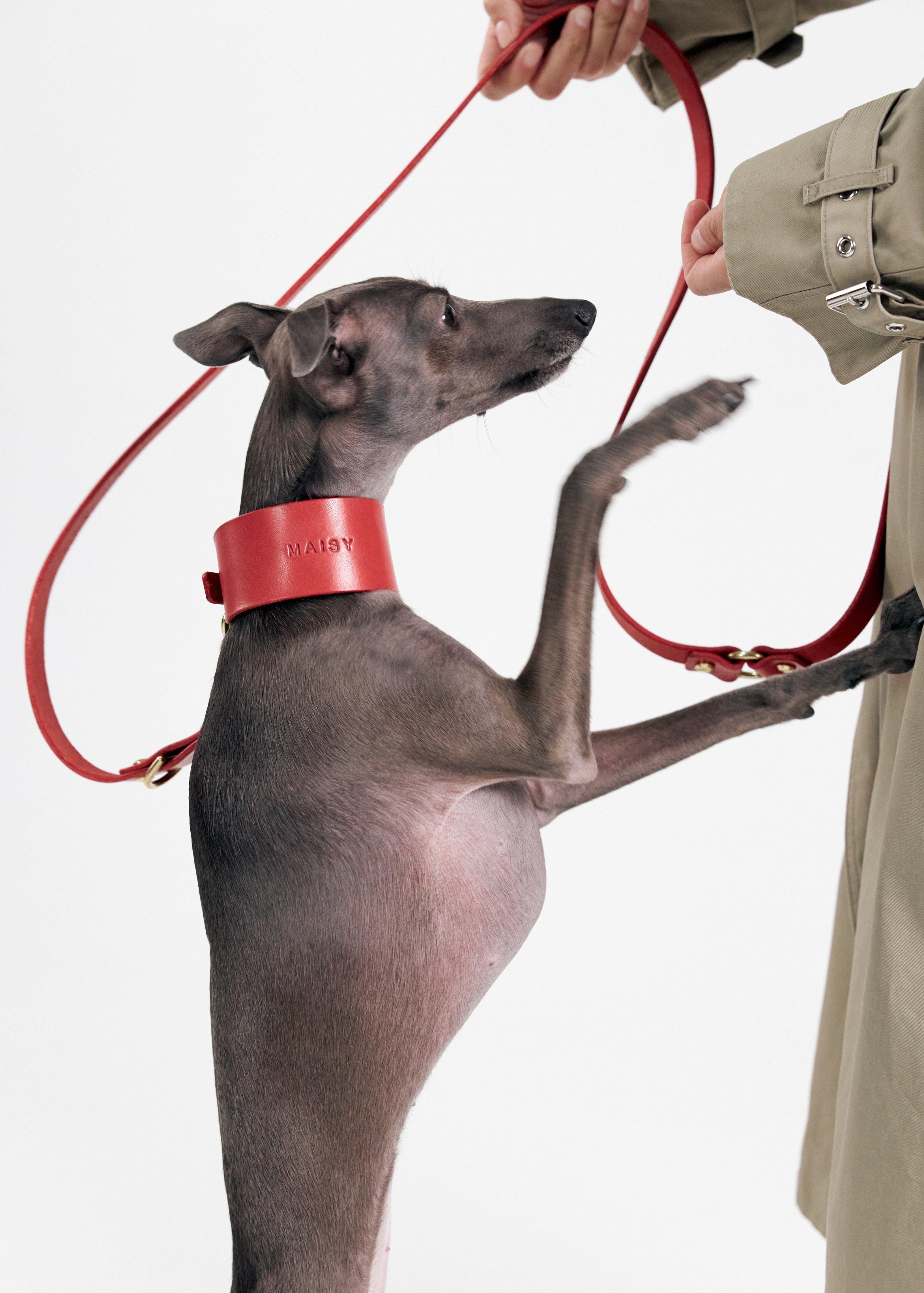
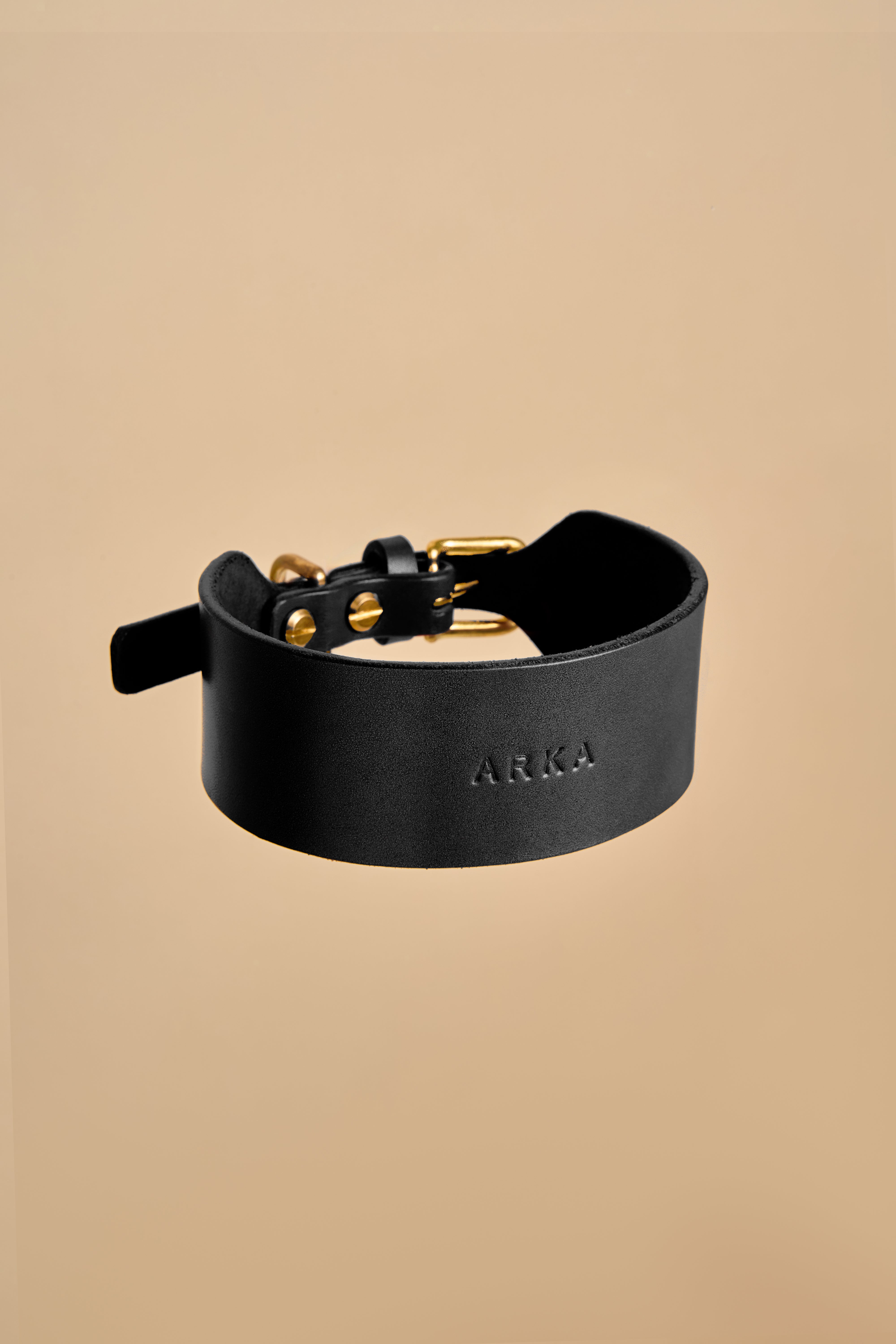
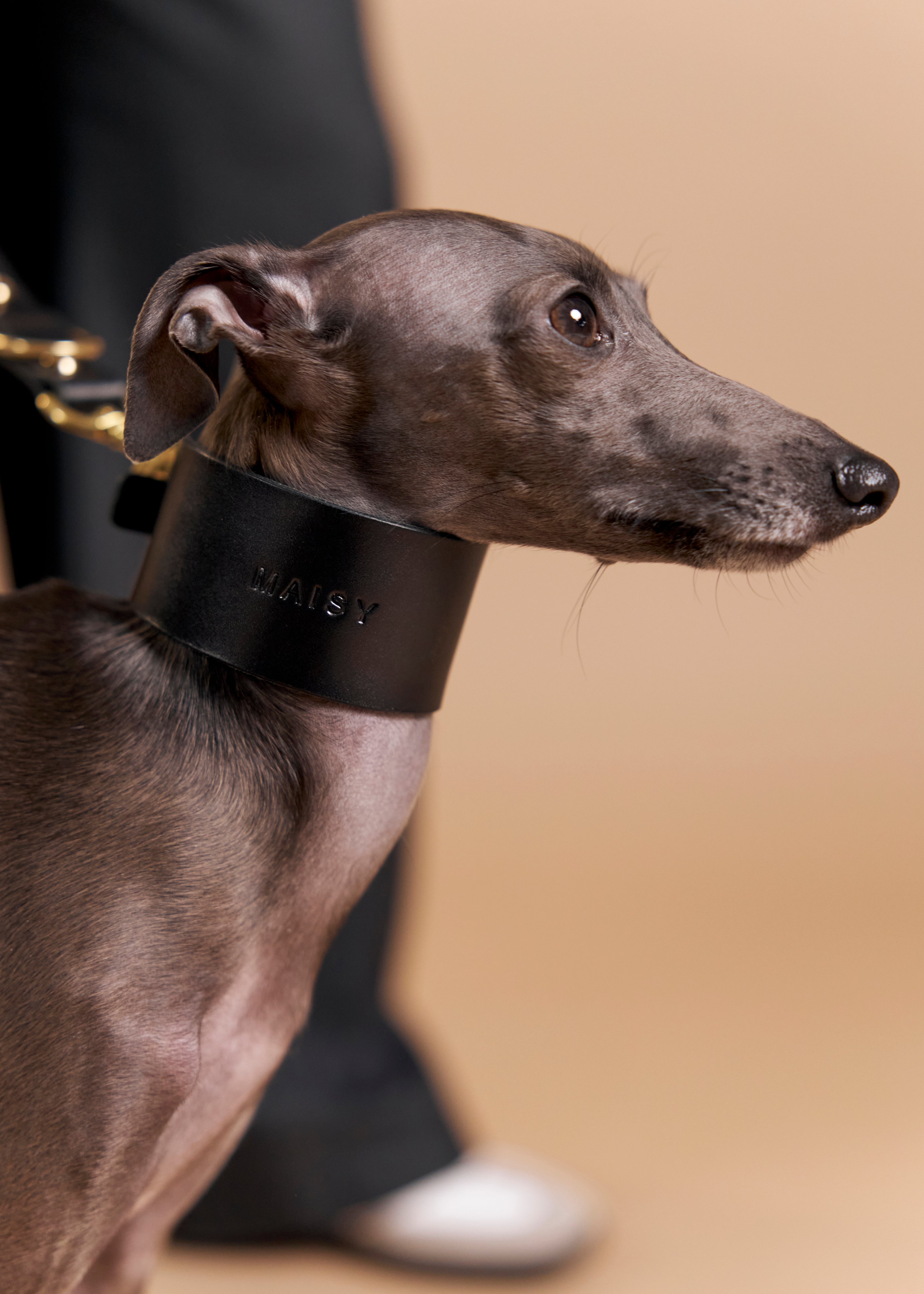
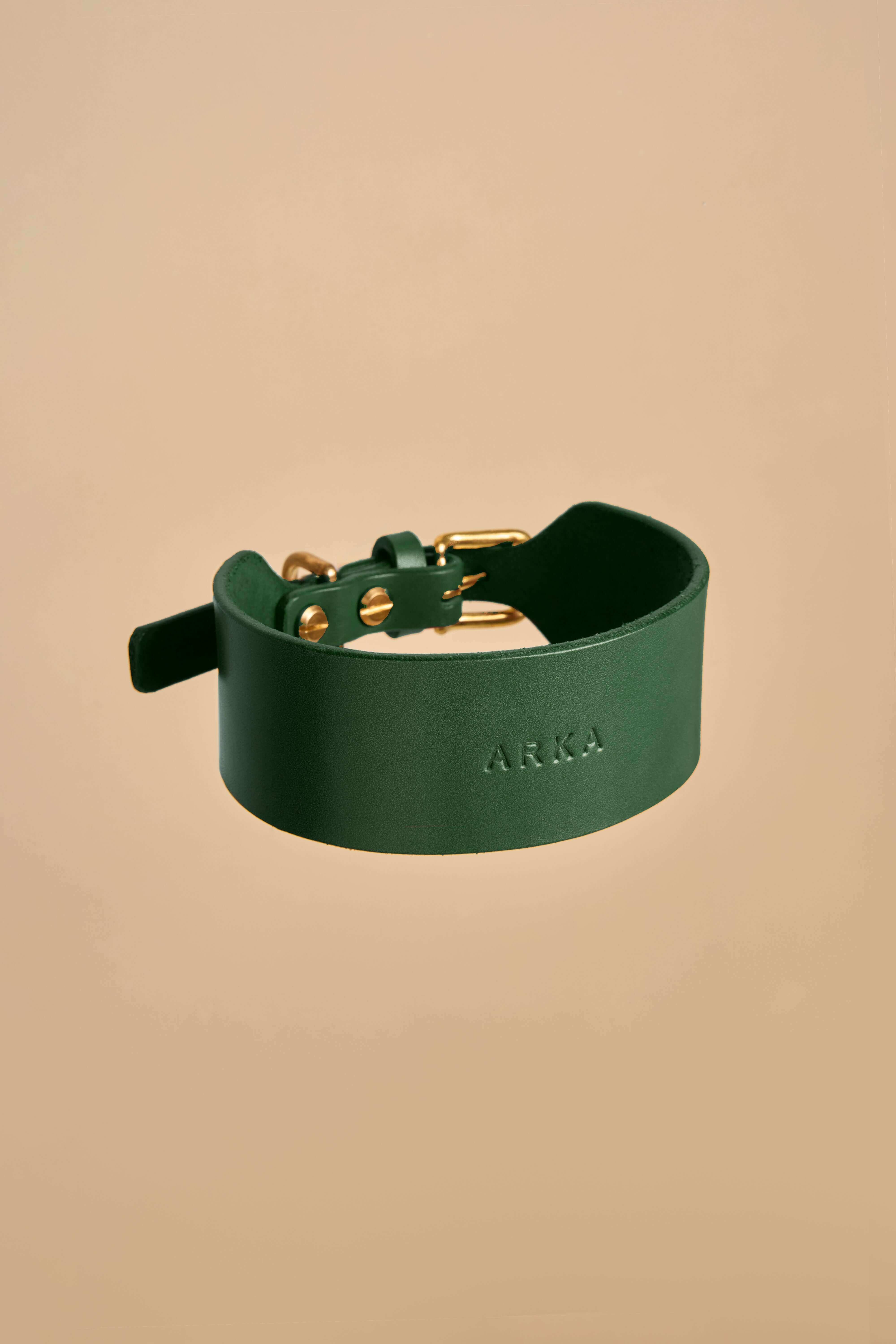
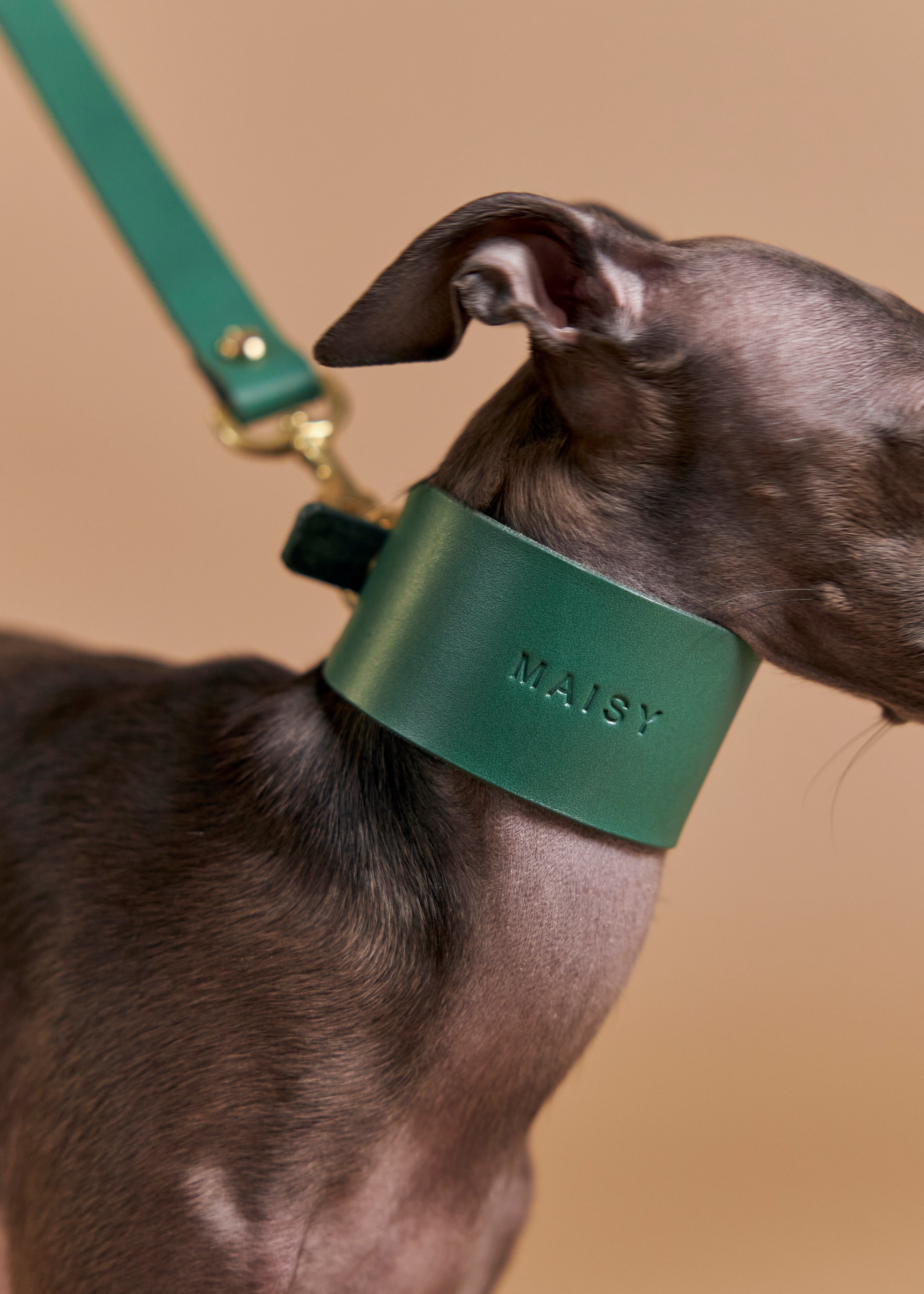
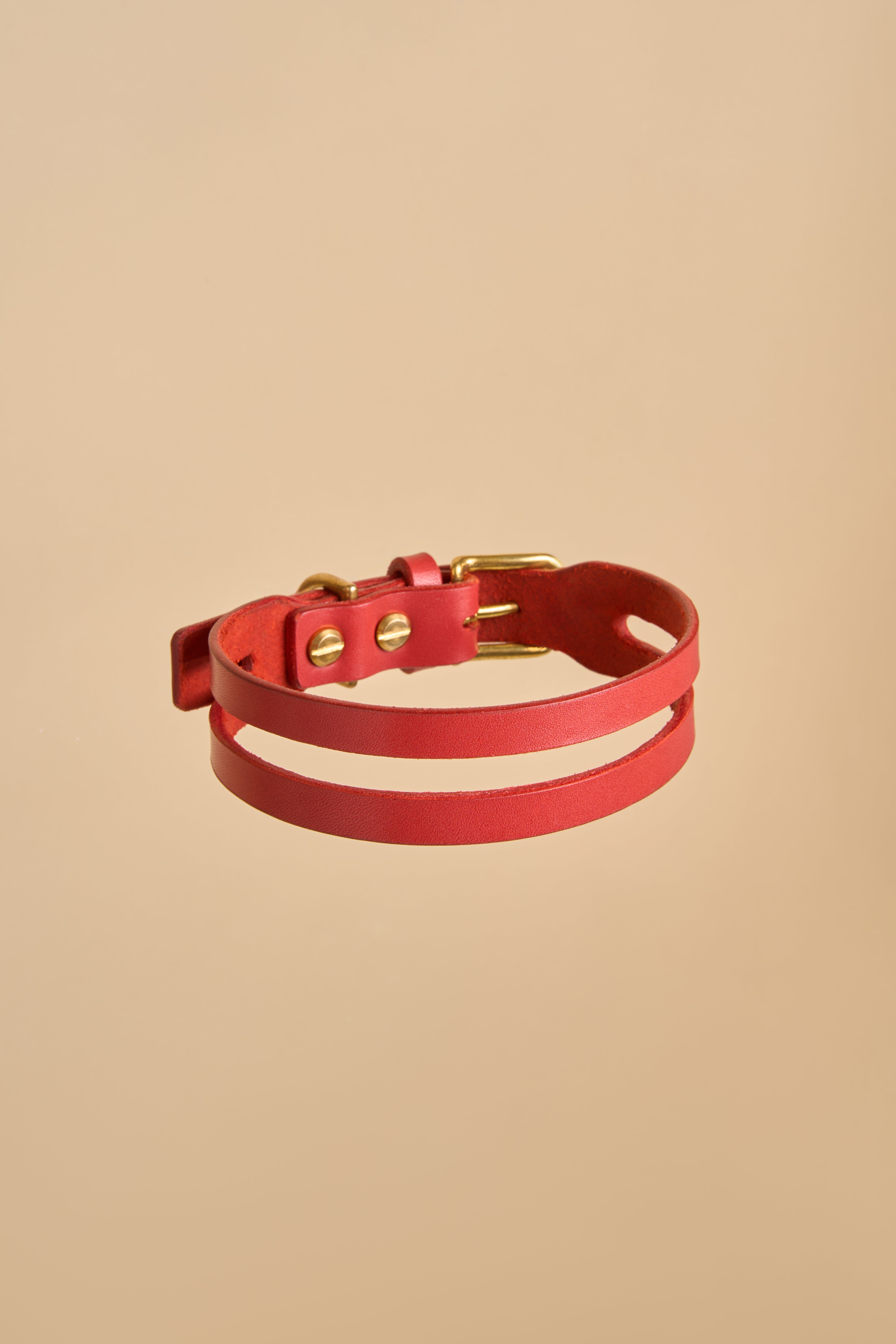
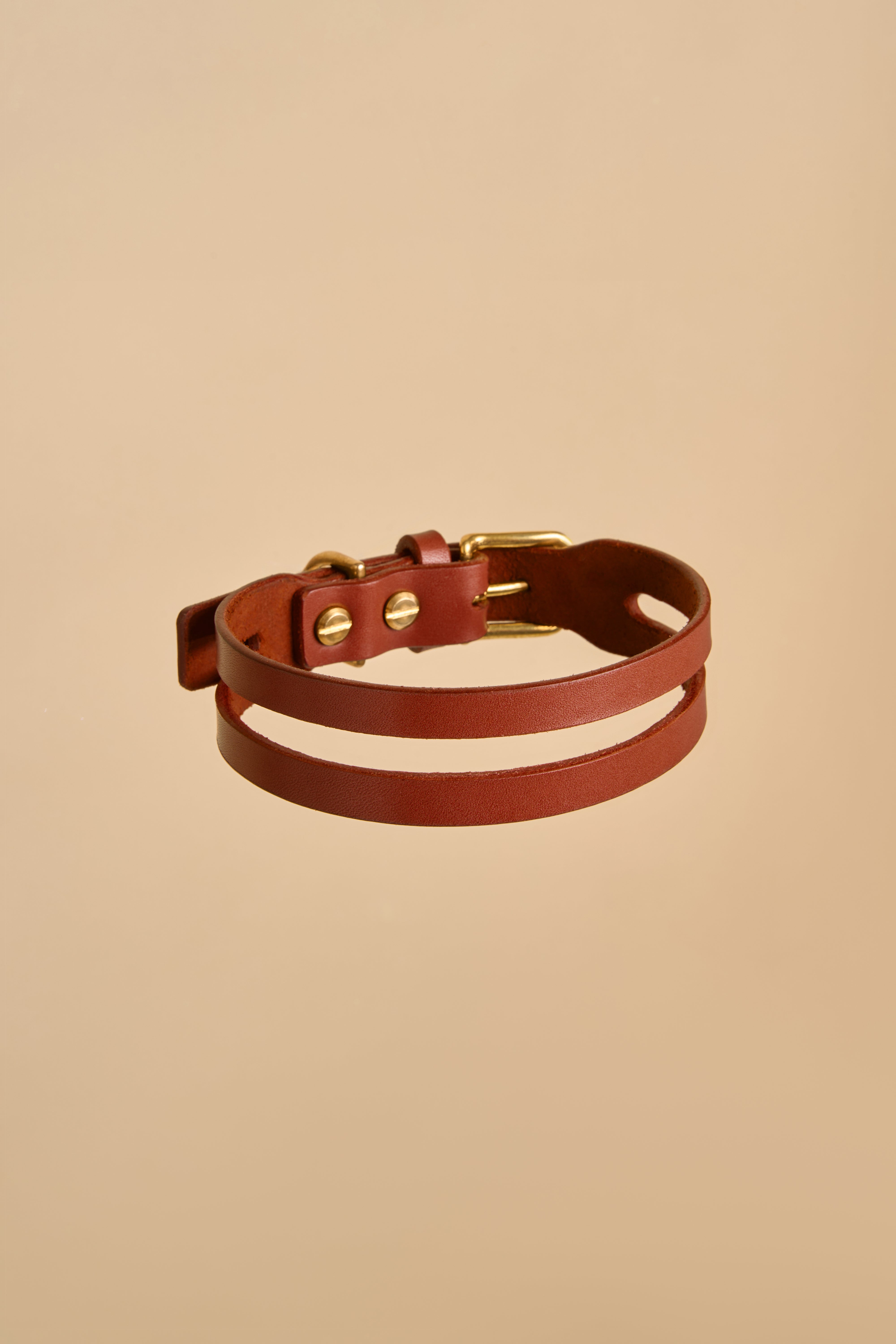
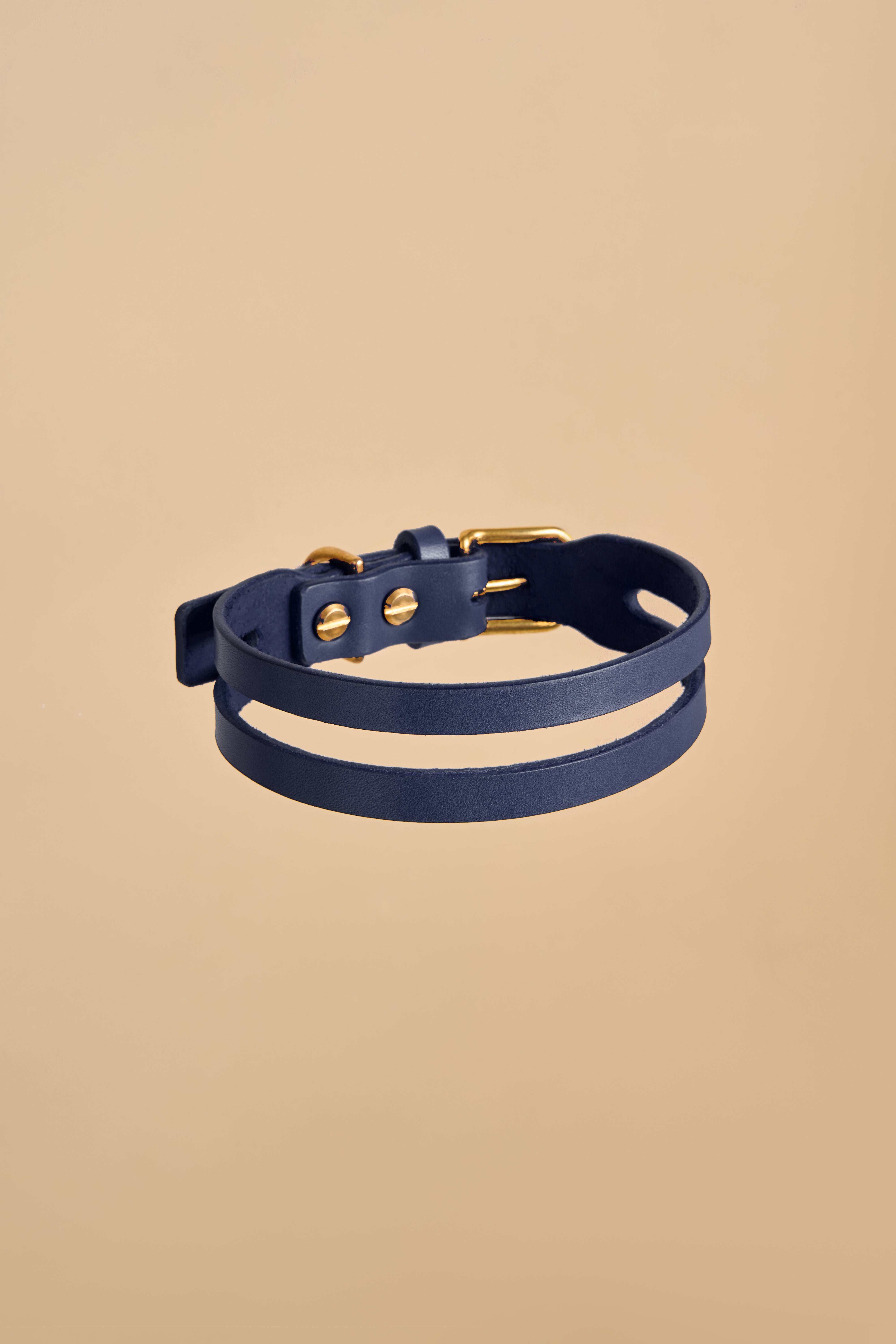
Our wide collars are specifically designed for long-necked sighthound breeds including Greyhounds, Whippets, Salukis where the wider surface area prevents pressure concentration on a slender, sensitive larynx. For the mid-sized breeds in this guide, the wide collar is generally not the appropriate choice. French Bulldogs and Dachshunds in particular have neck profiles that do not benefit from the extra width and where the 3 cm Classic provides better proportional fit.
The one exception worth noting: Cocker Spaniels with particularly long, elegant necks sometimes suit a slightly wider profile but the Classic 3 cm remains the more versatile starting point for this breed.

Why Leather Is the Best Collar Material for Mid-Sized Breeds
Okay, so now you know which width to choose, it’s time to focus on the next more important factor, material! This is an accessory that your pup is going to be wearing every single day, so a combination of durability, safety and comfort really matters.
Here are some of the biggest reasons why we think that leather dog collars are always the best option for mid-sized breeds.
-
Breathable & Hypoallergenic
Unlike most of the synthetic materials out there, leather doesn’t trap heat or irritants, making it much kinder to the skin. -
Vegetable-Tanned Leather
This leather is made using a much kinder process, helping the material to soften naturally with age and not crack or stiffen like lesser quality alternatives. -
Chemical Free
No toxins, dyes or artificial coatings are used to make any of our vegetable-tanned leather collars. -
Durability
Any one of our collars can last for a number of years without weakening or fraying, so you are definitely getting a great investment piece.
Compared to all of the chrome-tanned leather that is used for so many mass-marker collars, vegetable-tanned leather is a no-brainer in terms of safety. At all costs, you want to avoid the risk of exposing your pup to chromium VI, a known environmental hazard and irritant.
This is an accessory that you precious pup wears everyday, so it should be made with the utmost care and attention!
Tips for Getting the Right Fit (And Keeping It That Way)
Follow these simple steps to ensure that your chosen collar continues to provide your pooch with the best fit for years to come.
-
Measure Regularly
Your pup’s neck can change over time due to things like age, weight gain and seasonal coat changes. -
Avoid Extra Space
As we said, our collars are designed to be adjusted, so you don’t need to account for any extra space in your measurements. Remember, a secure fit is a safe fit! -
Adjust with Use
Vegetable-tanned leather softens and conforms to the neck over the first weeks of wear, it does not stretch significantly, but it does mould to the exact shape of your dog's neck, improving comfort over time. Recheck the two-finger fit after the first month to confirm the fit has settled correctly. -
Inspect for Wear
Make sure to check the stitching and hardware components regularly to notice any signs of wear and tear every few months.
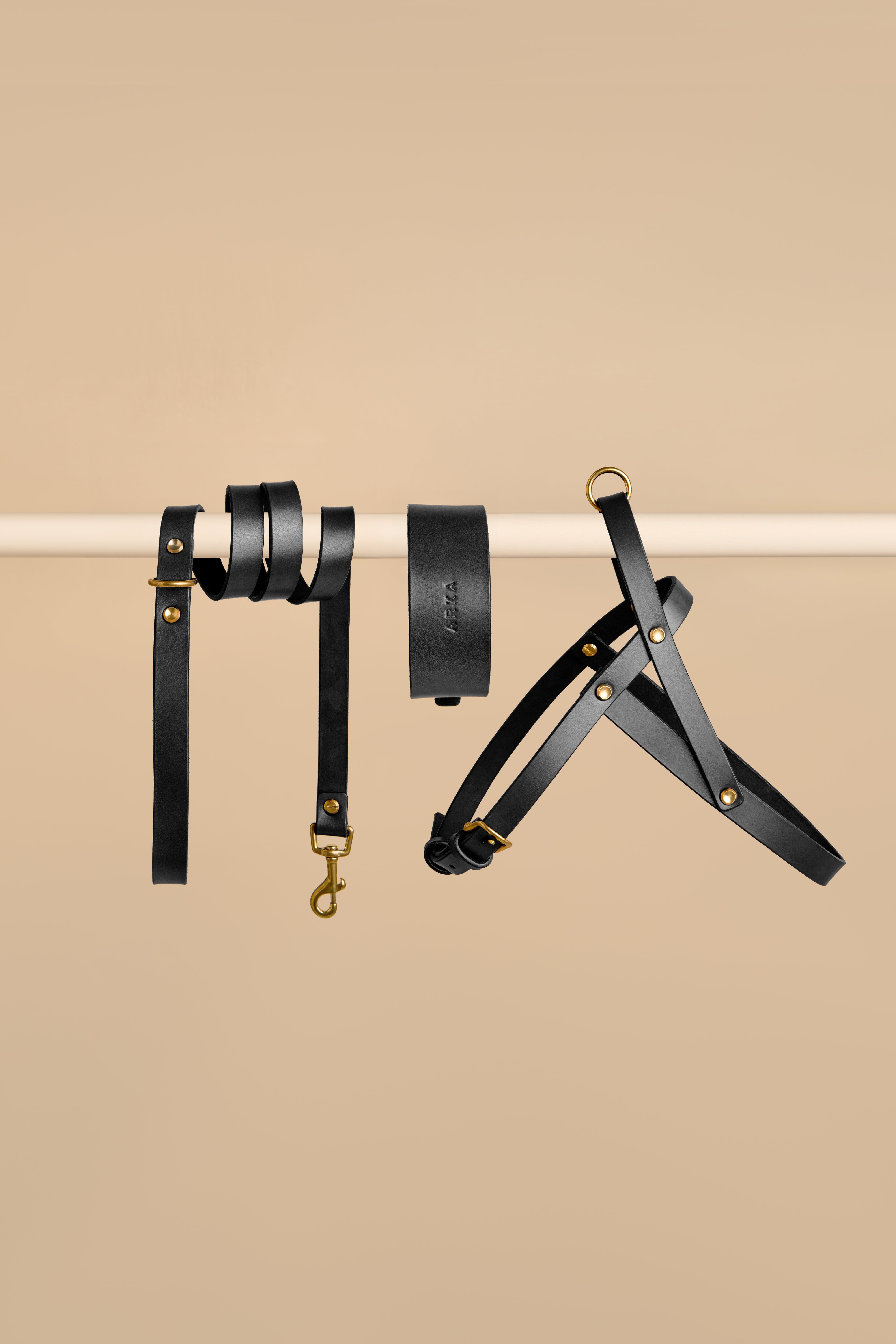
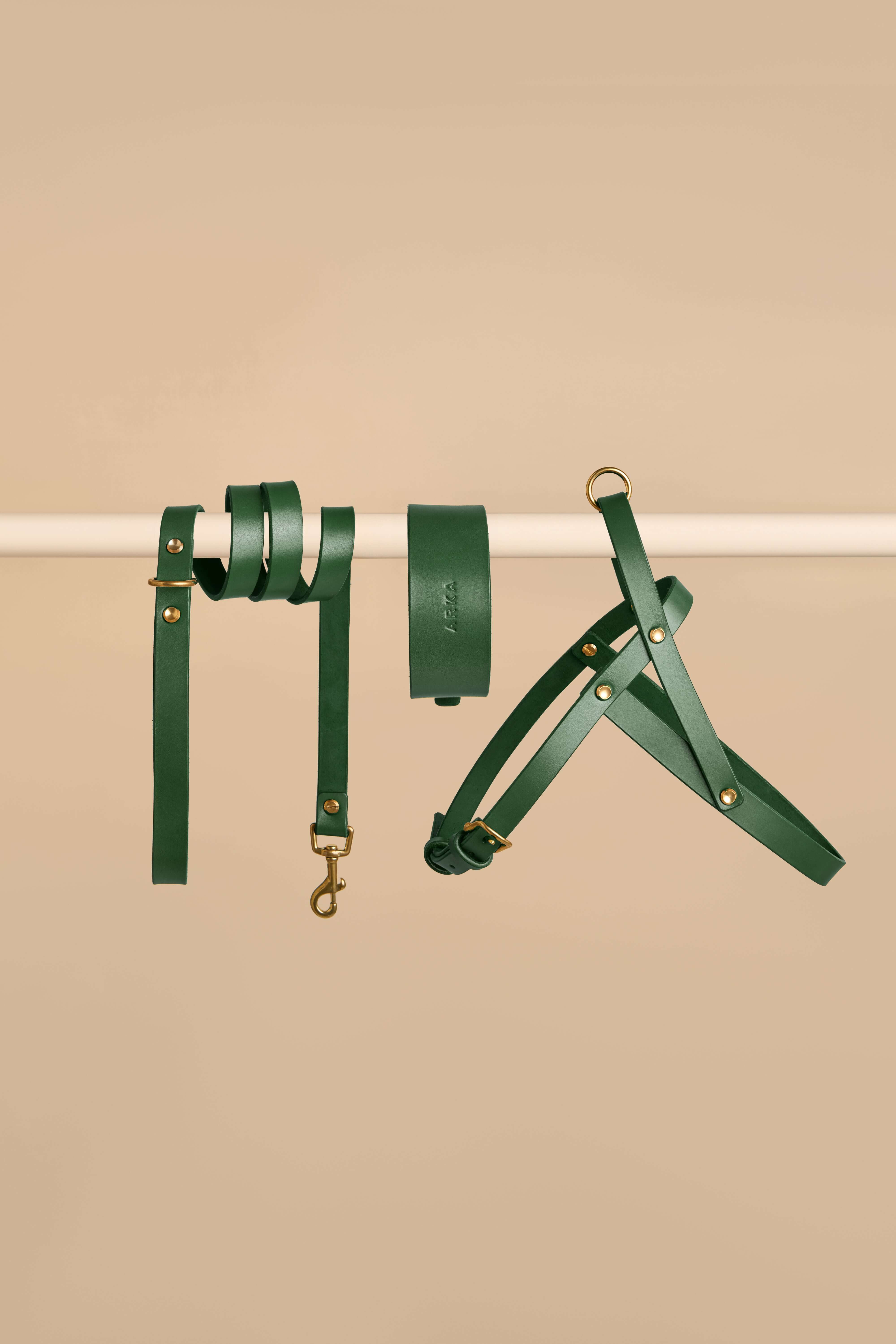
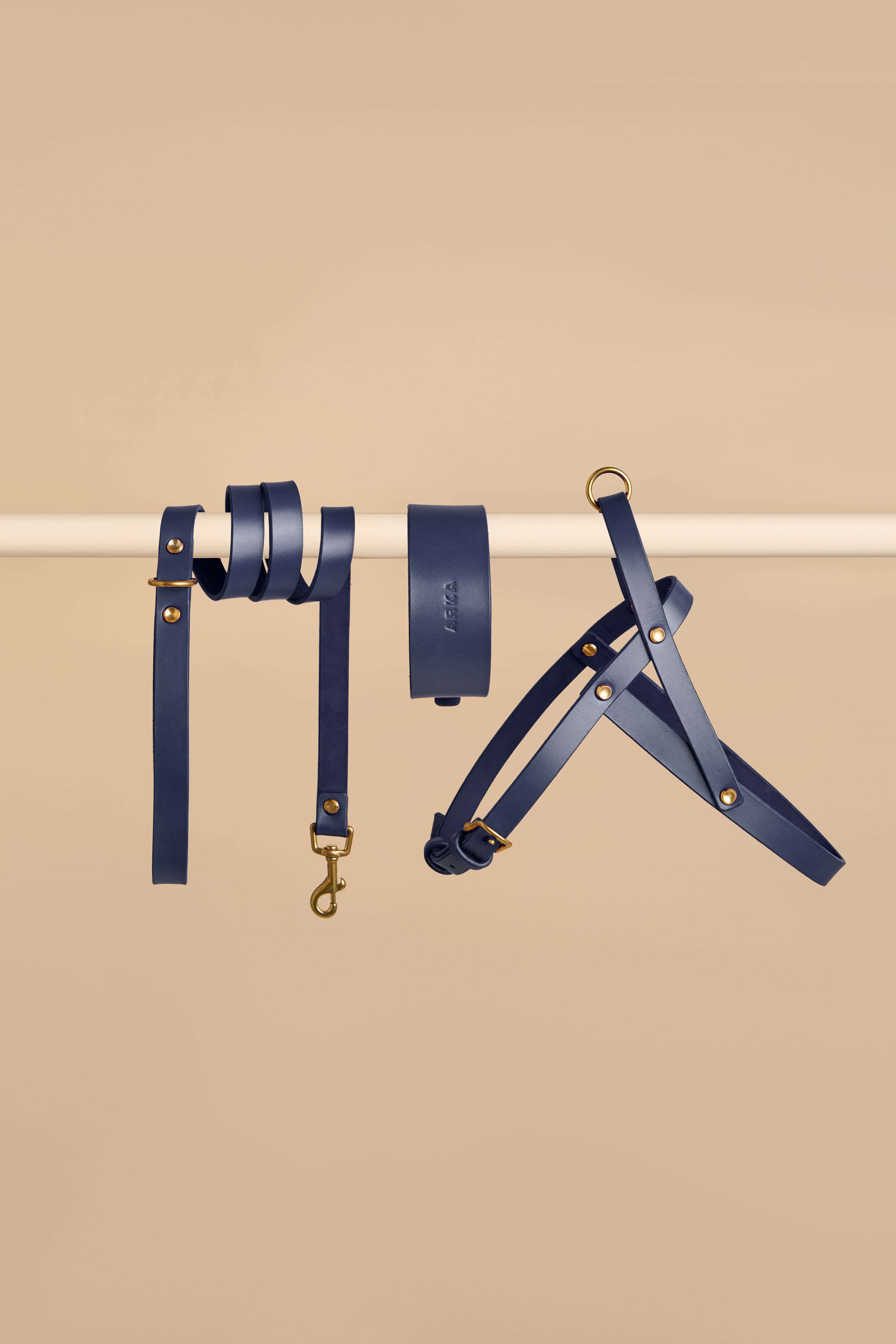
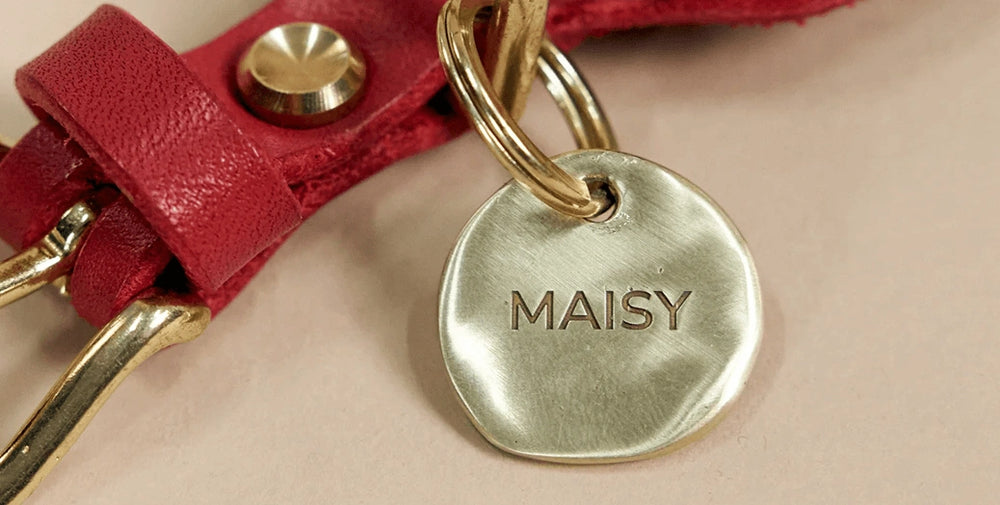
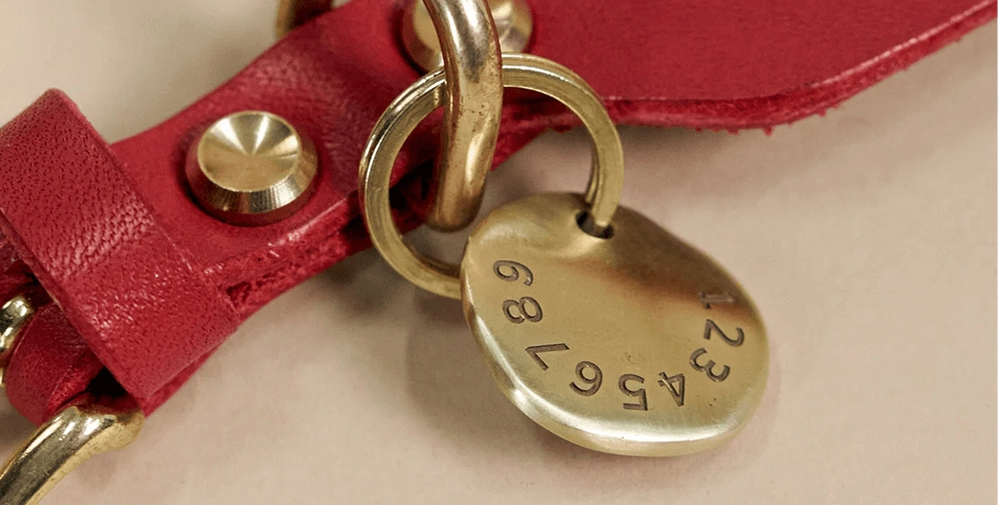
For that final touch of style and elegance, why not match your collar with The Lille Bjorn solid brass buckles or engraved brass tags? They are all rust-proof, sturdy and built to age as beautifully as your precious pup!

A Collar That Fits as Well as It Looks
Getting collar sizing right for a French Bulldog or Dachshund is not complicated but it does require a precise measurement, knowledge of the two-finger check, and an awareness of the specific health considerations that make these breeds different from the average dog.
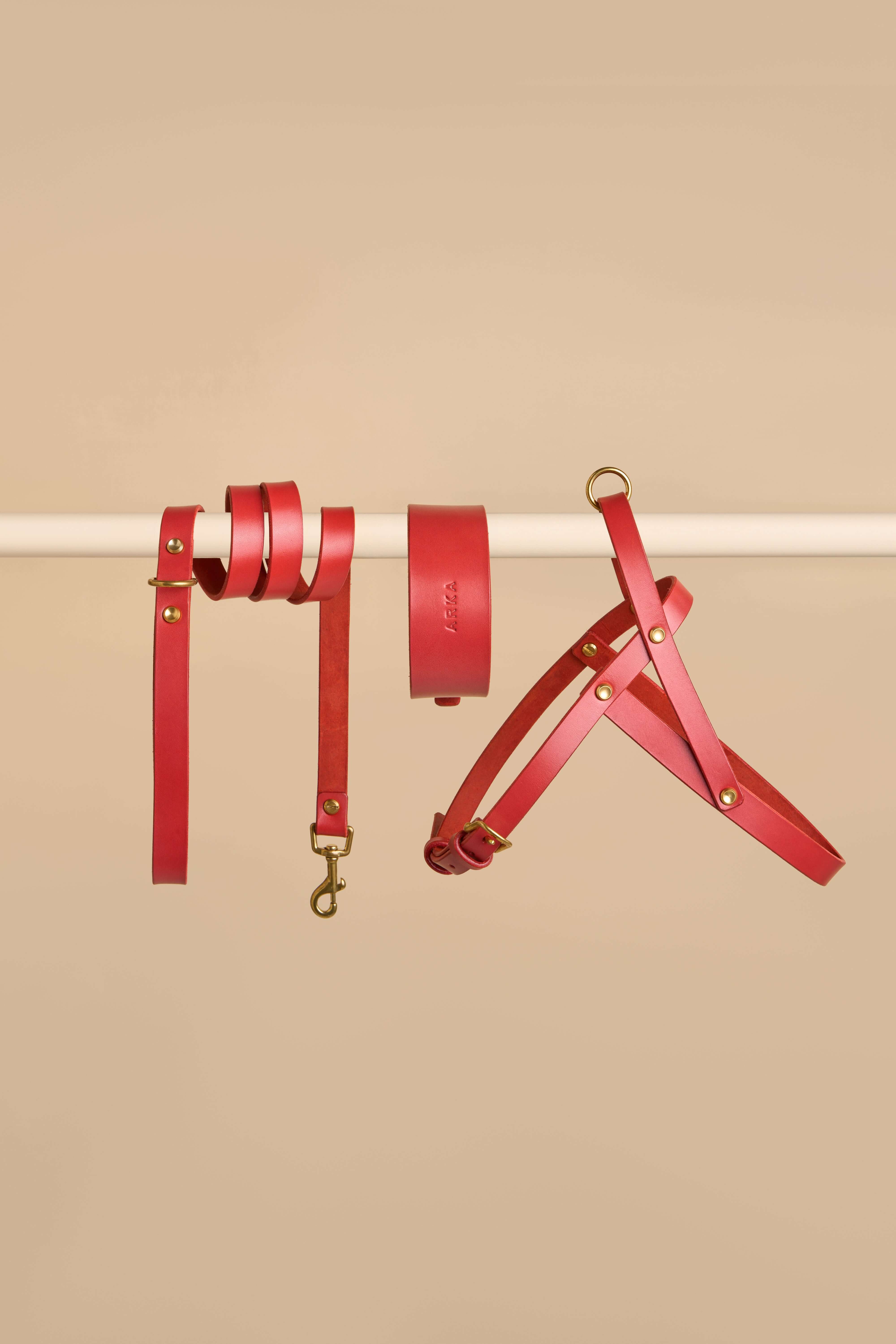
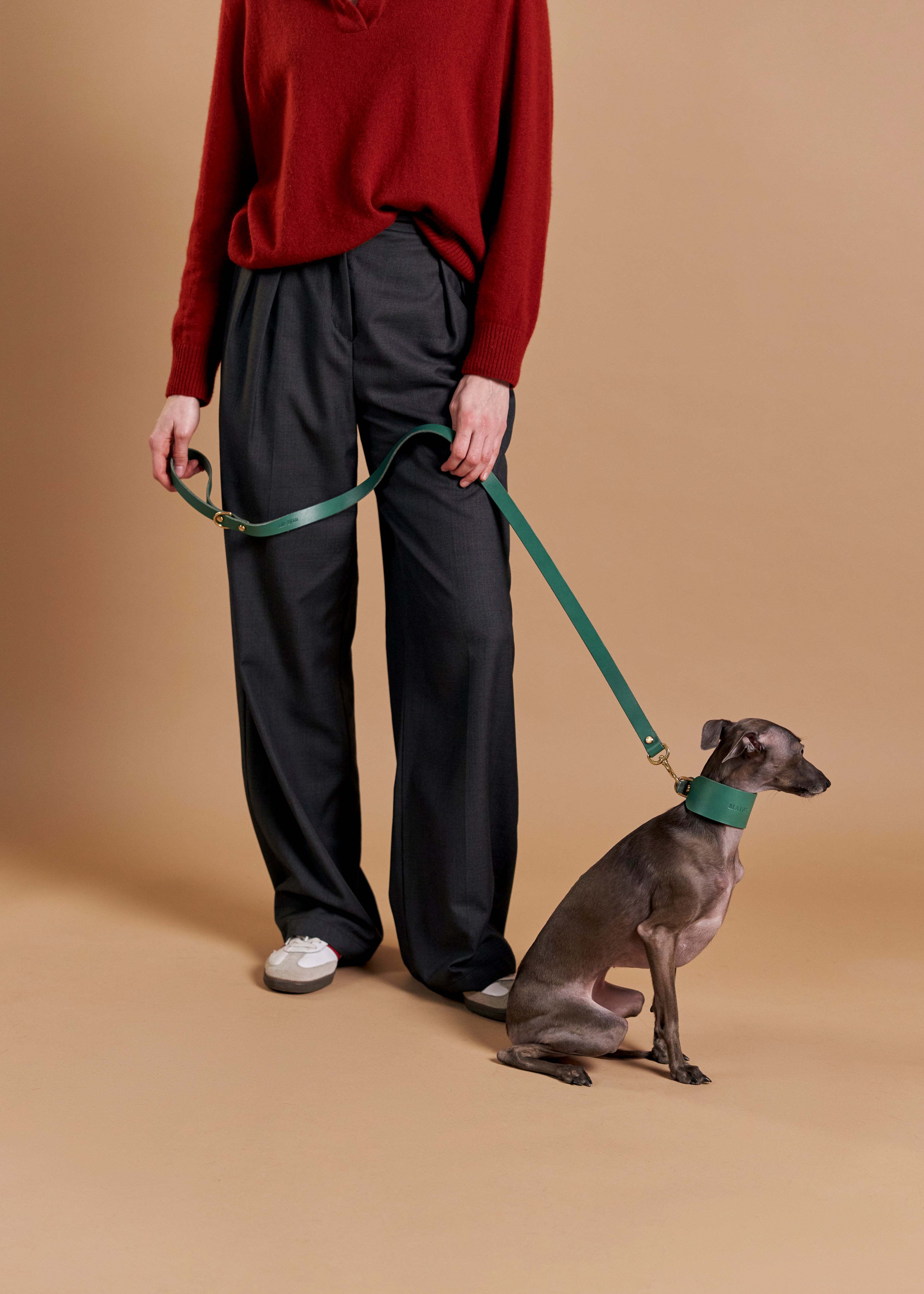
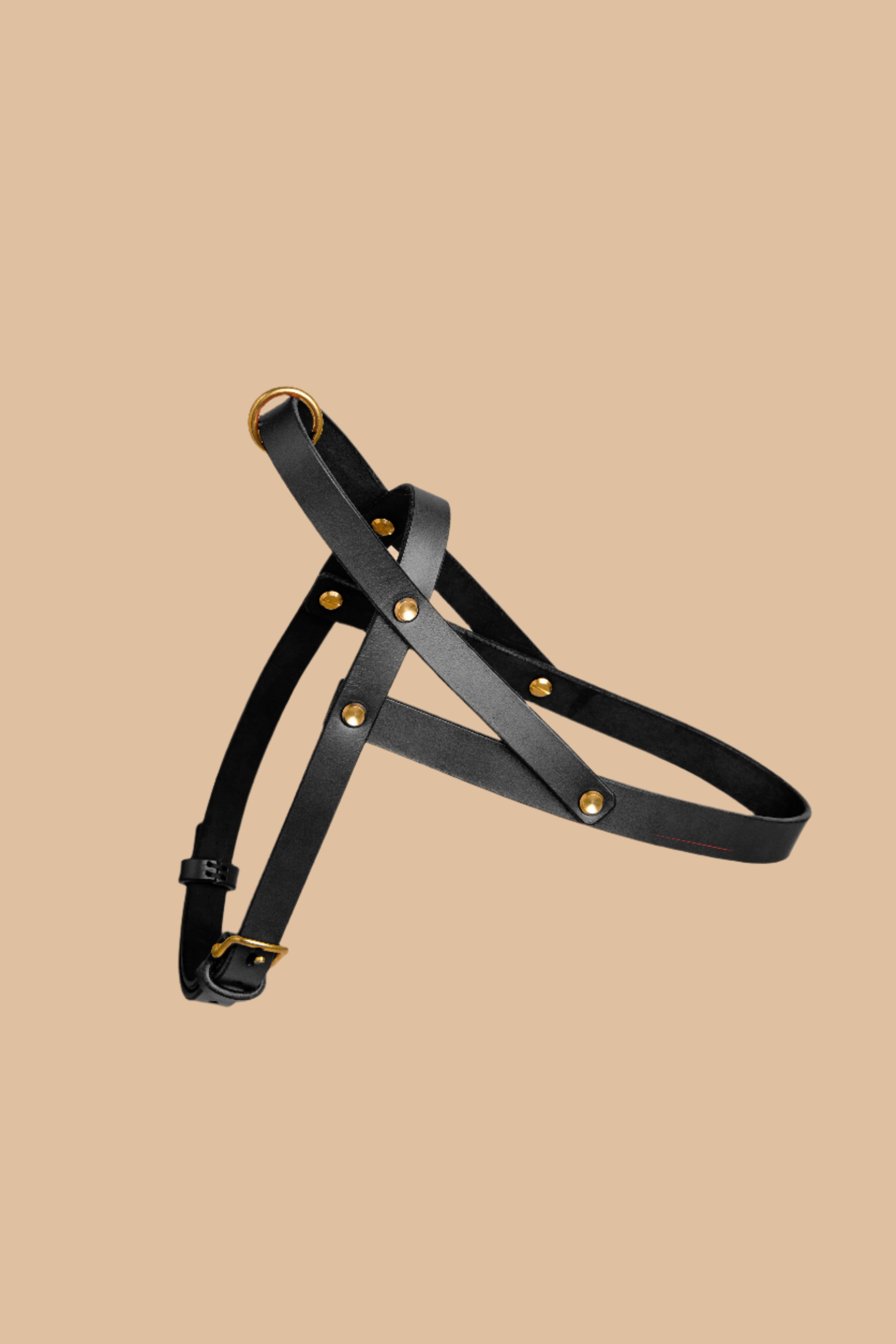
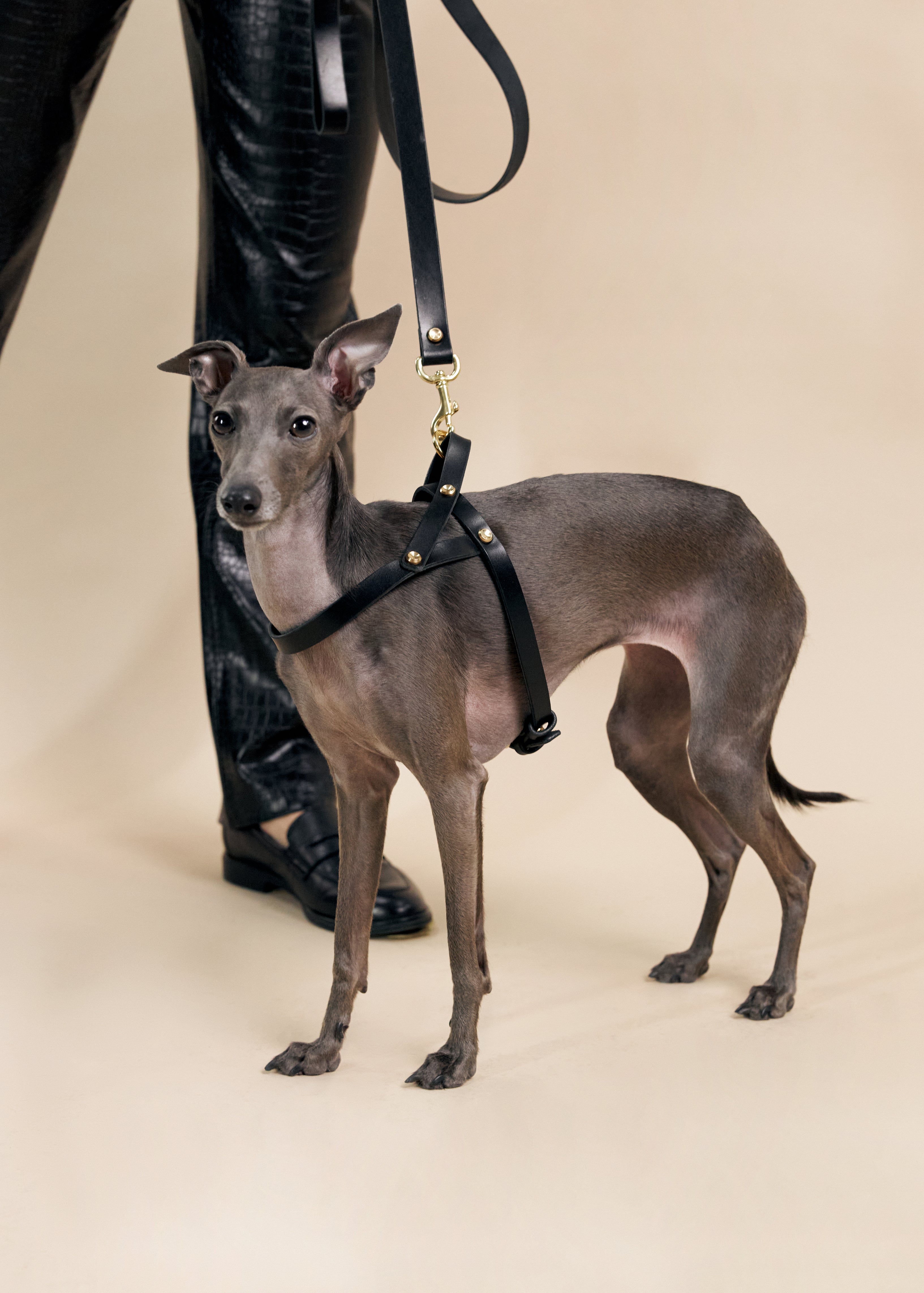
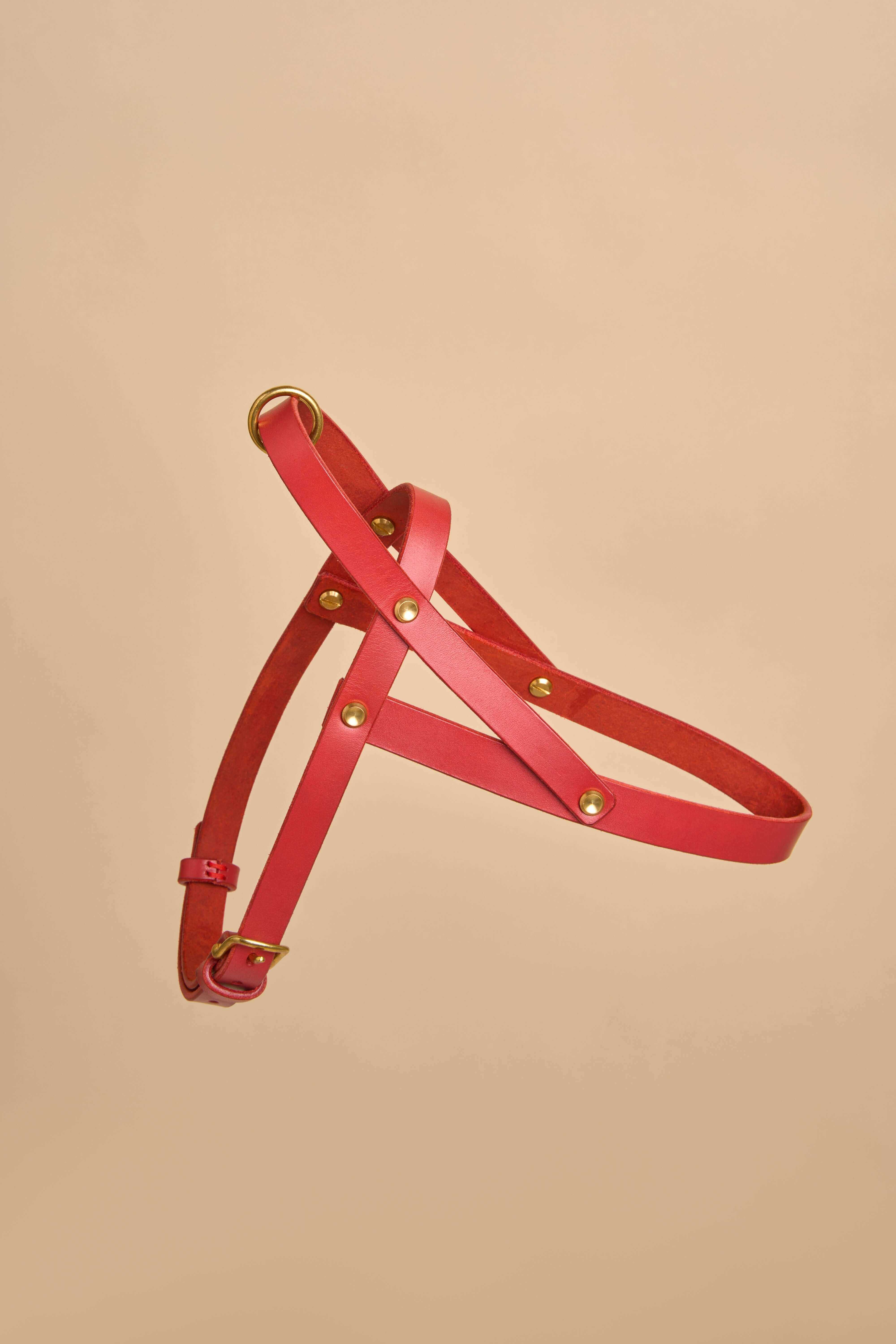
A well-fitted vegetable-tanned leather collar from The Lille Björn will earn its place as the most comfortable thing your dog wears every day. Pair it with one of our leather harnesses for walks, the combination that keeps your Frenchie or Dachshund identified, controlled, and completely protected from leash tension on a vulnerable neck and spine.
Frequently Asked Questions: Collar Sizing for Dachshunds and French Bulldogs
What size collar does a French Bulldog need?
Most French Bulldogs need a size M (32–37 cm) or L (37–42 cm) on The Lille Björn chart. The typical French Bulldog neck circumference is 30–40 cm, measure snugly at the middle of the neck and find the size range it falls within. Frenchies consistently have necks larger than their body size suggests, so always measure rather than estimating. Apply the two-finger check: your measurement should sit low enough within the size range to leave room for two flat fingers before the upper limit.
What is the average French Bulldog neck size?
The average French Bulldog neck circumference is 34–38 cm for a standard adult placing most in size M (32–37 cm) or at the lower end of L (37–42 cm). Larger or more muscular Frenchies can measure 38–42 cm, firmly in size L. French Bulldog puppies aged 6–12 months typically measure 28–34 cm, suiting size S to M. Individual dogs vary, always measure rather than relying on breed averages.
What size collar does a Dachshund need?
Standard Dachshunds typically measure 26–32 cm and suit a size XS (22–27 cm) or S (27–32 cm). Miniature Dachshunds measure 20–26 cm and suit size XXS (17–22 cm) or XS (22–27 cm). Measure at the middle of the neck and confirm the two-finger fit before ordering. Because Dachshunds are IVDD-prone, the collar should be worn for ID only and a harness should handle all leash attachment during walks.
Can Dachshunds wear collars?
Yes but with an important qualification. Dachshunds should wear a collar for identification purposes, but their IVDD vulnerability (intervertebral disc disease - a spinal condition common to the breed due to their elongated build) means leash tension through a collar adds cumulative stress to an already vulnerable spine. Veterinary guidance recommends a harness for all leash activities with a flat collar retained for ID tag use only. This setup provides full identification security while removing all leash tension from the neck and spine.
What collar is best for a Dachshund that wears sweaters?
A rolled leather collar is the best choice for Dachshunds that wear knitwear and jumpers. The cylindrical profile of a rolled collar has no flat hardware edge to snag on knitted fabric, it glides cleanly through even fine-knit sweaters without catching. A flat collar's buckle and D-ring hardware can snag on knitwear at the neck, which is both frustrating and occasionally a safety risk. For Dachshunds who are frequently dressed, switching to a rolled leather collar for everyday wear can solve this problem.
What collar size does a Dachshund puppy need?
Miniature Dachshund puppies from approximately 10 weeks typically suit an XS (22–27 cm). Standard Dachshund puppies move from XS to S (27–32 cm) at around 4–6 months. Because puppies grow rapidly, check the two-finger fit every two weeks during the first six months and size up without hesitation when needed. Start the puppy on a harness for all lead walking from day one, reserve the collar for ID tag use only, particularly for a breed with Dachshund's spinal vulnerability.
What is the best collar colour for a red Dachshund?
Natural vegetable-tanned leather is one of the most flattering collar choices for a red or tan Dachshund. The warm golden-brown tones of new leather deepen to a rich patina over time, complementing the rust and tan tones of the coat naturally. For black and tan Dachshunds, a dark brown or black leather collar provides sharp, elegant contrast. For cream or dapple Dachshunds, a lighter natural tan leather creates a soft, tonal look that photographs beautifully.