Quick Summary
Training a dog to walk off-leash requires three foundations built in sequence: reliable basic obedience on-leash, a solid recall command that works under distraction, and a gradual transition from leash to long-line to off-leash in progressively more challenging environments. Every dog can learn to walk off-leash safely with consistent positive-reinforcement training. The process takes weeks to months depending on the dog's age, temperament, and prior training history. Rushing any stage is the single most common cause of off-leash training failure.
Safety First: The Importance of Proper Identification
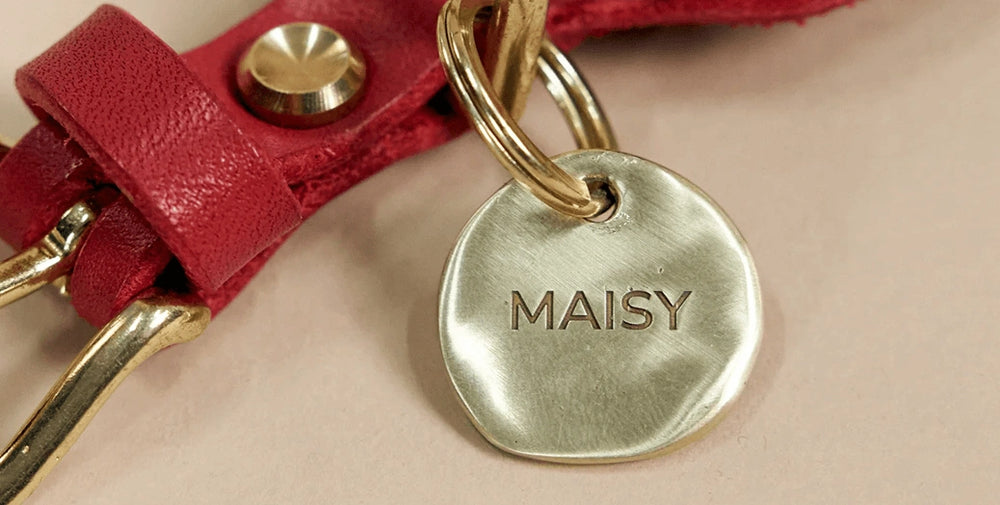
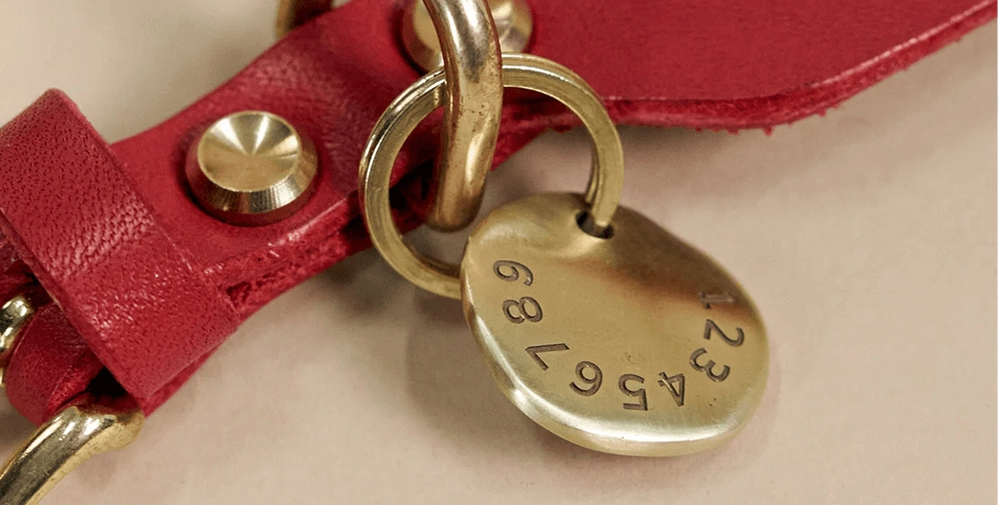
Before you even start to think about experimenting with off-leash training, you need to make sure that your pup is equipped with proper identification. The classic combo of a personalized leather collar that carries a deep-engraved brass ID tag is not only super stylish, but also super essential in the event that your enthusiastic pet wanders a little far! Even the best trained dogs in the world can get distracted by things like squirrels, other dogs and surprise noises, so you want to make sure that your contact details are easy to access for any kind stranger that comes to the rescue.
Feel free to check out our range of high quality, long lasting brass ID tags to guarantee peace of mind!

Step-by-Step Training Guide
Step 1: Start with Core Obedience Training
Before any off-leash work begins, your dog must reliably respond to sit, stay, come, and heel in multiple environments. These are not optional prerequisites. They are the literal foundation that determines whether off-leash training is safe to attempt. The AKC recommends mastering basic commands on-leash before introducing any additional freedom.
Start all obedience work indoors with zero distractions, using your dog's highest-value treats exclusively for training sessions. Once each command produces a correct response 9 out of 10 times indoors, move to your garden or a quiet outdoor area. Then introduce mild distractions: another person in the space, a toy on the ground, or light background noise. Each new distraction level should only be introduced when the previous one is consistently handled. This progressive distraction approach typically takes 4 to 6 weeks for most adult dogs.
Common mistake: moving to outdoor training before indoor commands are solid. If your dog ignores you indoors, they will ignore you outside. Do not progress until indoor performance is consistent.
Timeframe: 4 to 8 weeks of daily 10 to 15 minute sessions before moving to Step 2.
Step 2: Introduce a Hands-Free Leash for Controlled Freedom
A hands-free leash is an excellent bridge between standard on-leash walking and full off-leash freedom. When the leash attaches at the waist rather than the hand, your dog experiences more natural freedom of movement while you retain control. This is also the ideal format for practising recall, because your hands are free to signal, reward, and engage with your dog during the recall moment itself.
A high quality hands-free leather leash gives your dog the sensation of increased freedom while still providing the security of an attached lead. During this phase, practise recall repeatedly within the length of the leash: call your dog, wait for them to return to you, reward immediately and generously, then release them to explore again with a consistent release cue like "ok" or "go walk". The return-and-release pattern is one of the most important habits you can build, because it teaches your dog that coming back does not mean the end of the fun.
Common mistake: only calling your dog at the end of a walk. Dogs learn quickly that "come" means the adventure is over. Call them frequently throughout the walk and release them again each time.
Timeframe: 2 to 4 weeks of daily practice using the hands-free leash before attempting Step 3.

Step 3: Choose a Safe, Enclosed Training Area
The first off-leash attempts must happen in a physically enclosed space with no possibility of your dog reaching a road, another dog, or another person without warning. A fenced garden, a fully enclosed dog park during a quiet period, or a fenced sports field are all appropriate. This is not optional. The enclosed environment removes the consequence of a failed recall during the early stages, which protects your dog and allows you to train without the stress of a genuine emergency.
Within the enclosed space, VCA Animal Hospitals recommend starting with a 10 to 15 foot long training line before going fully off-leash. Drop the end of the long-line and allow your dog to drag it freely. This gives them the sensation of off-leash freedom while leaving you with something to step on or grab if the recall fails. Practise recall with the line dragging on the ground until your success rate is consistent, then move to a short drag line, and finally to no line at all.
Common mistake: removing the leash entirely in an unfenced area on the first attempt. Even a dog with excellent recall can bolt at an unexpected stimulus. The enclosed space protects against the unexpected.
Timeframe: spend a minimum of 2 to 3 weeks in the enclosed environment before testing in a larger open space.
Step 4: Strengthen Recall with High-Value Rewards
Recall is the single most important skill in off-leash training and it must be stronger than any distraction your dog is likely to encounter. The standard for a reliable recall is not that your dog comes when called in a quiet garden with a treat in your hand. It is that your dog comes when called while chasing a squirrel, playing with another dog, or investigating an interesting smell 50 metres away.
Building this level of recall requires consistently associating the recall command with the most valuable reward your dog knows, as confirmed by the AVSAB position statement on positive-reinforcement training. Use real meat, cheese, or your dog's absolute favourite toy exclusively for recall rewards, and never for anything else. This keeps the recall reward novel and high-value. Practise recall from increasing distances, with increasing distractions, and in increasing numbers of locations. Vary the reward type to maintain unpredictability. Never punish a late or imperfect return: even if your dog took 3 minutes to come back, reward them when they arrive.
Common mistake: using the same treat for recall that you use for everything else. The recall reward should be reserved exclusively for recall, so the dog always associates it with something exceptional.
Timeframe: recall training never fully stops. Continue rewarding recall throughout your dog's life to maintain its reliability.
Step 5: Gradually Increase Off-Leash Freedom
Once recall is reliable in your enclosed training area, begin expanding the environment progressively. A recommended progression is: enclosed garden, quiet local park during off-peak hours, a larger park with low distraction, a non-busy woodland or trail, and finally higher-distraction environments. Each new environment should be treated as a new training challenge, not a test of what your dog already knows.
In each new environment, start the session on the long-line even if your dog was performing reliably off-leash in the previous location. New smells, sounds, and sights reset a dog's distraction threshold temporarily. Drop the line after 10 to 15 minutes when you are satisfied your dog is settled and responding. Call them back frequently throughout the session and reward each return generously. The goal is to keep your learned connection with your dog by periodically calling them and rewarding them throughout every outing.
Common mistake: treating all parks and open spaces as equivalent. A quiet suburban park at 7am and a busy city park at noon are entirely different training environments. Progress through them separately.
Timeframe: spend 2 to 4 sessions in each new environment before moving to the next level of difficulty.
Step 6: Train in Different Environments
Generalisation is the process by which a dog learns that a command applies everywhere, not just in the specific location where it was trained. Many owners find that their dog recalls perfectly in the garden but ignores them at the beach. This is not disobedience. It is a failure of generalisation, and it is solved by deliberately training in as many varied environments as possible.
When you are satisfied with their progress in familiar settings, begin introducing open fields, woodland trails, busier parks, nature reserves, and urban environments. It is also a good idea to gradually introduce other distractions: joggers, cyclists, other dogs, wildlife, and unexpected noises. Each new distraction type should be introduced at low intensity first. For example, practise recall near a single dog on a long leash before attempting recall near a group of dogs playing off-leash. Read your dog's body language to recognise when they are approaching their distraction threshold, and call them back before they cross it rather than after.
Common mistake: only training in the same location repeatedly. A dog trained exclusively in one park will recall reliably in that park and nowhere else.
Breed note: sight hounds (Greyhounds, Whippets) and scent hounds (Beagles, Basset Hounds) have particularly strong prey and scent drives that can override recall in high-stimulation environments. These breeds require more time in each generalisation stage and may never be fully reliable off-leash in unfenced areas.
Step 7: Keep Training Fun and Positive
The single biggest predictor of long-term off-leash reliability is whether the dog finds returning to the owner as rewarding as the thing they were doing before being called. If the recall is followed by genuine excitement, a great treat, a brief play session, or enthusiastic praise, your dog will want to come back. If recall consistently leads to something neutral or negative, they will learn to delay or avoid it.
Keep training sessions as fun and enthusiastic as possible through things like hide and seek recall games, where you hide behind a tree and call your dog to find you; off-leash hikes with frequent check-in rewards; and changing your direction unpredictably so your dog learns to keep one eye on you rather than assuming you will always follow them. The further you can stay away from a punishment attitude, the better. Even on a difficult day, end every session on a successful recall and a positive reward so the final association is always a good one.
Common mistake: only rewarding recall with food. Some dogs are more motivated by play, praise, or a specific toy. Identify what your individual dog finds most rewarding and use that as the recall reward.

Step 8: Be a Confident Leader
Dogs read human body language and emotional state with remarkable accuracy. A handler who is anxious, uncertain, or tense during off-leash training communicates that anxiety directly to the dog, which increases the dog's own uncertainty and makes recall less reliable. Confidence in your own signals and cues is a trainable skill, not a personality trait.
Always project a level of calm authority: walk with purpose, use clear and consistent hand signals alongside verbal cues, and avoid repeating commands. Saying "come, come, come" when your dog does not respond immediately teaches them that multiple repetitions are acceptable. Issue the command once, clearly, and reward immediately when they comply. Stay alert and recognise when you might need to leash up again if your pup seems to be getting a bit too distracted. Knowing when to re-leash is not a failure: it is sound judgement that protects the training progress you have built.
Common mistake: repeating commands when the dog does not respond immediately. This trains the dog to wait for the third or fourth repetition before complying. Issue the command once and use a physical prompt or re-approach rather than repeating the word.
Timeframe: confident handling develops over months of consistent practice. Review your own technique as regularly as you review your dog's recall performance.
What to Do If Your Dog Runs Away During Off-Leash Training
Even well-trained dogs can bolt unexpectedly. Knowing how to respond in the moment is as important as the training itself:
- Stay calm: calling out in a panicked or angry tone makes your dog less likely to return, not more. Keep your voice even and confident.
- Do not chase: running after your dog triggers their chase instinct and makes the situation worse. Stand still or move slowly away from them.
- Turn and walk in the opposite direction: this triggers your dog's natural instinct to follow. Most dogs will turn around and trot after you when you move away calmly.
- Use treats or a familiar sound: rustling a treat bag or using their favourite squeaky toy sound can redirect their attention back to you.
- Use your emergency recall word: this is exactly the situation your emergency recall command was trained for. Use it calmly and clearly, and reward heavily when they return.
Essential Pro Tips for Off-Leash Success
- Consistency is Key! The more dedicated and consistent you are in reinforcing your dog's good habits on a daily basis, the deeper the behaviors will root into their psyche without even having to think about it.
- Socialization Matters A pup that is well-socialized with both other people and other dogs, the less likely they will be to react in unpredictable ways when met with a new or different challenge.
- Emergency Recall Command A really great tip is to introduce a unique word in your training, something like 'now!', that you use for only the most urgent situations.
- Reading Body Language Put in the work to learn your pup's body language. In doing so, you will be able to recognize any signs of excitement, stress or distraction that are out of the norm.
- Keep Walks Engaging Make the effort to mix up your walking locations, and play games with them and interact with them along the route to keep them as engaged as possible.
Prioritizing Safety: Why Personalized ID Tags Matter
Like we said above, even with the best, most extensive training, unexpected situations can always arise! That's why a deep-engraved brass ID tag is the best way to ensure that your dog will be returned to you if they wander a bit too far.
Our tags offer the ideal levels of durability and legibility, giving you ultimate peace of mind no matter what kind of adventure you and your pet embark on.
Take a look at the premium vegetable-tanned leather collars we have in stock that would make the perfect partner to an engraved brass tag.

Frequently Asked Questions: Off-Leash Dog Training
How do you train a dog to walk off leash?
Build in sequence: start with reliable basic obedience on-leash (sit, stay, come), develop a solid recall command that works under distraction, then transition through a long-line or hands-free leash phase before moving to fully off-leash in a safe enclosed area. Gradually increase the difficulty of the environment as each stage is mastered. Positive reinforcement throughout every stage is essential. Never skip a stage.
How long does it take to train a dog to walk off leash?
Most dogs take 2 to 6 months of consistent daily training to reach reliable off-leash recall in familiar environments, and 6 to 12 months to achieve reliable recall across varied environments with significant distractions. Younger dogs and dogs with prior positive-reinforcement training history typically progress faster. The recall command is the most critical skill and should be the primary focus throughout the entire process.
What is the most important command for off-leash training?
Recall: the ability to call your dog back to you reliably on the first command, in any environment, regardless of what distraction they are focused on. Every other aspect of off-leash training is secondary to a solid recall. Train recall daily with high-value rewards, keep the command word consistent, and never use the recall word in a context that ends negatively for the dog.
What should I do if my dog runs away during off-leash training?
Do not chase, as this triggers the chase instinct and makes your dog run faster. Stay calm, turn and walk in the opposite direction, and use a treat bag or familiar sound to redirect their attention. Use your emergency recall word calmly and clearly. When your dog returns, reward them immediately and generously regardless of how long they were gone. Never punish a dog for eventually returning.
At what age can you start off-leash training?
Basic recall training can begin as early as 8 weeks of age in short positive sessions of 2 to 5 minutes. Formal off-leash training in open environments should wait until the dog has a reliable on-leash recall, which for most dogs means 6 months of age or older. High-distraction off-leash environments are best introduced after 12 months when the dog's attention span and impulse control are more developed.
What breeds are hardest to train off-leash?
Sight hounds (Greyhounds, Whippets, Salukis) and scent hounds (Beagles, Basset Hounds) are generally the most challenging, because their instinct to chase or follow a scent overrides trained recall in high-stimulation environments. This does not mean off-leash training is impossible for these breeds, but it requires significantly more time and consistency, and fully off-leash freedom in unfenced environments may never be safe for some individuals. Wide sighthound collars with secure fit are particularly important for these breeds during the training process.
Is a hands-free leash good for off-leash training?
Yes, a hands-free leash is an excellent transition tool between standard on-leash walking and fully off-leash freedom. It gives the dog a greater sense of movement freedom while keeping the handler mobile and hands-free for signaling and rewarding. The Omni Hands-Free Leash from The Lille Björn serves this transition role well, allowing the dog to range at the end of the leash while the handler focuses on recall training without the distraction of holding a standard lead.
Train Together, Adventure Together
Off-leash training is not a destination but a continuous relationship with your dog built on trust, consistency, and positive experience. The steps take time. The rewards are permanent.
Before every off-leash outing, confirm your dog is wearing a properly fitted leather collar with a deep-engraved brass ID tag carrying your current phone number. That tag is the fastest route home if any adventure goes further than planned.