Quick Summary
To measure your dog's neck for a collar, wrap a soft fabric measuring tape around the neck where the collar will naturally sit, just below the head and above the shoulders, not too loose, not digging in and note the number where the tape meets itself. Find the size range that contains your measurement in The Lille Björn size chart - that is your size. Before ordering, keep the two-finger rule in mind: your snug measurement needs to sit far enough below the upper limit of the size range to leave room for two flat fingers. For example, a dog measuring 20 cm fits size XXS (17–22 cm) with 2 cm of range remaining, there is comfortable room for two fingers.This guide covers the complete step-by-step process, common mistakes, sighthound-specific notes, and a breed neck size reference chart for 30+ popular breeds.
Why Accurate Measurements Matter
Finding the right fit is important and you’ll know you found it when your dog’s collar fits snugly enough to stay in place, but not so tight that it’s uncomfortable. When you select the best leather dog collars, finding an accurate measurement for your pet ensures the best function. It also prevents the following issues:
- Escaping: when your dog’s collar is too loose, there’s a risk that they will slip out and run off during a walk or when you’re outside to play.
- Discomfort: if a collar is too tight it restricts your dog’s movements and can cause irritation, chafing, and trouble breathing.
- Health concerns: a collar with an improper fit can lead to sores, hair loss, and damage to your pet’s trachea.
As you can see, securing your dog’s collar properly isn’t just a matter of safety. It’s also a matter of their overall health. For the best quality of life for your furry friend, it’s absolutely vital that you take the time to ensure a proper fit when you choose from the many dog collars on store shelves.

Tools You’ll Need
Having the right gear on hand makes it super easy to measure your dog’s neck for the proper fit for its collar. Below is everything you need to get the job done right.
- A flexible measuring tape, ideally made from fabric.
- A piece of string.
- Pen and paper to write down your measurements.
If you feel like your dog’s current collar offers a great fit, you can simply remove it and measure it. Use that number to guide you as you shop for a new collar. When you measure an existing collar, be sure you do so by excluding the buckle, which gives you the most accurate measurement.
Step-by-Step Guide to Measuring Your Dog’s Neck
Now that you’ve gathered your materials, you’re ready to work through the steps required to get an accurate measurement of your dog’s neck. Read through them below so that you know what to expect when it’s time to get started.
Step 1: Identify the Proper Placement
Start by finding the middle of your dog's neck which is roughly halfway between the base of the skull and the top of the shoulders. This is where the collar will naturally rest when worn. If your dog has long or thick fur, gently smooth it down to feel the natural position of the neck before measuring.
Step 2: Measure the Neck Circumference
Wrap the fabric tape measure snugly around the middle of your dog's neck, this is where the collar will naturally sit during daily wear. Keep the tape flat with no twisting, touching the coat without compressing it, and not leaving any extra space. Note the number where the tape meets itself. This is your dog's neck circumference and for The Lille Björn collars, this measurement is your collar size directly.
If you don't have a flexible tape measure: use a piece of string or a strip of paper instead. Wrap it around the neck, mark the point where it overlaps with a pen, then lay it flat against a ruler or rigid measuring tape. This method is equally accurate.
How The Lille Björn sizing works and how to apply the two-finger rule:
Our collars are true to size. Find your snug measurement in the chart below and order the size range it falls within. The size range does not automatically include two-finger room, that is something you account for when choosing.
Before ordering, ask: does my measurement sit low enough within this size range to leave room for two flat fingers?
| Size | Neck Circumference | Safe ordering zone | Use caution consider sizing up |
|---|---|---|---|
| XXS | 17–22 cm (6.7–8.7 in) | 17–20 cm | 22 cm |
| XS | 22–27 cm (8.7–10.6 in) | 22–25 cm | 27 cm |
| S | 27–32 cm (10.6–12.6 in) | 27–30 cm | 32 cm |
| M | 32–37 cm (12.6–14.6 in) | 32–35 cm | 37 cm |
| L | 37–42 cm (14.6–16.5 in) | 37–40 cm | 42 cm |
| XL | 42–47 cm (16.5–18.5 in) | 42–45 cm | 47 cm |
Example: a dog with a snug measurement of 20 cm falls in size XXS (17–22 cm). With 2 cm of range remaining before the upper limit, there is comfortable room for two fingers and this size works. A dog measuring 22 cm at the very top of the XXS range should consider XS, as there is no room left in the range for two fingers.
Leather and two-finger room over time: vegetable-tanned leather softens with wear and subtly conforms to the neck shape. This means a collar that starts with snug two-finger room may feel progressively more comfortable as the leather breaks in and the fit refines itself rather than loosening. Some owners whose measurement sits near the top of a range choose to size up for confident two-finger room from day one. Others near the lower end of a range are happy with the closer fit. Both are valid as it comes down to your preference and your dog's individual neck shape.
Step 3: Check the Measurement and Choose Your Size
Once you have a reliable measurement, locate it in the size chart and apply the two-finger check mentally before ordering: does your measurement leave 2–3 cm of room before the upper limit of that size range?
If yes, that size works. Order with confidence.
If your measurement sits very close to the upper limit of a range there may not be enough room for two fingers within that size. The next size up gives you that room reliably.
If your measurement sits exactly on the boundary between two sizes, for example 27 cm, which is both the top of XS and the bottom of S consider: do you want a snugger fit with room to loosen, or a more relaxed fit from the start? Dogs with thicker necks relative to their size (Bulldogs, Pugs, Staffordshire Bull Terriers) generally do better in the larger size. If you are genuinely unsure, contact us with your measurement and breed before ordering, we are happy to advise.
Step 4: Consider the Collar Type
Different types of collars, including the leather dog collars here at The Lille Bjorn, often have specific sizing requirements. Make sure you understand the product details so you know whether you need to take additional measurements for the type of collar you choose.

Tips for Ensuring a Snug Fit
For breeds with thick double coats such as Huskies, Samoyeds, Bernese Mountain Dogs, Golden Retrievers the collar sits above a layer of fur rather than directly against the skin. Measure where the fur naturally rests without compressing it, and be aware that the same collar may fit differently in winter (heavier coat) versus summer (lighter or blown coat). If your dog sheds significantly in spring, it is worth re-checking the two-finger fit after their coat change. A collar that was correctly fitted in winter may feel slightly looser on a summer coat.
For short or single-coated breeds including Weimaraners, Vizslas, Dalmatians, Dobermanns the collar sits directly against the skin with no fur buffering. Be particularly precise with the two-finger check for these breeds, as there is no coat to absorb any minor tightness.
Tip 1: Account for Fur Thickness
If you have a breed known for its thick fur, such as a Husky or Golden Retriever, take into account the compression of their fur when you measure. Measure where the fur naturally rests and be prepared to make adjustments for the seasons, when fur may fall out or thicken.
Tip 2: Check Fit Regularly
Dogs may grow, lose weight or gain weight as seasons change and as they age. For that reason, it’s recommended to check dog collars regularly to make sure they stay comfortable and snug. Puppies will require frequent adjustments, so be sure you are monitoring their collar’s fit consistently for both safety and comfort.
Tip 3: Test with a Walk
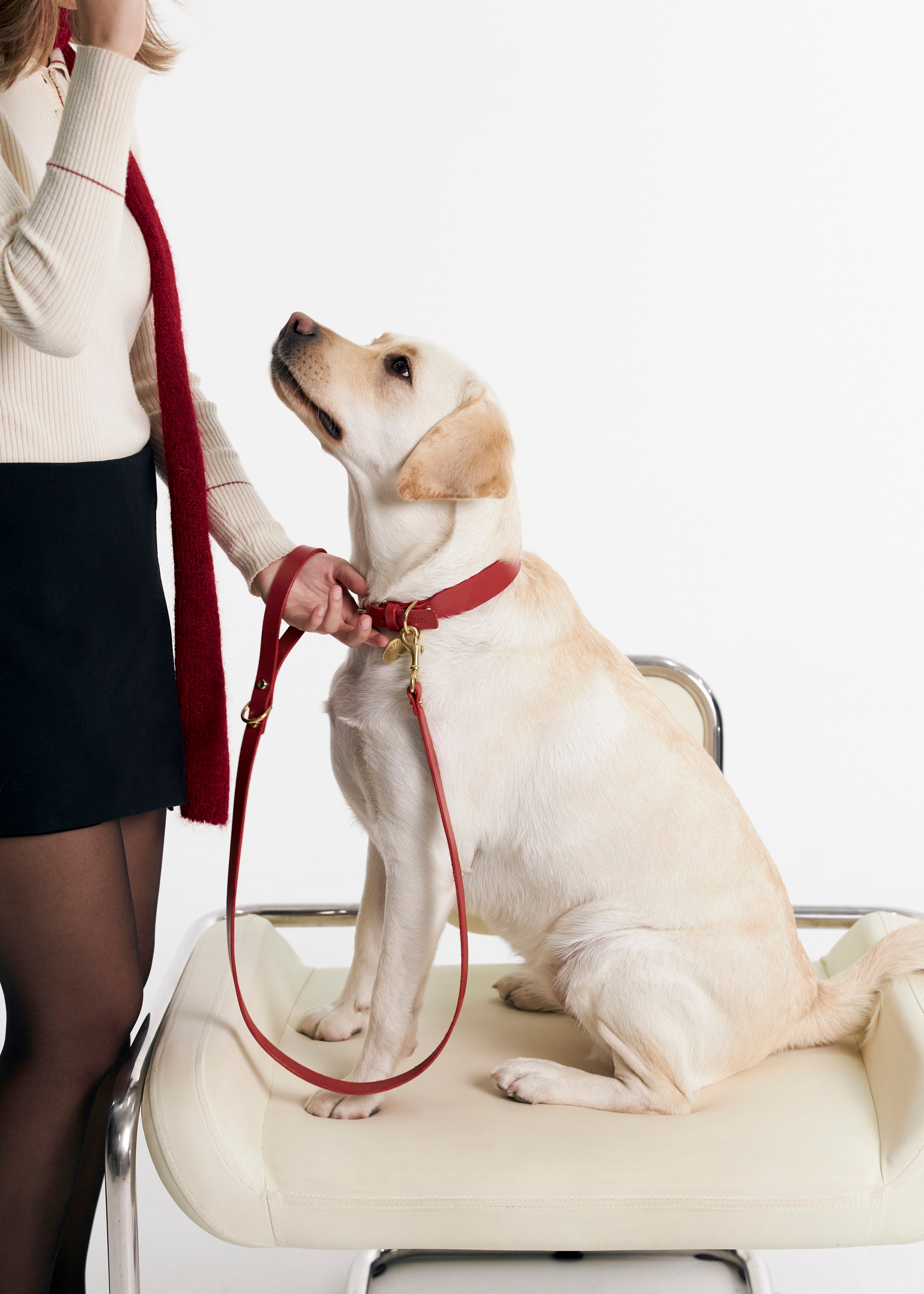
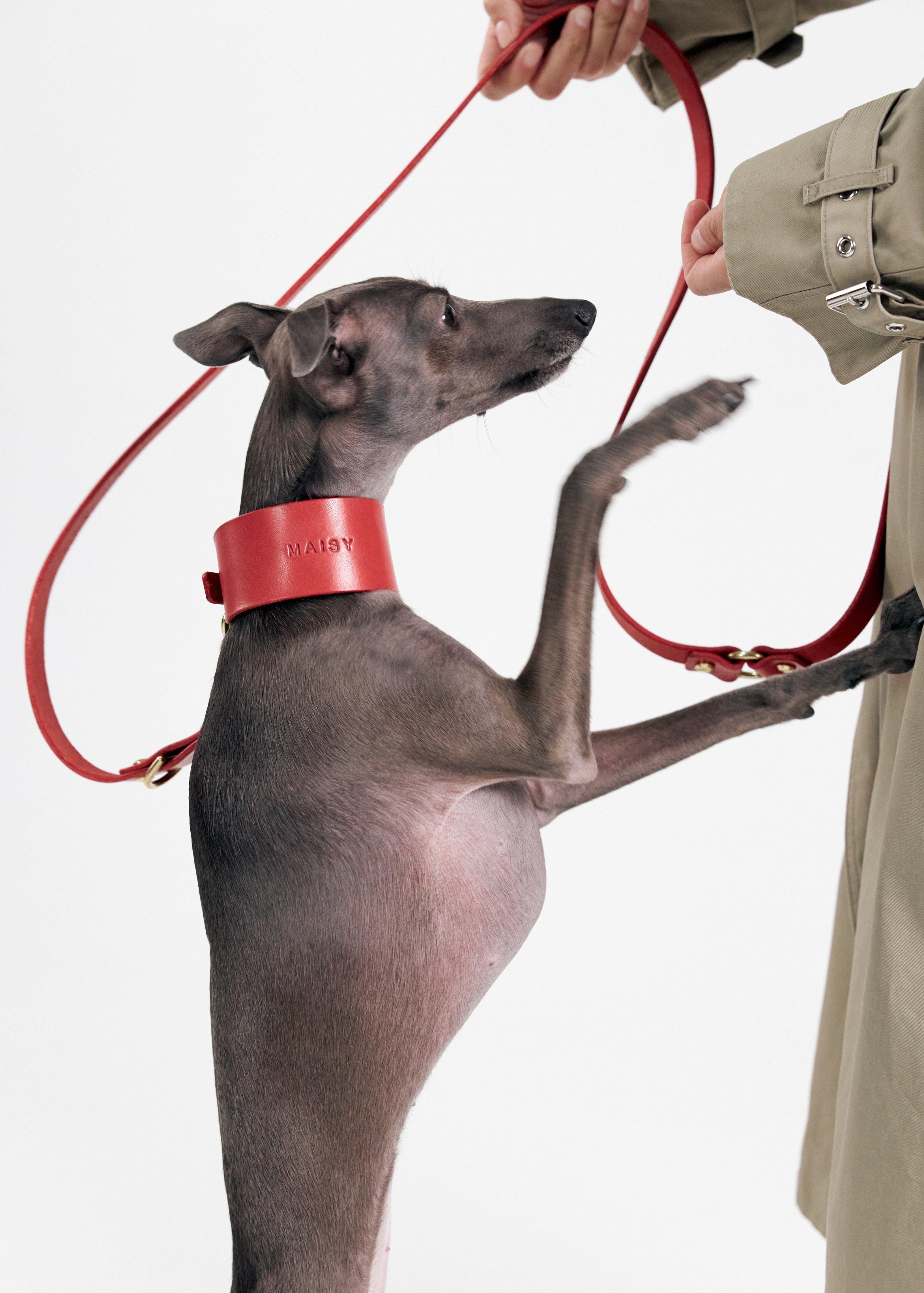
Before you confirm that you’ve found the right dog collar, test it with a dog lead or dog leash. Take your dog for a short walk and observe how the collar rests against its neck and how the fit looks with movement. Be sure it doesn’t slip, twist or cause your dog discomfort during movement.

Tip 4: Allow for Leather Break-In
This tip applies specifically to vegetable-tanned leather collars. A brand-new leather collar will be slightly firmer than a broken-in one. The leather has not yet softened and moulded to your dog's neck. During the first two to four weeks of regular wear, the leather will gradually conform to the exact shape of the neck, and the collar may feel incrementally more comfortable as this happens.
For owners whose measurement sits near the top of a size range, some choose to order the smaller size intentionally knowing the leather will soften into a confident two-finger fit over the first weeks of wear. Whether this works depends on the individual dog's neck shape and the specific collar model. If you are considering this, contact us before ordering and we can advise for your situation.
Breed Neck Size Reference Chart , 30+ Popular Breeds
Use this table as a starting point before measuring. Because individual dogs vary even within the same breed, always confirm with an actual measurement before ordering but this chart gives you a reliable baseline and helps you identify whether your dog falls into an unexpected size category.
Important note on thick-necked breeds: Bulldogs, Pugs, French Bulldogs, Staffordshire Bull Terriers, and Pit Bulls consistently have necks significantly larger relative to their body weight than other breeds. Always measure these dogs rather than estimating from weight or general size category as they regularly require a size larger than expected.
| Breed | Typical Snug Measurement | Suggested Size | Two-Finger Note |
|---|---|---|---|
| Chihuahua | 17–21 cm | XXS | Measure carefully, very fine necks |
| Yorkshire Terrier | 18–22 cm | XXS–XS | At 21–22 cm consider XS |
| Maltese | 18–23 cm | XXS–XS | |
| Toy Poodle | 19–24 cm | XXS–XS | |
| Pomeranian | 19–24 cm | XXS–XS | |
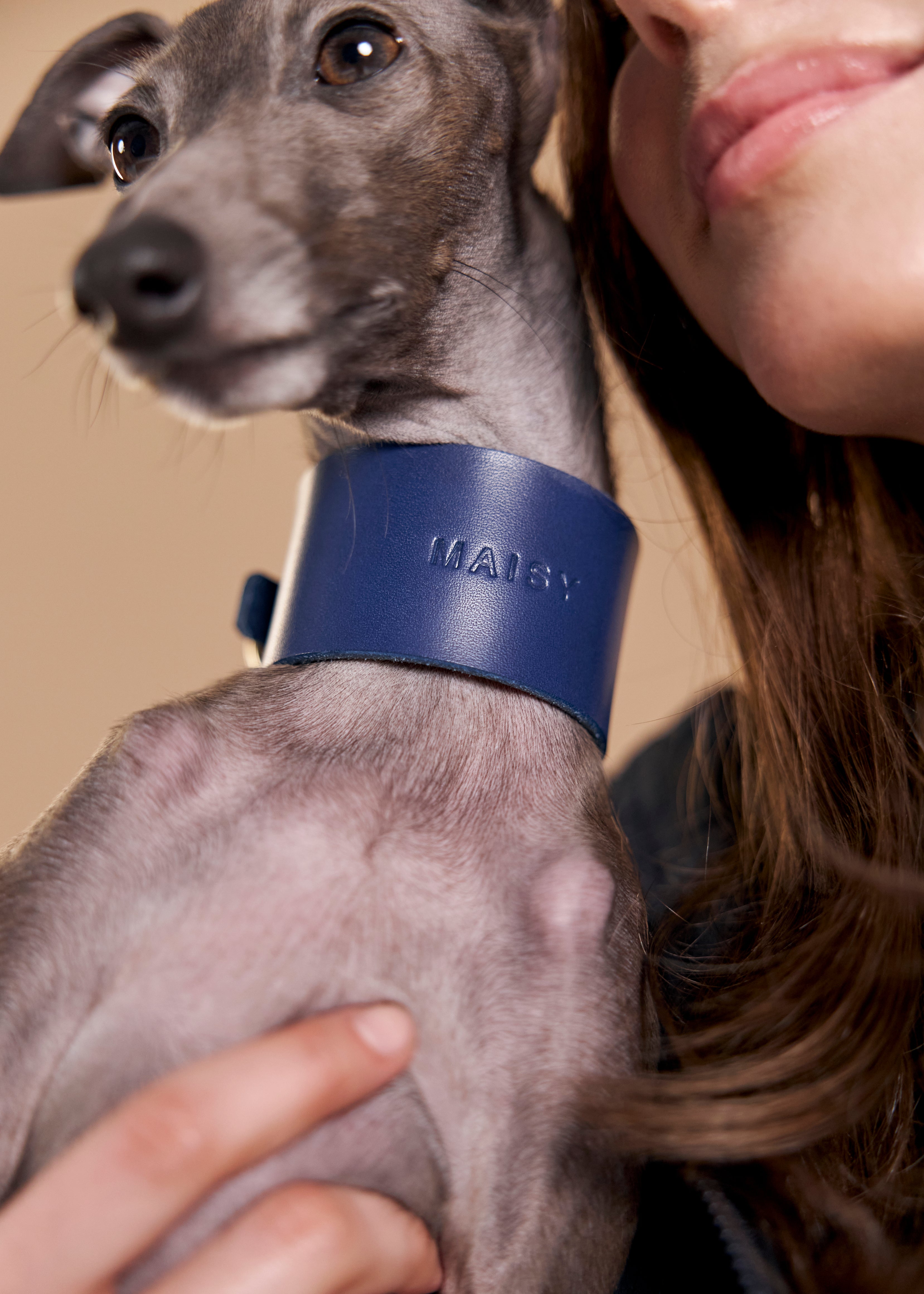
| Italian Greyhound | 20–26 cm | XXS–XS | |
| Miniature Dachshund | 22–27 cm | XS–S | At 26–27 cm consider S |
| Shih Tzu | 22–28 cm | XS–S | |
| Cavalier King Charles Spaniel | 24–30 cm | XS–S | |
| Whippet | 27–34 cm | S–M | |
| French Bulldog | 28–36 cm | S–M | Always measure, thick neck |
| Pug | 27–34 cm | S–M | Always measure, thick neck |
| Beagle | 27–34 cm | S–M | |
| Cocker Spaniel | 28–34 cm | S–M | |
| Cockapoo | 26–32 cm | XS–S | |
| Miniature Schnauzer | 26–31 cm | XS–S | |
| Border Collie | 32–37 cm | M–L | At 36–37 cm consider L |
| Australian Shepherd | 33–39 cm | M–L | |
| Blue Heeler | 32–37 cm | M–L | |
| Springer Spaniel | 33–39 cm | M–L | |
| Bulldog (English) | 35–44 cm | M–L | Always measure, very thick neck |
| Staffordshire Bull Terrier | 35–43 cm | M–L | Always measure, thick neck |
| Greyhound | 30–37 cm | S–M | |
| Labrador Retriever | 37–44 cm | L–XL | At 41–42 cm consider XL |
| Golden Retriever | 37–43 cm | L–XL | |
| Weimaraner | 37–43 cm | L–XL | |
| Dobermann | 37–43 cm | L–XL | |
| Husky | 40–46 cm | L–XL | At 41–42 cm consider XL |
| Boxer | 38–44 cm | L–XL | Always measure, thick neck |
| German Shepherd | 40–46 cm | L–XL |
|
| Bernese Mountain Dog | 42–50 cm | XL+ | Contact us for measurements above 47 cm |
| Rottweiler | 43–50 cm | XL+ | Contact us for measurements above 47 cm |
| Cane Corso | 45–55 cm | XL+ | Contact us for measurements above 47 cm |
| Great Dane | 48–58 cm | XL+ |
Contact us for measurements above 47 cm |
| Mastiff | 50–60 cm | XL+ | Contact us for measurements above 47 cm |
All measurements are typical ranges, individual dogs vary. Always confirm with an actual measurement before ordering.

Avoiding Common Sizing Mistakes
Even when you carefully measure your dog’s neck size, there is still the potential to make a mistake. Knowing what they are is the first step in taking action to prevent them. Here are some of the most common:
Mistake 1: Guessing the Size
It’s never a good idea to estimate your dog’s neck size. You need to use a measuring tape for the best accuracy, something that is also important when buying dog harnesses, dog leads and dog leashes as well.
Mistake 2: Ignoring Sizing Charts
Brands vary in size and fit and may have varying sizing charts for their dog collars and accessories. Make sure you compare the measurements you take with the collar’s sizing guide to ensure that you are buying the correct size for your beloved pet.
Mistake 3: Assuming There Is One Rule for In-Between Sizes
When your dog's measurement falls near a size boundary, the right choice depends on your dog's individual build, your preferred fit style, and the natural softening of the leather over time. There is no single rule that applies to every dog. If your measurement sits close to the upper limit of a size, consider whether 2–3 cm of room remains for two fingers and if not, size up. If you prefer a snugger initial fit knowing the leather will break in, the smaller size may work. When genuinely unsure, contact us before ordering and we will advise for your specific situation.
Mistake 4: Overlooking Activity Levels
Active dogs have specialized needs when it comes to getting the right fit for their collar. You may want to consider buying a padded or extra flexible collar so your pet has plenty of room to move around and play. In this case, it’s always a good idea to test the collar in a real-world environment, such as attached to a dog leash for a walk around the block or with a lead for a training session.

Why a Well-Fitted Leather Collar Is the Best Long-Term Choice
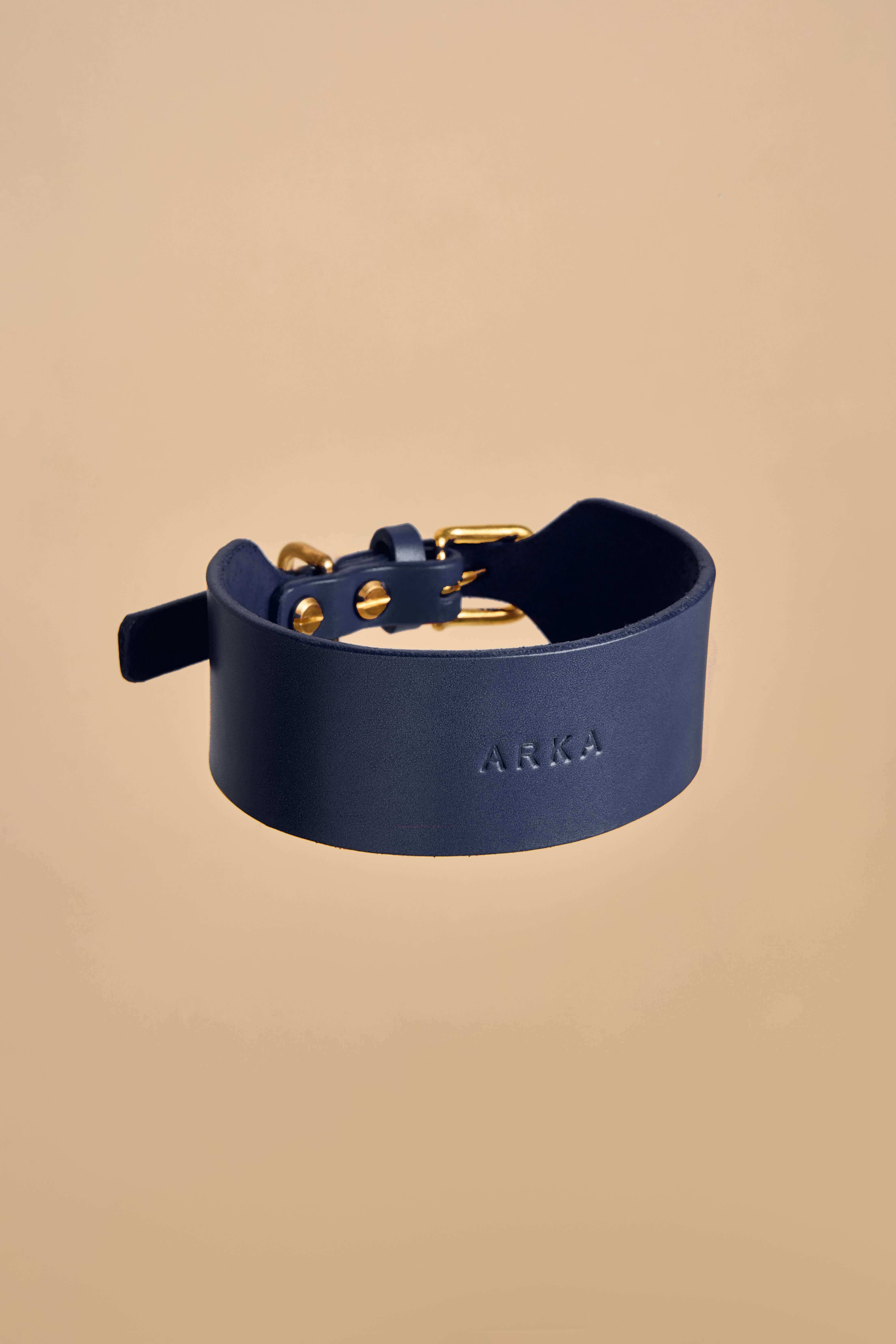
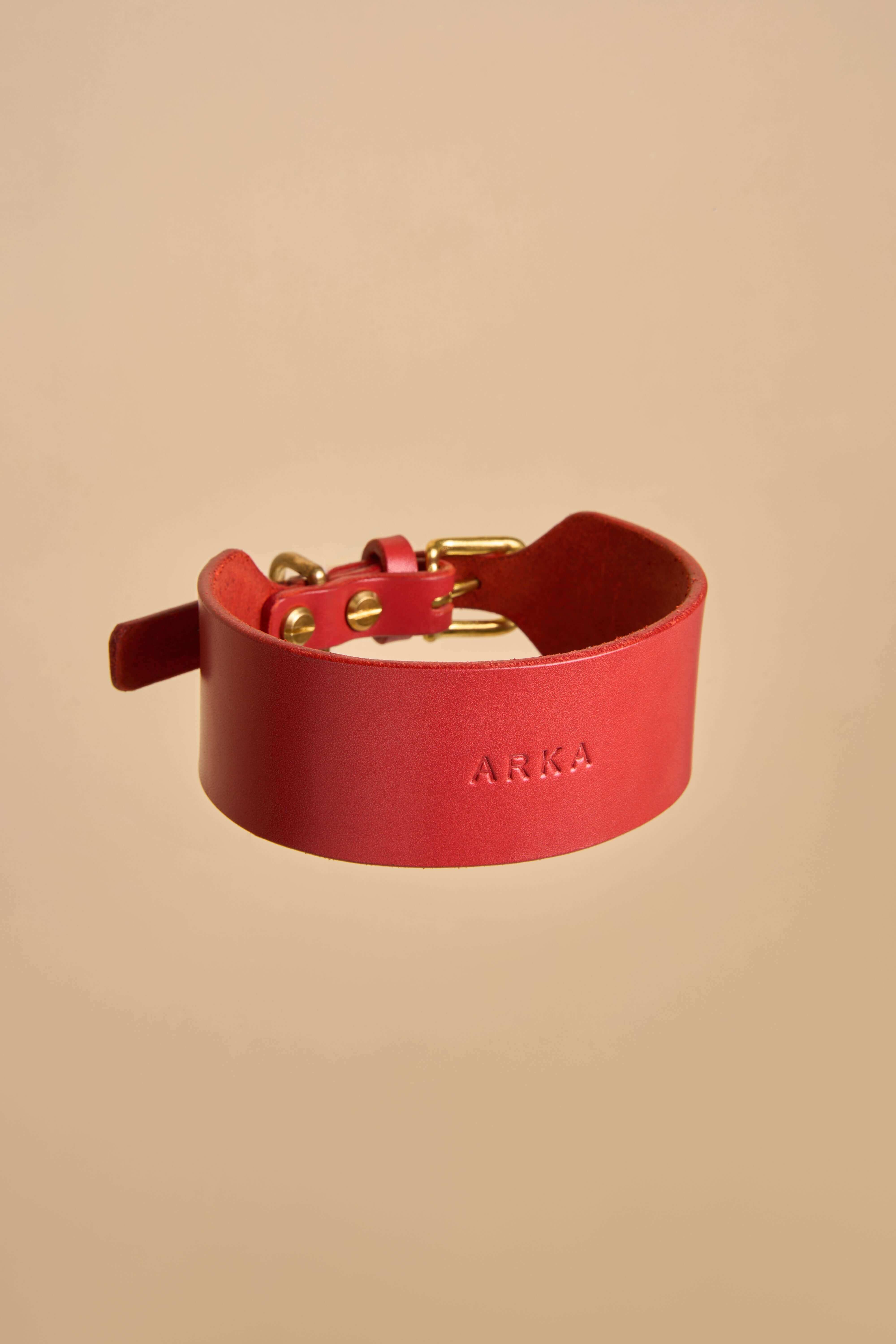
Getting the measurement right matters more with a leather collar than with almost any other type, precisely because leather does its best work over time. A correctly fitted vegetable-tanned leather collar will soften, mould, and conform to your dog's neck, producing a genuinely custom fit that no synthetic material can replicate. A leather collar that was ordered too tight cannot be adjusted to that comfort level; one sized correctly will earn its place as the most comfortable item your dog wears every day.
Three properties make leather the material where accurate sizing pays the greatest dividend:
- It moulds with wear. Vegetable-tanned leather is a living material, it responds to your dog's body heat, the natural oils in their coat, and the specific pressure points of their neck shape. Over weeks and months it becomes a precise impression of your dog's neck rather than a generic band of material.
- It does not retain moisture. Unlike nylon, which absorbs and holds dampness against the skin, quality leather breathes and dries. A correctly fitted leather collar that is not pressed tightly against the skin allows airflow at the contact zone reducing the moisture buildup that causes collar-related skin irritation.
- Its hardware does not degrade at contact points. Solid brass D-rings and buckles do not corrode, rust, or develop rough edges over time the way nickel-plated hardware does. For a collar intended to last years rather than months, the hardware quality matters as much as the leather.
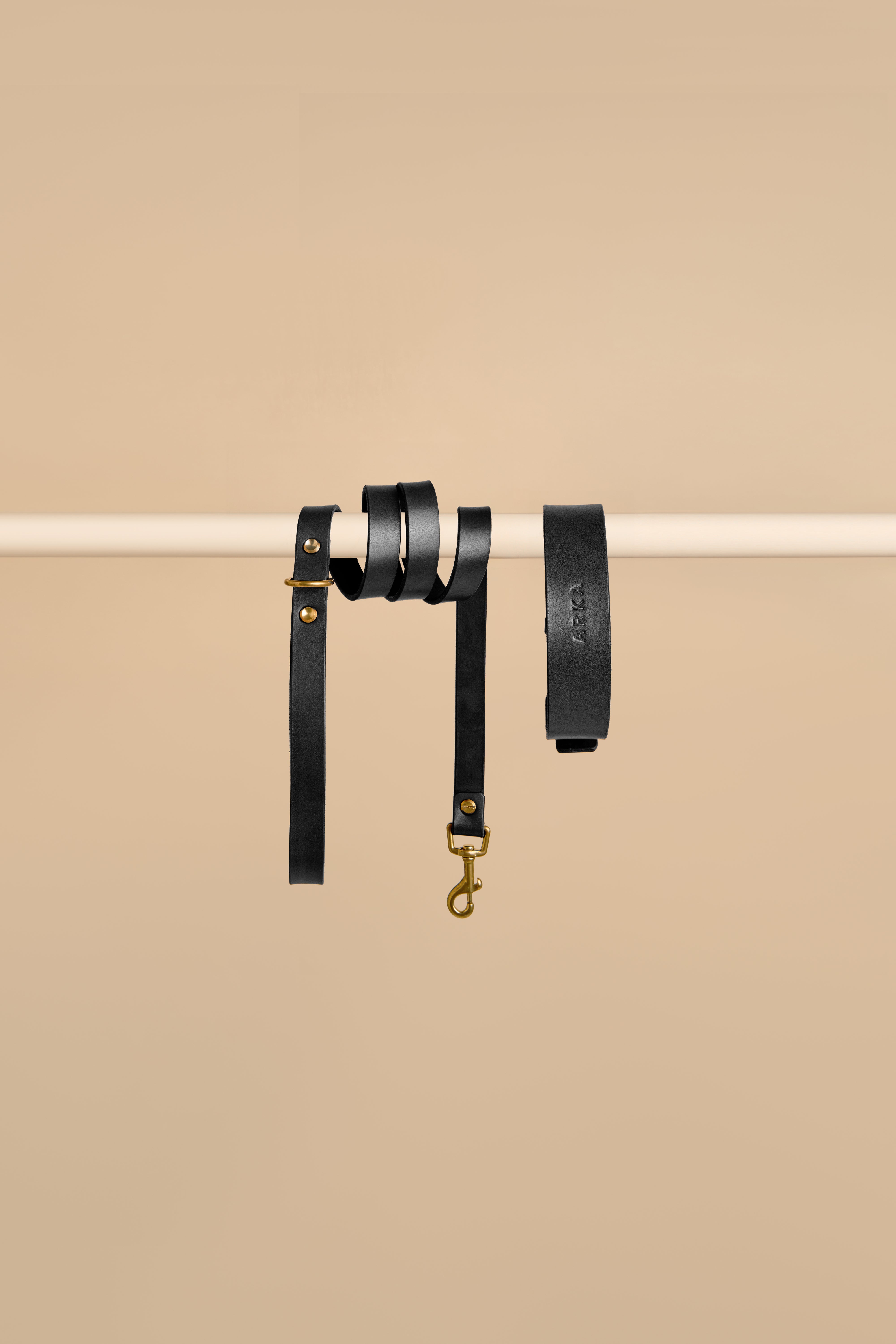
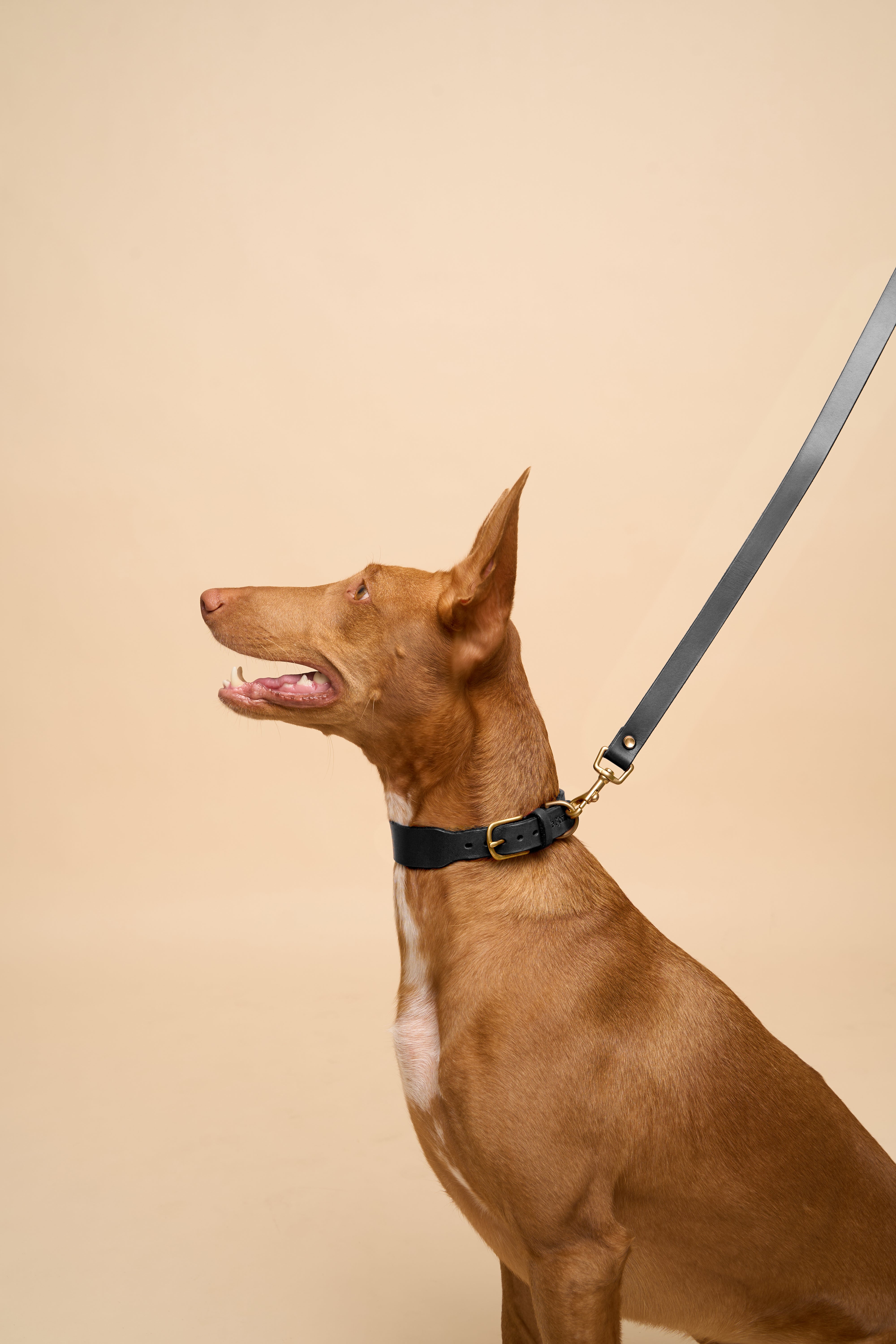
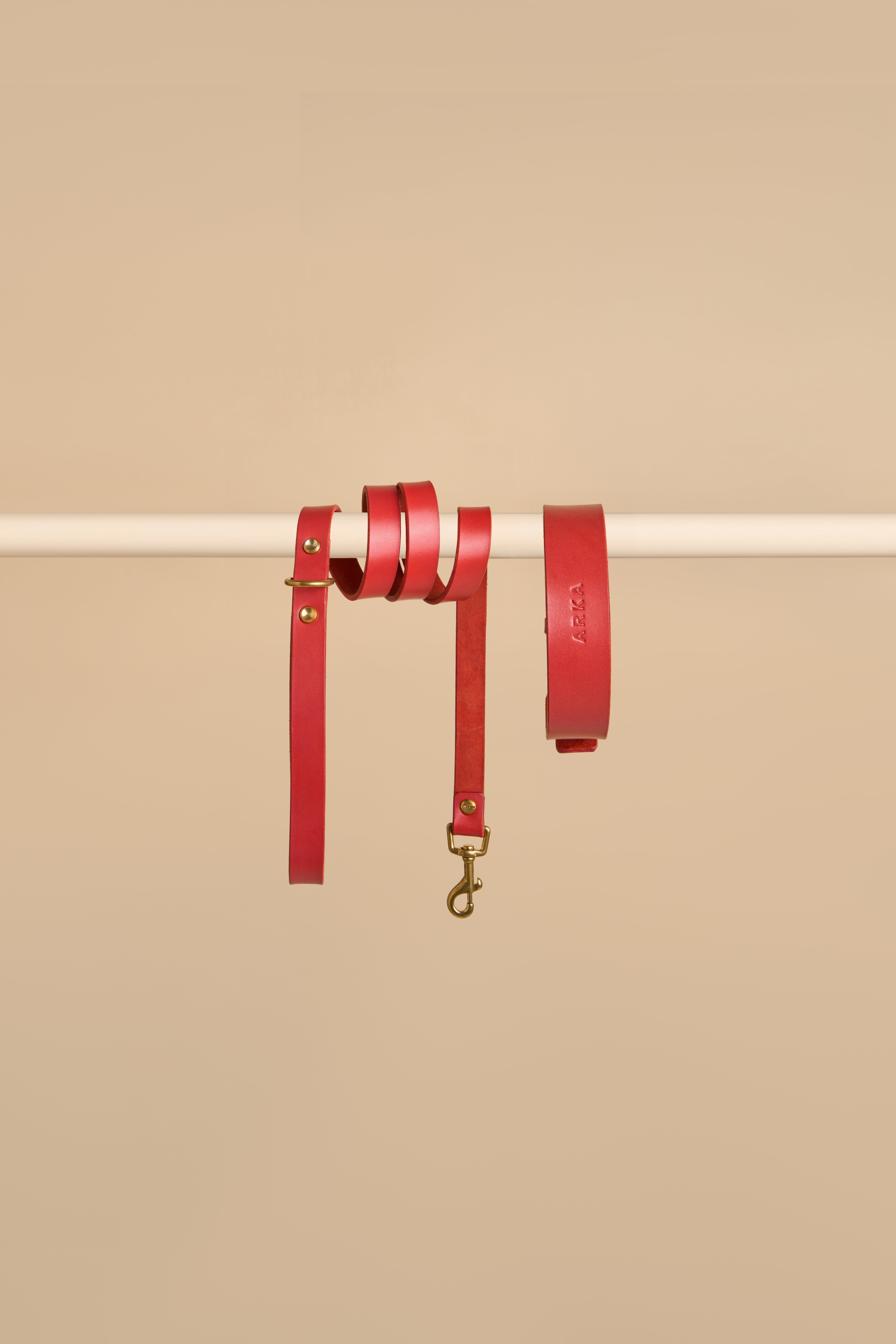
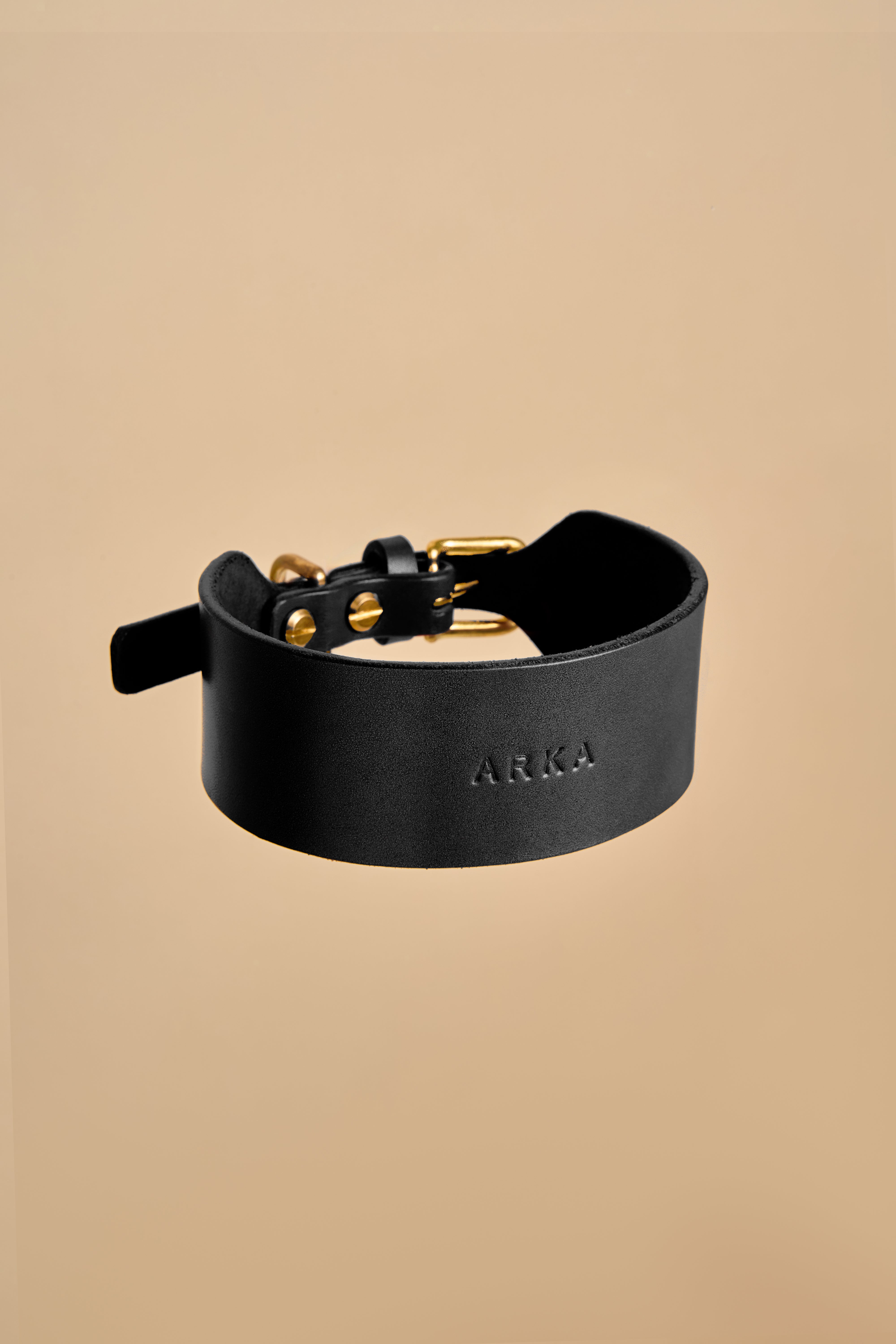
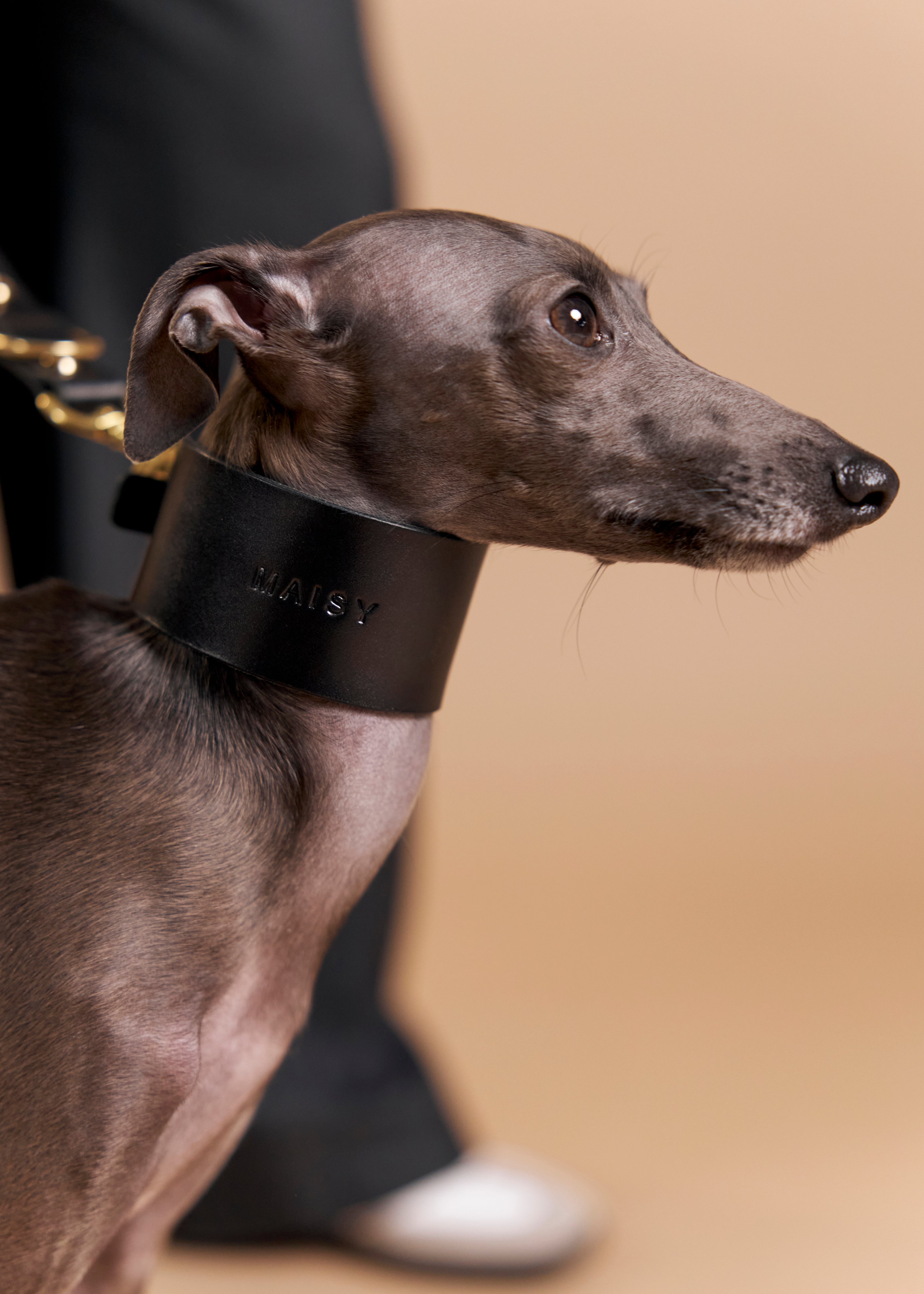
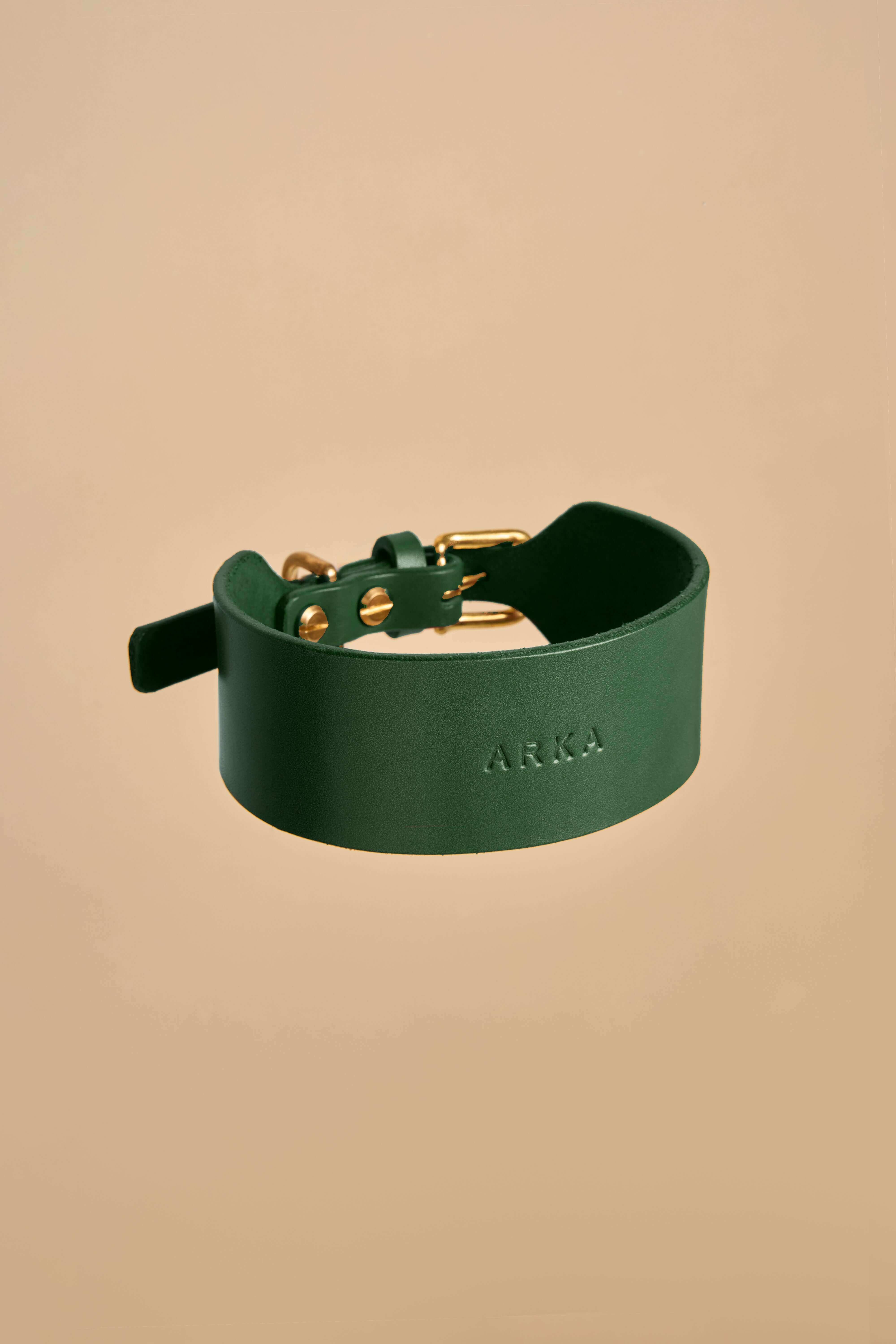
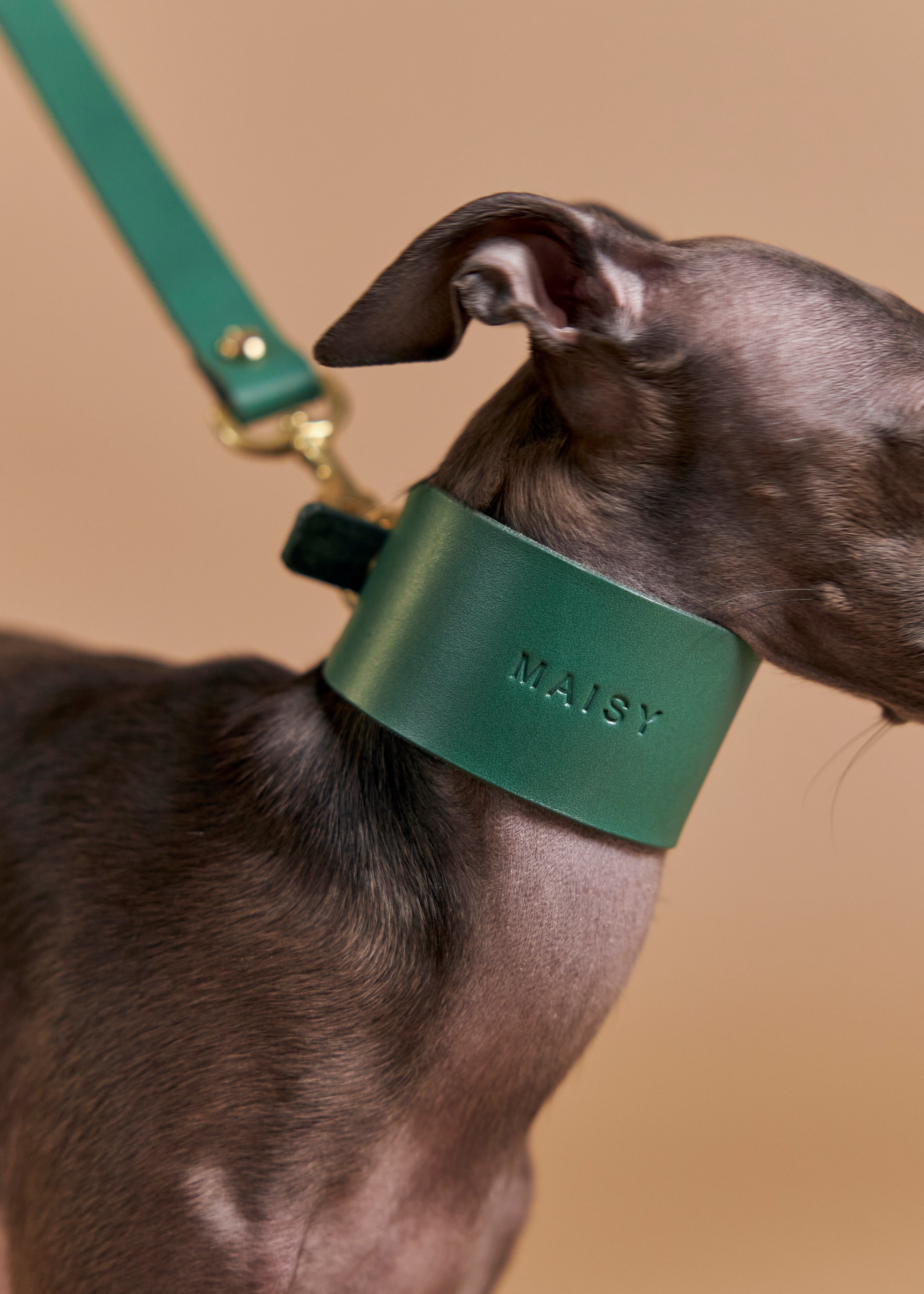
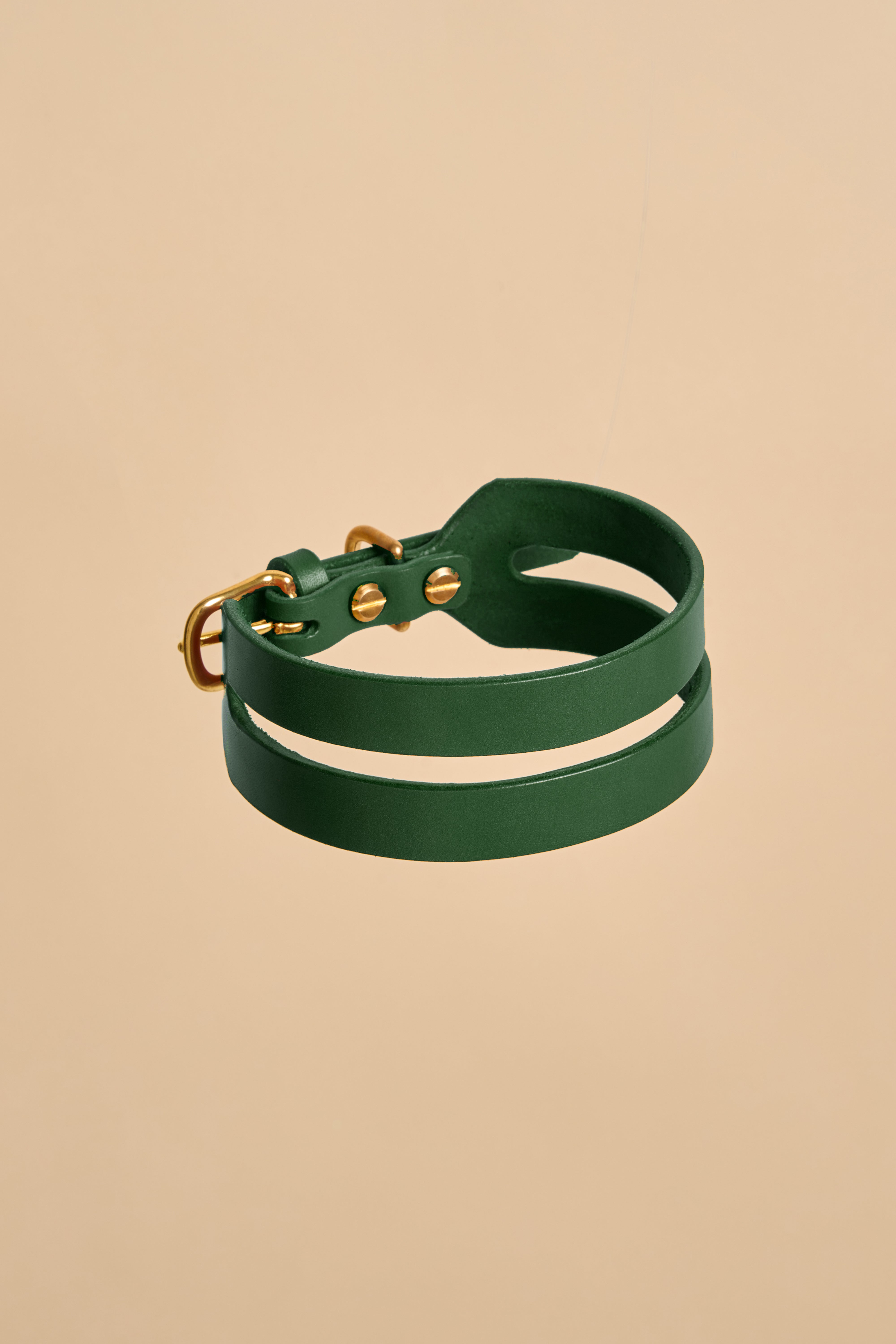
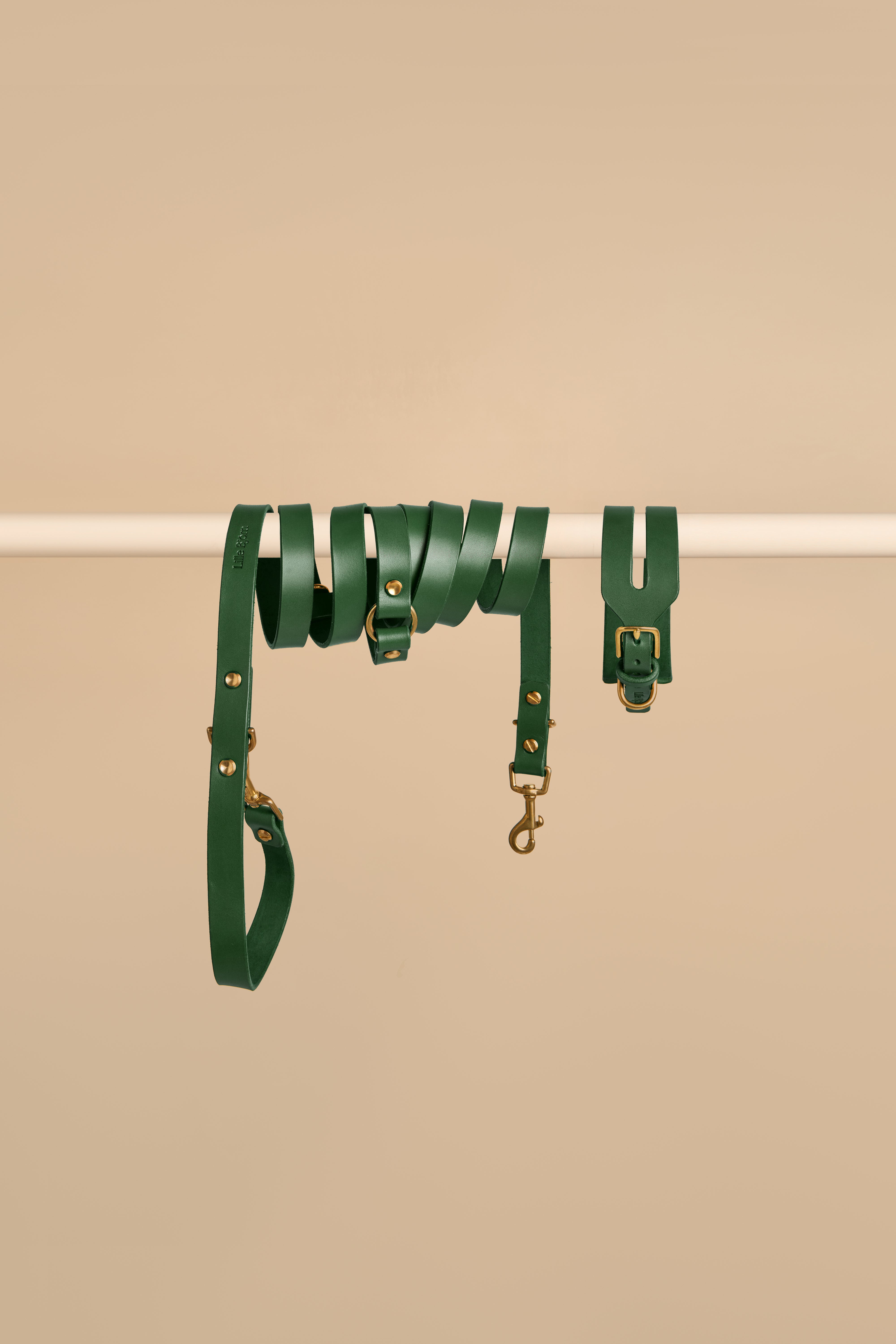
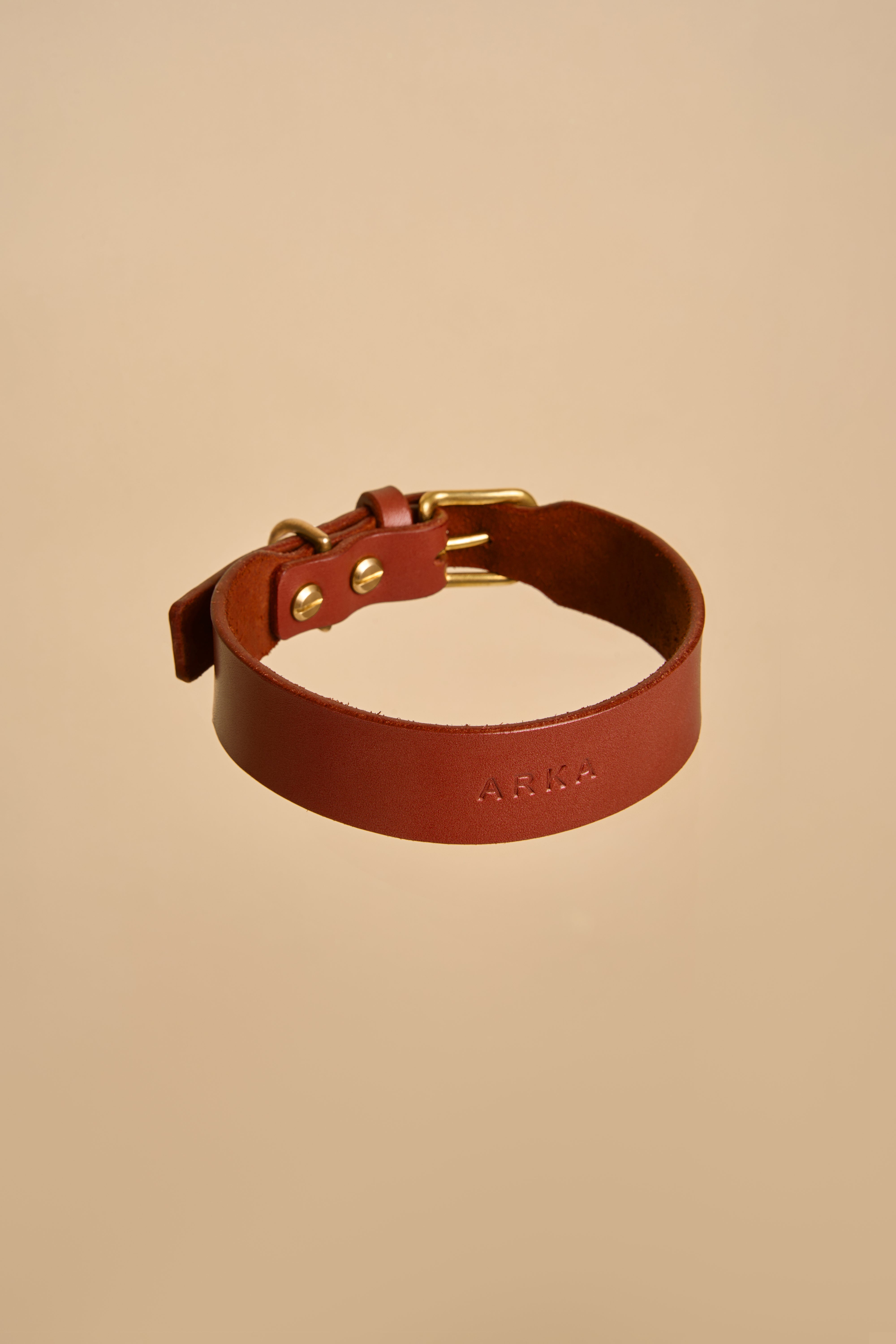
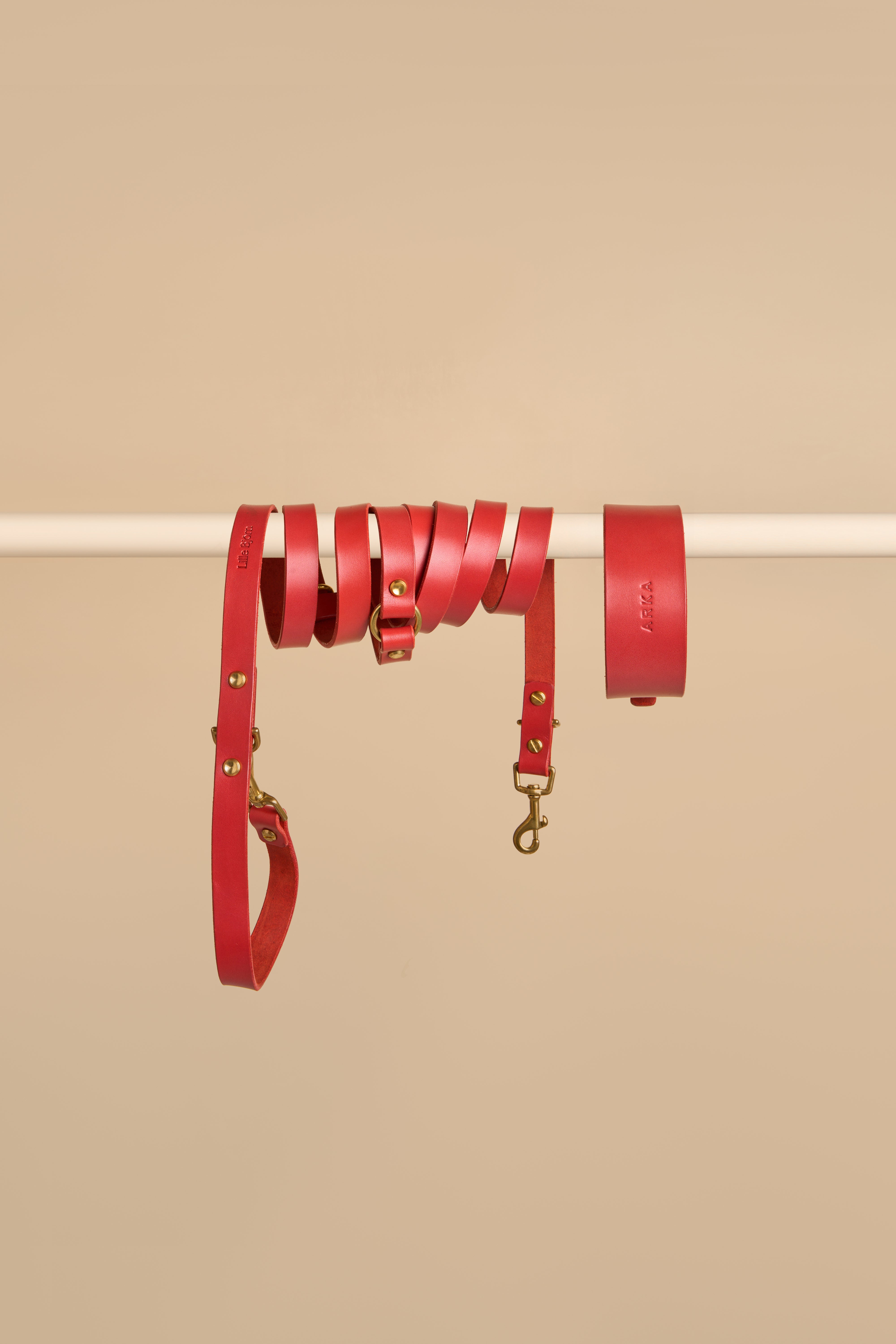
Browse The Lille Björn's collection of handcrafted leather dog collars each sized to the measurements above and built from full-grain vegetable-tanned leather with solid brass hardware.
Frequently Asked Questions: Dog Neck Measurement and Collar Fit
How do I measure my dog's neck for a collar?
Wrap a soft fabric tape measure snugly around the middle of your dog's neck where the collar will naturally sit with no extra space left in the tape. Note the measurement and find the size range it falls within: XXS (17–22 cm), XS (22–27 cm), S (27–32 cm), M (32–37 cm), L (37–42 cm), XL (42–47 cm). Before ordering, apply the two-finger rule mentally: your snug measurement needs to sit low enough within the size range to leave room for two flat fingers. A dog measuring 20 cm in XXS (17–22 cm) has 2 cm of range remaining, which comfortably accommodates two fingers. A dog measuring 22 cm at the top of the XXS range should consider XS.
What is the average neck size for a dog?
Average dog neck size varies enormously by breed, from around 20 cm (8 inches) for a Chihuahua to over 70 cm (28 inches) for a Mastiff or Saint Bernard. For the most common medium breeds: For commonly owned medium breeds: Beagles typically measure 27–34 cm (size S–M), Labradors 37–44 cm (size L–XL), and German Shepherds 40–46 cm (size L–XL). See the full breed reference chart above for 30+ popular breeds mapped directly to The Lille Björn size ranges.
What is the average neck size of a Beagle?
A Beagle's typical snug neck circumference is 27–34 cm. Based on The Lille Björn size chart, most Beagles suit a size S (27–32 cm) or M (32–37 cm) depending on their individual measurement. Apply the two-finger check before ordering: if your Beagle measures 30 cm in size S (27–32 cm), there is comfortable room for two fingers. If they measure 31–32 cm, consider size M for reliable two-finger space.
What is the average neck size of a Chihuahua?
A Chihuahua's typical snug neck circumference is 17–21 cm, placing most within size XXS (17–22 cm) on The Lille Björn chart. Chihuahuas have particularly fine, delicate necks so measure carefully and apply the two-finger check: a measurement of 17–20 cm in XXS leaves comfortable room. A Chihuahua measuring 21–22 cm should consider XS to ensure two-finger space is available.
What is the two-finger rule for dog collars?
The two-finger rule is the standard fit check for any dog collar. With the collar buckled at its normal position, slide two fingers, held flat, not pinched between the collar and your dog's neck. If you cannot fit two fingers the collar is too tight; if the collar gaps, rotates, or shifts freely it is too loose. Two fingers with light resistance is the correct fit. Recheck this every few weeks for growing puppies, and any time your dog gains or loses weight.
What if my measurement falls between two sizes or near the top of a range?
If your measurement sits near the upper limit of a size range, check whether 2–3 cm of range remains above it, that is approximately the room needed for two fingers. If that room is tight, the next size up gives you confident two-finger space. If your measurement sits exactly on the boundary between two sizes, the right choice depends on your dog's individual neck shape, your preferred fit style, and whether the leather break-in appeals to you for a snugger starting fit. There is no single rule, contact us with your measurement and breed before ordering and we will advise for your specific situation.
Does leather stretch over time and does it affect sizing?
Vegetable-tanned leather does not stretch significantly, but it does soften and conform to your dog's neck shape over the first weeks of wear. This means the fit becomes progressively more comfortable and personalised, the leather responds to your dog's body heat and movement rather than remaining a rigid band of material. Some owners whose measurement sits near the top of a size range choose to size up for reliable two-finger room from day one. Others near the lower end of a range are comfortable with the closer initial fit, knowing the leather will soften into it. Neither approach is wrong, it depends on your dog's build and your preference. If you are unsure, contact us before ordering.
Conclusion
One measurement, one simple addition, one fit check is the complete process. Find the size range it falls within, then apply the two-finger check before ordering: does your measurement sit low enough within the range to leave room for two flat fingers? If yes, order with confidence. If it sits close to the upper limit, the next size up gives you that room reliably. Everything else including breed charts, seasonal adjustments, leather break-in allowances is refinement on top of that foundation.
The breed reference chart above covers the 30+ most commonly searched breeds with typical size ranges in both centimetres and inches. Use it as a cross-check, but treat your actual measurement as the authoritative number. Individual dogs vary even within the same breed, and a measurement taken in 30 seconds is always more reliable than an estimate from a chart.
For measurements that fall at a boundary, or for breeds where sizing is less predictable, our team is always happy to advise before you order. For a well-fitted collar that earns its place through daily wear, browse the full collection of handcrafted vegetable-tanned leather dog collars at The Lille Björn. Every collar is sized to the measurements in this guide, built from full-grain leather that softens and conforms over time, and finished with solid brass hardware that will not degrade at the contact points.